

Hospitals lose money every day to equipment they already own. Between 10% and 20% of mobile medical assets go missing or get stolen each year, at roughly $3,000 per item, according to GE Healthcare. Across a large facility, those losses add up fast.
The bigger cost is time. A Nursing Times survey of 1,000 nurses found that one in three spends an hour or more per shift hunting for equipment. That hour comes straight out of patient care.
The fix is visibility. When staff know where every asset sits, they stop searching, stop hoarding, and stop buying duplicates. Here is how medical equipment tracking works and how to choose the right hospital asset management system.
What Medical Equipment Tracking Is (and the assets it covers)
Medical equipment tracking monitors the location, status, and use of clinical assets across a facility or network. It gives staff real-time clinical asset visibility, cuts search time, and puts idle gear back to work. For hospitals, that means better workflow, tighter medical device inventory management, and safer patient care.
The system covers mobile clinical equipment first. That includes high-value gear like infusion pumps, ventilators, defibrillators, portable X-ray machines, and surgical instruments.
It also tracks the items that vanish most: wheelchairs, patient beds, vital signs monitors, and tablets used for charting. The same principles apply to durable medical equipment (DME) tracking for home care and to pharmaceutical cold-chain visibility in transit.
Why Hospitals Lose Mobile Equipment: The Real Cost of Search Time and Hoarding
Hospitals lose equipment for three reasons: misplacement, departmental hoarding, and sloppy transfers. Gear ends up in the wrong room, a hallway, or even the laundry and waste streams.
When clinicians cannot find a device fast, they hide one for next time. That hoarding inflates demand and triggers new purchases for equipment that already exists. Hospitals end up carrying 20% to 30% more devices than they need just to cover the gear they cannot locate.
The real cost runs past the price of the missing items. An hour of search time per shift is an hour stolen from patient care, and it wears down nurse morale.
It also delays treatment, which affects patient outcomes and readmissions. On top of that, capital spent replacing assets that were never truly lost is money you recover with better visibility. These inefficiencies erode the bottom line every day.
How Gateway-Free BLE Medical Equipment Tracking Works
Gateway-free BLE medical equipment tracking uses Bluetooth Low Energy (BLE) to monitor assets at scale. Traditional real-time location systems (RTLS) demand fixed gateway infrastructure across the building. Gateway-free BLE skips that.
Small, battery-powered BLE tags attach to each asset. The tags broadcast signals that existing staff smartphones, tablets, or a few minimal BLE readers pick up. This IoT-based approach sends data over your current Wi-Fi or cellular network to a cloud platform, which maps every asset in real time on a dashboard.
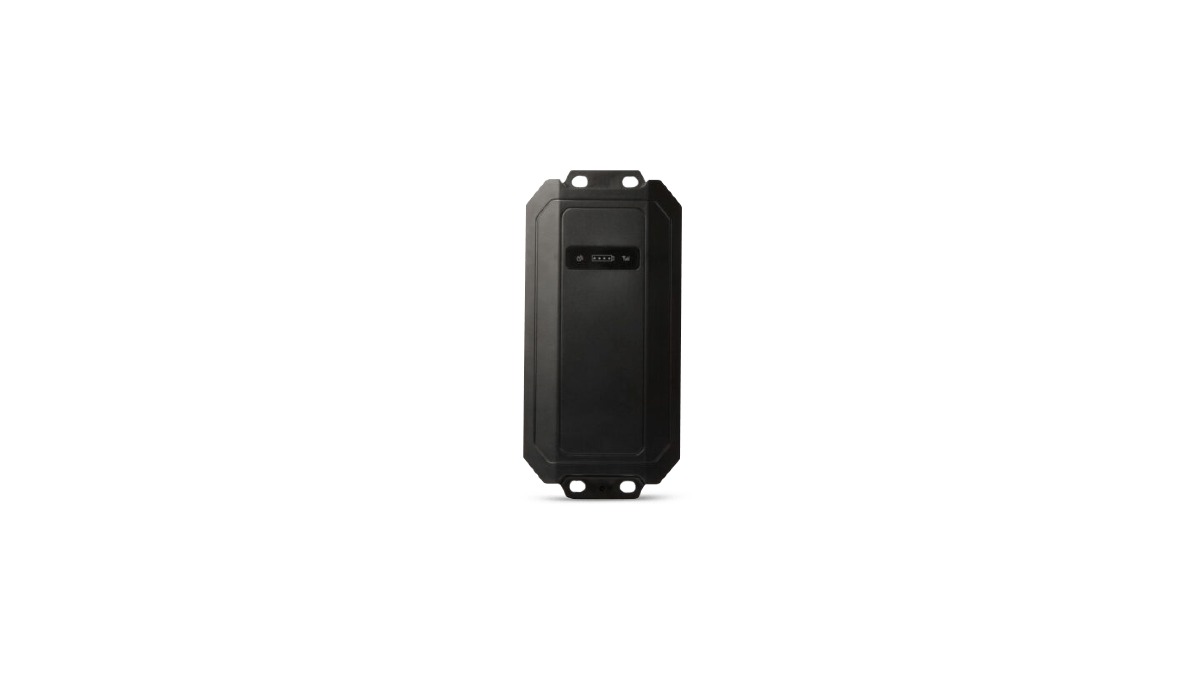
This cuts installation cost and complexity sharply. GPX’s AssetTag runs on a 4-year replaceable battery, so the system runs for years with little maintenance and no wired infrastructure. You get accurate, real-time location data without a heavy upfront hardware bill. Learn more in our BLE asset tracking solutions blog.
What to Plan for Before Deploying Hospital Trackers
Every tracking rollout hits a few predictable obstacles. Address them up front, and you protect both the deployment and the ROI.
RF Interference Near Imaging Equipment
Radiofrequency (RF) interference is a real concern around MRI and X-ray machines. Wi-Fi-based RTLS can take a hit in these zones.
Solution: BLE runs on a different frequency band at lower power, which limits interference. Smart tag placement and shielded areas close the remaining gaps.
Sterilization and Infection Prevention and Control (IPC) Compliance
Every item, tags included, has to survive sterilization without breaking down or violating IPC protocols.
Solution: Choose tags built from medical-grade materials, sealed against fluid ingress, and rated for common disinfectants and methods like UV-C light or chemical wipes. Confirm they meet your hospital’s IPC guidelines.
Battery Maintenance at Scale
Managing thousands of battery-powered tags across a large facility is a heavy lift, and dead batteries create blind spots.
Solution: Pick tags with long-life, easily replaceable batteries, like the GPX AssetTag and its 4-year replaceable battery. Centralized battery dashboards and automated alerts handle the scheduling for you.
EHR/CMMS Integration
Connecting the tracker to your Electronic Health Record (EHR) or Computerized Maintenance Management System (CMMS) takes custom APIs or middleware.
Solution: Prioritize systems with open APIs and proven integrations into major healthcare IT platforms. That keeps asset, maintenance, and patient-assignment data flowing in one direction.
Staff Adoption
Clinical staff push back on tools that feel like extra work, and that breaks tracking consistency.
Solution: Deploy an interface staff use with almost no training. Show them the payoff: less search time, faster care. Bring end-users into the pilot so they own the result.
Data Security, Privacy, and HIPAA Compliance
Location and asset data sit close to patient information, so data security, privacy, and HIPAA compliance are non-negotiable in any healthcare deployment.
Solution: Choose a platform with encryption in transit and at rest, role-based access controls, and independent audits. GPX is SOC 2 compliant, which gives hospital IT and compliance teams a verified security baseline before any asset data flows.
Integration Across the Wider Hospital IT Stack
Asset data has to reach more than the EHR and CMMS. Procurement, supply chain, security, and building management systems all benefit from live location feeds.
Solution: Favor a platform-agnostic system with open APIs that connect across your hospital IT stack, not just one or two endpoints. That keeps asset, maintenance, and procurement data in sync without brittle one-off connectors.
Scalability for Multi-Site Health Systems
A single hospital is one challenge; a health system with many sites and mixed infrastructure is another. Tracking has to scale across buildings and regions without a rebuild at each location.
Solution: Gateway-free BLE scales site by site without heavy fixed infrastructure, so a multi-site health system rolls out on a consistent cloud platform. Centralized dashboards give enterprise teams one view across every facility.
Implementing Medical Equipment Tracking: From Tag to Dashboard
A successful rollout follows a clear path from assessment to daily operations. Each phase earns its keep.
Phase 1: Needs Assessment and Planning
Start by naming your problems: frequently lost items, high replacement costs, long nurse search times. Map your high-traffic areas and critical equipment zones. Set hard targets, like a set percentage cut in asset loss or a lift in utilization. Then pick a technology that fits your infrastructure and budget, such as gateway-free BLE.
Phase 2: Tagging and System Deployment
Tag each mobile asset with a compact BLE AssetTag. Affix tags so they hold through daily use and sterilization. With gateway-free BLE, deployment means a handful of compact readers or existing staff devices and your Wi-Fi network collecting location data.
Phase 3: Data Visualization and Analytics
Once live, the system streams real-time location data into a central dashboard that shows every tagged asset at a glance. GPX’s Scout AI turns that raw data into AI-driven asset intelligence, moving “beyond dots on a map.” You get equipment heatmaps, utilization reports, and alerts when items leave their zones.
Phase 4: Training and Optimization
Train staff to find equipment on their devices and read utilization reports. Run thorough initial training, then back it with ongoing support and refreshers. Review performance often, collect feedback, and tune tag placement, geofences, and reports as you go. For the fundamentals, see our guide on what asset tracking is.
ROI: Utilization Gains, Recovered Capital, Reclaimed Nurse Time
The return on a tracking system shows up in three places: operations, finances, and staff well-being. Here is where the money and time come back.
Utilization Gains
When you know where every asset sits, you stop buying duplicates. Hospitals carry 20% to 30% more devices than they need to cover gear they cannot find, and real-time tracking closes that gap. Higher utilization wrings more value out of the capital you already spent.
Recovered Capital
Less loss and better utilization put capital back on the table. You cut replacement spending and stop over-purchasing for shortages that were never real. Money once set aside for new gear moves to technology upgrades or patient services instead.
Reclaimed Nurse Time
The biggest payoff is nurse time. Cut the search, and clinical staff get those minutes back for patient care and documentation. That lifts patient safety, raises morale, and eases burnout. Save 30 minutes per nurse per shift, and a single facility reclaims thousands of hours over a year. See our resources on tracking ROI for the full breakdown.
Getting Tracking Tech Right for Your Asset Mix
| Solution | Tracking tech | Battery life | Gateway-free | Best-fit assets | Real-time vs last-seen | Starting price |
|---|---|---|---|---|---|---|
| GPX AssetTag | Bluetooth (BLE) | 4-year replaceable battery | Yes | Mobile clinical equipment (pumps, wheelchairs, monitors) | Real-time | Contact GPX |
| Wi-Fi RTLS | Wi-Fi | Powered / wired infrastructure | No (needs access points) | High-value fixed-route equipment | Real-time | $$$ |
| IR / ultrasound RTLS | Infrared / ultrasound | Powered tags | No (room sensors) | Room-level certainty (OR, isolation) | Real-time, room-level | $$$ |
| Passive RFID | Passive RFID | No battery | No (portals / readers) | Bulk check-in / out, supply rooms | Last-seen at chokepoints | $$ |
| Barcode / manual | Barcode scan | n/a | n/a | Periodic audits | Last-seen at scan | $ |
The right system matches your facility’s needs, infrastructure, and goals. Weigh your scale, the asset types you track, and the accuracy you need. Decide between a traditional RTLS with heavy gateway installs and an agile gateway-free BLE solution that fits a tighter budget and faster deployment.
Look for strong data analytics, clean integration with your hospital information systems, and an interface staff actually use. Demand durable, sterilization-ready tags and easy battery maintenance. Get those right, and the system pays back in higher utilization, recovered capital, and faster clinical workflows.
An advanced hospital asset management system gives your facility real efficiency gains and real cost savings. See how GPX AssetTag delivers the real-time visibility and AI-driven asset intelligence your hospital needs to cut losses and find critical equipment faster. Visit our GPX AssetTag product page to learn more.
Frequently Asked Questions (FAQs)
What is medical equipment tracking and how does it work?
Medical equipment tracking locates, monitors, and manages mobile assets inside healthcare facilities. You attach small tags, often BLE tags, to each device. The tags broadcast signals that readers or existing infrastructure pick up, then relay real-time location data to a central dashboard staff check.
What is the difference between RTLS and BLE asset tracking for hospitals?
Real-Time Location Systems (RTLS) is the umbrella term for any technology that pinpoints assets live. Many traditional RTLS rely on proprietary infrastructure, Wi-Fi, or UWB and need heavy hardware installs. BLE asset tracking, especially gateway-free versions, uses energy-efficient tags and rides your existing Wi-Fi or cellular network, which cuts infrastructure and deployment complexity.
How long do the tags last on medical equipment?
Tag life depends on the technology and the manufacturer. GPX AssetTag tags use a 4-year replaceable battery, so they run for years with minimal maintenance. That lowers your total cost of ownership over time.
Can medical equipment tracking work without installing gateways or new infrastructure?
Yes. Gateway-free BLE systems run with little to no new infrastructure. They use your existing Wi-Fi network or staff mobile devices as readers, which simplifies deployment and lowers upfront cost against traditional RTLS that demand full gateway installs.
How much does a medical equipment tracking system cost?
Cost depends on the technology, facility size, asset count, and feature set. Gateway-free BLE systems offer a lower entry point because they need less infrastructure, and pricing usually comes per asset or by subscription after an initial consultation.