

On February 20, 2026, the U.S. Supreme Court struck down the IEEPA tariffs in a 6-3 decision, invalidating roughly $175 billion in collections and upending trade flows overnight. Within four days, the White House imposed a replacement 15% global tariff under Section 122 of the Trade Act, which expires in 150 days unless Congress extends it. Every supplier relationship, inventory position, and Just-in-Time (JIT) inventory optimization decision your team made in 2025 is now in play again. Dwell times are spiking at distribution nodes nobody planned to keep active. Lanes that were cost-prohibitive six months ago are suddenly the cheapest route. And every day an asset sits in the wrong yard, it’s working capital your company cannot deploy elsewhere.
That is the environment a finance team is reading when your business case lands on their desk. Macroeconomic whiplash, not warehouse efficiency, is the lens they are using.
I’ve sat on both sides of the table when it comes to approving spend. Before I became CEO of GPX Intelligence, I spent years in corporate finance. I was the person whose job it was to look at every proposal with skepticism and say no. Now I’m the one hearing the pitches, and honestly, the pattern hasn’t changed much.
Someone on my team walks in genuinely excited about a new tool, a consultant, or a platform and the pitch fails when I hear, “I don’t know exactly what the return will be, but I think it’s going to provide positive value.” I get it. The enthusiasm is real. But enthusiasm doesn’t get a purchase order signed. Numbers do.
Here’s what most people don’t realize about the finance team they’re pitching to: those folks aren’t trying to block you. They’ve got a mandate they’re being measured against, and they don’t always have the full operational picture. They see everything through the lens of the budget. So when you walk in without a clear ROI, you’re not just making a weak case. You’re asking them to take a risk they have no incentive to take.
The good news? You don’t need to predict the future to calculate ROI. Nobody expects that. But you can take a math-based approach and say, “Based on everything I know as a professional in this space, here’s my best estimate.” What’s our probability of loss? How many units move through the system daily? What does recovery look like with better visibility versus without it? A compelling ROI turns a request into a business case; business cases get funded.
The other thing I’ve learned sitting in both seats: you get one shot at this. If the first impression is shaky, finance will be skeptical of that line item no matter how many times you come back to reposition it. They’ll assume you’re just massaging the numbers. But when you come correct the first time, with a clean model, real data, and honest assumptions, it’s easy for them to run it up the chain and get to yes.
That’s exactly why we put this guide together. Whether you’re making the case for GPS asset tracking or any other operational investment, the framework below will help you build the kind of business case that gets approved on the first pass.
Building a Business Case for GPS Asset Tracking: A Finance Leader’s Blueprint
You know the operational value of location intelligence. You have seen GPS tracking hardware paired with AI-powered analytics solve persistent inventory problems. The benefits are obvious to everyone on the warehouse floor. But now you face the hardest part of the procurement cycle: convincing the finance department to approve the purchase order.
Finance teams speak a language of numbers, risk, and return. They are trained to be skeptical. They will ask tough questions about costs, implementation complexity, and the risk of the investment not delivering as promised. Without a concrete financial model, daily inefficiencies look like the normal cost of doing business to a Chief Financial Officer. Your operational enthusiasm alone will not move the needle.
The Hidden Financial Drain of Supply Chain Blind Spots
The scale of the problem is staggering. Cargo theft now costs the U.S. supply chain up to $35 billion annually, with strategic theft rising 1,500% since the first quarter of 2021. In the United States alone, the construction sector loses between $300 million and $1 billion each year to equipment theft. Meanwhile, businesses routinely carry 10% to 30% of their assets as ghost assets in 2026, items that are lost, stolen, or unusable but remain on the corporate books, distorting financial health and tying up working capital you could otherwise deploy against tariff volatility and demand sensing investments.
To secure funding, you need a structured approach that proves supply chain visibility is a strategic financial asset. This guide provides a step-by-step blueprint to build that exact business case, framed around the Lean Six Sigma DMAIC discipline your operations team already speaks.
Step 1: Quantify the Financial Cost of the Status Quo
Before you can pitch a new solution, you must establish the baseline cost of your current operations. Finance will not approve an investment without understanding what problem it solves and the dollar value attached to that problem. This is the Define and Measure phase of any credible business case.
Work with your team to calculate the exact financial impact of poor visibility. Document the total capital spent replacing lost or stolen equipment over the past twelve months. Calculate the hours your staff spends manually searching for assets or conducting inventory audits, and multiply those hours by the average loaded labor rate. Identify the carrying costs of the safety stock you hold simply because you cannot trust your current location data. Finally, consider the indirect costs: operational downtime, project delays, potential penalties, damage to customer relationships, and increased insurance premiums.
This baseline establishes the “why now” that finance needs to see. The opportunity is not just to stop the bleeding. It is to create a more efficient, secure, and ultimately more profitable operation, one that can absorb the next tariff ruling or demand signal without scrambling.
Step 2: Project the Financial Impact with Hard Numbers
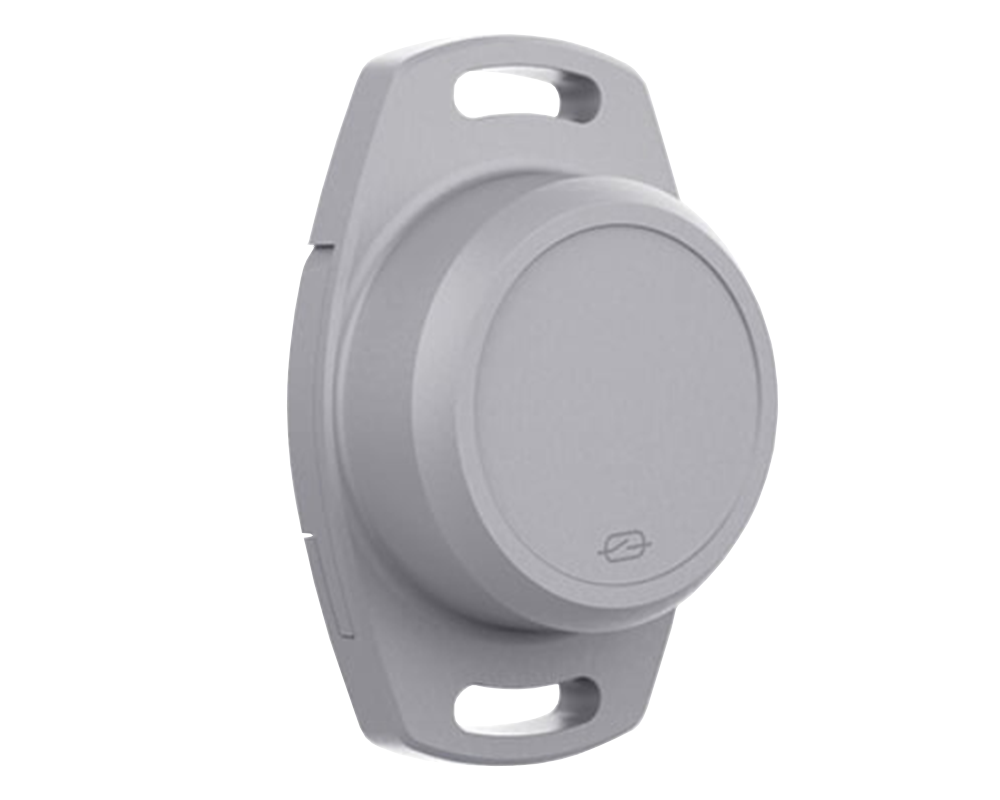
Once you have the baseline, you can project the savings. Transparency is key here. An investment in GPX Intelligence solutions is approximately $115 annually per tracked asset.
Against that cost, you must map the projected returns. Real-Time Location Systems consistently demonstrate reductions in asset loss and theft by 30% to 50%, with GPX solutions delivering results at the higher end of that range. Recovery rates for stolen or misplaced assets improve by up to 80%, and organizations gain 100% visibility into the location of tracked assets.
To present this clearly to your finance team, use a standardized framework:
| Metric | Current Scenario (Annual) | Projected Scenario with GPX | Annual Savings |
|---|---|---|---|
| Number of Assets Tracked | N/A | [Your Total Asset Count] | N/A |
| Annual GPX Solution Cost | $0 | Count x $115 | N/A |
| Cost of Lost/Stolen Assets | $[Current Loss Total] | 50% Reduction | $[Calculated Savings] |
| Value of Unrecovered Assets | $[Value of Lost Assets] | 80% Improvement | $[Calculated Savings] |
| Manual Data Analysis Labor | $[Current Labor Costs] | 95% Reduction | $[Calculated Savings] |
| External Consultant Fees | $[Current Consultant Spend] | $0 | $[Calculated Savings] |
Use the GPX live demo to see the platform running on a site like yours, then fill the framework above with figures from your own operations. The power of using your own data within a standardized framework makes the projected savings far more credible to a finance audience.
Step 3: The AI Multiplier Effect on ROI
If the core GPS tracking hardware builds a strong financial case, the Scout AI agent makes the proposal undeniable. CFOs and operations directors in 2026 are no longer searching for dashboards. They are searching for AI agents and AI copilots for supply chain data that act as embedded analysts instead of another tool their team has to learn. Finance teams often worry that new technology will require hiring expensive data analysts or consultants to extract value from the platform. Scout closes that gap.
Scout acts as an embedded expert data analyst. It brings platform and industry knowledge directly to the user through simple questions and answers. This drastically reduces the time required to analyze supply chain data and accelerates time-to-value. An analysis that previously took three days of manual effort can now be completed in just two and a half minutes. Dwell time reduction, anomaly detection, and predictive stockout prevention that once required a dedicated analyst happen continuously in the background.
| Analysis Task | Manual Effort (Typical) | Effort with Scout AI | Time Reduction |
|---|---|---|---|
| Dwell Time Analysis | 3 Days (approx. 24 hrs) | 2.5 Minutes | >95% |
| Anomaly Detection | 4 to 8 Hours (periodic) | Continuous, Automated | Significant |
| Cross-Fleet Reporting | 1 to 2 Days (monthly) | Minutes | >90% |
This massive reduction in administrative work translates directly into hard dollar savings. It also eliminates the need for expensive third-party data projects. A major German automotive manufacturer invested $107,000 in a tracking project and yielded savings of $515,000. A significant portion of their previous spend included $50,000 in consultant costs, precisely the type of expenditure Scout eliminates.
Step 4: Cost Avoidance and Hidden Savings
Beyond direct ROI, Scout AI delivers substantial cost avoidance that strengthens the financial case:
| Cost Category | Scenario without Scout | Scenario with Scout | Potential Annual Savings |
|---|---|---|---|
| External Consultants | $25,000 to $50,000+ | $0 (Included) | $25,000 to $50,000+ |
| Additional FTE Data Analyst | $70,000 to $100,000+ | $0 (Empowered Team) | $70,000 to $100,000+ |
| Staff Overtime for Audits | $5,000 to $15,000 | Significantly Reduced | $5,000 to $15,000 |
These figures represent real cost avoidance that flows directly to the bottom line. Scout actively reviews asset movement, identifies unusual dwell times, flags behavioral anomalies indicative of potential theft, and provides cross-supply chain analysis to preempt issues. It can increase the accuracy of these findings by more than 80%, leading to better, faster decisions and fewer costly errors.
Step 5: Risk Mitigation from the CFO’s Perspective
Every investment carries some risk, but smart investments also mitigate existing, often larger, risks. Frame GPS asset tracking as a powerful risk reduction tool, especially in an environment where tariff rulings, supplier reallocation, and JIT inventory optimization pressure are already on the CFO’s desk.
Financial risks mitigated include direct loss from asset theft, damage, and the cascading costs of operational disruptions. Organizations with tracked assets also benefit from lower insurance premiums over time. Operational risks mitigated include project delays due to unavailable equipment, unpredictable supply chain performance, and weak security protocols. Strategic risks mitigated include brand reputation damage from service failures and business continuity threats from unaccounted critical assets.
Addressing risk proactively demonstrates a thorough understanding of the investment’s implications and turns a perceived cost into a tangible benefit.
Step 6: Strategic Alignment with Company Goals
How does this investment support the company’s overarching strategic objectives? This question is crucial for securing finance approval because it demonstrates that the investment contributes to the bigger picture.
GPS asset tracking directly contributes to operational efficiency and labor productivity. It enhances asset security and minimizes losses, protecting company capital. Reliable operations ensured by complete visibility improve customer satisfaction through on-time deliveries and timely project completion. The platform empowers better, faster, and more accurate data-driven decisions. Better asset utilization also means less waste and fewer unnecessary equipment purchases, contributing to sustainability goals.
Leading consultancies like McKinsey emphasize a holistic approach to ROI, incorporating non-financial factors such as operational resilience, innovation, and sustainability alongside traditional financial metrics.
Real-World ROI: Documented Results
The financial impact of GPS asset tracking is well documented across industries:
- A precious metal shipping company rescued a $425,000 shipment being actively stolen using a $15 disposable tracker.
- A large-scale deployment with a $660,000 investment generated savings of $5.8 million.
- Recovery of $60,000 in critical test equipment lost during shipment, facilitated by a minimal tracking investment.
- A ready-mix concrete company achieved a 2,000% ROI and $6.5 million in savings with an asset tracking solution.
- Hospitals using RTLS have reported saving $300,000 to $500,000 annually by reducing equipment loss.
Most organizations project a positive ROI within the first six months of deployment. The exact timeline depends on the scale of initial asset loss and the inefficiency of previous manual auditing processes.
How to Justify RTLS Investment to Your CFO: Moving Forward with Confidence
Securing budget approval requires a rigorous financial model that highlights the true cost of asset loss and the predictive power of modern technology. When you compare the $115 annual cost per tracked asset against the persistent financial drain of equipment theft, excess inventory, and expensive data analysis, the solution typically demonstrates a rapid payback period. Every dollar saved in operational waste flows directly to the company’s bottom line.
You understand the on-the-ground needs of your operations better than anyone. By combining your internal data with this financial framework, you can present a strategic investment that demonstrably pays for itself. This approach protects valuable capital, streamlines complex operations, and builds a resilient supply chain prepared for the next tariff ruling, the next demand sensing challenge, and the next macroeconomic shock.
Frequently Asked Questions (FAQs)
How do you calculate asset tracking ROI?
You calculate ROI by subtracting the total cost of the tracking system from the total financial savings generated by the system. You then divide that number by the system cost and multiply by 100 to get your percentage. Savings typically include reduced loss, lower labor costs, and optimized inventory levels, including the working capital you release by cutting ghost assets from your books.
What is the biggest hidden cost of poor supply chain visibility?
The largest hidden cost is usually excess safety stock and ghost assets. Companies hold surplus inventory to buffer against uncertainty, which ties up significant working capital and increases warehousing expenses. Unusable ghost assets, which account for 10% to 30% of the average corporate asset register in 2026, also remain on the books, distorting financial health and inflating tax and insurance exposure year after year.
What financial metrics do CFOs care about most for supply chain technology?
Chief Financial Officers prioritize the payback period, Total Cost of Ownership, and Return on Investment. They want to see a clear, data-driven timeline of when the supply chain technology will stop being an expense and start generating profitability for the organization, and how the investment performs against working capital release and risk-adjusted return benchmarks.
How do AI agents improve the ROI of GPS asset tracking?
AI agents like Scout accelerate time-to-value by bringing platform and industry knowledge directly to users, eliminating the learning curve. They reduce analysis time by up to 95%, automate anomaly detection, and increase finding accuracy by more than 80%. This eliminates the need for expensive external consultants or additional data analyst headcount, directly improving the financial return on the tracking investment and aligning the deployment with the 2026 shift toward agentic AI in logistics.