
Affordable GPS fleet tracking: every asset, not just vehicles.
Your fleet is more than the trucks. Trailers, heavy equipment, tools, and the vehicles that move them — GPX puts real-time GPS and Bluetooth (BLE) asset tracking on all of it, at a low, flat per-asset cost. If it moves, it's on the map.
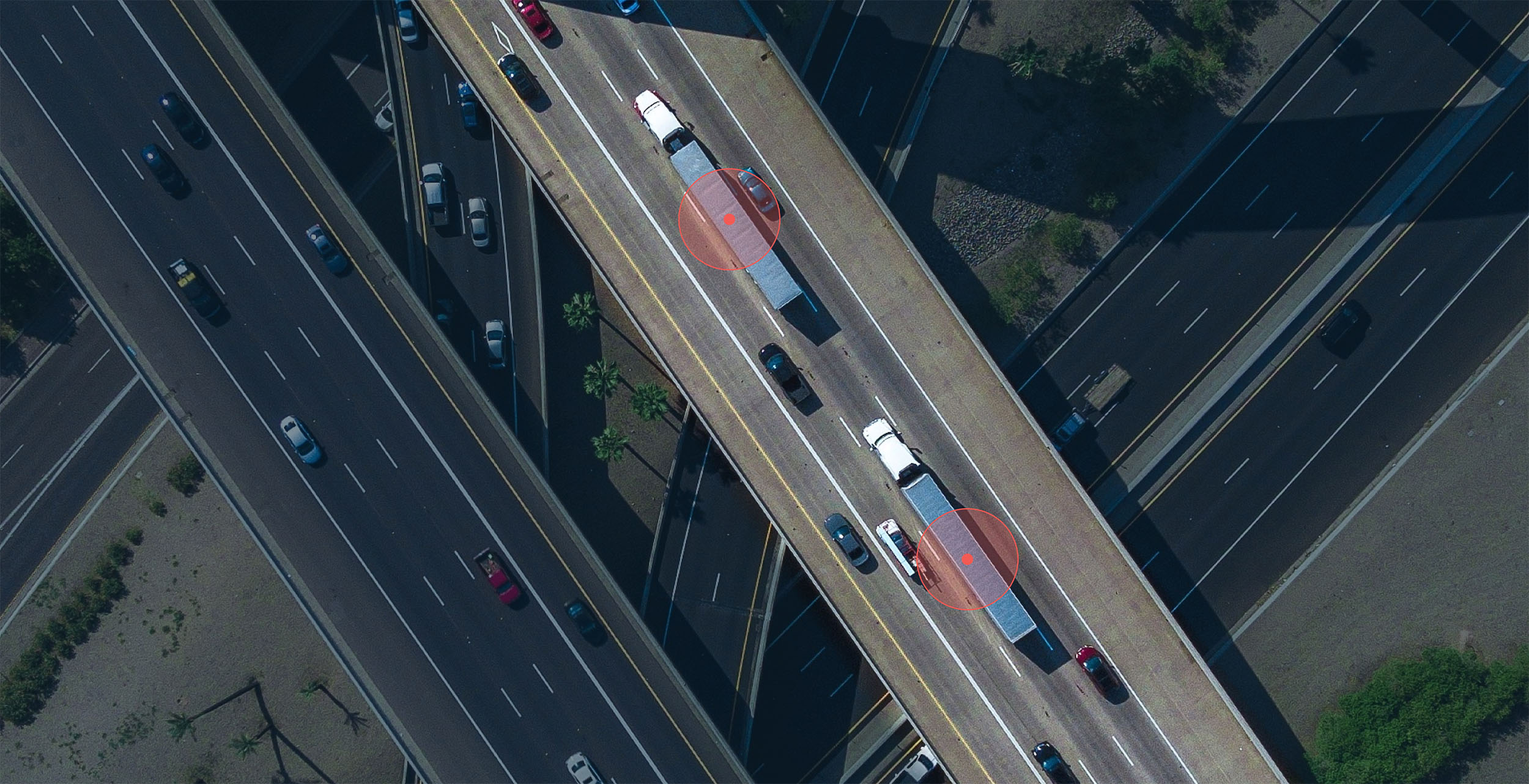
















You don't need telematics on every asset.
Fleet telematics is built for managing trucks and drivers: engine diagnostics, driver behavior, hours of service. It's the right tool for that job — and the wrong one for everything else your fleet owns. Hardwired installs, multi-year contracts, and a per-vehicle cost that only makes sense when you need the driver data.
Most of a fleet isn't trucks. It's trailers, heavy equipment, and tools — assets with no engine to diagnose and no driver to score. What they need is location, geofencing, and alerts, at a cost low enough to cover all of them. That's what GPX does: affordable fleet tracking for the whole fleet, at a fraction of the per-asset cost of a telematics subscription.
GPX AssetTag Pro
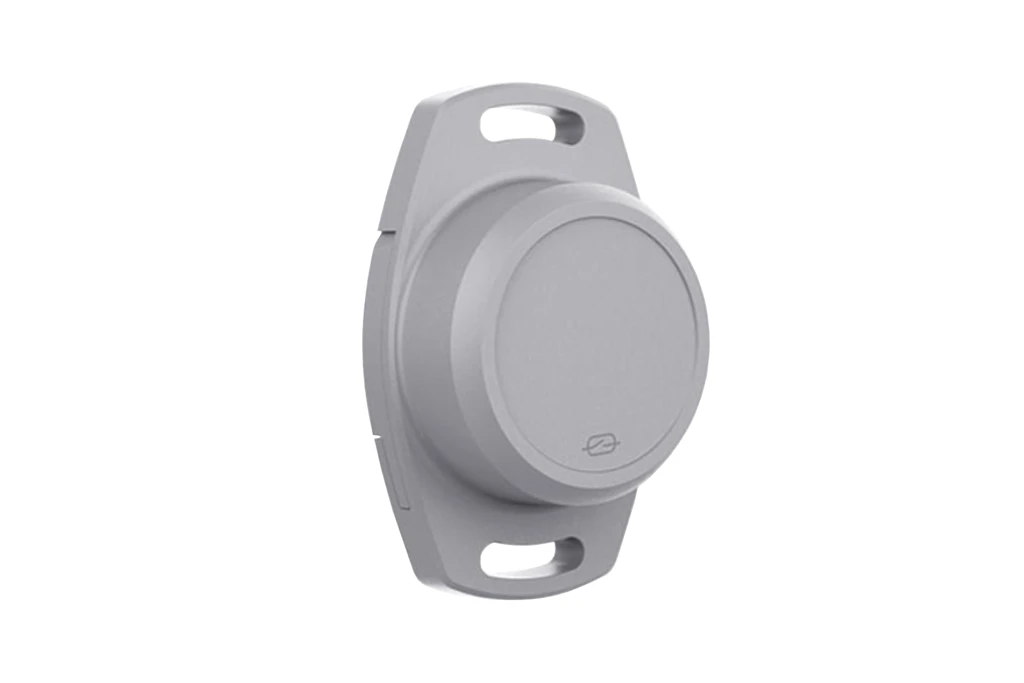
- Location, geofencing, instant alerts
- Up to 5-year battery, zero infrastructure
- No wiring, no OBD, no installation
GPX GPS trackers
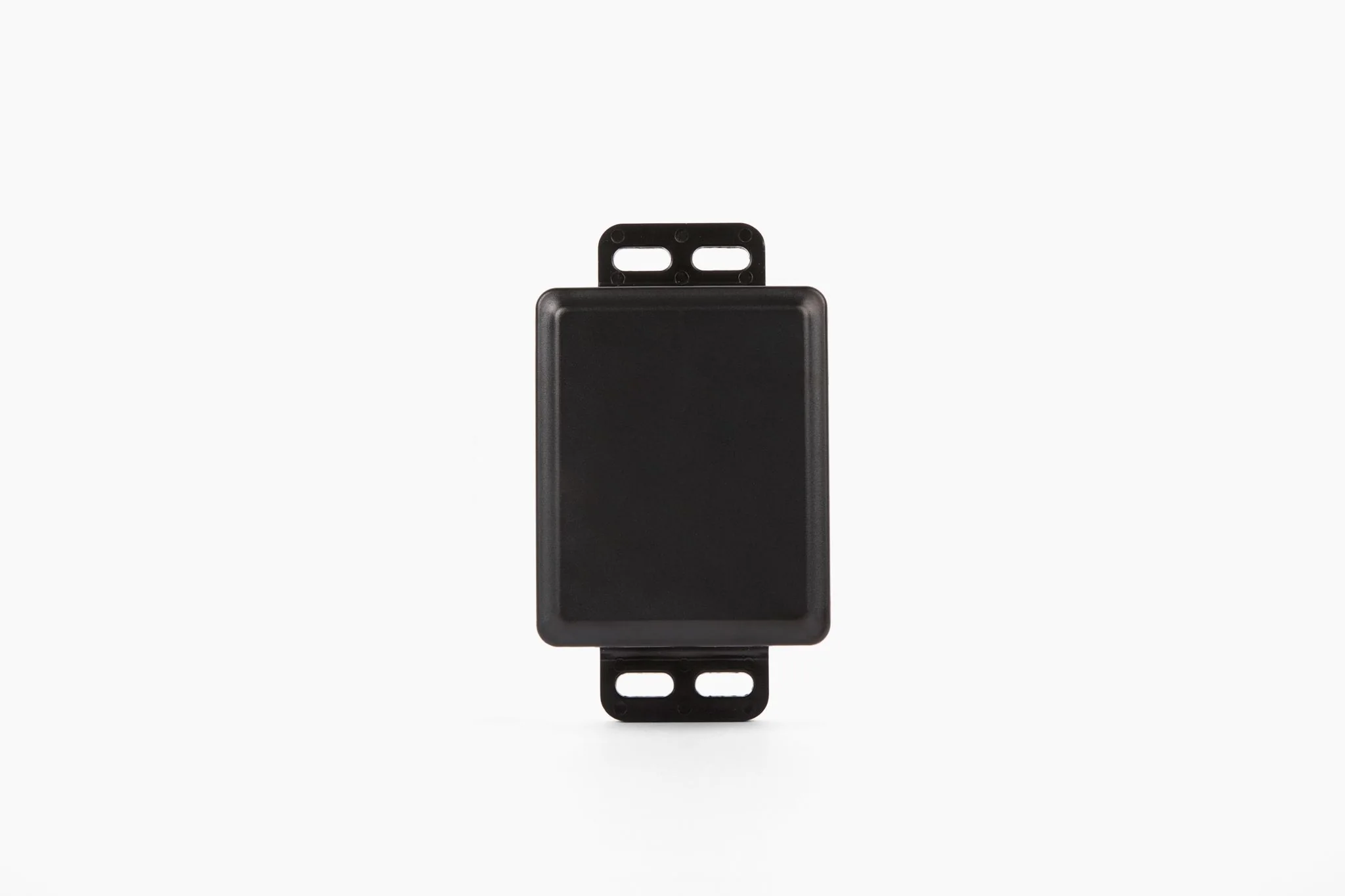
- Live location on predictable intervals
- Strong rural and remote coverage
- Trip history and ignition status (wired)
Traditional telematics
- OBD-II or hardwired install required
- Engine diagnostics, driver behavior
- Designed for powered vehicles only
One platform. A tracker for every part of the fleet.
A service truck and a light tower don't need the same hardware. GPX pairs the right GPS fleet tracker or BLE device to each asset class — and every one reports into the same live map, alerts, and analytics.
BLE RoadWired
Hardwired GPS + BLE gateway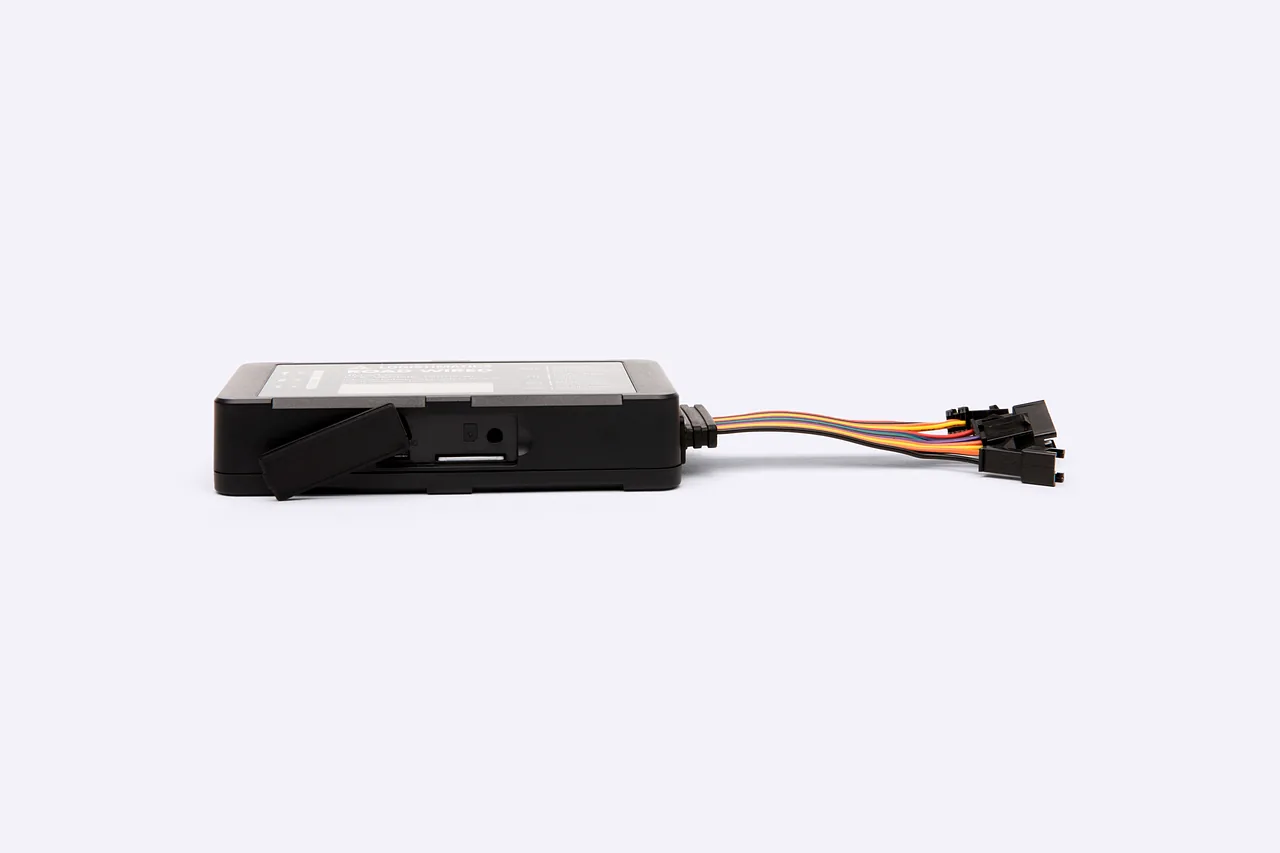
For the powered vehicles: hardwired for constant power, live location every 30 seconds on the move, ignition status, and trip history. And it doubles as a mobile BLE gateway — reading nearby GPX tags on trailers, tools, and equipment as it drives, so every vehicle extends your tracking coverage.
AssetTag Pro
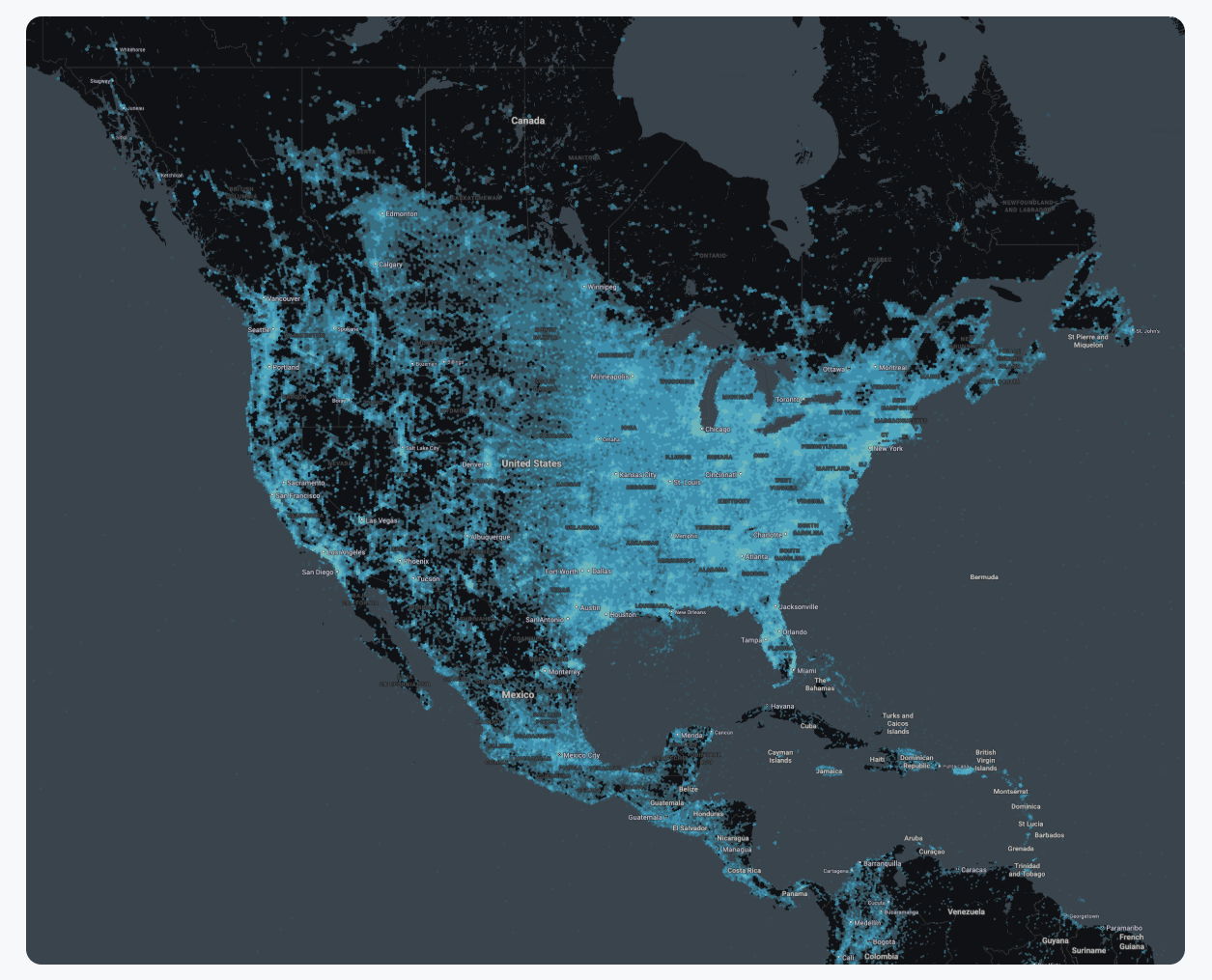
Battery GPS + BLE tag · hardware includedThe tracker for everything without an ignition: a rugged tag smaller than a credit card that reports for three to five years, depending on the model, without charging, wiring, or maintenance — over a 100M-gateway terrestrial network that already exists. Cheap enough per asset to tag the whole trailer pool, every attachment, and the tools that walk off between jobs.
Heavy-equipment GPS
Rugged · engine-hour data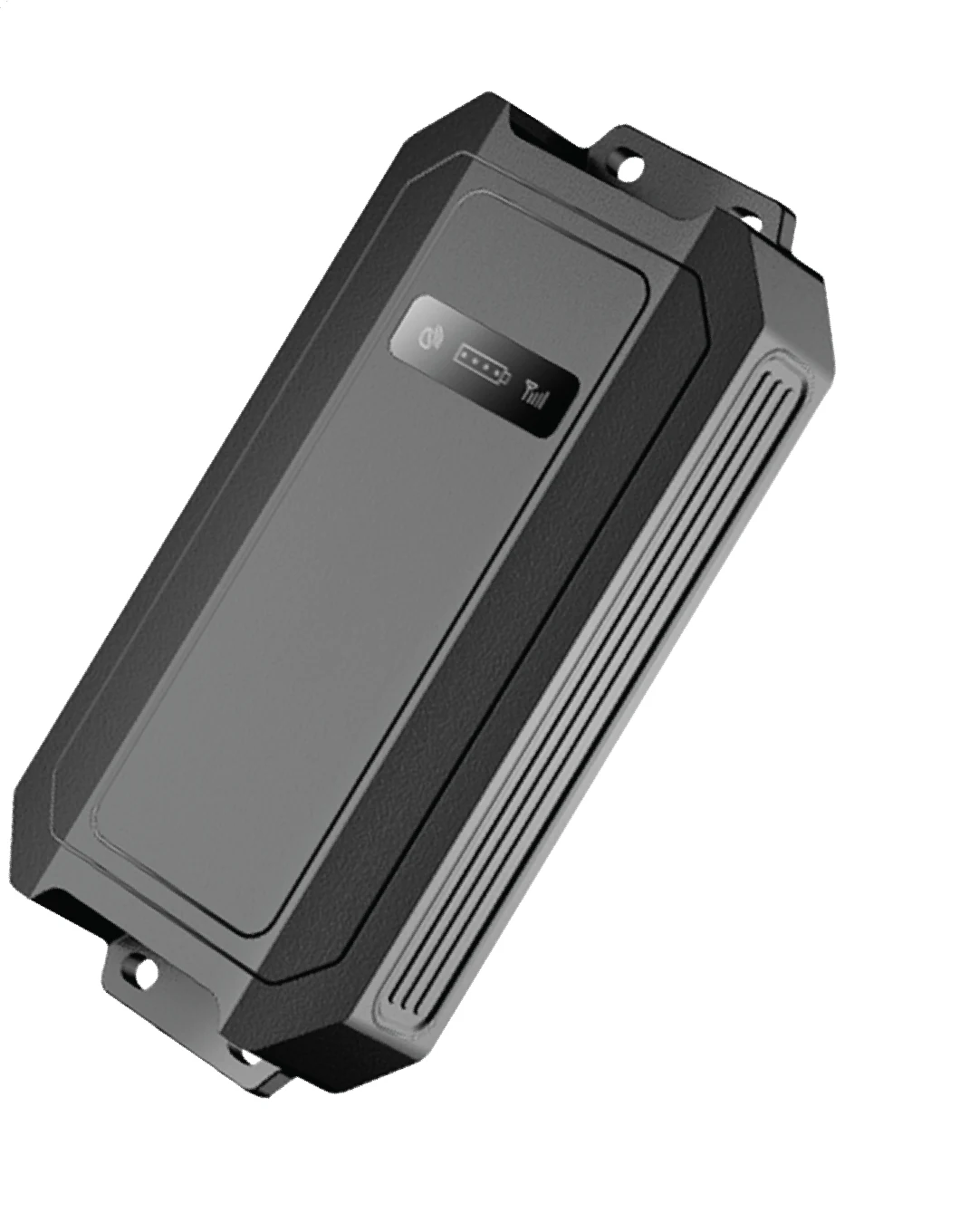
Purpose-built for yellow iron — engine hours and utilization alongside location, in enclosures that shrug off vibration, weather, and wash-downs. See heavy equipment tracking for the full story.
The 2 a.m. alert that gets the trailer back by breakfast.
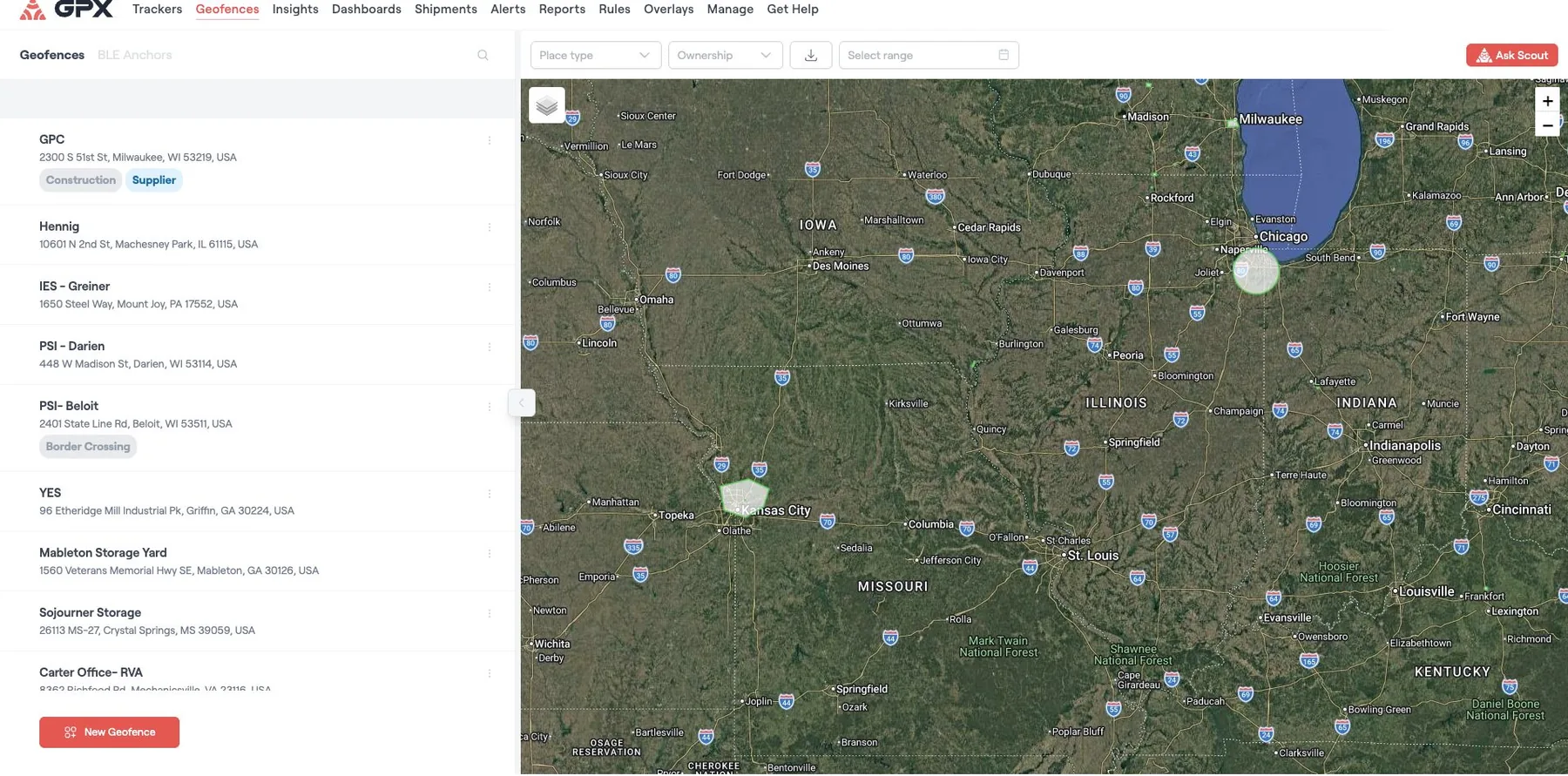
Every tracked asset reports continuously, so the moment something moves that shouldn't, you know. Scout AI geofences every site in seconds — yards, job sites, lots — and after-hours movement fires an instant alert by text, email, or webhook. From there, full movement history turns recovery into a procedure: an auditable trail law enforcement can act on.
Fleet tracking software that puts idle assets back to work.
Theft is the loss you notice. Idle assets are the loss you don't. With 100% of the fleet tracked, not sampled, under-used trailers, parked equipment, and tools stranded on finished jobs show up as data instead of write-offs.
Idle-time and dwell analytics answer the questions that used to take a yard walk: which trailers haven't turned in a month, which excavator sat through a whole rental cycle, which job site is hoarding the generators. And because it all flows through API and webhooks into your ERP, WMS, and TMS, the answers land in the systems your team already works in.
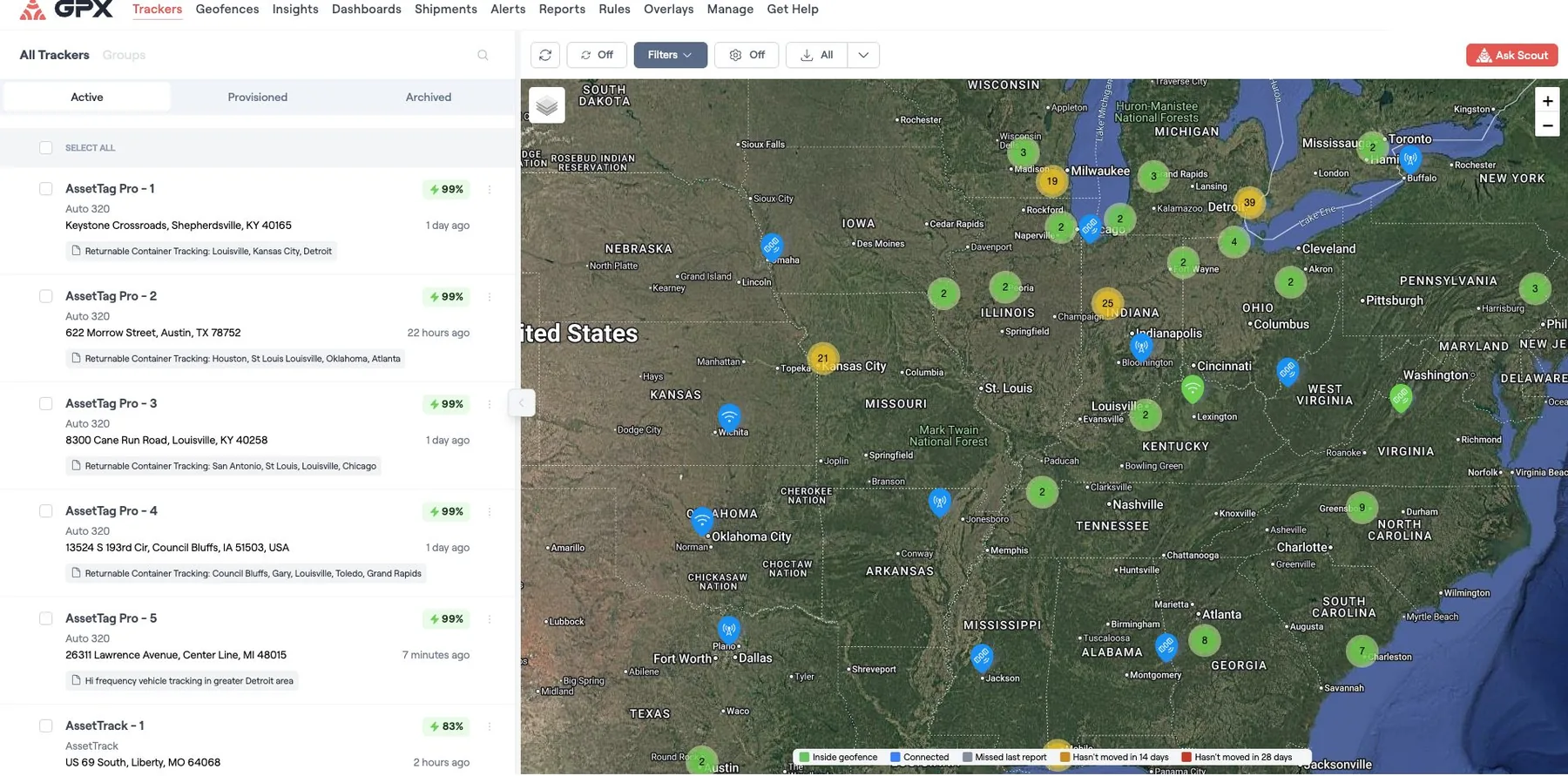
One fleet tracking system for every device you deploy
Wired trackers, battery tags, and heavy-equipment GPS all report into the same map, the same alerts, and the same analytics — wherever your fleet moves.
Proof from the yard, the lot, and the road.
GPX's GPS data and AI platform transformed visibility across our supply chain. We now track returnable containers in real time, cut losses and shortages, and manage assets with greater confidence and control.
We have had over a 95% recovery rate since implementing GPX solutions. It has saved us so much time and money tracking and protecting our fleet.
An account swore the demo unit wasn't there — until GPX showed the location. One screenshot later, it 'reappeared.' These trackers remove doubt and protect assets.
Fleet tracking, answered.
What is fleet tracking?
Fleet tracking uses GPS and Bluetooth (BLE) devices to monitor the location, movement, and status of everything in a fleet — vehicles, trailers, heavy equipment, and tools. Locations flow into one platform in real time, where geofencing, alerts, and analytics help operators prevent theft, improve utilization, and reduce costs.
How does GPS fleet tracking work?
A tracking device rides on each asset. Wired GPS trackers draw vehicle power and report live location every 30 seconds on the move; battery tags like AssetTag Pro report for three to five years, depending on the model, over a terrestrial network of more than 100 million gateways, with nothing to install. All of it lands in the GPX platform, where geofencing, alerts, and analytics turn locations into action.
What is the difference between fleet telematics and fleet tracking?
Telematics is built for powered vehicles and drivers: engine diagnostics, driver behavior, OBD-II data, hardwired installs, and multi-year contracts. Fleet tracking with GPX is built for the whole fleet — including trailers, equipment, and tools that telematics can't cover — delivering real-time location, geofencing, and utilization analytics at a fraction of the per-asset cost. If you need driver scoring and engine diagnostics on trucks, that's a telematics vendor; for everything else, it's GPX.
How much does fleet tracking cost?
Low, flat per-asset pricing at fleet volume — with AssetTag Pro hardware included. The subscription covers the full GPX platform: geofencing, alerts, idle and dwell analytics, and Scout AI, with no per-ping charges and no infrastructure to buy. Powered vehicles that need live 30-second reporting use dedicated GPS trackers quoted per deployment. Most operators find tracking the whole fleet costs less than the losses they were absorbing.
Can trailers and equipment be tracked without hardwired GPS?
Yes. Battery-powered tags like AssetTag Pro mount with adhesive or bolts — no wiring, no OBD port, no installation downtime. They report for up to five years on one battery over a network that already exists, which is what makes it practical to tag every trailer, generator, and toolbox in the fleet, not just the trucks.
Will I need expensive computer hardware or infrastructure?
No. The GPX platform is cloud-based — any computer or phone with a browser. And on the tracking side there's no infrastructure either: no gateways, readers, or scanners to install. AssetTag Pro reports over a 100M-gateway terrestrial network that already exists, so fleets go live within days, not quarters.
The whole fleet on the map. Every alert in seconds. Every recovery routine.
Start with a pilot: we ship you trackers, you put them on trailers, equipment, and tools, and within days you're watching the whole fleet live. No infrastructure. No commitment.