
Returnable container tracking that eliminates loss. Every tote, rack, bin, and IBC.
Real-time visibility for every reusable container in your closed-loop supply chain. AssetTag Pro reports over a 100M-gateway network that already exists — nothing to install — while geofencing, dwell analytics, and Scout AI catch loss the moment it starts. Track the entire container pool, not an audited sample.
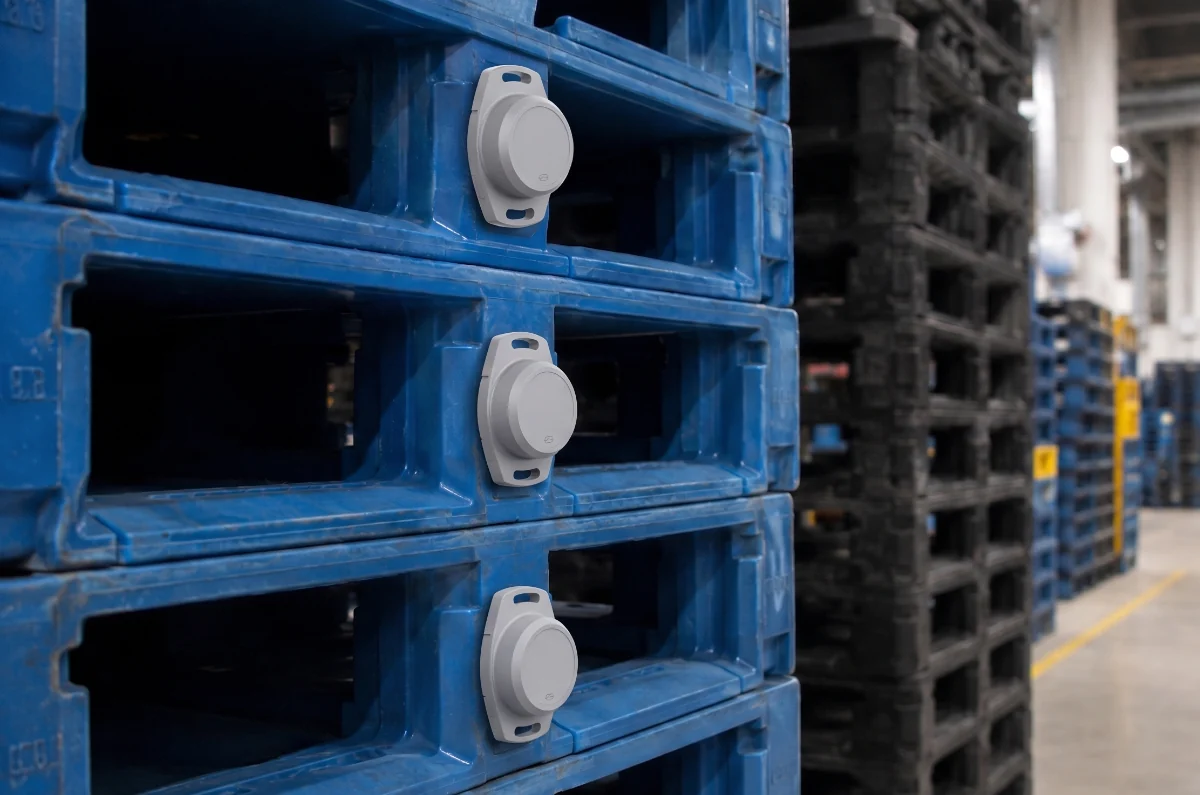















Stop auditing your container pool. Start tracking it.
For decades, returnable container management meant periodic audits, manual cycle counts, and quietly re-buying what walked off. Not because tracking didn't work — because it cost too much to put on everything. Expensive, clunky GPS meant you tracked only your highest-value assets and audited the rest quarterly. Between counts, asset shrinkage compounded silently: totes hoarded at supplier sites, racks lost in yards, bins that never came home.
And the lost container is the cheapest part. Add the emergency replacements, the demurrage fees, the production line waiting on returnable transport packaging that didn't return, and the labor hours spent reconciling spreadsheets against reality. The float you carry to absorb it all is capital doing nothing.
GPX flips that math. With AssetTag Pro as low as $45/yr per container, hardware included, and no gateways or scanners to install, the entire pool is finally worth tagging. Tag everything, heavy-duty industrial bins and reusable plastic containers alike, and replace periodic audits with a live, continuous count of every asset in the loop.
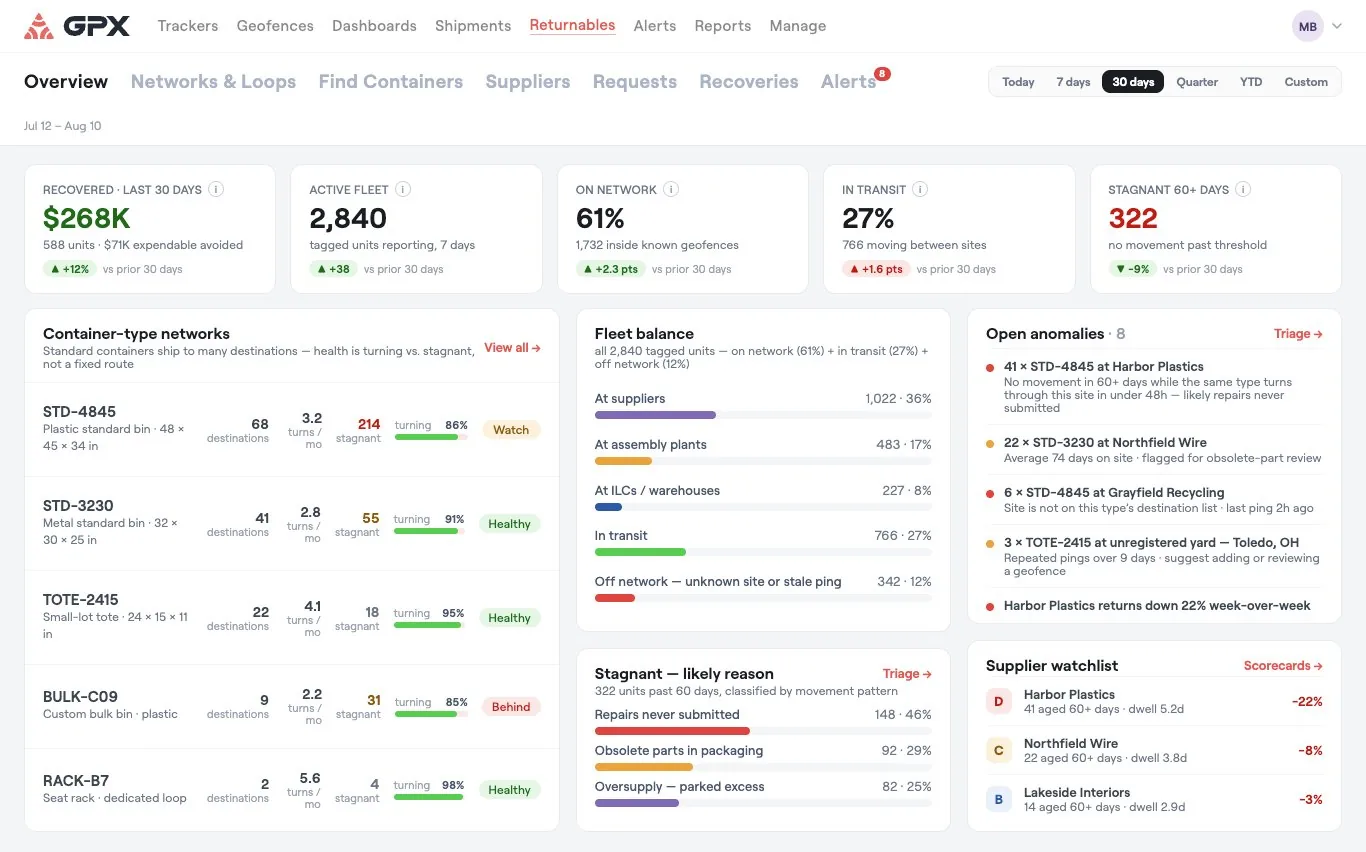
AssetTag Pro — built to ride on every returnable container.
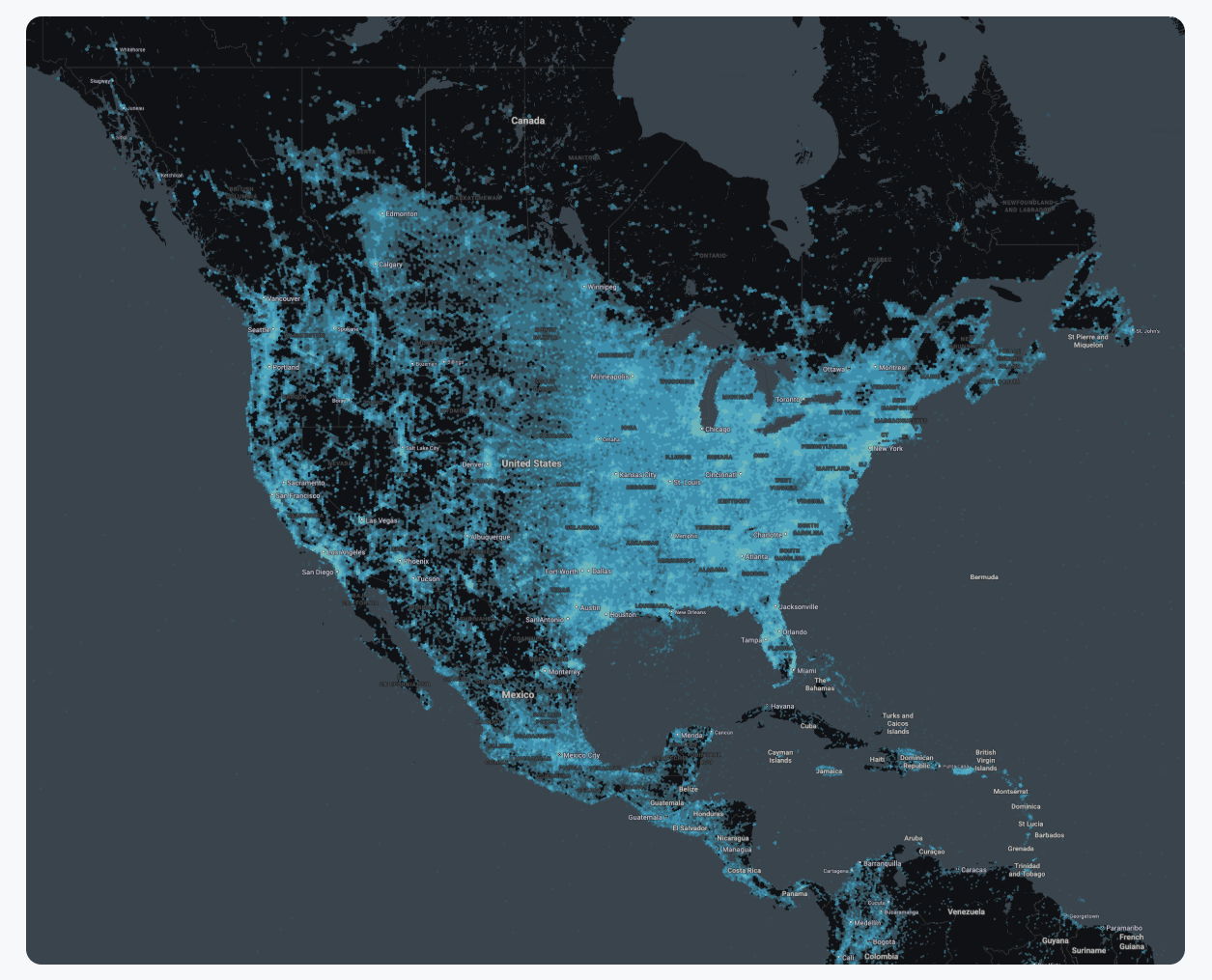
AssetTag Pro is a rugged tracker about the size of an AirTag — 2.8 × 1.8 inches and just over an ounce — that mounts to any container and reports for three to five years, depending on the model, without charging, wiring, or maintenance. It broadcasts passively to a terrestrial network of over 100 million gateways formed by connected devices already in the field, so locations flow to the GPX platform in seconds, indoors and out, with no gateways, readers, or on-site infrastructure to buy.
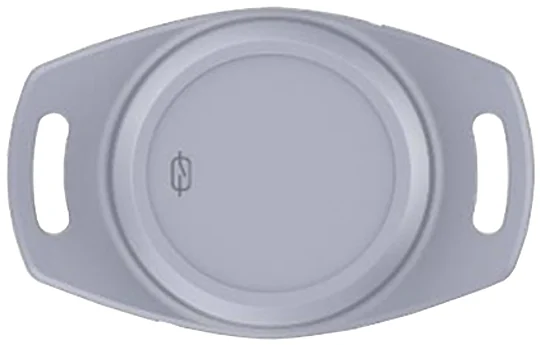
Always on. Always connected. Zero maintenance.
1 · Tag every container. Mount an AssetTag Pro on each tote, rack, bin, or IBC — adhesive or screws, no wiring, no charging. A crew can tag hundreds in a shift, and the tag is reporting before the container leaves the dock.
2 · The network does the rest. Each tag broadcasts a passive signal picked up by millions of phones and devices on the terrestrial network — plus BLE infrastructure where you already have it. No gateways, no Wi-Fi provisioning, no SIM cards, no RFID scanner tunnels to install or maintain.
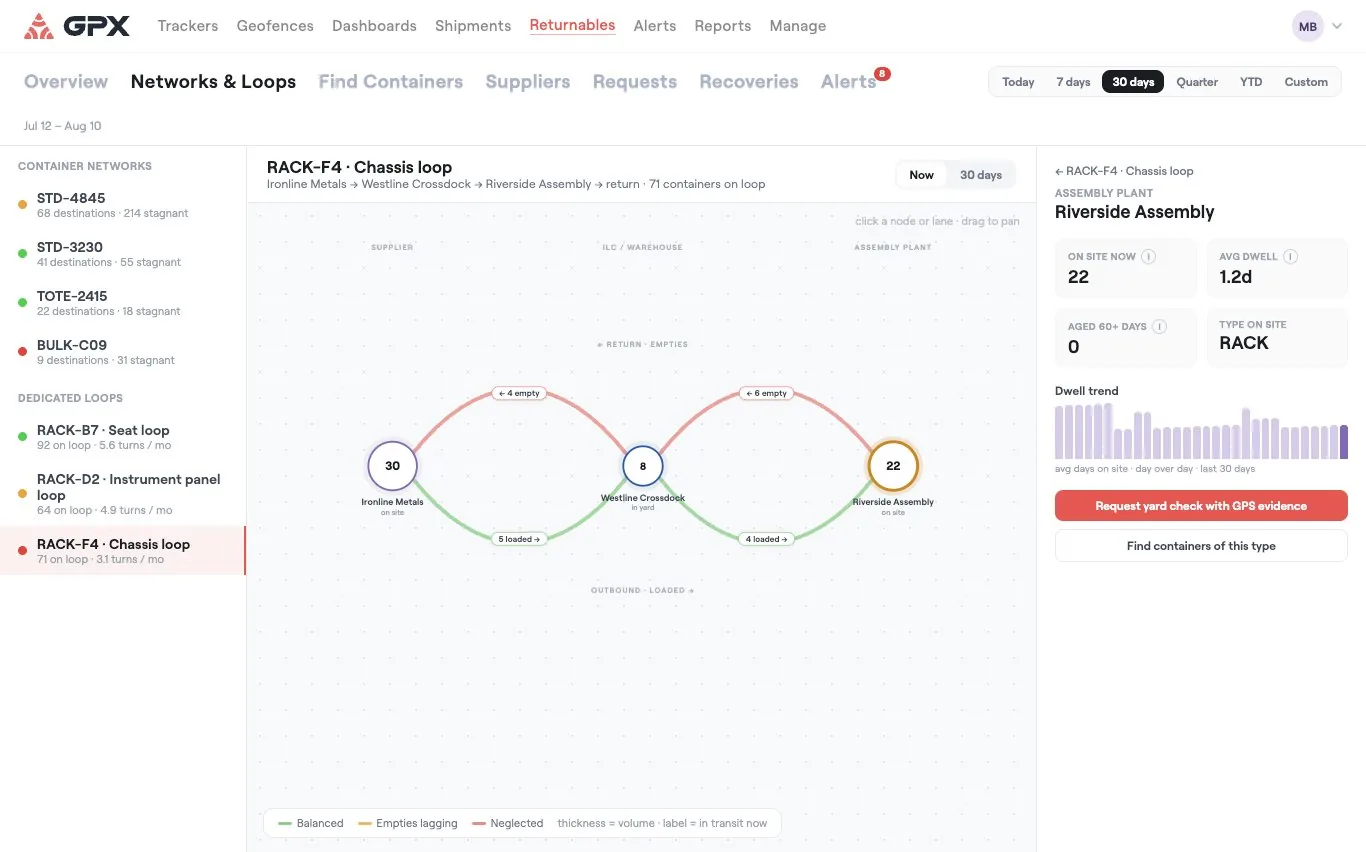
3 · GPX watches the loop. The platform maps every container against its expected cycle: geofenced plants, suppliers, and yards. Dwell-time analytics, unauthorized-movement alerts, and Scout AI flag loss the moment it starts — not at the next audit.
Indoor-to-outdoor handoff, without a blind spot.
Most container systems lose the thread at the dock door. RFID sees a tote only when it passes a portal, and a GPS tracker that works in the yard goes quiet under a steel roof. The gap between those systems is exactly where containers go missing: staged in a warehouse corner, left on a trailer, or parked at a customer site nobody audits.
AssetTag Pro closes that gap with one signal. The same tag reports inside your plant, on the truck, and at the customer's dock, so there is no handoff between technologies to engineer and no second device to buy.
Inside the facility
Indoors, the tag's broadcast is picked up by connected devices on the terrestrial network, plus any BLE infrastructure you already run. Containers stay visible between floors and deep in racking, where GPS cannot reach.
On the road
Once the container is loaded, the same broadcast is carried by the 100M-gateway network along the route. Vehicles fitted with a BLE RoadWired tracker also read every tagged container they carry.
At the customer site
Arrival is logged when the container enters the customer's geofence, and dwell time starts counting. If empties sit past the agreed window, the alert goes out while recovery is still a phone call.
Every way to manage a container pool, compared.
GPS works — at a price that limits it to your most expensive assets. RFID and barcode systems work — inside the four walls you've instrumented. AssetTag Pro covers the whole loop for less than either, with hardware included and nothing to install.
| GPX AssetTag Pro | Legacy GPS tracker | RFID / barcode | Manual audits | |
|---|---|---|---|---|
| Hardware | Included with the program | Purchased per unit | Cheap tags, costly readers | — |
| Cost per container | As low as $45/yr, hardware included | Multiples higher per unit | Reader & integration overhead | Labor at every count |
| Infrastructure required | None | None | Scanners at every checkpoint | Clipboards & spreadsheets |
| Coverage | 100M gateways, indoors & out | Cellular, weak indoors | Only at instrumented sites | Only where you count |
| Location updates | Live, continuous | Throttled to save battery | At checkpoints only | Quarterly, at best |
| Battery / upkeep | Up to 5 years, maintenance-free | Wired or recharged | Reader maintenance | — |
| Geofencing, dwell & theft alerts | ✓ Built in, plus Scout AI | ✓ | ✗ | ✗ |
| Worth putting on everything | Yes | No | Only instrumented flows | That's the problem |
The cost of RFID is everything around the tag.
An RFID tag is cheap. The cost of an RFID container program sits in the read points: fixed portal readers and antennas at every dock door you want to see through, the power, cabling and network drops to each one, installation and read-rate tuning, middleware to turn raw reads into container events, and the upkeep that keeps all of it working. Every new site or supplier you want visibility into means another set of readers, and a container between read points is invisible.
AssetTag Pro moves the whole cost into one line: a per-container subscription, as low as $45/yr, with the hardware included and no read points to buy, install, or maintain. The more sites your containers visit, and the more of those sites you do not own, the wider that gap gets. For a per-asset breakdown, see what RFID really costs per asset.
| Cost driver | GPX AssetTag Pro | Fixed RFID portals |
|---|---|---|
| Read hardware | None, the network already exists | Reader and antennas at each dock door or checkpoint |
| Installation | Adhesive or screw mount, active on placement | Power, cabling and network to every read point, plus tuning |
| Adding a site or supplier | Nothing to add, the tag reports wherever it goes | Another set of readers at that site |
| Software layer | Included in the GPX platform | Middleware to turn reads into container events |
| Ongoing upkeep | Subscription only, battery lasts three to five years by model | Reader maintenance, missed reads, re-tuning |
| Visibility between read points | Continuous, indoors and out | None |
How many containers does your loop actually need?
At a steady shipping volume, the pool you need grows in step with cycle time: every extra day a container spends at a supplier or in a yard is a day of volume you have to own containers for. Enter your own numbers to see what a shorter cycle frees up and what losses cost you each year. Example values are filled in; the results are estimates from your inputs, not a quote.
Cutting the average cycle from 30 to 24 days means a pool of 4,000 does the same work, freeing 1,000 containers worth $100,000. At a 5% annual loss rate you replace about 250 containers a year, or $25,000 in replacement spend.
Everything returnable container management should have been.
The same challenges that made reusable containers a liability — shrinkage, blind spots, bad data — become strategic advantages once every asset in the closed loop reports its own location.
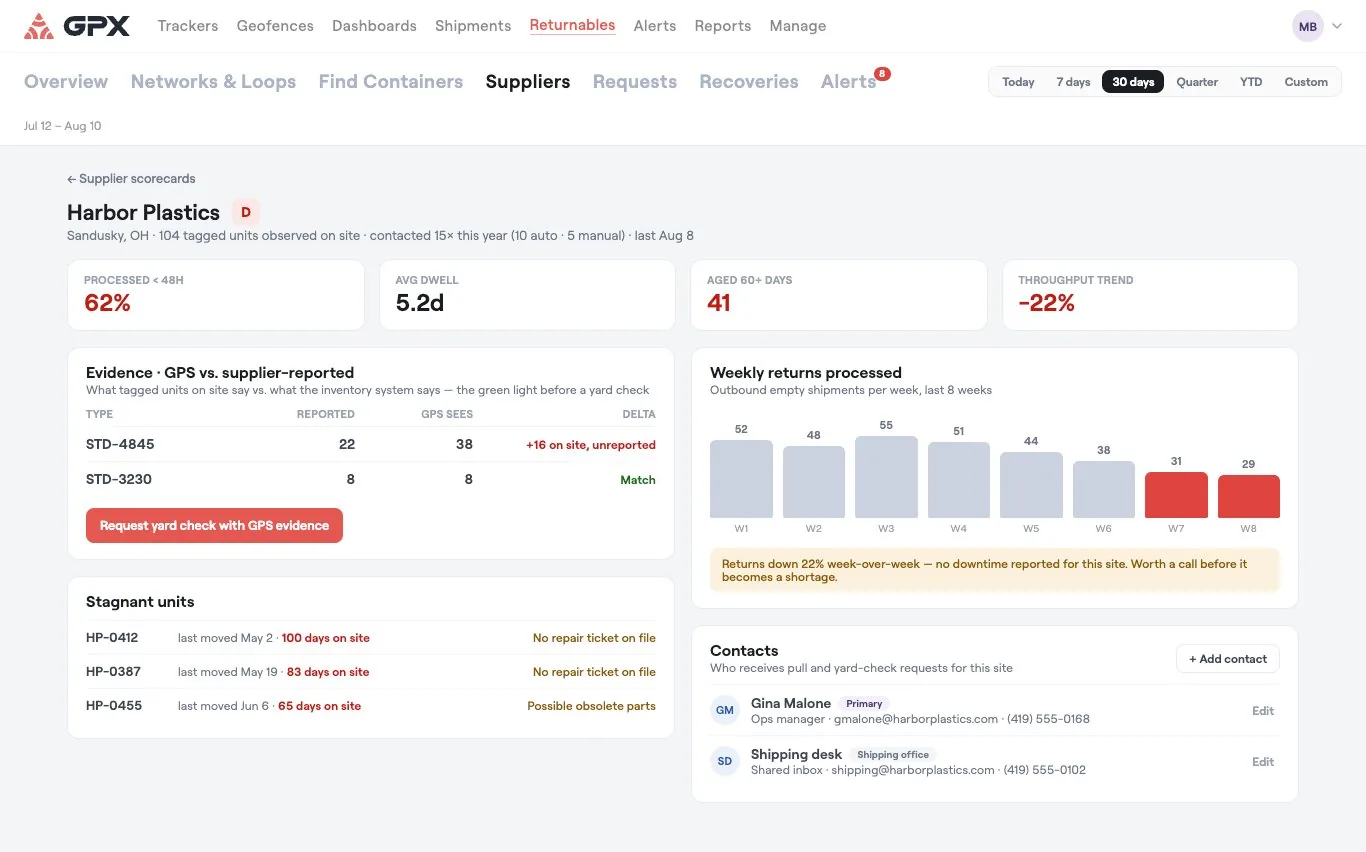
Loss prevention. Geofencing and real-time alerts flag unauthorized movement the moment a container leaves an approved zone — deterring theft and triggering rapid recovery instead of a write-off. GPX recoveries typically land in under 8 hours, and full movement history gives you (and law enforcement) an auditable trail from dispatch to return.
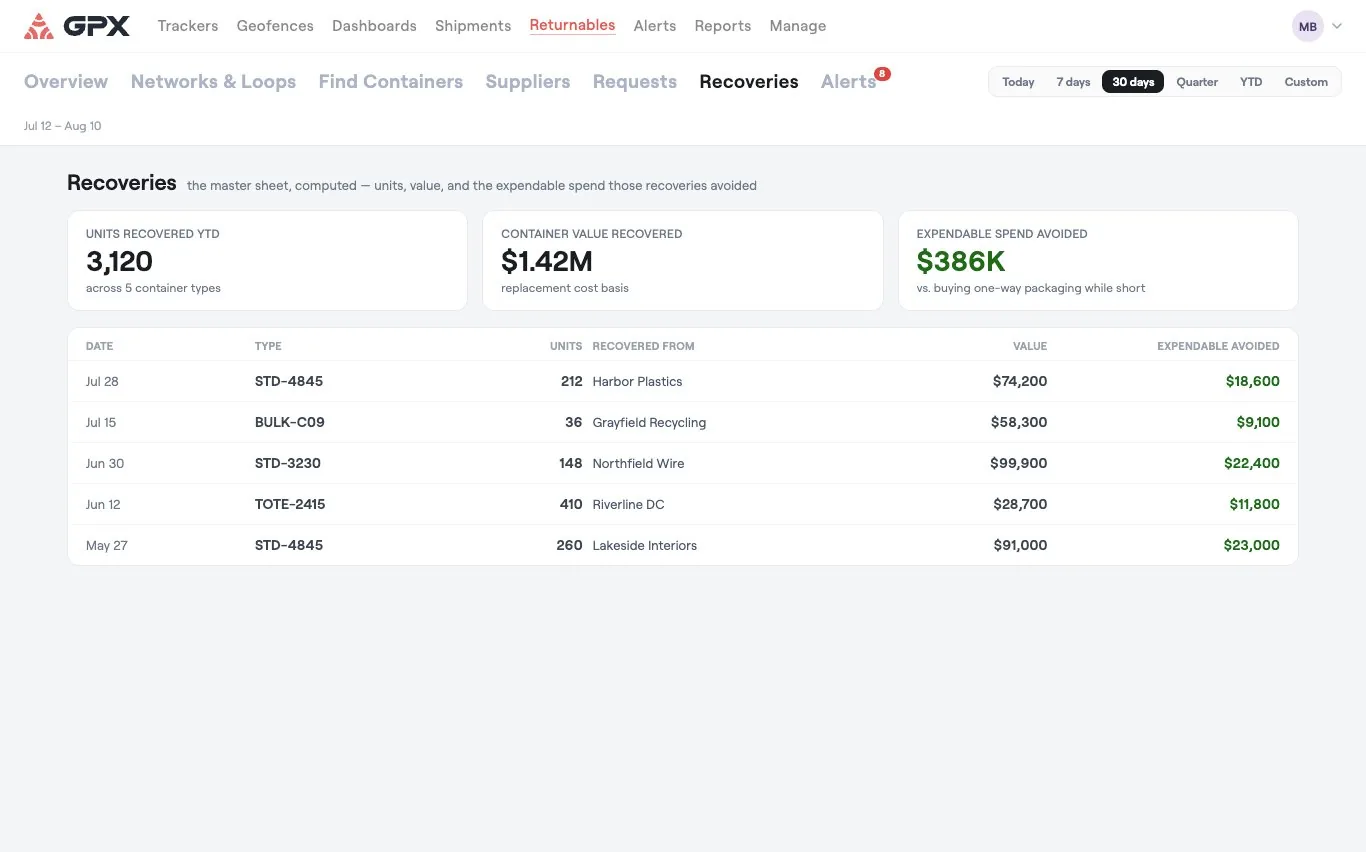
Utilization. See exactly where every container sits and for how long. Dwell-time analytics expose the supplier yards hoarding your totes, empty-container management gets proactive instead of reactive, and faster turnaround means a smaller pool doing more work — without buying another rack.
Data accuracy. Manual container tracking breeds inventory discrepancies. Continuous, automated location data creates a single source of truth for the entire pool — no scan gates missed, no keying errors, no arguments with partners about whose dock the racks are on. Reconciliation becomes a report, not a project.
Visibility. Multi-party, closed-loop logistics is where visibility gaps hide. GPX follows each container from factory to customer and back — yard management, in-transit visibility, and supplier dwell in one live view, with shareable links so partners and carriers see the same truth you do.
Asset longevity. Usage patterns show which assets are over-cycled and which never move. Spot the bins stuck in a corner of a lot for a year, rotate the fleet evenly, and retire assets on data instead of guesswork.
Container data that powers your ERP, WMS & TMS
Location data is only useful where your team already works. GPX integrates with your existing systems via a robust API and webhooks — one unified container data ecosystem, no data silos. It also closes the loop your finance team cares about: what the ledger says you own, against what is actually out there.
Built for the operations that run on returnables.
Racks and dunnage across tiered suppliers
Specialized racks cycling between plants and Tier 1–3 suppliers are the classic returnable container problem: high replacement cost, multi-party custody, chronic hoarding. A national OEM supply chain runs 18× ROI tracking returnables with GPX — cutting dwell at supplier sites and slashing expendable repurchases.
Totes and bins in the closed loop
Reusable plastic containers and heavy-duty industrial bins move between production, warehousing, and distribution daily. Continuous tracking replaces cycle counts, keeps line-side inventory honest, and turns the buffer stock you buy to cover losses back into working capital.
Harvest bins and crates in the field
Seasonal peaks scatter harvest bins across growers, packers, and processors — then they winter wherever they landed. With batteries that last up to five years and no infrastructure at remote sites, AssetTag Pro keeps the whole fleet visible year-round, so next season starts with a full pool instead of a purchase order.
And wherever else pools cycle — GPX tracks returnables for operators across every industry.
Proof from the biggest container pools in the world.
GPX's GPS data and AI platform transformed visibility across our supply chain. We track returnable containers in real time, cut losses and shortages, and manage assets with far more confidence.
We ran the pilot expecting to find a few missing racks. We found four hundred — and recovered most of them. Tagging the whole pool paid for itself before the first quarter closed.
Our totes used to vanish between packers every season. Now dwell alerts tell us exactly who is sitting on them, and the pool comes home. We bought zero replacement containers this year.
Returnable container tracking, answered.
How much does returnable container tracking cost?
AssetTag Pro is as low as $45/yr per container, with the hardware included. You pay a simple annual subscription that covers the full GPX platform — geofencing, alerts, dwell analytics, and Scout AI. No per-ping charges, no infrastructure, no hidden fees. Most customers find tracking the whole pool costs less than the losses they were absorbing; your rate at fleet volume is confirmed on a quick call.
How does GPX prevent returnable container loss?
Every container reports its live location continuously. Geofencing detects unauthorized movement or exits from approved zones and fires instant alerts, so your team responds while recovery is still easy. Detailed movement history supports asset recovery — including with law enforcement — and Scout AI flags anomalies like unusual dwell or silent tags before they become losses. Platform-wide, recoveries typically complete in under 8 hours.
How is this different from RFID or barcode container management?
RFID container management and barcode scanning only see containers at instrumented checkpoints — you know a tote passed a reader, not where it is now. AssetTag Pro reports continuously over a 100M-gateway terrestrial network with no scanners, gateways, or readers to install, so you get real-time visibility between facilities, in transit, and at partner sites you don't control. If you already run BLE infrastructure, GPX integrates with it rather than replacing it.
What kinds of reusable containers can I track?
Every asset type in returnable transport packaging: reusable plastic totes and crates, heavy-duty industrial bins, steel racks and dunnage, IBCs, pallets, and specialty containers. AssetTag Pro mounts with adhesive or screws, survives wash-down and open-deck transit, and runs three to five years on a battery, depending on the model — so it fits assets that cycle hard and live outdoors.
How long does implementation take?
There's no infrastructure phase — no gateways, readers, or site surveys — so deployment is as fast as tagging containers. A pilot is typically live within days of tags arriving, and a full fleet rollout for thousands of containers usually completes in weeks, not months, including geofence setup and ERP/WMS integration.
What ROI should we expect from tracking our container pool?
Container programs are among the highest-ROI deployments on GPX — an average of 18× — because savings stack from multiple directions: eliminated replacement purchases, reduced demurrage and dwell, recovered labor hours from manual audits and searching, and freed working capital from the buffer stock you no longer need. A 20-minute demo maps the math to your pool.
What tools help with regulatory compliance for returnable containers?
Compliance rules such as EPR fees and the EU packaging regulation reward reuse you can prove, so the tool that matters is a record of each container’s trips. GPX logs every departure, arrival and return per container, which gives you trip counts, cycle times and loss rates you can export for audits and reporting. No regulation requires GPS, but the evidence has to come from somewhere, and tag data is the most complete source. Our guide to EPR compliance covers the reporting side in more detail.
What software tracks returnable containers like tanks, totes and pallets?
GPX tracks all of them on one platform. AssetTag Pro mounts on totes, IBC tanks, bins, racks, dunnage and pallets, reports its location without gateways or readers, and runs three to five years on a battery depending on the model, from as low as $45 a year with the hardware included. For pallet-heavy pools, see pallet tracking.
Your containers already know where they are. Now you will too.
Start with a pilot: we ship you AssetTag Pro trackers, you put them on containers, and within days you're watching the whole loop live. No infrastructure. No commitment.