
Shipment tracking solutions for high-value freight: real-time GPS & BLE cargo visibility from a Smart Label you peel and stick.
Every pallet on the map. Every route deviation flagged the moment it happens. The GPX Smart Label is the world's thinnest real-time shipment tracker — a disposable GPS and Bluetooth (BLE) tracking label thinner than a credit card that you tear to activate and stick on cargo, then it reports for up to 60 days over a 100-million-gateway network. GPX shipment tracking software draws the route corridor, watches for cargo theft and delays, and raises an exception when something goes wrong.
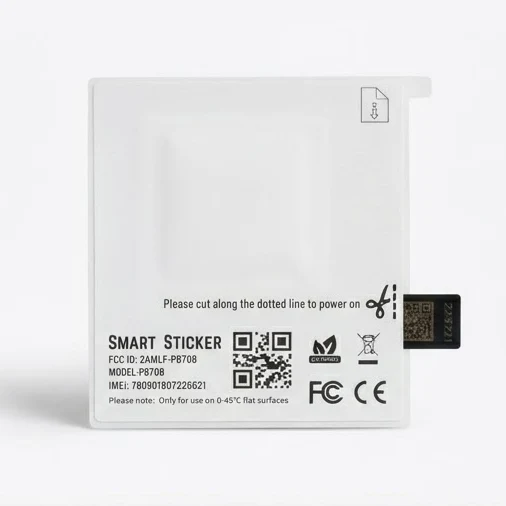
















Real-time cargo tracking used to be too costly for every load. Not anymore.
Between the dock and the delivery, most shipments disappear into a gap: a carrier's status update, a phone call, a scan at the other end. That gap is where cargo theft happens, where delays go unnoticed until a customer calls, and where "in transit" becomes an answer nobody can verify.
Legacy GPS trackers could close the gap — but unlike disposable GPS trackers, they were built to be recovered, recharged, and shipped back. At per-shipment volume, the reverse logistics cost more than the visibility was worth. So operators tracked a handful of loads and hoped about the rest.
The GPX Smart Label changes the math: a tracker thin enough to be a label, low-cost enough to put on every pallet, and disposable — nothing to charge, nothing to get back. Paired with the GPX Shipments platform, every load gets a planned route, a live position, and an exception the moment either one goes wrong.
A shipment tracker that's really a sticker.
The Smart Label is the world's thinnest real-time shipment tracker: thinner than a credit card, about 0.15 oz, printed like a shipping label. Tear it to activate, press it onto a carton, pallet, crate, or coil, and it begins reporting — no SIM card, no charging, no pairing, no installer.
It reports over the same terrestrial network of 150 million gateways that powers GPX's asset tracking: connected devices already moving through warehouses, trucks, ports, and city streets relay the label's position to the platform. That's how a sticker delivers live location for up to 60 days — long enough for any domestic lane and most international ones — and why it works across truck, rail, air cargo, and ocean legs wherever those gateways are.
Need the same visibility on something you want back — a returnable rack, a trailer, a tool crate? The AssetTag Pro is the reusable sibling, with three to five years of battery depending on the model, on the same network and the same platform. Shipments needing temperature or humidity monitoring pair with AssetTemp.
Cargo theft prevention starts with a route corridor. Know the second the freight leaves it.
Every GPX shipment carries a planned route and a corridor around it — the width you choose, set once as an account default. While the label reports inside the corridor, nothing happens. The moment it reports outside, a Route Deviation exception fires at high severity, the shipment turns red on the map, and the right people are notified by text, email, or webhook.
Cargo theft rarely looks like a heist; it looks like a trailer that took a different exit. Corridor alerts catch the different exit — while the freight is still minutes away, not days. And because the label keeps reporting after the alert, recovery becomes a procedure: a movement trail from the origin dock to wherever the freight sits now, evidence law enforcement can act on.
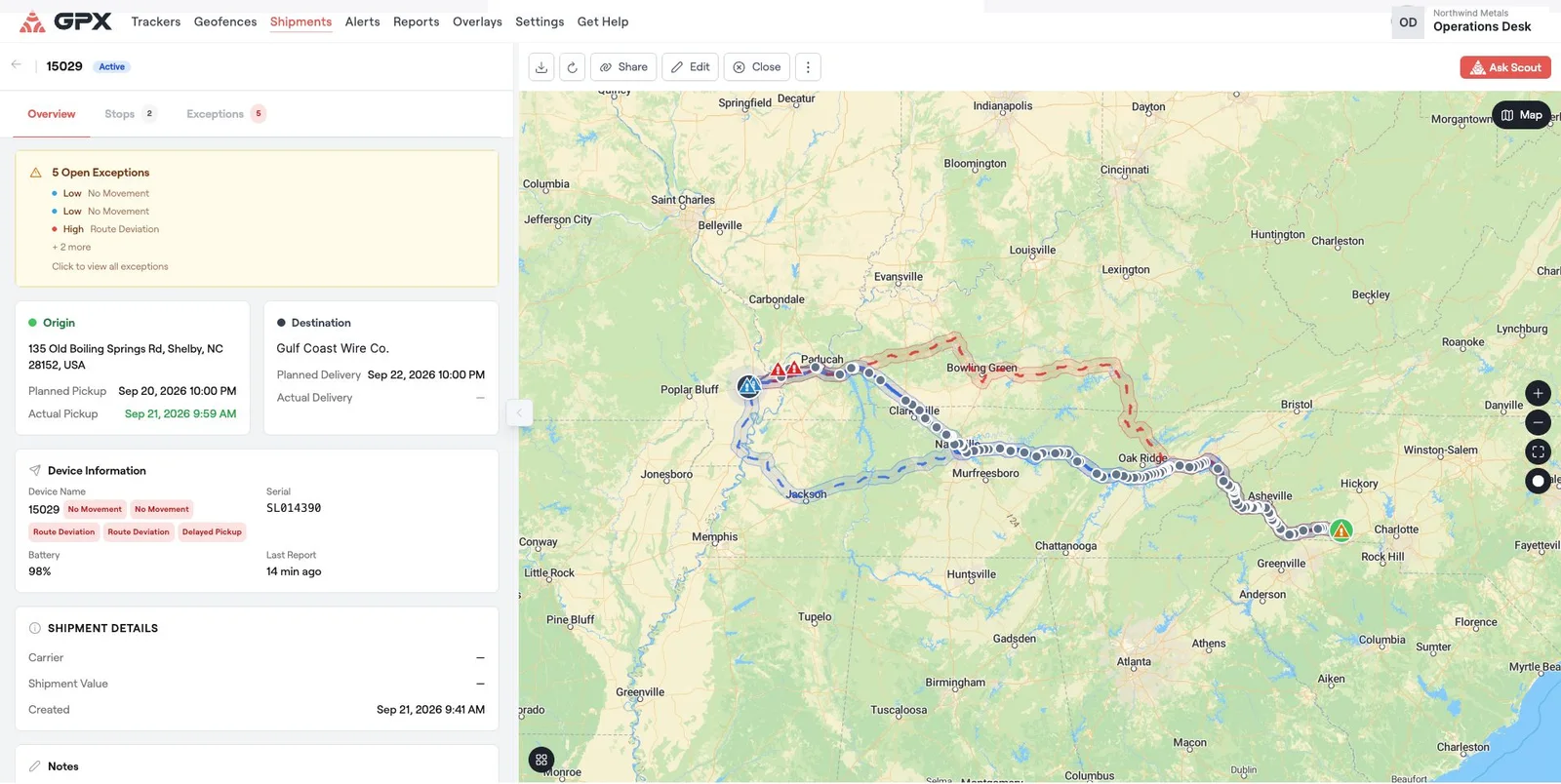
Manage the shipments that need you. Ignore the ones that don't.
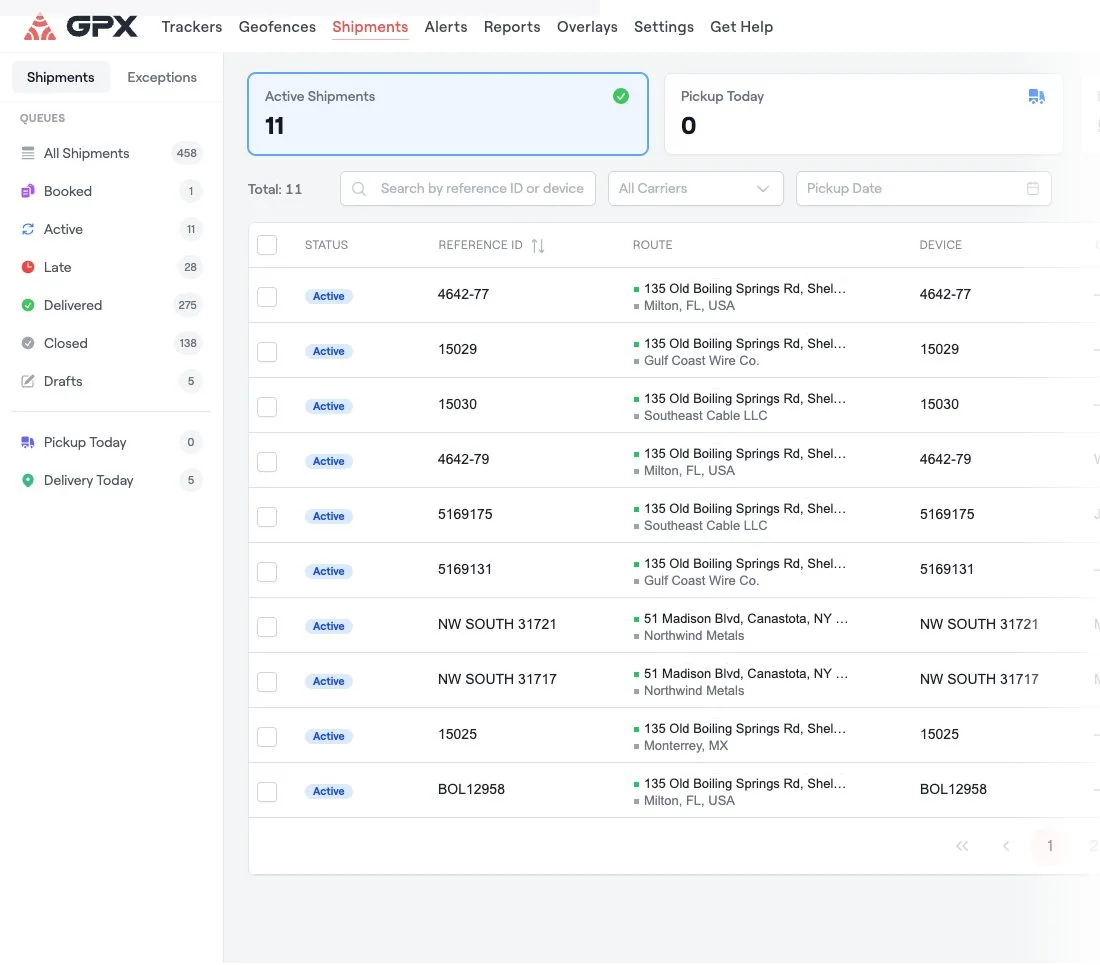
A wall of moving dots isn't visibility. The GPX Shipments workspace is built around queues and exceptions: Booked, Active, Late, Delivered — plus Pickup Today and Delivery Today so the morning starts with the loads that matter today. Each exception carries a severity, a plain-language reason, and a one-click close with feedback so the rules learn what your team considers real.
Every rule runs automatically against the label's reports. No one watches a screen; the screen tells you.
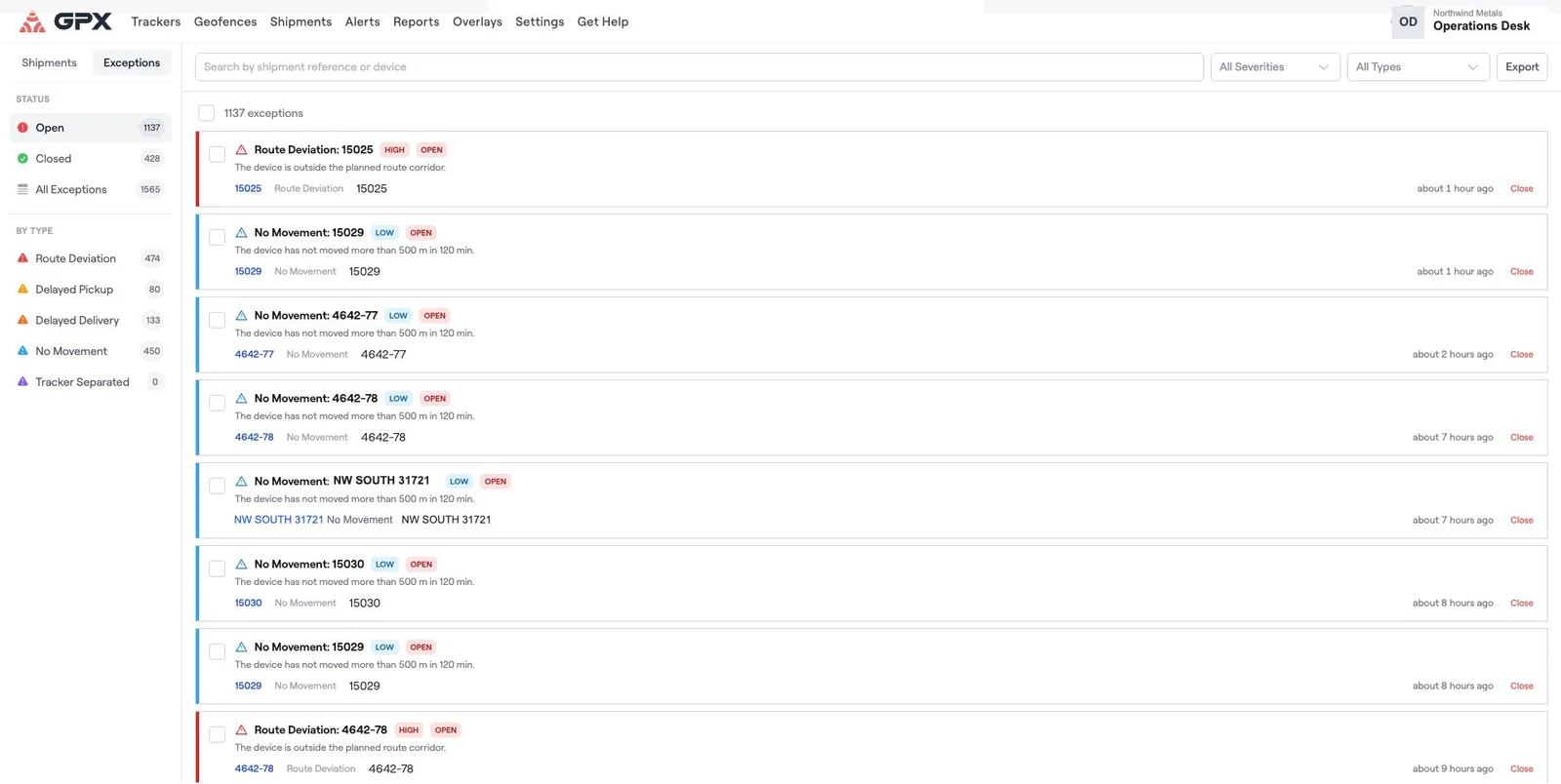
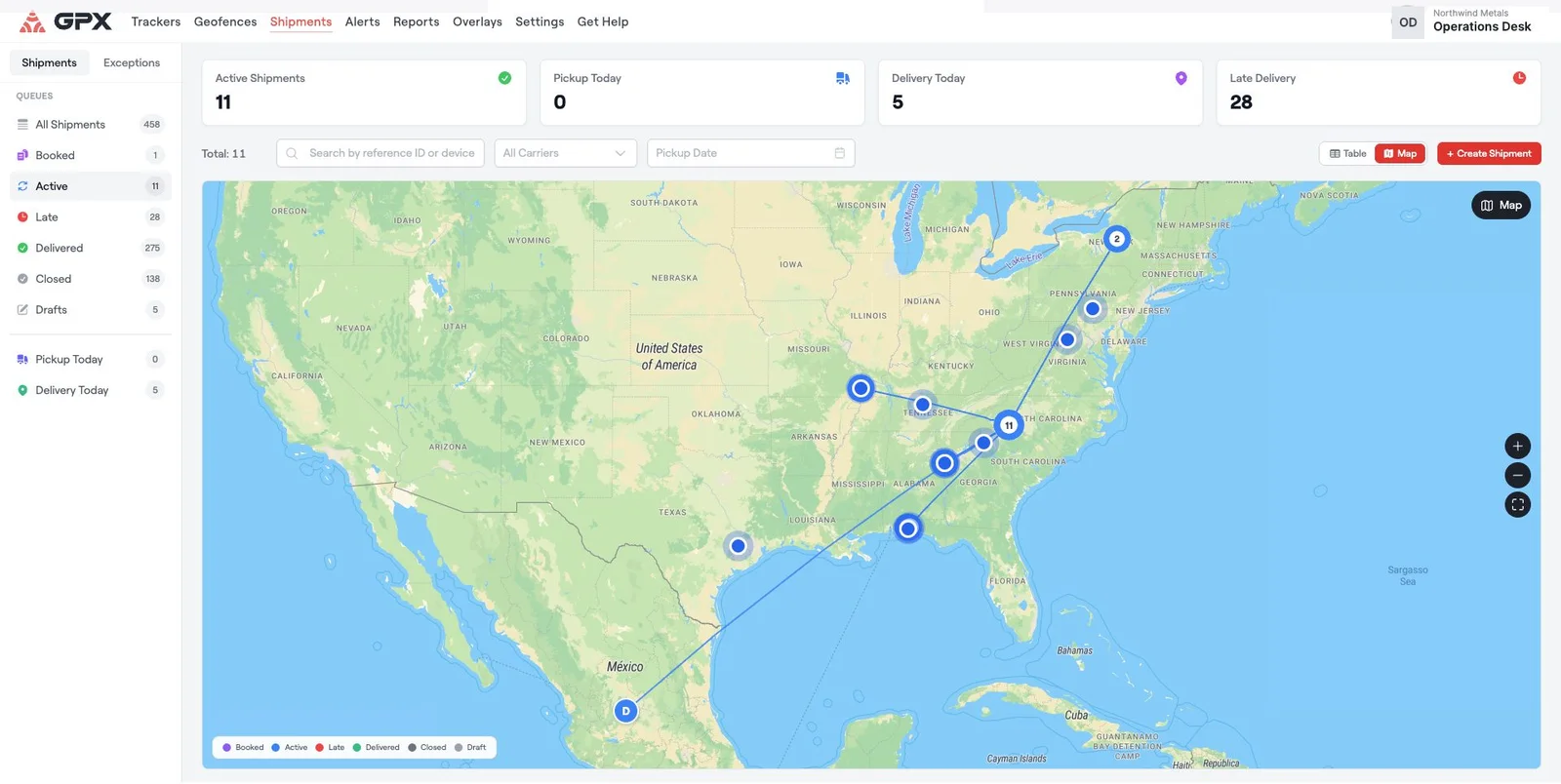
One shipment tracking system, from the first label to the whole network
Smart Labels on outbound freight, AssetTag Pro on the containers coming back, wired trackers on the fleet — all reporting into the same map, alerts, and Scout AI.
Proof from the dock, the lane, and the receiving bay.
GPX's GPS data and AI platform transformed visibility across our supply chain. We track returnable containers in real time, cut losses and shortages, and manage assets with far more confidence.
Shipment tracking, answered.
How can real-time tracking reduce my shipping costs and improve ROI?
Three ways. First, theft and loss: a shipment with a live position and a corridor alert is recovered, not written off — platform-wide, off-route freight typically comes home in under 2 hours. Second, delays: Delayed Pickup and Delayed Delivery exceptions surface problems while there is still time to re-route, re-book, or warn the customer, cutting expedite fees and chargebacks. Third, labor: the exceptions queue replaces check calls and carrier portals, and public share links replace "where is it" emails. Because the Smart Label is low-cost and disposable, the visibility costs a fraction of the freight it protects.
What data points can your shipment tracking system provide beyond just location?
Every shipment carries a planned route and corridor, planned and actual pickup and delivery times, the carrier and your reference IDs, and the full trail of reports from the label. From that the platform derives exceptions — Route Deviation, Delayed Pickup, Delayed Delivery, No Movement, and Tracker Separated — each with severity and timestamps, plus device battery and last-report age. Shipments that need temperature or humidity readings pair with AssetTemp on the same platform.
How does the Smart Label work without a SIM card or charging?
The Smart Label is a Bluetooth (BLE) tracker thinner than a credit card. Instead of a cellular modem, it reports through a terrestrial network of 150 million gateways — connected devices already in warehouses, trucks, ports, and cities relay its position to GPX. That is why it needs no SIM, no charging, and no installation, and why a single tear-to-activate label reports for up to 60 days. When the shipment arrives, the label is recycled with the packaging; there is nothing to send back.
How does AI or predictive analytics enhance my shipment tracking capabilities?
Scout AI sits on top of every shipment. It geofences your origins and destinations in seconds, and you can ask it plain-language questions from any shipment or queue — which loads delivering today have open exceptions, which carrier deviates most often, which lane runs late. Exception feedback ("real issue" or "not an issue") teaches the rules what your operation considers normal, so the queue gets quieter and more accurate over time.
How does your system handle fluctuating shipment volumes or seasonal peaks?
Because the Smart Label is a disposable label rather than a device you own and recover, scaling up is a matter of ordering more labels — no hardware pool to size, charge, or chase. Shipments can be created in bulk or from your TMS via API, and the queues (Pickup Today, Delivery Today, Late) keep the workload legible whether you are running fifty shipments or five thousand.
Can your system integrate with my existing ERP or TMS platforms?
Yes. Shipments can be created and updated through the GPX API with your reference IDs and carrier attached, and exceptions, pickups, and deliveries flow back through webhooks. That keeps GPX as the source of live truth while your TMS, ERP, or WMS stays the system of record. Public share links give customers and carriers a live view of a single shipment without any integration at all.
Every pallet on the map. Every detour flagged. Nothing to send back.
Start with a pilot: we ship you Smart Labels, you stick them on the next outbound loads, and within days you're watching your freight move — routes, corridors, exceptions and all.