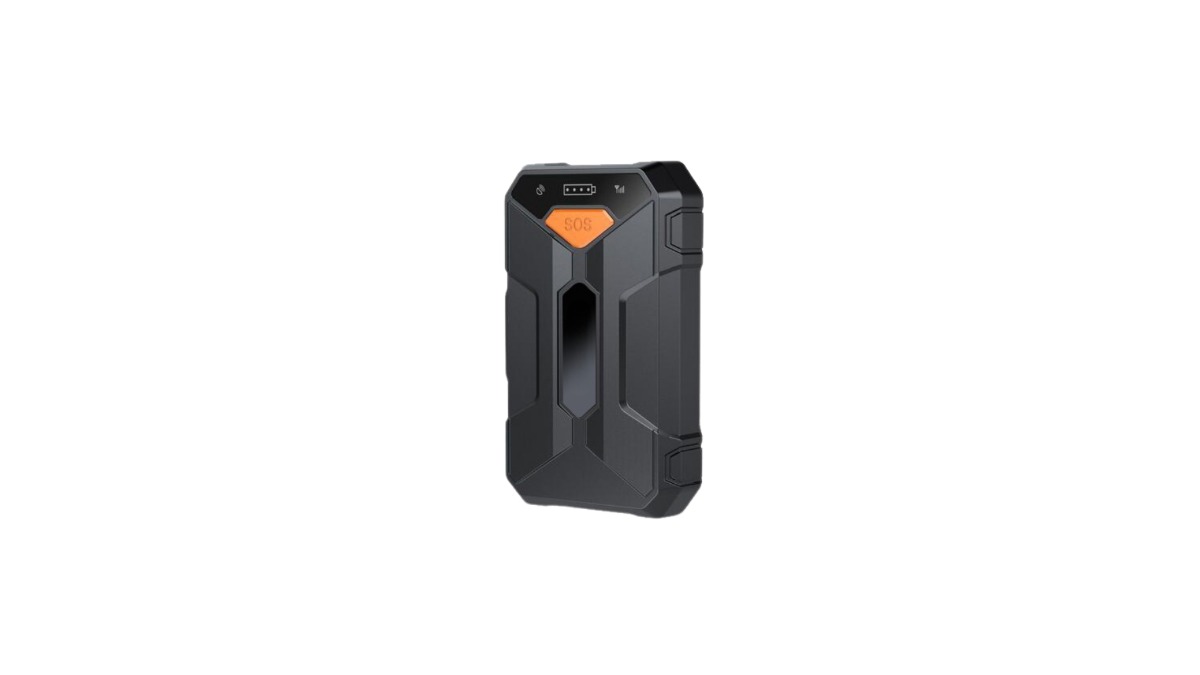


Every asset tracking decision starts with one question: what does the tag cost? A passive RFID tag costs 7 to 15 cents for a bare inlay in high volumes. That price deceives buyers. The tag is the smallest piece of a far larger cost. Judging a system by tag price alone ignores the infrastructure that makes those tags work, which is why the real RFID vs BLE cost question matters more than any sticker.
The real expense sits in the readers, antennas, cabling, and software. A complete RFID portal costs thousands of dollars per read point, and full deployments for large facilities reach six or seven figures, as logistics research documents. That reality rewrites the economics. It makes the sticker cost per asset a poor measure of what you actually pay.
Underestimate these costs and you get budget overruns, stalled projects, and the same old problems: lost equipment and idle assets. A sound decision compares the all-in cost per asset. That means hardware plus the hidden costs of installation and maintenance across the system’s full lifecycle.
Why Tag Price Alone Is a Misleading Metric
A tag’s sticker price is not the price of a solution. An asset tracking system combines tags, data-capture hardware, software, and services. The real number comes from Total Cost of Ownership (TCO): every expense from purchase to daily operation.
Hidden costs inflate the estimate fast. They include:
- Infrastructure: readers, gateways, antennas, and the servers that run the software.
- Installation: labor to run cables, mount hardware, and configure read zones.
- Software: middleware to filter data, platform licenses, and integration with your ERP or WMS.
- Maintenance: replacing failed hardware, managing battery life, and ongoing software support.
A $0.10 passive tag that needs a $5,000 dock-door portal is not a ten-cent solution. You find the true RFID vs BLE cost by dividing total system cost by the number of assets you track.
Breaking Down Passive RFID Total Cost of Ownership
Passive RFID works by having a reader beam a signal that powers the tag, which reflects back its unique ID. The tags cost little. The infrastructure to read them does not.
A full passive RFID cost breakdown includes:
- Tags: under $0.10 for paper-faced tags at high volume, up to several dollars for ruggedized or on-metal tags.
- Readers: fixed readers run $1,000 to $3,000 before antennas. Handheld readers for manual scanning start at $2,000.
- Antennas and cabling: each read point needs one or more antennas ($100 to $500 each) plus coaxial cabling, which adds hundreds of dollars per location.
- Portals: an engineered choke point, like a dock door or conveyor reader, bundles multiple readers, antennas, and light stacks. Installed, these run $5,000 to more than $20,000 per portal.
- Software and integration: raw RFID data is noisy. You need middleware to clean it, for example to read direction of travel, plus a platform to manage it. Integrating that into your core systems is a project on its own.
This model front-loads heavy capital spending on infrastructure. More read points mean higher cost.
The Real Cost of Bluetooth Low Energy (BLE)
BLE asset tracking uses small, battery-powered tags that broadcast a signal. BLE gateways pick it up, and so do everyday devices like smartphones and tablets. That flexibility beats RFID on deployment.
A full BLE cost breakdown includes:
- Tags: BLE tags cost more, $5 to $30 each, because each one is an active device with its own battery and processor. Many add sensors for temperature, humidity, or shock.
- Data readers (gateways): fixed BLE gateways cost less than RFID readers, often $100 to $500. Modern systems skip dedicated gateways entirely. They use phones, vehicle trackers, or other BLE-tagged assets as a mesh network that relays location to the cloud. This slashes infrastructure cost. See our guide on gateway-less BLE vs. RFID.
- Battery replacement: active tags need battery swaps. The GPX AssetTag ships with a 4-year replaceable battery, but factor the replacement labor into your TCO.
- Software platform: most BLE solutions run on a SaaS model with a recurring per-asset fee. The GPX AssetTag fee, as low as $45/yr per device, covers platform access, data, and support, which keeps costs predictable.
The BLE model leans toward operating expense with low upfront capital, especially in gateway-free setups.
Cost Per Asset at Scale: A 3-Year TCO Comparison
To see the true cost, model it over time and across scales. The table below estimates 3-year TCO for tracking 1,000 assets across technologies. It shows how infrastructure changes the math. The sticker cost per asset looks low, but the total tells another story.
| Approach | Tag Cost (Each) | Infrastructure Needed | Install Cost | Est. 3-Yr TCO (1,000 Assets) | Best Fit |
|---|---|---|---|---|---|
| GPX AssetTag (BLE) | $0 (incl. in sub) | None (Gateway-free) | None | $135,000 ($45/yr x 3) | Mobile assets, no infra budget |
| Passive RFID | $0.50 to $5 | Fixed readers, antennas, portals | High ($20k+) | $100,000 to $250,000+ | Fixed choke points |
| Active RFID | $20 to $100 | Proprietary readers | Medium-High | $200,000 to $500,000+ | High-value assets, RTLS |
| Cellular GPS Tracker | $50 to $200+ | None (uses cell network) | Low | $200,000 to $350,000+ | High-value remote assets |
| Barcode / QR Scan | $0.10 (label) | Smartphones, handheld scanners | Low | $75,000 to $150,000+ | Manual check-in/out |
Working The Math: 100, 1,000, and 10,000 Assets
Here is how cost per asset shifts with scale.
- At 100 assets: RFID’s fixed infrastructure cost is prohibitive. A $50,000 RFID system for 100 assets is $500 per asset before a single tag. A gateway-free BLE system stays a simple per-asset subscription and wins on economics.
- At 1,000 assets: this is the crossover point. That same $50,000 RFID system now runs $50 per asset for infrastructure, plus tags and software. The RFID vs BLE cost gets competitive, though BLE keeps its flexibility edge.
- At 10,000 assets: RFID infrastructure amortizes to $5 per asset. The per-asset cost drops low, but only if every asset passes through those fixed read points. For assets that roam outside those zones, BLE reads them anywhere and delivers visibility RFID cannot match at any price.
What RFID Costs Per Dock Door, and When Tags Break Even
Tag price is the number vendors quote. The number that decides an RFID budget is how many read points you need, because passive tags are only seen when they pass a reader. Every dock door, conveyor and yard gate that needs visibility needs its own portal, and every partner site in the loop needs its own as well.
Using the installed portal range above, $5,000 to more than $20,000 per read point, the infrastructure bill scales with doors and sites, not with assets. A tag that reports on its own, such as AssetTag Pro at as low as $45 a year with the hardware included, scales the other way: with the number of assets, and nothing at the doors.
| Scenario (illustrative) | Portals needed | RFID portal spend | Same spend in tag-years at $45/yr |
|---|---|---|---|
| 1 site, 4 dock doors | 4 | $20,000 to $80,000+ | 444 to 1,777 tag-years |
| 1 site, 12 dock doors | 12 | $60,000 to $240,000+ | 1,333 to 5,333 tag-years |
| 3 sites, 8 doors each | 24 | $120,000 to $480,000+ | 2,667 to 10,667 tag-years |
Read the last column as a breakeven: a 12-door site spends as much on portals as it would cost to tag 1,333 assets for a year at the low end, before any tags, software or maintenance. If your pool is smaller than that, or it spends most of its life at customer and supplier sites where you cannot install portals, the tag model costs less and sees more. If the pool is large, stays inside one facility and passes the same doors every day, RFID can still win on cost.
This is the reason returnable container tracking and pallet tracking programs usually start with tags: the loop crosses sites nobody will wire.
Key Challenges of Costing an Asset Tracking Program
An accurate budget means anticipating costs beyond the hardware quote. Operations and finance leaders have to account for factors that derail projects.
- Hidden installation and integration costs: running power and data cables to readers, plus the IT/OT project to connect the platform to your ERP or WMS, often costs more than the hardware.
- Environmental interference: radio waves react to metal and liquids. An RFID system that shines in a lab posts low read rates in a warehouse full of metal racking and liquid-filled containers, which forces expensive tuning.
- Tag attachment and survival: how does the tag attach, and does it survive pressure washing, impacts, and extreme heat or cold? Failed tags and re-tagging drive hidden operating costs.
- Battery replacement at scale: for active BLE systems, what is the plan to swap thousands of batteries every few years? A truck roll to find and service one tag adds up fast. Pick solutions with long, predictable battery life.
- Data management and security: thousands of tags generate massive data streams. Storing, filtering, and securing that data deluge, then turning it into decisions, is a recurring cost that IT and OT teams carry long after install.
- Scaling from pilot to enterprise: a 100-asset pilot that works can hit unforeseen hurdles at 10,000 assets, from network capacity to data integration to support load. Budget for the jump, not just the proof of concept.
- Change management and user adoption: a new system rewrites daily workflows. Training staff and overcoming resistance is the difference between a system that generates returns and one that gathers dust.
A successful deployment depends on a partner who knows these realities and gives you a transparent TCO model, not just a cheap tag.
How to Choose Between RFID and BLE for Your Operation
The right choice comes down to your operation, not the price tag. Neither technology wins everywhere. Each solves a different problem.
When RFID Genuinely Wins
Passive RFID is the right call when high volumes of items move through fixed, predictable paths. It excels in:
- Controlled choke points: reading thousands of tagged items as they pass a dock door, ride a conveyor, or enter a warehouse.
- Item-level retail: managing apparel or electronics inventory where near-perfect in-store accuracy matters.
- Tool cribs and file rooms: checking items in and out of a specific room automatically.
- No-battery mandates: settings where battery replacement is not feasible and passive energy harvesting is enough.
When BLE Is the Clear Winner
BLE offers more flexibility and a lower barrier to entry. It fits dynamic operations and assets that do not follow a script.
- Mobile and dispersed assets: tracking equipment, tools, or returnable containers across job sites, yards, or distribution centers.
- No new infrastructure: when you cannot or will not run cables and mount fixed readers, gateway-free BLE uses what you already have.
- Last-seen location: knowing an asset’s last-known spot anywhere, not just the last time it passed a portal. That is a core difference between BLE and GPS tracking.
- Sensor data: monitoring temperature, humidity, or impact, since BLE tags carry these sensors easily.
Ready to move past misleading tag prices and see the real total cost of ownership? GPX’s gateway-free BLE technology delivers operational clarity without the heavy infrastructure burden. Explore our AssetTag solution to see how.
Frequently Asked Questions
What is the main cost difference between passive RFID and BLE?
The difference is infrastructure. Passive RFID uses cheap tags but demands expensive fixed readers and portals. BLE uses pricier tags but runs on low-cost gateways, or no dedicated gateways at all, using devices like smartphones.
How much does RFID cost per dock door?
An installed RFID portal typically runs $5,000 to more than $20,000 per read point, covering readers, antennas, cabling and installation. Multiply by the doors and sites that need visibility; that total, not the tag price, is the real infrastructure cost.
How do you calculate the ROI for an asset tracking system?
Weigh the full TCO against the value it returns. Add up savings from reduced asset loss, higher equipment utilization, less time spent searching for gear, and fewer emergency replacement purchases. When those annual gains exceed the yearly cost per asset, the system pays for itself, and a gateway-free BLE model reaches that point faster because upfront capital stays low.
Why is gateway-free BLE cheaper to deploy?
Gateway-free BLE removes the biggest upfront cost: buying, installing, and maintaining a network of fixed readers. It uses existing devices like smartphones or vehicle trackers as the network, which cuts capital spending to nearly zero.
Is RFID or BLE better for tracking tools on a large construction site?
BLE wins on a construction site. Tools and equipment move unpredictably across a wide, open area with no fixed choke points. A last-seen location from a mobile device or vehicle beats trying to blanket a job site with RFID portals.
Can you track assets globally with BLE?
Yes, indirectly. A BLE tag broadcasts only about 100 meters. But when that tag rides an asset also tracked by a cellular GPS device, like a truck or container, the system reports the asset’s location anywhere in the world. This multi-sensor approach powers modern asset tracking platforms.
Author: Mitch Belsley