
Buy-here-pay-here dealers, subprime auto lenders, and rental yards hand over keys every day. Each handoff is a bet that the borrower pays on schedule and returns the asset intact. When payments stop and calls go unanswered, you need a way to keep the vehicle from moving again.
A tracker tells you where the car sits. It does not stop a delinquent borrower from driving off. The National Insurance Crime Bureaucounted 1,020,729 vehicle thefts in the United States in 2023, up from 1,008,756 in 2022.
A starter interrupt device closes that gap. The relay keeps the engine from cranking, and the tracker tells your recovery agent where to send the tow truck.
The Short Version
- A starter interrupt is a relay wired into the ignition circuit. It blocks the engine from cranking.
- Most systems sound in-cabin warning tones as the payment due date gets closer.
- The relay blocks the next start only. It never shuts down a moving vehicle.
- Pairing the relay with a GPS tracker gives you the lock and the coordinates together.
What High-Risk Lending and Rental Actually Cost You
Default turns an asset into a liability fast. Mitigating auto loan default starts with physical control of the vehicle, because without it a missed payment becomes a write-off.
- Deep delinquency:High-risk borrowers skip calls, letters, and texts. Dealers need a mechanism that restarts the conversation before the collateral disappears.
- Asset flight:Vehicles tagged for repossession move. Once one crosses a state line, your agent is chasing a target through a second jurisdiction.
- Skip tracing hours:Borrowers who sublet the car or shuffle it between addresses turn a repossession into an open investigation. Every day of skip tracing adds agent hours to a loan that already stopped paying.
- Unbilled rental hours:Renters keep machines past the contract end date. Hours and miles pile up on an unpaid invoice while the yard absorbs the depreciation.
- Collateral you never recover:A vehicle that never comes back lands twice, first as a charge-off on the loan and then as a higher cost of insuring and funding the rest of the portfolio.
- Risky field recovery:Pulling a running vehicle invites confrontation. A car that will not start comes back on a flatbed, quietly and cheaply.
How a Starter Interrupt Device Works
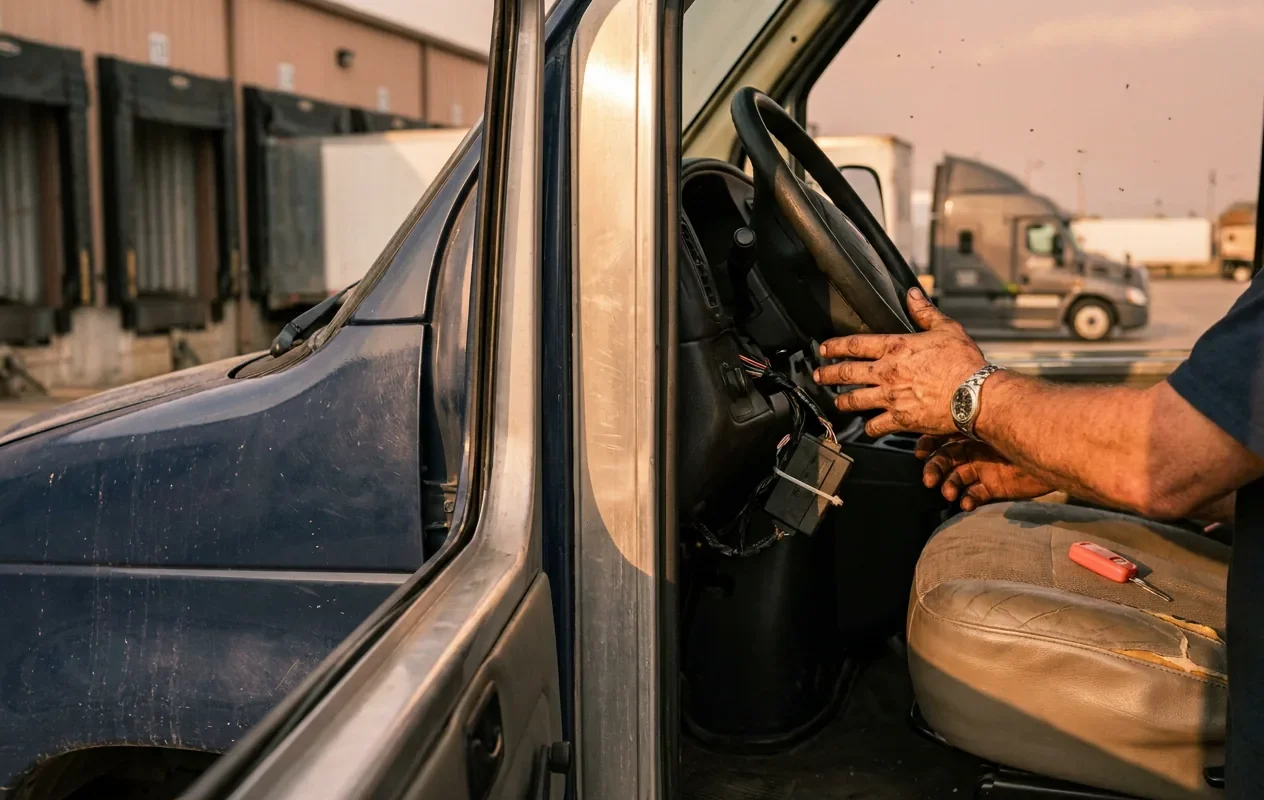
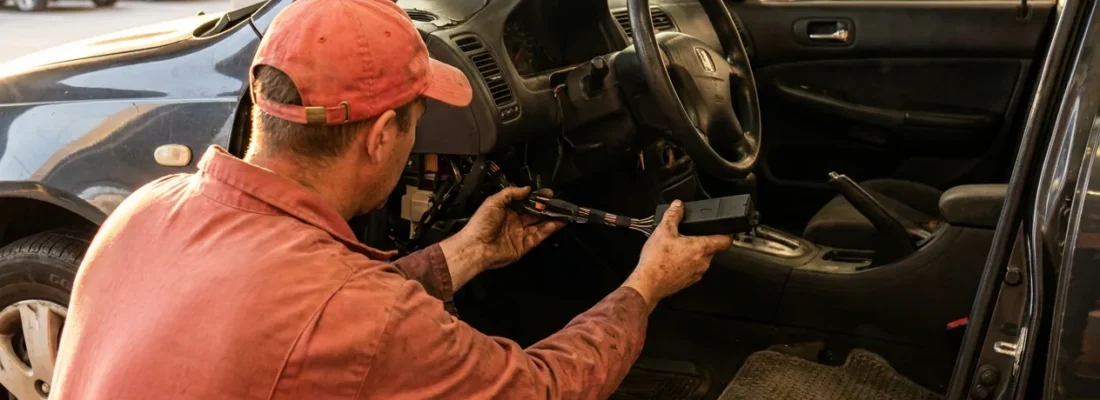
A starter interrupt device, sometimes sold as a GPS kill switch, is an IoT-enabled starter interrupt relay spliced into the vehicle starter circuit. When the lender sends a disable command, the relay opens the circuit. The driver turns the key, and nothing cranks.
Most installs include a payment reminder module. It beeps inside the cabin, and the tones repeat more often as the due date approaches. Borrowers get an alert they cannot miss.
Payment clears the tones. The dealer sends a wireless command and the cabin goes quiet. Miss the deadline and the relay opens the starter circuit until the dealer restores it.
Safety Limits Built Into Remote Disablement
Lenders ask about liability first, and the answer sits in the hardware design. The relay blocks the next engine start and nothing else.
Send a disable command while the borrower runs 70 on the interstate and the engine keeps running. The car drives normally until the driver parks and shuts it off.
The relay engages after that shutdown. The next crank attempt fails. The borrower keeps control of the vehicle on the road, and you keep control of the collateral in the driveway.
Compliance Rules Vary by State
State law drives how you use starter disable technology. Some states regulate whether and how a lender can remotely disable a vehicle, including notice and timing. The requirements differ, so check the rules in every state you lend in.
Disclose the device in the finance contract. The borrower signs an addendum acknowledging the tracker and the ignition cutoff, and that addendum spells out when you will use it. Our guide to GPS tracking for BHPH dealerscovers the operational side in more detail.
Run your procedures past qualified counsel. State rules reach everything from emergency override codes to privacy boundaries. Clean paperwork protects the loan and your right to recover the asset.
Do All Financed Cars Have Tracking Devices?
No. Installation depends on the lender and the credit risk behind the loan.
Banks writing prime loans to high-credit buyers rarely add tracking hardware. They price the risk into the loan and rely on legal recourse when it goes bad.
Subprime and buy-here-pay-here lenders carry much higher default rates, and BHPH GPS trackers paired with a starter interrupt are commonly a condition of financing. The dealer underwrites the loan in house, so the dealer eats the loss. Buyers on subprime paper see the device disclosed in their contract.
Beyond Cars: Rental Machines and Job Site Equipment
Ignition control matters anywhere the asset leaves your yard. Construction rental operations lease six-figure machines to contractors they met last week.
Heavy equipment GPS tracking devices confirm the excavator stayed on the approved job site. A relay wired into a skid steer stops the engine hours from climbing after the renter stops paying.
Smaller assets need a different approach. Trackers on power tools, mowers, and trailers will not immobilize anything. They still cut shrinkage by showing what left the warehouse and never came back.
Classic and specialty inventory calls for a discreet tracker paired with an ignition cutoff. That pairing stops a thief from hotwiring a vintage car off the showroom floor.
Why GPS Tracking Finishes the Recovery
A relay solves half the problem. The vehicle will not start, and you still do not know which driveway it sits in.
Pair the relay with a GPS tracker and recovery gets simple. You send the disable command, the tracker reports the coordinates, and your agent drives to one address instead of three. Billable repossession hours drop.
The pairing also covers tow-away attempts. If a borrower hauls the disabled vehicle to a friend’s garage, the tracker flags the movement and streams the location while it happens. You intercept the asset before it crosses a state line.
The Tracking Hardware Behind a GPS Kill Switch
The disable command needs a network to ride on. Commands travel over the cellular network, so a tracker with a reliable LTE connection matters. GPX supplies the tracking hardware and platform, not the interrupt relay itself, so confirm with your GPX rep and installer how a relay fits your setup.
Running a high-risk portfolio takes a platform built for recovery work.
| Option | Remote starter interrupt | Install | Backup power | Best fit |
|---|---|---|---|---|
| GPX RoadTrack Wired | Relay output (OUT1) listed in specs; confirm interrupt setup with GPX | Hardwired, 2-wire | 300 mAh, up to 24 hours | BHPH and subprime loan portfolios |
| GPX AssetTrack OBD | No | OBD-II plug-in | Backup battery, up to 12 hours | Lot inventory and short-term rentals |
| Factory OEM telematics | Varies by manufacturer | Installed at the factory | Vehicle battery only | Warranty and diagnostic data |
| Standalone immobilizer module | Yes | Hardwired | None | Immobilization with no location data |
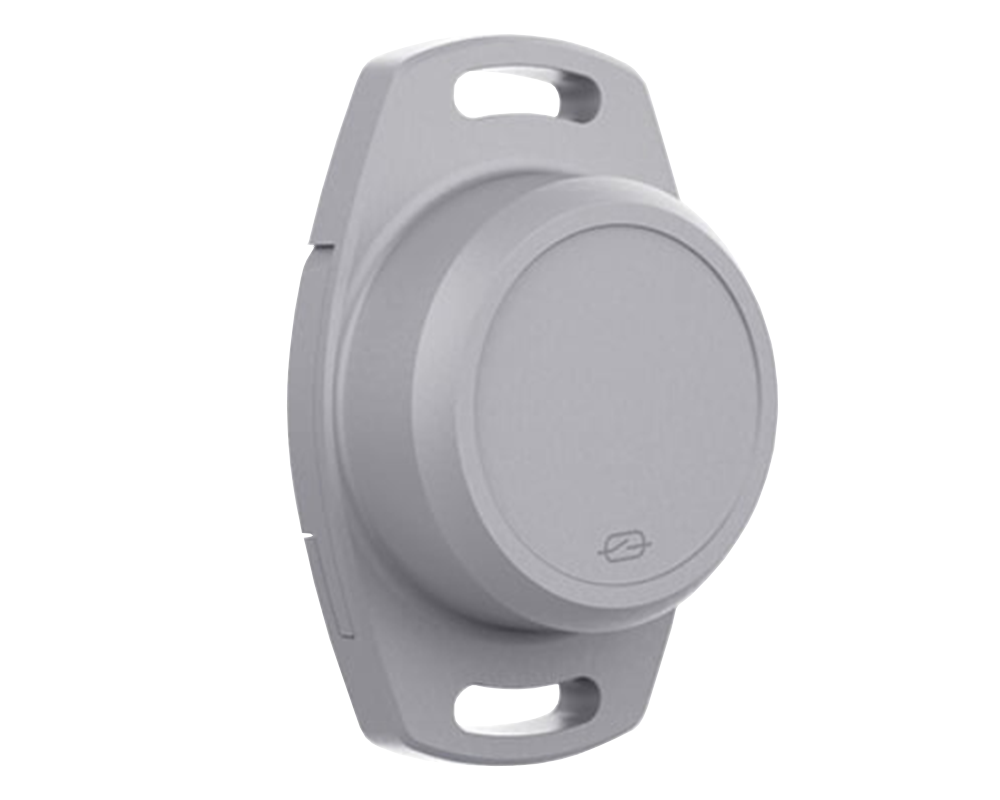
| Battery-powered covert tracker | No | Magnet mount, no wiring | Internal cells | Covert recovery support |
RoadTrack Wiredis the GPX tracker dealers usually hardwire for this job. It is a 2-wire unit, and its spec sheet lists a relay output (OUT1) alongside ACC and IN1 inputs. Whether that output should drive a starter interrupt in your vehicles is a question for your GPX rep and installer. GPX does not sell the interrupt relay itself.
The RoadTrack Wired also carries a 300 mAh backup battery. Cut the main vehicle power and it keeps reporting its location for up to 24 hours.
For lot inventory without ignition control, the AssetTrack OBDplugs straight into the OBD-II port. Inventory managers see every unsold unit on the lot without pulling a dash panel.
What Actually Decides Your Recovery Setup
Your risk profile decides the configuration. If assets leave your control and repayment is uncertain, you need location data and ignition control together.
A tracker alone leaves you chasing a moving car. An immobilizer alone leaves you with a dead vehicle at an unknown address. A hardwired tracker paired with an interrupt relay covers both sides.
Single-vehicle operators and one-lot rental yards sit outside that math. Budget options such as Bouncie or Logistimaticsreport location on a month-to-month plan, though neither is built for the ignition-control side of a lending portfolio.
Ready to lock down your high-risk loans and rental fleet? Talk to the GPX teamabout tracking hardware that keeps your collateral visible and recoverable.
Frequently Asked Questions (FAQs)
How long does a starter interrupt device take to install?
A trained installer finishes a tracker and relay install in about an hour. The work involves locating the starter wire, splicing in the relay, and hiding the hardware behind the dash to deter tampering.
Can a borrower remove the tracking device to start the car?
That depends on how the relay is wired. A fail-secure install leaves the starter circuit open when power is cut, so the engine will not crank. The GPX RoadTrack Wired adds a 300 mAh backup battery, so it keeps reporting its location for up to 24 hours after main power is pulled.
Are dealerships required to warn a borrower before disabling a vehicle?
State law sets the requirement. Rules on notice and warning tones vary by state, and some states regulate remote disablement directly. Verify the rule everywhere you write loans.
Will a starter interrupt device drain the vehicle battery?
Hardwired trackers draw very little current with the vehicle off. On a healthy battery, normal daily driving replaces that draw. Vehicles that sit for weeks need a battery tender.
Can a lender shut off a vehicle while someone is driving it?
No. The relay blocks the next engine start only. A running engine keeps running until the driver parks and turns the ignition off.