
Quick answer
AirTag anti-stalking alerts warn a smartphone owner when an unknown tracker travels with them over time. Put consumer tags on business assets and your drivers and crews get those warnings on their personal phones. Business assets need commercial GPS trackers that report through a business network, not through strangers’ phones.
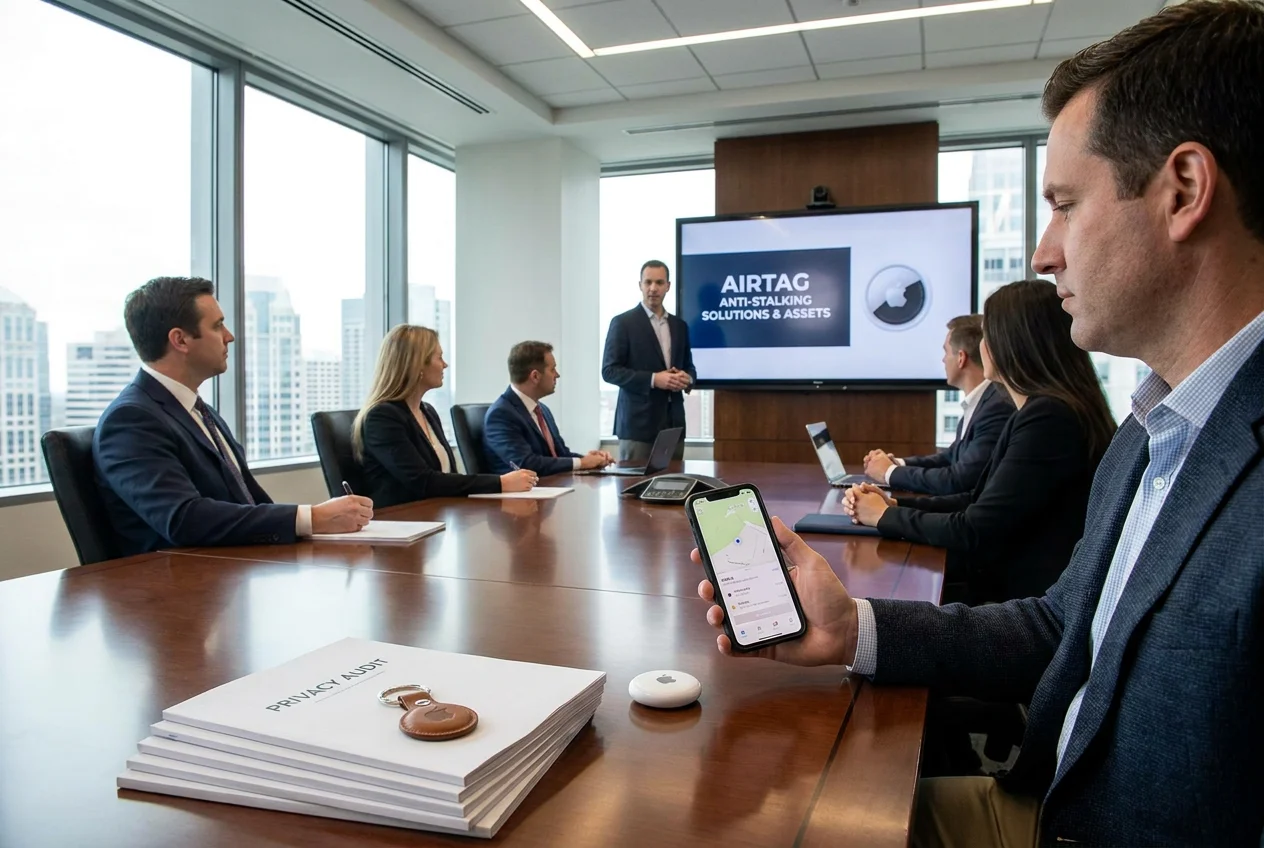
Since May 13, 2024, iPhones on iOS 17.5 or later and Android phones on 6.0 or later warn their owners when an unknown Bluetooth tracker travels with them. That warning comes from the Detecting Unwanted Location Trackers specification, which Apple and Google rolled out together. Operations teams that tag trailers and tools with consumer trackers notice quickly: employee phones start flagging the tags as possible stalking devices.
The standard is now moving through the Internet Engineering Task Force. Its DULT Accessory Protocol draft sets out what tracker makers must build to guard against unwanted tracking. Put a consumer tag on a shared trailer or pallet and those safeguards fire exactly as designed, sending drivers to hunt for a threat that does not exist.
| Tracker Platform | Network Architecture | Alert Behavior | Best Fit |
|---|---|---|---|
| GPX AssetTag Pro | GPX trackers and gateways plus 150 million terrestrial gateways | Business device that ships activated with no consumer app pairing | Enterprise fleets, yards and supply chains |
| Apple AirTag | Crowdsourced Apple Find My network | Triggers unknown tracker alerts on nearby iPhone and Android phones | Keys, bags and personal items |
| Tile | Tile app user network | Broadcasts an unencrypted MAC address and unique ID | Personal belongings on a budget |
| Logistimatics | GPS trackers for consumers and small businesses | Sold for single-tracker use, not shared fleets | One car, a pet or a family member |
1. GPX Intelligence
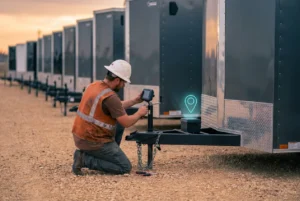
GPX builds the tags, the trackers, the network and the platform for AI-powered asset tracking. Our devices ship activated and report through GPX trackers and gateways, with no consumer app to pair. Gateway-less BLE asset tracking taps 150 million terrestrial gateways, with nothing for you to install.
- Best for: Operations tracking 10 or more high-value assets across yards, fleets and supply chains
- Pricing: AssetTag Pro as low as $45/yr; SmartLabel as low as $13
- Standout features: Scout AI geofences every site in seconds; idle and dwell analytics put under-used assets back to work
- Advantages:
- Does not depend on passing consumer phones to report
- AssetTag Pro runs 3 years on a replaceable coin-cell battery
- Ships activated, with no consumer app pairing
- Disadvantages:
- Built for business fleets, so it is more platform than one car or one bag needs
2. Apple AirTag
Apple built AirTag to help people find keys, bags and other personal items. Apple’s AirTag technical specifications list Bluetooth, Ultra Wideband and NFC. There is no GPS chip and no cellular radio.
AirTag gets a location fix only when a nearby Apple device picks up its signal. That device relays the position through Apple’s crowdsourced Find My network.
- Best for: Personal items and single-user tracking
- Standout features: Precision Finding on supported iPhones and deep iOS integration
- Advantages:
- Dense Apple device coverage in cities and busy areas
- Light and easy to attach to keychains and bags
- Disadvantages:
- Triggers unknown tracker alerts on employee phones
- No independent cellular or satellite connection
3. Tile
Tile sells Bluetooth tags for personal belongings. Georgia Tech researchers found that Tile tags broadcast an unencrypted MAC address and unique ID that nearby receivers can read.
- Best for: Consumers tracking personal belongings on a budget
- Disadvantages: Broadcasts unencrypted identifiers that nearby receivers can read (Georgia Tech)
Why Consumer Bluetooth Trackers Fail in Enterprise Asset Tracking
Consumer tags work for one person and one set of keys. On a commercial fleet, they break down in six predictable ways:
- Alert fatigue: Drivers and warehouse staff get repeated warnings that an unknown device is traveling with them. They either start ignoring security alerts or stop work to search the vehicle.
- Network blind spots: Consumer tags need a passing smartphone to report. Remote yards, rural routes and restricted sites go dark.
- Legal and HR exposure: Operators who find undocumented tags on shared vehicles feel personally monitored. That turns an asset question into a privacy complaint.
- Account sprawl: Each AirTag registers to a single Apple Account. Across hundreds of assets, your IT team ends up managing personal logins, passwords and departing employees’ devices instead of one provisioned fleet.
- Battery swaps with no schedule: Every consumer tag needs its own coin-cell change, checked one account at a time across hundreds of tags. AssetTag Pro runs 3 years on a replaceable coin-cell battery, and AssetTrack runs 10 years on one daily GPS fix.
- No chain of custody: When a stolen generator turns up, a personal app shows a dot tied to one employee’s account. A commercial platform keeps the location record under your company, ready for the recovery and the claim.
What is DULT and why did Apple and Google build it?
DULT stands for Detecting Unwanted Location Trackers, an Internet Engineering Task Force working group. Its charter calls for standardizing an application protocol for information exchange between location-tracking accessories and nearby devices. In practice, it defines what a smartphone does when it spots a tracker moving with its owner.
Apple and Google built the framework to stop covert tracking of people. Chipolo, eufy, Jio, Motorola and Pebblebee committed to making future tags compatible. For a person, that is real safety. For a business tagging shared equipment, it is a built-in conflict.
Why did my phone say an unknown tracker was detected?
The alert fires because a tracker separated from its owner is traveling with you. Apple’s “Found Moving With You” alert triggers when an AirTag travels with someone else’s device over time. Apple publishes no minute or mile threshold.
Android works the same way. Its unknown tracker alert fires when a tag separated from its owner moves with your phone. A driver hauling a tagged trailer will get that warning on a personal phone sooner or later.
Can AirTags be used for business asset tracking?
Not well. AirTags have no dedicated connectivity, and every shared asset they ride on puts alerts on your crew’s phones. Tracking a commercial generator through one employee’s Apple Account is a fragile chain.
AirTags do recover property in some cases. In June 2025, a London couple used a hidden AirTag to find their stolen car. Even that coverage noted that Apple does not market AirTag as an anti-theft device.
The real AirTag alternatives for business are commercial GPS trackers and BLE tags built for remote sites and shared fleets. See how GPX handles asset tracking for equipment, containers, trailers and tools.
Is it illegal to put an AirTag on a company vehicle or someone else’s property?
Tracking without consent is a crime in a growing number of states. Florida’s CS/SB 758 made the nonconsensual placement or use of a tracking device to find a person’s or property’s location a crime effective October 1, 2024. Pennsylvania House Bill 416 proposed expanding the stalking offense to cover remote location tracking.
For a business, the exposure is perception and paperwork. A consumer tag on a shared vehicle looks like personal surveillance to the employee who finds it. A commercial deployment runs under a written fleet policy, so everyone knows what is tracked and why.
Do AirTags work without cell service or a nearby phone?
No. AirTag has no GPS chip and no cellular radio. It reports only when a nearby Apple device in the Find My network picks up its signal and relays the location to iCloud.
Park a tagged generator in a remote construction yard or a farm field with no Apple devices nearby, and the location stops updating. Nothing on the tag can reach a cell tower on its own.
Bluetooth vs. Cellular GPS Trackers: What Changes for Commercial Fleets?
A consumer Bluetooth tracker waits for a passing smartphone to report its location. A cellular GPS tracker carries its own GPS receiver and cellular radio, so it sends its position straight to the cloud. No bystander is required.
GPX asset tracking combines both. AssetTrack cellular trackers report on their own, and BLE tags like AssetTag Pro report through GPX trackers and gateways in range. AssetTrack runs 10 years on one daily GPS fix, with a replaceable battery.
When GPX Is Not the Right Fit
GPX tracks equipment, containers, trailers, tools and vehicles across many industries. We are not a telematics suite, an ERP or a dashcam provider.
For a single bag or set of keys, an AirTag or a Tile does the job. For one car, a pet or a family member, our sister brand Logistimatics serves single-tracker and small-business buyers. For 10 or more high-value assets, GPX is built for the job.
Scalable Tracking for Mixed Fleets With Trailers and Heavy Equipment
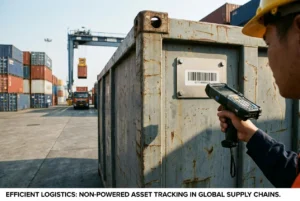
Mixed fleets need one view of powered and nonpowered assets. Cellular trackers cover trailers and heavy equipment, while BLE tags cover the tools and smaller assets around them. None of it depends on an operator’s phone.
Scout AI turns that asset visibility into decisions. Its AI-powered geofencing covers every site in seconds, fires an instant alert on unauthorized movement and flags idle assets you can put back to work.
Pull the Consumer Tags Before the Next Alert Stops a Shift
Start with a count. Walk your yards and list every trailer, generator and toolbox carrying a consumer tag, and note whose Apple Account each one sits under.
If that list reaches 10 or more high-value assets, move them to a business network now. Write the change into your fleet policy so drivers know what is tracked and why, and retire the personal accounts as the new tags go live.
Know where every asset is, whether it is safe and whether it is working. Get a demo to see GPX on your own fleet, yards and supply chain.
Frequently Asked Questions (FAQs)
How often does an unknown tracker alert fire?
Neither company publishes a time threshold. Apple says an alert fires when an AirTag separated from its owner is seen moving with you over time, and Google caps Android alerts at one per tracker each day.
What is the best AirTag alternative for business asset tracking?
Pick a tracker that reports through a business network instead of strangers’ phones. GPX pairs AssetTrack cellular GPS trackers with BLE tags like AssetTag Pro, so vehicles, trailers, equipment and tools show up on one map without depending on strangers’ phones.
Do enterprise tracking platforms trigger the Apple or Google unwanted tracker alert?
The alerts are built into iPhones and Android phones for trackers that follow the Apple and Google specification. GPX AssetTag Pro reports through the GPX terrestrial network rather than a crowd network of consumer phones, ships activated and needs no app pairing. Ask any vendor, GPX included, how its tags behave around these alerts before you deploy.
Can I track my business fleet with consumer Bluetooth tags?
Not reliably. Consumer tags have no GPS or cellular radio, they go dark where no phones pass, and they put stalking alerts on your drivers’ phones.