
A refrigerated trailer fights time, temperature swings, and equipment failure on every haul. One deviation spoils the cargo, triggers a rejected load, and drains your margin. Roughly one-third of all food produced globally is lost or wasted each year, and weak cold chain handling is a leading cause. For pharmaceuticals and other sensitive freight, the stakes climb even higher.
Security is the other half of the problem. High-value refrigerated loads are prime targets for organized theft crews. Verisk’s CargoNet recorded a 57% year-over-year rise in cargo theft across the U.S. and Canada in 2023. Effective reefer trailer tracking now means live, actionable intelligence on temperature and security, not just a dot on a map.
| Provider | Temp Monitoring | Location Tech | Reefer Control | Key Feature |
|---|---|---|---|---|
| GPX | Real-time multi-zone sensors | GPS, Cellular, BLE, Satellite | Two-way commands & diagnostics | Scout AI Predictive Alerts |
| Samsara | Wireless temp & humidity sensors | GPS, Cellular | Remote diagnostics & control | Integrated video & ELD platform |
| Orbcomm | Real-time temp, fuel, door sensors | GPS, Cellular, Satellite | Two-way reefer control | Extensive OEM integrations |
| Motive | Wireless environmental sensors | GPS, Cellular | Reefer monitoring & control | AI-powered dashcams |
| Geotab | Third-party Marketplace sensors | GPS, Cellular | Varies by integration partner | Open platform extensibility |
The Core Components of Reefer Trailer Tracking Systems
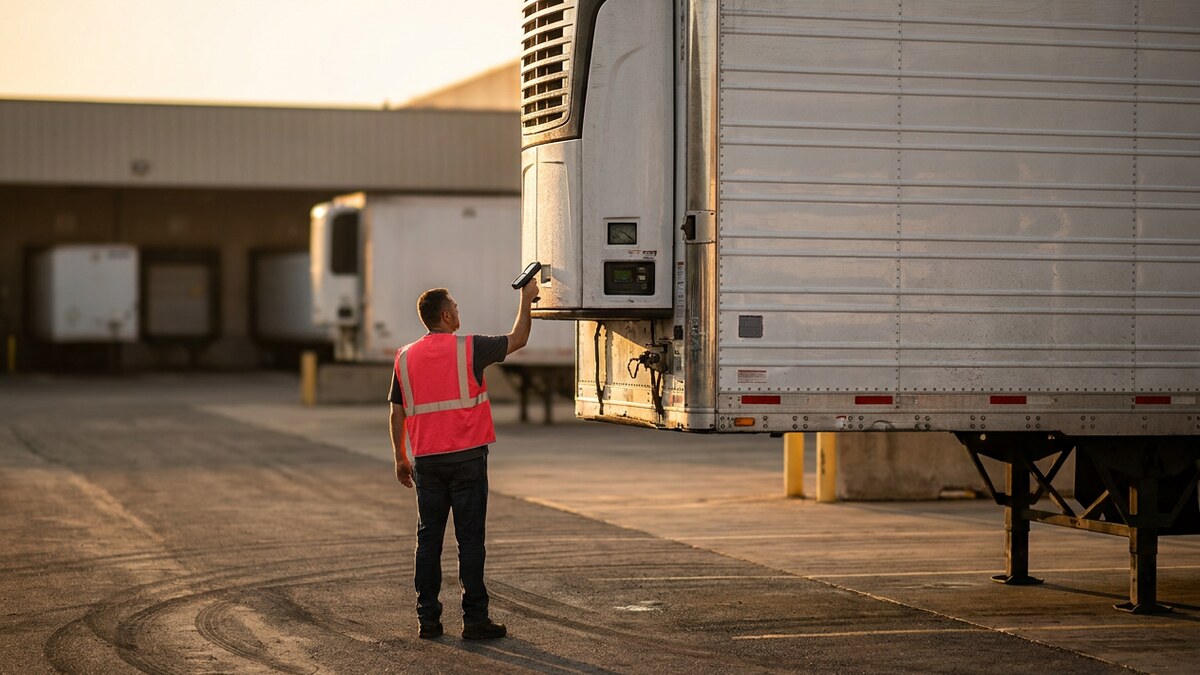
Modern reefer tracking platforms pull several technologies together to show an asset’s condition and location at once. They go well past a GPS dot on a map and stream live operational data for cold chain logistics. Hardware sensors on the trailer and reefer unit feed a software platform for monitoring and analysis.
The essential components include:
- GPS and cellular or satellite modems provide the core location data and transmit the trailer’s position at set intervals. Dual-mode cellular and satellite connectivity holds coverage in remote areas where cellular networks drop out.
- Temperature sensors do the heavy lifting in cold chain monitoring. Wireless units sit inside the trailer, often across multiple zones (front, middle, and rear), and confirm the whole space stays in range.
- Reefer unit integration links directly to the refrigeration unit’s microprocessor. It tracks engine status, operating mode, fuel levels, and diagnostic trouble codes, giving you early warning of equipment failure.
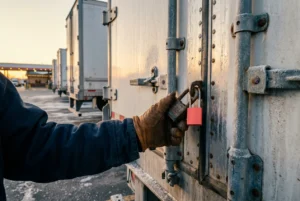
- Door sensors detect when trailer doors open or close. That digital record verifies chain of custody and flags unauthorized access during transit.
- A cloud-based software platform collects every data stream from the hardware. Fleet managers view live maps, analyze temperature history, configure alerts, and generate compliance reports in one place.
What a Single Reefer Failure Actually Costs
Running a refrigerated fleet leaves almost no margin for error. The cargo often outvalues the trailer itself, and a single failure cascades into financial loss, brand damage, and regulatory scrutiny.
Operations and fleet managers wrestle with a few critical issues:
- Temperature excursions compromise a full load of produce, vaccines, or chemicals in minutes. Catching them after the fact is too late, so teams need real-time alerts that trigger immediate action.
- Reefer unit failure strikes for many reasons, from mechanical faults to an empty fuel tank. Without live engine diagnostics and fuel monitoring, a breakdown in a remote spot goes unnoticed for hours and turns into a total loss.
- Chain of custody and security demand proof that a shipment held temperature and stayed sealed from origin to destination. FSMA compliance and claims defense both depend on it, and unauthorized door openings or long unexplained stops are red flags.
- Compliance reporting is a documentation grind. Generating audit-ready temperature histories by hand eats staff hours, and one missing record can sink an FSMA audit or a customer claim.
- Reefer fuel is a heavy operating cost. Fuel theft or a unit left idling in the wrong mode quietly erodes margin haul after haul.
- Poor trailer utilization wastes money, and drivers burn time hunting for the right reefer in a crowded yard instead of moving freight.
- Driver accountability slips when no one can confirm a reefer ran in continuous mode rather than start/stop, which lets cargo drift out of range unnoticed.
- Lack of real-time visibility leaves managers guessing. Driver check-in calls and a basic location ping cannot manage high-value, temperature-sensitive assets, yet shippers and customers now expect live ETAs and proof of cargo integrity.
How Real-Time Temperature Monitoring Prevents Spoilage
Real-time temperature monitoring is your first line of defense against spoilage. Wireless sensors inside the trailer give operators a live, uninterrupted view of the cargo environment. Manual checks and passive data loggers only tell the story after the trip ends. A connected system pays off in the moment.
When a sensor reads a temperature outside a set threshold, the platform fires an alert by email, SMS, or mobile app to the driver, fleet manager, and other stakeholders. The team diagnoses the problem on the spot. Is the reefer unit failing? Is a door ajar? Is the unit on the wrong setting? That instant notification turns a looming catastrophe into a manageable event and buys time to act before the product is lost.
The Role of GPS and Geofencing in Reefer Logistics
Temperature comes first, but precise location tracking matters just as much for security and efficiency. Reefer trailer tracking systems use GPS for constant visibility, and geofencing turns that data into operational power. A geofence is a virtual perimeter around a real-world location such as a distribution center, a customer facility, or a high-risk zone.
When a trailer crosses a geofence, the system automates tasks and triggers alerts. A geofence around a customer’s depot logs arrival and departure times automatically, which sharpens detention billing and improves turn times. An alert can also warn a security manager the moment a trailer strays from its route or enters an unauthorized area, an early signal of theft or hijacking.
GPX: Unifying Temperature and Location with AI-Powered Intelligence
GPX folds multi-sensor data into an AI-powered asset intelligence platform. Our solution answers the what, the where, the why, and what comes next. It combines real-time GPS location, multi-zone temperature data, reefer diagnostics, and door status into one view of asset health and security.
The platform’s real strength is turning raw data into predictive insight. Our Scout AI engine reads historical and live data streams to spot the patterns that precede failures. It predicts temperature excursions from reefer performance trends and flags a trailer at high risk of a fuel run-out on a long haul. Your team moves from reactive to proactive. With our cold chain monitoring solution, you see a problem as it happens and stop it before it starts.
What to Look For in a Reefer Monitoring Solution
When you evaluate a reefer trailer tracking system, look past basic location pings and focus on features that solve the real cold chain problems. A capable system is a complete operational tool, not just a map.
Weigh these capabilities:
- Two-way reefer control lets you change the set point, start a defrost cycle, or turn the unit on and off remotely. That control keeps you from relying on the driver for every adjustment.
- Comprehensive alerts cover temperature deviations, geofence breaches, door openings, low reefer fuel, and diagnostic codes straight from the reefer unit.
- Detailed reporting generates FSMA-compliant temperature history on demand. These records carry audits, compliance checks, and claims with customers or insurers.
- Hardware durability and battery life keep trackers running in harsh conditions. Ruggedized, IP67-rated hardware with a long-life battery keeps tracking even when a trailer sits unpowered in a yard for weeks.
- Integration ties the platform to your Transportation Management System (TMS) and other business software, so data flows without silos. A strong return on investment from asset tracking often starts there.
The Future of Cold Chain Visibility: Predictive Analytics
The next stage of reefer trailer tracking runs on artificial intelligence and machine learning. The focus shifts from watching current conditions to predicting what happens next. Future platforms will flag a reefer engine’s failure likelihood weeks ahead from small changes in vibration, temperature, and runtime data, not just report a fault code.
That prediction reaches logistics too. AI systems read traffic patterns, weather forecasts, and past delivery times to produce accurate predictive ETAs. Better dock scheduling, less driver detention, and a tighter supply chain follow. For cold chain, it means anticipating delays that risk spoilage and rerouting assets or adjusting schedules to protect the cargo and the bottom line.
How to Move From Spoilage Risks to Proactive Control
Moving from reactive fixes to proactive control takes a shift in both technology and mindset. Start with a tracking partner that delivers deep, actionable intelligence instead of surface-level data. The goal is to give your team the tools to see and solve problems before they hit your cargo or your customers.
Pinpoint your biggest points of failure first. Are they equipment breakdowns, temperature compliance, or security? An audit of past incidents shows where a modern tracking solution delivers the fastest impact. Pick a system with two-way control and a full suite of alerts matched to those risks. Real-time data and predictive insight turn a refrigerated fleet from a source of uncertainty into a predictable, reliable, and efficient asset.
Ready to take full control of your refrigerated assets? Connect with a GPX specialist to see how our AI-powered platform protects your cargo and sharpens your operations.
Frequently Asked Questions (FAQs)
Can reefer tracking systems monitor fuel levels?
Yes. Advanced systems that integrate directly with the refrigeration unit’s microprocessor read fuel levels in real time. This prevents unexpected shutdowns on long-haul trips that can cause total cargo loss.
What is two-way reefer control?
Two-way control lets a dispatcher or fleet manager send commands to the refrigeration unit remotely. That includes changing the temperature set point, turning the unit on or off, and starting a defrost cycle, all from the software platform without contacting the driver.
How does a reefer tracking system help with FSMA compliance?
A reefer tracking system logs temperature continuously across every zone and stores that history in the cloud, so you can generate audit-ready reports on demand. That documented record proves a shipment held temperature from origin to destination, which is exactly what the Food Safety Modernization Act (FSMA) requires for sanitary food transport and what defends against rejected-load claims.
Does GPX integrate with existing TMS or ERP systems?
Yes. The GPX platform integrates through APIs that move data between our asset intelligence platform and your Transportation Management System (TMS), Enterprise Resource Planning (ERP), or other business software.