

Temperature-controlled freight either arrives sellable or arrives as a claim. Grand View Research estimated the global cold chain data logger market at USD 1.29 billion in 2023, growing at a 7.8% CAGR from 2024 to 2030. Shippers spend that money for one reason. They need proof of temperature, and they need it before the load is gone.
Regulators want the same proof. The FDA’s FSMA Sanitary Transportation rule sets a retention period for written procedures, agreements, and training records that “does not exceed 12 months,” and requires vehicles and transportation equipment “capable of maintaining temperatures necessary for the safe transport of food.” Your logger is what turns that requirement into evidence.
Two hardware structures dominate. Single-use loggers ride with the load and stay at the destination. Reusable loggers come back and ship again. The right call depends on who controls the receiving dock and how fast you need the numbers.
Cold Chain Data Logger Providers Compared
Six vendors show up on most shortlists. The split that matters is structure and connectivity: what comes back, and how the data gets out.
| Provider | Best For | Logger Structure | Connectivity |
|---|---|---|---|
| GPX | All asset types across 50+ industries | Disposable SmartLabels plus reusable trackers and BLE sensors | Cellular, BLE, GPS, WiFi |
| Sensitech | Regulated pharma and food freight compliance | Single-use indicators through reusable in-transit monitors | USB, BLE, cellular |
| DeltaTrak | Perishable produce and vaccine shipments | Single-use, multi-use and reusable FlashLink lines | USB, BLE, WiFi, cellular |
| Elitech | Short-haul food transport on a tight hardware budget | Separate single-use, reusable and real-time catalogs | USB, Bluetooth, cellular |
| Onset (InTemp) | Clinical and pharmacy cold storage | Reusable CX400 loggers, gateway optional | Bluetooth, gateway to WiFi or Ethernet |
| Copeland | Perishable cargo on long international lanes | Single-trip GO Real-Time trackers plus passive GO Loggers | Cellular, WiFi |
GPX
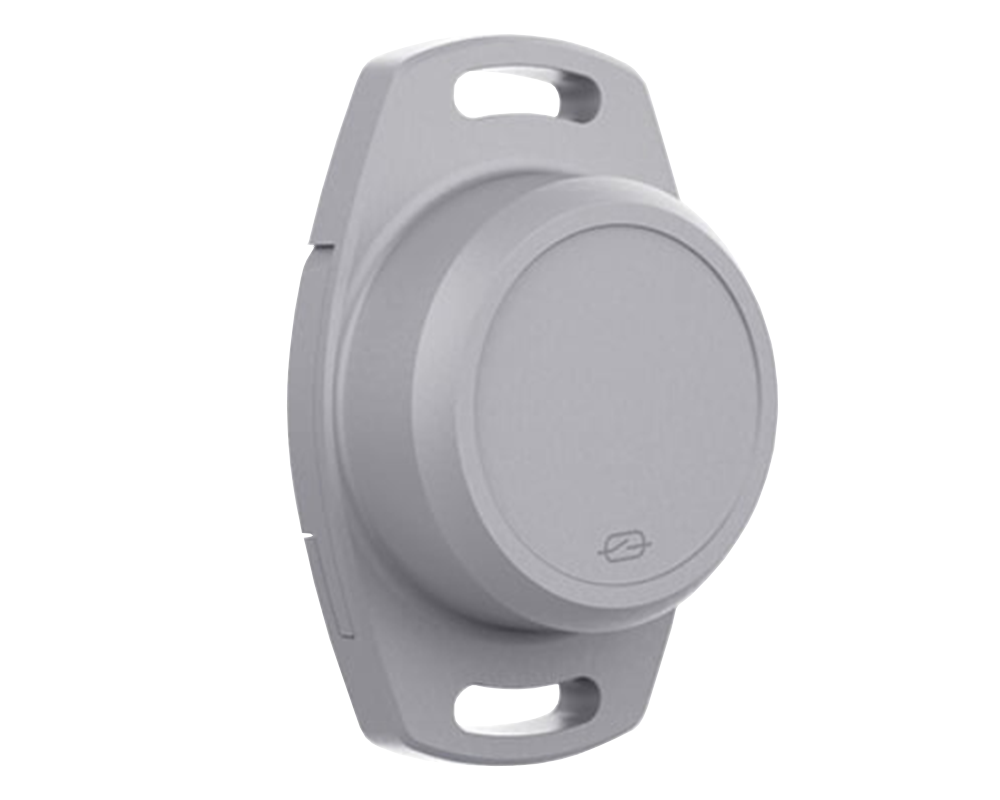
GPX builds AI-powered asset tracking hardware and software for operators who need the temperature reading and the location fix in one record. AssetTemp, a BLE temperature and humidity sensor built on an SHT30 element with replaceable batteries, pairs with GPX trackers and gateways so every position report carries a condition reading. The alert fires while the truck is still moving, not when a receiver plugs in a stick at the dock.
The single-use versus reusable question becomes a product choice inside one temperature and humidity tracking platform. SmartLabels are peel-and-stick disposables: tear the tab, the label goes live in seconds, it cannot be powered off, and nothing comes back. AssetTrack Voyager covers the reusable side, running one-way or recharge-and-reuse depending on the lane, with WiFi position at cross-dock and geofence-confirmed arrival.
Scout AI takes plain-English questions across the whole network. A manager asks which shipments ran warm last week instead of building a report. GPX runs this across 50+ industries.
- Best for: Operators tracking 10 or more high-value temperature-sensitive assets.
- Logger structure: Disposable SmartLabels for one-way freight, AssetTrack Voyager for closed loops, AssetTemp for condition data on either.
- Standout features: Scout AI natural-language queries, multi-network connectivity, and predictive disruption alerts tied to live location.
The trade-off is scope. GPX is built for fleets and networks of assets, so a shipper sending a handful of boxes a year gets more platform than the job needs.
Sensitech
Sensitech builds temperature monitoring for life sciences, food, and industrial supply chains. The catalog spans shipping temperature indicators, in-transit monitoring, stationary temperature monitoring for storage, and the SensiWatch platform with SmartView software. Regulated shippers use it heavily for historical compliance documentation.
- Best for: Global logistics teams whose main job is producing compliance paperwork at the receiving dock.
- Logger structure: Passive shipping indicators at one end, reusable in-transit and platform-connected hardware at the other.
- Standout features: The SensiWatch platform, SmartView software, and the Berlinger cold chain line for life sciences.
Sensitech wins on acceptance. Pharmaceutical receivers know the devices, which removes an argument at the dock. The cost is breadth. The lineup runs from passive indicators to real-time platforms, and a team that buys the wrong tier still waits for someone to download a file before anyone acts.
DeltaTrak
DeltaTrak sells the FlashLink family, which splits cleanly along the single-use and reusable line. The catalog lists in-transit loggers, PDF loggers, BLE loggers, multi-use loggers, reusable loggers, and real-time loggers, plus a separate vaccine monitoring line with certified WiFi and USB PDF devices.
- Best for: Produce shippers and vaccine programs that want disposables and reusables from one vendor.
- Logger structure: Both, with dedicated product families for each.
- Standout features: FlashLink Manager and ColdTrak software, plus certified vaccine loggers for regulated storage.
The breadth is the selling point and the complication. Buyers get a device for nearly every lane, then have to keep several device families, several readers, and several record formats straight.
Elitech
Elitech has manufactured temperature and humidity data loggers for cold chain management since 1996. The catalog is organized by structure: digital temperature labels, single-use data loggers, reusable data loggers, single-use real-time loggers, and multi-use real-time loggers, backed by Elitech Cloud.
- Best for: Small operations that rank hardware cost above platform depth.
- Logger structure: Both, with the real-time versions sold as separate lines.
- Standout features: A category-per-structure catalog that makes the buying decision obvious, plus Elitech Cloud for the connected models.
The lineup covers every structure a small shipper needs. The catch sits in the price gap. The budget draw is the label and standalone logger tier, which records history and alerts nobody, so live visibility means stepping up to the real-time lines and paying for connectivity.
Onset (InTemp)
Onset builds the InTemp line for clinical, medical, and pharmaceutical cold storage. The CX400 series loggers are Bluetooth Low Energy devices with an onboard LCD, audible and visual excursion alarms, and a 3-year NIST Certification of Calibration, built to WHO and CDC guidance for vaccine storage.
- Best for: Hospitals and clinical trial managers securing stationary vaccine and medication storage.
- Logger structure: Reusable, read through a phone app or a fixed gateway.
- Standout features: NIST calibration certification, secure PDF reports generated from the InTemp app, and the InTemp CX Gateway for real-time excursion alerts.
For a pharmacy refrigerator, Bluetooth sync beats plugging in a USB stick every week. Over the road it stops working. The CX Gateway holds loggers within roughly 100 feet on local WiFi or Ethernet, and freight moves away from gateways.
Copeland
Copeland sells cargo tracking through GO Real-Time Trackers, GO Loggers, and the Oversight360 software platform. The real-time trackers report temperature and location together with alerts. The GO Loggers produce the time-stamped record of a completed shipment for verification after the fact.
- Best for: Agribusiness distributors moving perishable commodities across borders.
- Logger structure: Single-trip real-time trackers alongside passive verification loggers.
- Standout features: Combined location and condition alerting, Oversight360 reporting, and the GO GreenSense line for sustainability reporting.
The hardware is built around long ocean and cross-border lanes, where an excursion happens days from anyone who can fix it. The friction shows up in the back office: real-time hardware only earns its cost when someone acts on the alert, and the reporting interface takes time to learn on a small team.
Where Cold Chain Logger Programs Break Down
Most thermal compliance data fails for operational reasons, not technical ones. Eight problems account for the bulk of it.
- Reverse logistics on reusable units. A multi-trip logger only pays off if it comes home. Receivers throw them out or forget to mail them back. The postage and the chasing often cost more than the device is worth.
- Data that arrives too late to matter. A USB logger requires someone to dig it out of a pallet and plug it in. That confirms the excursion after the produce is already soft. Nobody reroutes a failing reefer using a PDF opened three days later.
- Calibration tracking across a fleet of devices. Reusable hardware needs periodic recalibration against a reference standard. Knowing which serial numbers are due is a full administrative task. Miss a date and the thermal record for that shipment no longer holds up.
- Activation failures. Devices that require a button press or an app pairing at the dock get skipped under time pressure. The shipment moves, the logger sleeps, and the record is blank.
- Records scattered across carriers and sites. One carrier emails PDFs, another uses its own portal, a third hands over a spreadsheet. Assembling an unbroken history for an inspector then takes days instead of minutes.
- No clean path into the TMS. Condition data that lives in a vendor portal never reaches the transportation management system, so dispatchers work from one screen and the quality team works from another. Without an API that writes excursions back against the shipment record, every audit becomes a manual reconciliation.
- Cellular dead zones and thin offline buffering. Rural lanes, ocean legs, and steel container walls drop the signal for hours. A device that stops recording when it stops transmitting hands you a gap exactly where the inspector looks first. Local buffering and backfill on reconnect are what keep the chain unbroken.
- Disposable volume and Scope 3 reporting. High-volume single-use programs put thousands of battery-bearing devices into the waste stream every year, and sustainability teams now ask where they went. E-waste reduction logistics and take-back or recycling routes belong in the buying decision, not in a follow-up email from procurement.
Single-Use Disposables vs. Reusable Devices
The choice comes down to cost per shipment against cost per asset over time. Both numbers are real, and they point in opposite directions.
A single-use cold chain data logger is a consumable. Activate it, drop it in the payload, and leave it at the destination. Cost per trip runs higher, but the device disappears from your asset register the moment it ships. Single-use units arrive factory-calibrated for their short life, which removes recertification from the workload entirely. That fits outbound freight where you have no authority over the receiving facility.
Reusable digital loggers cut the per-trip cost across a multi-year life. They demand asset control in exchange. Origin has to coordinate with the receiver to get the hardware mailed back, every time. Companies that run reusables successfully almost always run closed loops: plant to their own distribution center, where recovery costs nothing extra.
| Factor | Single-Use Devices | Reusable Devices |
|---|---|---|
| Cost Structure | Higher cost per shipment, no maintenance overhead | Lower cost per shipment, higher upfront capital |
| Reverse Logistics | None; discard or recycle at destination | Return shipping plus the admin to chase it |
| Calibration Management | Factory validated for one trip | Scheduled recalibration and compliance tracking |
| Sustainability Reporting | Device volume counts against waste and Scope 3 goals | One device amortized across many shipments |
| Best Application | Third-party receiving, export freight, high-risk loads | Closed-loop networks and internal company transfers |
Passive Logging vs. Connected Monitoring
Who reads the data, and when, separates legacy passive tracking hardware from a supply chain visibility platform. A passive temperature logger writes to internal memory. It is a historical record and nothing more.
When a reefer unit quits halfway across the country, a passive device documents the climb in temperature and says nothing. The operator sees the failure in a PDF days later.
Connected monitoring over cellular or BLE transmits condition status live. An alert fires the moment a trailer crosses its threshold, and a fleet manager routes the driver to a repair yard before the load spoils. IoT real-time temperature tracking changes the objective from proving why a shipment died to keeping it alive. Modern logistics teams treat tracking as an intelligence layer, not a status page.
Regulatory Standards and Calibration Tracking
Legal frameworks govern how perishable goods and medications move. The FSMA Traceability Rule requires records for designated high-risk foods, and inspectors expect an unbroken thermal history on request. In pharmaceuticals, Good Distribution Practice guidelines set the rules for moving medication from manufacturing to pharmacy.
Meeting those standards takes hardware that proves its own accuracy. Traceable calibration is what makes a recorded number defensible rather than decorative, which is why NIST certification appears on regulated storage devices and why calibration due dates belong in the same system as the shipment records. The operators who pass audits quickly centralize that evidence digitally and generate automated FSMA compliance reporting from it, instead of hunting through email for a certificate.
Where Cold Chain Monitoring Goes Next
The step past live alerting is prediction. Predictive cold chain analytics reads route, ambient conditions, dwell time, and reefer behavior together, then flags the load heading for a breach while the driver still has options. The alert moves from the moment of failure to the hours before it.
Facilities follow the same path. Cloud-based thermal mapping turns scattered sensor readings into a live picture of where cold rooms and staging areas actually run warm, so remediation targets a specific dock door instead of an entire building. Layer an autonomous control tower on top and the platform ranks exposure across every open shipment and hands the operator one decision instead of six dashboards.
How to Choose Between Single-Use and Reusable Cold Chain Data Loggers
Answer two questions and the hardware decision resolves itself. Do you control the receiving dock? If not, buy single-use and stop paying for recovery you will never get. Do you need to act mid-transit, or only prove what happened? If you need to act, passive logging is the wrong category no matter how cheap the device is.
Most operations end up running both. Disposables cover one-way outbound freight, reusables cover the closed loop, and one platform holds the records. That combination gives you shipment-level visibility without a second asset recovery program, and it feeds a single audit trail instead of six.
Stop finding out about a warm load after it hits the dock. See how connected temperature monitoring works on your lanes, and talk to our team today.
Frequently Asked Questions (FAQs)
What is a cold chain data logger?
A cold chain data logger is an electronic device that records the temperature around a payload over time. Operators place them inside containers, trailers, or individual pallets to show that sensitive goods stayed within safe limits through transit and storage.
How do single-use temperature loggers differ from reusable ones?
Single-use loggers run one trip and stay at the destination, so there is no return shipping and no recalibration to manage. Reusable loggers travel back to the origin for the next shipment, which lowers cost per trip but requires strict asset control to work.
Do connected temperature monitors replace traditional USB loggers?
Yes, for anyone who needs to act on the data. Connected devices send condition readings over cellular or BLE while the load moves. GPX SmartLabels, for example, activate with a tab pull, cannot be powered off, and report live, which removes the step of retrieving a logger and plugging it into a computer.
What does the FDA require for temperature records in transit?
Under the FSMA Sanitary Transportation rule, vehicles and transportation equipment must be capable of maintaining the temperatures necessary for the safe transport of food. Carriers keep records of written procedures, agreements, and training, with a required retention time that depends on the record type and does not exceed 12 months.