
A rejected refrigerated load costs you the product, the freight charge, the disposal bill and a mark on your carrier scorecard. Operations teams cannot wait for the receiving dock to discover that a cooling unit quit two states back.
The numbers behind that risk are documented. Verisk CargoNet recorded 3,625 cargo theft incidents across the United States and Canada in 2024, a 27 percent increase over 2023, at an average value of $202,364 per event. The FDA Sanitary Transportation of Human and Animal Food rule supplies the compliance half: vehicles and transportation equipment must be capable of maintaining the temperatures necessary for safe transport, and the retention clock on a carrier’s written procedures, agreements and training records runs up to 12 months.
Live reefer monitoring answers both exposures with one data set. Where the trailer is, and what the air inside it is doing, right now.
What Actually Causes a Reefer Claim
Fleets and 3PLs running without continuous trailer visibility lose money the same five ways.
- Passive loggers report the autopsy. The driver hands over a logger, the receiver pulls the file, and the load is rejected on the spot. Nothing in that sequence saves the freight.
- Slow reporting intervals. A cooling unit shuts down. If the tracker reports once an hour, the box warms past threshold before dispatch sees a thing.
- Set point only. The number commanded on the reefer unit proves nothing about the air around the pallets. Return air, supply air and door events carry the truth.
- Fuel runs out in the yard. A reefer unit needs diesel. A trailer that sits over a weekend without a fuel reading shuts down quietly and takes the load with it.
- No chain of custody on the record. Manual temperature checks written on a paper log give a receiver every reason to dispute the data and file a claim.
Each one ends the same way: a claim, a higher deductible at renewal, and a shipper who starts shopping your lanes.
Three more obstacles show up during rollout rather than in transit, and they decide whether the data ever reaches someone who acts on it.
- Legacy TMS integration. Condition data trapped in its own portal never reaches the planners building the loads. Feeding temperature and location into the transportation management system your dispatchers already live in is the difference between an alert and an action.
- No remote command over the reefer unit. Monitoring reports what the box is doing; it does not restart the unit. Every exception still has to route to a driver, a dispatcher or a repair vendor fast enough to matter, which puts the weight on alert routing rather than on the sensor.
- Retrofitting older trailers. A mixed fleet holds reefers of several vintages, and the oldest ones offer no smart controller to tap. Battery-powered devices with magnetic or adhesive mounting avoid a wiring project on assets that will leave the fleet in three years anyway.
What Gets Monitored Inside a Refrigerated Trailer
Preventing a claim takes more than one temperature reading. An IoT-enabled, real-time reefer monitoring setup for temperature and humidity tracking captures four things at once.
Supply Air and Return Air
Supply air is the cold air the unit pushes into the box. Return air is what comes back. Together they prove the system is circulating, not merely running.
A wide gap between the two readings points to blocked airflow, usually from how the load was stacked. That is a fixable problem on day one and a total loss on day three.
Door Open and Close Events
Every door opening dumps ambient air into the trailer. A long door-open event at an address nobody scheduled is either a theft in progress or a dock running well behind.
Pair door events with the temperature curve and you hand the receiver an explanation they will accept. Without that context, a spike is just a spike.
Fuel Level on the Reefer Unit
A cooling unit with no diesel is a metal box. A fuel reading off the reefer lets dispatch route the driver to a stop before the unit cycles off, instead of explaining a shutdown after the fact.
Live Location and Security
Location turns a temperature alarm into a decision. Trailer tracking tells dispatch whether a distressed load is twelve minutes from the consignee or parked on a shoulder in the desert. The same feed drives geofence alerts and recovery when a trailer moves without authorization.
Why a Temperature Excursion Turns Into a Rejected Claim
Receivers review transit temperature records before they touch the freight. An excursion means the cargo environment sat outside the agreed range for longer than the agreed duration.
If the carrier cannot produce a continuous record proving otherwise, the receiver rejects the load. The burden of proof sits with the logistics provider, and the freight is often destroyed at the carrier’s expense.
Continuous monitoring flips that dynamic. Automated temperature compliance records, time-stamped from origin to delivery, defend the carrier against claims that are not the carrier’s fault, and they keep safe product moving to market.
The Financial Impact of One Spoilage Event
The wholesale value of the goods is the smallest line on the invoice. Specialized disposal of spoiled food or pharmaceutical product gets billed straight back to the carrier.
The deductible hits operating cash immediately. Then the scorecard damage starts: shippers track claim frequency closely, and carriers who slip below threshold lose dedicated lanes and get pushed back into spot freight.
Live Alerts vs. Passive Data Loggers
A passive logger rides in the pallet and gets read after the trip. It tells you exactly when the load died. It gives your team zero chances to intervene.
Live alerts change the question from what happened to what do we do. When sensors report continuously, dispatch calls the driver, routes the truck to a reefer repair shop, or arranges a cross-dock into a working trailer while the product is still good. That is also the answer when a unit loses power mid-run: the trend breaks, the alert fires, and someone acts while the freight is still in spec.
Here is how the common approaches compare.
| Monitoring Method | What It Captures | When You Learn About a Problem | Best Fit |
|---|---|---|---|
| Passive data logger | Temperature history, downloaded at delivery | After the load arrives | Post-trip documentation only |
| Reefer unit set point readout | The value commanded on the unit | At the next driver check | Basic unit status |
| Cellular trailer tracker with temperature sensing | Location, return air, supply air, door events | Live, at the reporting interval | Trailer-level cold chain visibility |
| BLE sensor at pallet level | Temperature and humidity next to the product | Live whenever a tracker or gateway is in range | Proving conditions at the freight itself |
| Disposable shipment label | Location from activation through delivery | Live, nothing to retrieve at destination | High-volume one-way freight |
AssetTemp is the BLE temperature and humidity sensor in the GPX line. It runs an SHT30 sensor on replaceable batteries and pairs with GPX trackers and gateways, so every location fix carries a condition reading with it. That gives you product-adjacent proof alongside the trailer-level record.
How Fast Does a Reefer Alert Need to Be?
An alert is worth exactly as much as the time it buys you. Set the reporting interval against the failure you are trying to catch, not against a spec sheet.
A tracker reporting once every two hours cannot support a recovery decision on a summer run through the Southwest. Minute-scale reporting on a temperature-controlled load gives dispatch a real window to diagnose the unit and act. In the cold chain, old data is not data.
Predictive ETAs Protect the End of the Run
Time and temperature are the same risk. Every extra hour in transit burns reefer fuel, adds mechanical strain and widens the window for something to go wrong.
A predictive ETA that fuses location, traffic, weather and historical lane performance lets the receiver staff the dock for the actual arrival. The trailer gets unloaded on contact instead of baking in the sun, and driver detention drops at the same time.
Tracking Mixed Fleets on One Platform
Most logistics providers do not haul one thing. The same yard holds reefers, dry vans, flatbeds and heavy equipment, and every asset class carries its own monitoring requirement.
Running perishables on one system, construction equipment on a second and shipment tracking on a third creates blind spots at exactly the handoffs where loads go wrong. One platform covering trailers, equipment and in-transit shipments puts every exception into a single queue under a single alert rule set.
Scout AI, the in-platform analyst, takes plain-English questions across that data: which reefers reported above threshold this week, which trailers have been idle more than 48 hours. Across 50+ industries, the pattern is the same. Teams that consolidate stop reconciling dashboards and start acting on exceptions.
The Future of IoT Cold Chain Logistics and Agentic Asset Intelligence
The shift from passive tracking to agentic asset intelligence is already underway in refrigerated freight. Alerting on a threshold breach is table stakes. The next layer predicts the breach from unit behavior, ambient forecast and lane history.
Modern logistics teams treat tracking as an intelligence layer, not a status page. An autonomous control tower that reroutes the load, notifies the consignee and opens the repair ticket without a human relaying messages is where cold chain operations are headed.
How to Choose the Right Reefer Monitoring Platform
A weak system records the failure. It logs the drop, stamps the time and hands you a tidy report of how much money left the building.
A strong system is built for intervention. Check five things before you sign. Does it read return air and supply air rather than set point alone? Does it report on a minute scale? Does it tie door events and location to every temperature reading? Does it push exceptions into the TMS your dispatchers already use? Does it cover your dry and heavy assets on the same platform?
Then check the proof. The record has to be continuous and time-stamped from origin to delivery, because that record is what settles the claim.
Protecting temperature-controlled freight takes continuous visibility and instant exception alerts. Talk to our team to see how AI-powered asset tracking stops temperature claims before they start.
Frequently Asked Questions (FAQs)
How does AI asset tracking differ from traditional GPS for refrigerated trailers?
Traditional GPS reports coordinates at a set interval and stops there. AI-powered asset tracking ties location to return air, supply air, door events and fuel level, then flags the exception and predicts the arrival window. Dispatch acts on a live problem instead of reading a report about a dead load.
Can you monitor trailer temperature and individual pallets at the same time?
Yes. A cellular trailer tracker covers the box, and a BLE sensor such as AssetTemp sits with the freight and reports temperature and humidity next to the product. Every location fix then carries a condition reading, which gives you two independent records for the same load.
Can I retrofit older refrigerated trailers with IoT monitoring devices?
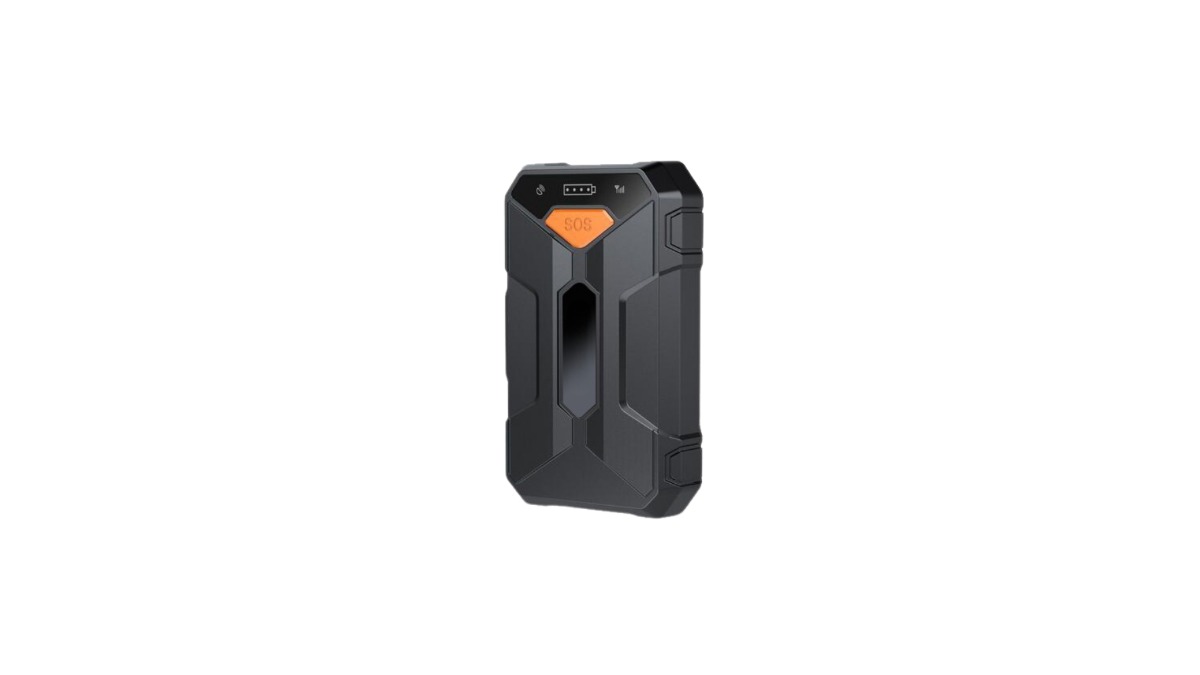
Yes, and it takes no wiring. Battery-powered trackers such as AssetTrack mount magnetically, carry an IP67 rating and run 10 years on one daily GPS fix, while AssetTemp attaches inside the box on replaceable batteries. A trailer built before smart reefer controllers existed reports the same data as a new one.
Can reefer monitoring integrate with an existing TMS or ERP?
Yes. GPX is platform-agnostic, so the location and condition feed sits alongside your ERP, EAM or TMS system of record rather than replacing it. Dispatchers keep planning loads in one tool and receive temperature exceptions in the same queue as every other asset alert.