
Returnable transport items walk off, and most operations never see the bill add up. The Reusable Packaging Association puts annual loss of uninstrumented returnable assets at 10% to 15%. On a fleet of totes, pallets, and IBCs, that shrinkage drains profit and stalls production lines every quarter, and the loss compounds fastest in open loops where assets change hands across third-party custody.
Operations are responding with investment. Future Market Insights values the inventory management software market at $2.7 billion in 2026, climbing to $9.4 billion by 2036 at a 13.1% CAGR, as teams chase real-time inventory visibility across their supply chain. Returnable container tracking is the layer that makes that visibility real for physical assets.
Returnable container tracking tells you where every asset sits, how long it dwells, and which ones stop coming back. This article shows you how to track returnable containers and build a program that recovers RTIs and keeps your pool moving, from pallets and totes to IBCs and dunnage.
What Returnable Container Tracking Is
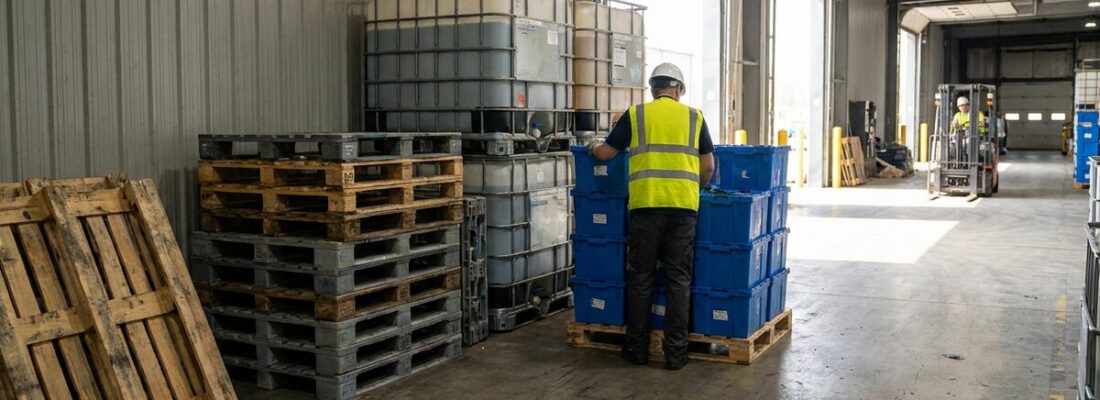
Returnable container tracking monitors the location and movement of your reusable packaging assets across the supply chain. These assets, known as returnable transport items (RTIs), include durable containers like totes, pallets, intermediate bulk containers (IBCs), and dunnage. The point is simple: use every asset harder, lose fewer of them, and stop paying to replace what you already own. Reusable packaging also supports circular-economy goals, but only when assets actually come back.
Good tracking shows you more than a location. It surfaces cycle times, dwell times at each touchpoint, and the bottlenecks that trap assets. When you know where your RTIs are and how they move, you manage the pool instead of chasing it. For the fundamentals, read what asset tracking is.
Open-Loop vs Closed-Loop: Why Your Tracking Approach Has to Differ
Your supply chain shape decides your tracking strategy. Closed loops and open loops create different problems and call for different technology.
Closed-loop systems run inside a controlled network, usually between your own sites or a short list of trusted partners. RTIs circulate on predictable routes and return to their origin, such as a factory-to-warehouse run or an inter-plant transfer. Consistent infrastructure makes data collection easy here. Your real job is to tighten turnaround and stop assets from piling up at one location.
Open-loop systems span a wider network: external customers, third-party logistics providers, and distributors. RTIs travel far, change hands often, and carry a higher risk of diversion or loss. Recovery gets hard when handling varies and no shared infrastructure exists. These environments need tracking that works without fixed gateways at every stop.
How to Track Returnable Containers, Step by Step
An effective program moves through three phases, from setup to ongoing control. Each phase builds on the one before it.
Phase 1: Assess Your RTI Pool and Operational Flows
-
Catalog every RTI type. List your totes, pallets, IBCs, and dunnage. Record quantity, unit value, typical routes, and current loss rate for each.
-
Map your loops. Separate closed-loop from open-loop operations. Mark the key touchpoints, custody transfers, and dwell areas where assets stall or disappear.
-
Set clear objectives. Decide what you are solving for: less shrinkage, higher asset utilization, faster inventory turns, or stronger partner accountability. Your objective drives the technology you pick.
Phase 2: Select and Implement Tracking Technology
-
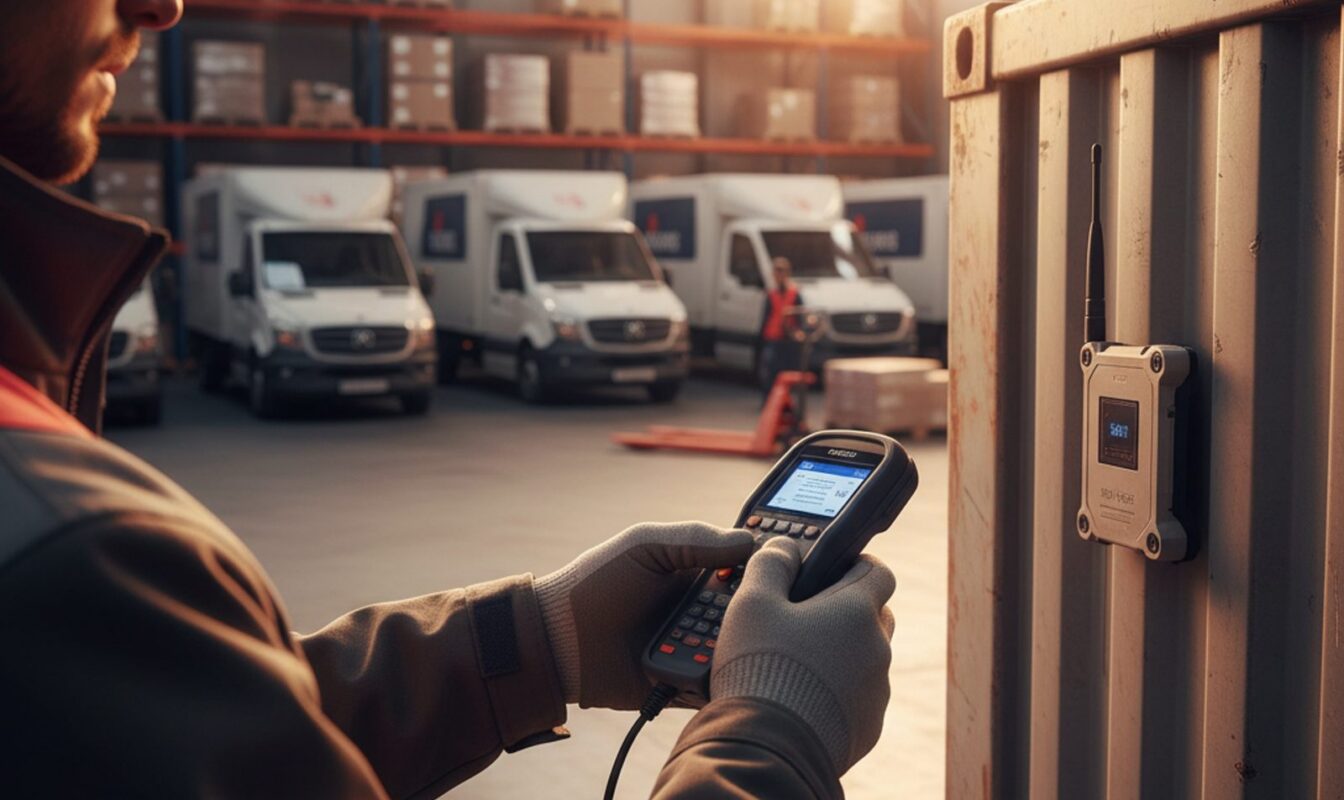
Choose the right method. Match the technology to your loop type, RTI value, and goals. Open loops and mixed asset types reward flexible, multi-network platforms with BLE asset tags or hybrid GPS. GPX AssetTag, for example, uses gateway-free BLE, so you get location updates even where fixed infrastructure does not exist. Learn more about BLE asset tracking solutions.
-
Tag your RTIs. Attach durable tags that survive industrial use, wash cycles, and temperature swings. Quality BLE tags ship with a 4-year replaceable battery and rugged housing.
-
Deploy your readers. Many systems need gateways or configured mobile devices. Gateway-free BLE turns existing smartphones and smart devices into mobile readers, which cuts deployment cost across wide areas and partner sites.
Phase 3: Integrate Data and Establish Monitoring
-
Centralize visibility. Pull tracking data into one platform. An AI-powered system processes location data from GPS, BLE, cellular, and satellite into real-time and historical views. That gets you beyond dots on a map to operational clarity.
-
Set alerts and reporting. Trigger automated alerts when RTIs leave a geofence, dwell too long, or stray from a planned route. Report on utilization, loss rate, and cycle efficiency so you can measure results.
-
Train your team and partners. Make sure everyone who handles RTIs understands the process and their part in keeping data clean. Clear communication drives adoption and accuracy.
Selecting the Right Returnable Container Tracking Technology
| Method | How it works | Open vs closed loop | Per-asset cost | Battery / maintenance | Best-fit RTI |
|---|---|---|---|---|---|
| BLE asset tags (GPX AssetTag) | Bluetooth tag read by phones and fixed gateways | Both loops | Low | 4-year replaceable battery | Totes, dunnage, pallets |
| GPS trackers | Cellular GPS reports location anywhere | Open loop (long-haul) | High | Rechargeable / multi-year | High-value IBCs, racks, trailers |
| Passive RFID | Tags read at portals and gateways | Closed loop / choke points | Low tag, high reader infra | No battery | High-volume totes through fixed readers |
| Barcode / manual scan | Manual scan at each handoff | Closed loop | Lowest | None | Low-value, low-volume RTIs |
The right technology depends on your operation, your budget, and the assets themselves. Each method trades coverage, cost, and maintenance differently.
BLE asset tags are small, low-cost devices that broadcast to nearby readers, including gateways, smartphones, and other BLE assets. Low power draw means battery life measured in years. GPX AssetTag runs gateway-free BLE, so it tracks across open or closed loops without fixed infrastructure at every point. It fits totes, dunnage, and pallets, with location updates indoors and out.
GPS trackers deliver wide-area, real-time location over satellite and cellular. They suit large, high-value RTIs that travel long distances, such as specialized containers and shipping frames. They cost more per unit, run larger, and need recharging or external power. Coverage drops indoors and in dense urban areas.
Passive RFID uses unpowered tags that fixed readers detect at close range. It works well for high-volume, fixed-point reads in controlled spaces, like pallets crossing a warehouse dock. It needs dedicated reader infrastructure and struggles with metal or liquid-filled containers.
Barcode and manual scan attach codes that staff scan at checkpoints. It is the cheapest entry point and the most labor-heavy, with visibility only at scan points and blind spots in transit. It covers low-volume, low-priority assets but never matches automated tracking.
Why Partners Never Return RTIs They Cannot Scan
Every tracking program hits friction. Plan for these challenges and you keep the program delivering.
Loss in open loops and third-party custody. Once RTIs leave your control, they get misplaced, taken, or never returned. Gateway-free BLE tags hold location even outside your walls, and clear contractual return terms with partners reinforce accountability.
Read rates on metal and liquid-filled IBCs. Metal reflects radio signals and liquid absorbs them, which breaks RFID and some BLE reads. Use tags built for harsh conditions, place them on non-metallic or external surfaces, and combine BLE with cellular or GPS to close the gaps.
Cost per asset versus container value. Tagging a cheap tote with an expensive GPS unit makes no sense. Tier your technology: low-cost, long-life BLE tags for high-volume, lower-value items like totes and dunnage, and GPS for high-value assets like specialized IBCs or vehicle chassis.
Integration with legacy ERP and WMS. Connecting tracking data to existing enterprise systems is where many programs stall. Choose a platform-agnostic system that pushes clean data into your ERP, EAM, and warehouse systems through standard APIs, so you avoid a custom integration project at every site.
Partner data sharing. 3PLs and customers often resist integrating systems or sharing data. Lead with the payoff: fewer losses, better efficiency, stronger partnerships. Easy-to-deploy tracking with simple partner reporting portals removes the IT barrier.
Proving ROI and winning team adoption. New tracking spend needs a clear business case, and crews need a reason to handle assets correctly. Lead with the numbers: recovered assets, fewer replacement buys, higher utilization. Simple workflows and short training keep adoption high and data clean.
Tag durability in wash and reuse cycles. Containers face harsh chemicals, heat, and constant handling. Specify tags rated for industrial use with IP67 or IP68 water and dust resistance. GPX AssetTag units handle these conditions and carry a 4-year replaceable battery, so they last across thousands of cycles.
Building a Returnable Container Tracking Program That Scales
A strong program does not stop at go-live. It scales with your operation and improves over time.
Start with a platform built to scale. It should add assets and locations without friction and connect to your ERP and warehouse management systems. A multi-network platform that supports different tag types and connectivity gives you that headroom, plus one unified view instead of siloed data.
Then put your data to work. An AI-powered platform applies predictive analytics to raw location data. Scout AI reads movement patterns, flags bottlenecks, predicts losses before they happen, and recommends process fixes. You shift from reacting to problems to preventing them, and predictive ETAs sharpen your planning.
Track the numbers that matter. Watch utilization rate, cycle time, asset recovery rate, and replacement-cost reduction. Review them on a schedule, refine where the data points, and show stakeholders the dollars you saved.
Keep improving. Ask your operations teams, logistics partners, and customers what they see on the ground. Their feedback surfaces problems and opportunities you would otherwise miss. Adjust the program as your supply chain changes, and it stays useful year after year.
Which RTI Tracking Method Fits Your Loop
Match your operation to the technology. Weigh the environment your RTIs run in, their value, and the visibility you need. Complex open loops with mixed assets like totes, pallets, and IBCs call for a flexible, multi-network platform built on low-cost, long-life BLE tags, with no heavy fixed infrastructure. Check how cleanly the platform connects to your existing systems and whether it delivers intelligence beyond location. Pick the system that predicts, not just reports, and that grows with you.
Ready to see every returnable transport item in your fleet? See how GPX AI-powered asset tracking stops RTI loss and keeps your supply chain moving. Visit our returnable container tracking solutions page to learn more.
Frequently Asked Questions (FAQs)
How do you track returnable containers?
You track returnable containers by tagging each RTI with a location device, then reading those tags as assets move. Attach BLE asset tags, GPS trackers, or RFID to your totes, pallets, and IBCs, capture reads at gateways, docks, and on phones, and feed the data into one platform that shows location, dwell time, and loss. Start with your highest-value or highest-loss assets, then scale across the pool.
How do you track returnable containers in an open loop vs a closed loop?
In closed loops, where RTIs circulate inside a controlled network, passive RFID or BLE with fixed gateways works well. Open loops involve external partners and less control, so gateway-free BLE tags or hybrid GPS trackers fit better. Both give you visibility across varied environments without dedicated infrastructure at every point.
What is the best technology to track totes, pallets and IBCs?
It depends on asset value and environment. For high-volume, lower-to-medium-value items like totes and dunnage, BLE asset tags are cost-effective and accurate. For high-value items or long-distance travel, GPS trackers fit. A multi-network platform that combines both covers a mixed RTI pool best.
How long do the tags last and do they survive wash/reuse cycles?
Battery life and durability vary by technology. GPX AssetTag uses a 4-year replaceable battery for long service life. The tags are built for industrial use and hold up to wash cycles, chemical exposure, and temperature swings across repeated reuse.
How does AI and predictive analytics enhance returnable container tracking?
AI turns raw location data into decisions. Scout AI reads movement patterns across your RTI pool, flags bottlenecks, predicts losses before assets disappear, and recommends process fixes. Predictive analytics sharpen ETAs and lift asset utilization, so you move from reacting to shrinkage to preventing it.