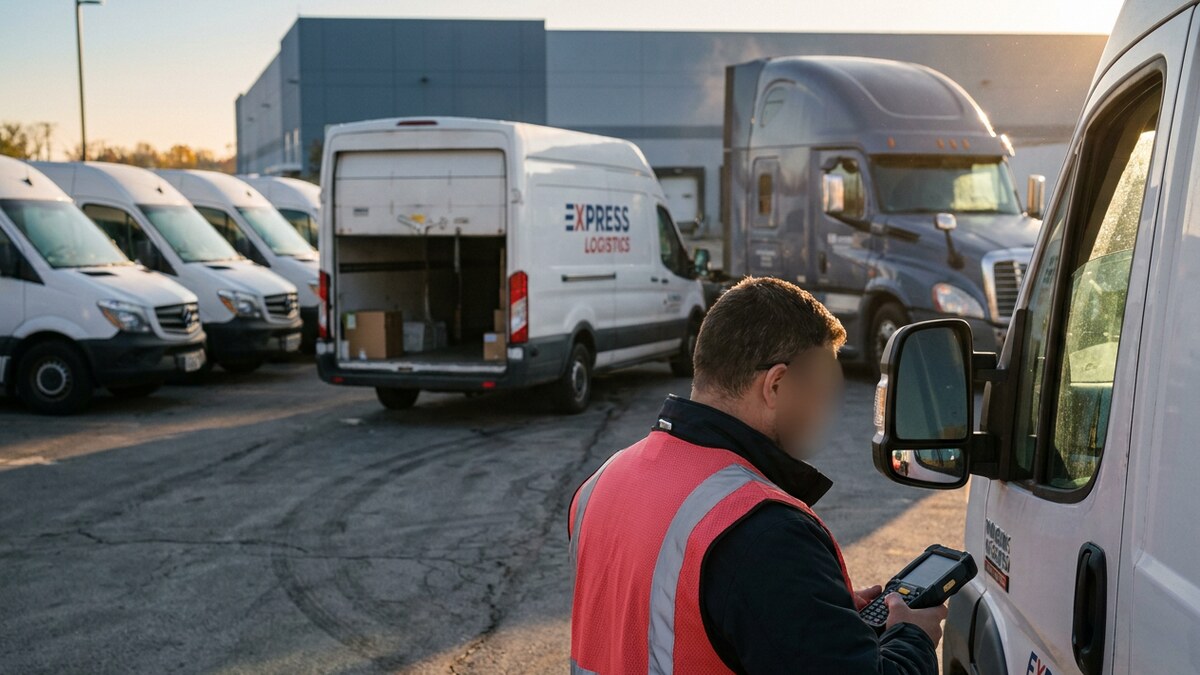

A trailer leaves a yard in Dallas. A $40,000 diagnostic cart goes missing on the third floor of a hospital. A pallet of high-value parts sits idle in a depot for nine days while three people swear it shipped. None of these assets are lost in the philosophical sense. They are simply invisible, and invisibility is expensive.
Bluetooth Low Energy has become the connective tissue that closes that visibility gap, especially indoors and at close range where satellite signals cannot reach. The market reflects it. The BLE indoor location market is projected to grow from USD 4.3 billion in 2025 to USD 11.8 billion by 2030 at a 22.5 percent CAGR, while the broader asset tracking and inventory management solutions market climbs from USD 66.67 billion in 2026 to USD 145.37 billion by 2032. The hardware is no longer the hard part. Choosing the right solution architecture is.
This guide ranks the top BLE tracking solutions for 2026 as distinct architectures built for distinct jobs, not as a list of identical gadgets. By the end you will know which Real-Time Location System (RTLS) and Indoor Positioning System (IPS) approach fits construction fleets, healthcare equipment, automotive supply chains, and in-transit cargo, and how to choose without overbuying infrastructure you do not need.
What Is a BLE Tracking Solution and How Does It Work?
A BLE tracking solution locates and monitors physical assets using Bluetooth Low Energy radios, and it forms the foundation of a modern Real-Time Location System (RTLS) and Indoor Positioning System (IPS). A low-power tag on the asset broadcasts a signal, nearby gateways hear it, and a cloud platform reports the location in near real time. Those gateways can be smartphones, vehicle-mounted hubs, fixed readers, or other tracking devices already moving through a facility.
BLE has taken over indoor and near-asset tracking for four reasons:
- Low power draw. A BLE tag can run for years on a small battery, which makes it practical to deploy across hundreds or thousands of assets without a crew chasing dead devices.
- Low cost per asset. Putting a full cellular GPS tracker on every wrench, cart, or container is not economical. BLE tags cost a fraction of that and scale to high volumes.
- Indoor accuracy. GPS fails inside hospitals, parking decks, steel buildings, and basements. BLE thrives there, delivering room-level and zone-level location where satellites go dark. Advances such as Bluetooth 5.1 AoA (Angle of Arrival) now push that precision toward sub-meter accuracy for high-value RTLS deployments.
- Network flexibility. BLE pairs with GPS, WiFi, and cellular to create a layered system that follows an asset from a loading dock, into a truck, across a highway, and onto a job site.
The difference between a mediocre deployment and a great one is rarely the tag itself. It is the network the tag reports through and the intelligence layer that turns location pings into decisions.
Why Are BLE Tracking Solutions Replacing Legacy Asset Tracking in 2026?
BLE tracking solutions are replacing legacy systems because they deliver real-time indoor visibility at a fraction of the infrastructure cost, and because IoT convergence now lets a single BLE network feed location, condition, and supply chain visibility data into one platform. Three forces have pushed BLE to the center of enterprise strategy.
Theft, loss, and inventory shrinkage are climbing. Cargo theft and equipment loss reached record levels through 2025, and finance teams now treat real-time visibility as a loss-prevention line item rather than a nice-to-have. BLE makes it affordable to tag the long tail of assets that used to fly under the radar, which is where most shrinkage hides.
Indoor visibility became a requirement. Construction sites, hospitals, automotive plants, fleet depots, and distribution hubs all share the same blind spot: the moment an asset moves indoors, GPS-only systems lose it. BLE beacons are now one of the fastest-growing segments of the asset tracking market precisely because they solve that blind spot through true IPS coverage.
IoT convergence and lighter infrastructure changed the math. Early BLE systems demanded fixed readers bolted to every wall, which made them costly and slow to deploy. Modern crowdsourced and mobile-gateway architectures use the devices already in motion, which removes most of the installation burden and the associated CapEx. At the same time, IoT convergence means the same tag that reports location can also report temperature, humidity, and motion, feeding condition data into predictive maintenance programs and supply chain visibility dashboards from one source. This is why hybrid telematics, the blend of BLE indoor location with GPS wide-area tracking, has become the dominant buying pattern for asset-intensive operations.
Top 7 BLE Tracking Solutions for Enterprise Asset Visibility
The best solution is the one matched to your asset profile, your environment, and your budget. Below are the seven leading BLE tracking architectures in 2026, ranked by how much real-world visibility they deliver per dollar deployed, with each defined by the specific technology gap it closes.
1. Crowdsourced Network BLE Tracking
This is the highest-impact architecture available today, and it closes the fixed-infrastructure RTLS gap. Instead of forcing you to install readers, a crowdsourced network uses an existing fleet of gateways already in motion: smartphones, vehicles, forklifts, and dedicated hubs. The GPX Intelligence platform runs this model at scale through a network of more than 150 million interconnected BLE gateways, which means a tagged asset is heard the moment it passes near any participating device.
It fits construction equipment moving between sites, healthcare assets circulating through a campus, and in-transit cargo that needs lane-level visibility without dedicated gear at every stop. Strongest match for organizations that want broad RTLS coverage with near-zero CapEx.
2. Hybrid BLE Plus GPS Multi-Network Platforms
Hybrid platforms close the hybrid telematics gap by combining a long-life GPS tracker with BLE so a single asset stays visible outdoors and indoors. The GPS device reports wide-area location over cellular and reads nearby BLE tags as it moves, turning every powered tracker into a roaming gateway. GPX builds this into the AssetTrack family, which delivers up to 10 years of battery life when reporting once per day, adds WiFi positioning for indoor accuracy, and reads BLE tags in range for precise proximity location, all reported as unified asset tracking and supply chain visibility rather than raw vehicle telematics.
This is the architecture of choice for trailers, heavy equipment, and high-value mobile assets that travel long distances and then park inside structures where GPS cannot follow.
3. Disposable BLE Smart Labels for In-Transit Shipments
Some assets do not come back. For single-trip shipments, parcels, and one-way freight, a reusable tracker creates a retrieval problem that costs more than the tracker itself. The GPX Smart Label answers this: a peel-and-stick disposable BLE tracker less than 1mm thick, starting around $9.75 per unit, that activates on placement with no SIM card, no wiring, and no reverse logistics.
It is purpose-built for in-transit logistics and supply chain visibility where the asset, or its packaging, is consumed at the destination. Nothing on the market matches it at that price-to-capability ratio for one-way visibility.
4. Rugged Enterprise BLE Asset Tags
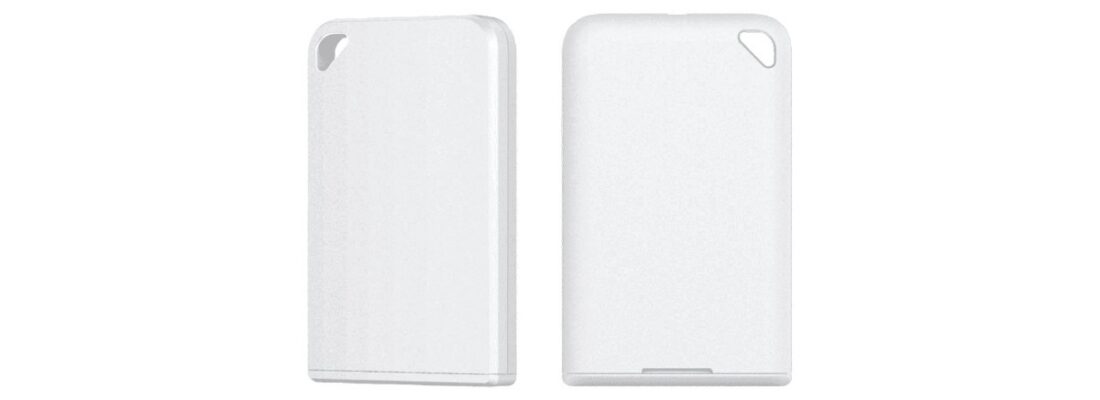
When the asset itself is durable and stays in service for years, you want a tag built to match, and you want IPS-grade indoor precision. The GPX AssetTag and AssetTag Edge are IP67-rated for dust and water resistance, deliver a 4-year replaceable battery life, and mount via adhesive, screws, or zip ties on almost any surface. They locate within 75 to 150 feet of any BLE-enabled GPX device, indoors or out.
Because the battery is replaceable rather than disposable, total cost of ownership stays low across large fleets of tools, returnable containers, automotive components, and medical devices. You refresh the cell instead of discarding the tag, which protects both OpEx and CapEx over a multi-year program.
5. Fixed-Infrastructure BLE Beacon Systems
The traditional RTLS approach anchors fixed BLE readers throughout a building to create zone-level location grids. It delivers reliable, consistent indoor positioning within a single controlled site, which suits a hospital wing or a manufacturing floor where assets rarely leave, and it can layer in Bluetooth 5.1 AoA for higher precision.
The trade-off is real. Fixed infrastructure carries high upfront CapEx, requires careful reader placement and cabling, and does not travel with the asset once it leaves the building. For multi-site or mobile operations, it is the heaviest and least flexible option on this list.
6. Mobile Gateway BLE for Vehicles and Fleets
This architecture mounts the gateway on the move and closes the coverage gap in yards and fields. A hardwired hub installed in a truck, van, or piece of equipment reads BLE tags in its vicinity and relays them over cellular, turning every vehicle into a roving reader. The GPX BLE RoadWired hub does exactly this, extending coverage across yards, depots, job sites, and routes without any fixed installation.
It excels in fleet operations, yard management, and field service, where assets cluster around vehicles that are already going everywhere the assets go.
7. AI-Powered BLE Analytics Platforms
The most advanced solutions add an intelligence layer on top of the location data and close the gap between tracking and decision-making. Rather than handing operators a map of dots, an AI analyst answers questions in plain language. GPX Scout AI lets a user ask things like which assets have been idle more than 48 hours, which shipments deviated from route in the last 30 days, or which lanes carry the highest theft risk, and returns answers without a dashboard hunt. The same data layer supports predictive maintenance by surfacing usage and condition trends before a failure stops work.
This is the layer that separates a tracking system from a decision system. For data-heavy operations across logistics, healthcare, and supply chain, the analytics tier is where BLE data finally pays for itself.
| BLE Tracking Solution | Best Use Case | Indoor Visibility | Battery and Power | Infrastructure and CapEx |
|---|---|---|---|---|
| Crowdsourced Network BLE (GPX-powered) | Construction, fleet, healthcare, in-transit assets | Yes, 75 to 150 ft via 150M+ gateways | 5-year replaceable (AssetTag) | None, uses ambient gateways |
| Hybrid BLE plus GPS platform | Trailers, heavy equipment, mobile high-value assets | Yes, BLE indoor plus GPS outdoor | Up to 10 years (AssetTrack, 1x/day) | Low |
| Disposable BLE Smart Labels | Single-trip shipments, parcels, one-way freight | Yes, network dependent | Single-use built-in cell | None |
| Rugged enterprise BLE tags | Tools, containers, automotive parts, medical devices | Yes, 75 to 150 ft (IPS-grade) | 5-year replaceable | Low |
| Fixed-infrastructure BLE beacons | Single controlled site, fixed indoor zones | Yes, zone level, AoA optional | Beacon coin cells | High, anchored readers and cabling |
| Mobile gateway BLE (vehicle hubs) | Yards, depots, field service, fleet routes | Yes, mobile coverage zone | Vehicle powered | Low, hardwired hub per vehicle |
| AI-powered BLE analytics platform | Data-heavy operations needing plain-language insight | Software layer over any source | Not applicable | None, software |
BLE vs GPS vs RFID vs UWB: Which Tracking Technology Is Best?
No single technology wins everywhere. The best choice is a BLE-first architecture for indoor and near-asset visibility, paired with GPS for the outdoor and over-the-road segments, with RFID and UWB reserved for the narrow cases that justify their cost. Here is where each one earns its place.
- BLE wins on indoor and near-asset visibility, low cost per tag, and multi-year battery life. It is the right default for the high-volume, mid-value assets that make up most of a fleet, and Bluetooth 5.1 AoA narrows its precision gap with UWB.
- GPS wins on wide-area, outdoor, real-time location across long distances. It is the right layer for trailers, vehicles, and assets that travel between cities, and it pairs naturally with BLE for the indoor leg of the journey.
- RFID wins on instantaneous, high-speed scanning at fixed checkpoints such as gates and dock doors, but it demands readers at every read point and offers no continuous location between scans.
- UWB wins on centimeter-level precision in tightly controlled spaces, yet it carries the highest infrastructure cost and power draw, which limits it to specialized indoor applications rather than broad asset fleets.
For most operations, a BLE-first RTLS with GPS bolted on covers the full asset journey at a fraction of the cost of a UWB or fixed-RFID build.
Inventory Shrinkage and Indoor Blind Spots Left Unsolved
A BLE tracking solution earns its keep by removing specific, measurable problems from daily operations: it cuts inventory shrinkage, eliminates indoor blind spots, enables predictive maintenance, and reduces the CapEx tied up in fixed tracking infrastructure. The strongest deployments target these directly.
- Inventory shrinkage and theft. Tagged assets generate alerts the moment they leave a geofence, which shifts loss prevention from forensic to preventive and recovers the long tail of items that shrinkage usually swallows.
- Lost time searching for assets. Crews and clinicians lose hours hunting for equipment that visibility eliminates. BLE turns a search into a glance at a screen.
- Indoor blind spots. The handoff from outdoor GPS to indoor space is where most systems lose the asset. BLE closes that gap inside hospitals, plants, parking structures, and multi-level sites through true IPS coverage.
- Unplanned downtime. When BLE tags carry sensors for temperature, vibration, or usage, the data feeds predictive maintenance so teams service equipment before it fails rather than after it stops a job.
- Underused equipment. Idle-time data exposes assets that sit unused, so you can right-size a fleet instead of buying more.
- High capital expenditure. Crowdsourced and mobile-gateway architectures remove the fixed-reader build, which converts a large RTLS CapEx project into a lightweight, scalable deployment.
Honesty matters in a buying decision, so here is where BLE alone reaches its limits. It is not a real-time outdoor tracker on its own, so it needs a GPS or gateway layer for over-the-road location. Its range is shorter than cellular, which is why network density matters more than the tag spec. And a fixed-beacon build can become costly if you anchor infrastructure where a crowdsourced or mobile-gateway model would have done the job. The fix for all three is choosing the right architecture rather than the cheapest tag.
What Features Define an Enterprise-Grade BLE Tracking Solution?
An enterprise-grade BLE tracking solution combines broad network reach, multi-network connectivity, long-life or disposable power options, rugged hardware, sensor support for predictive maintenance, and a native AI intelligence layer. Once you move past the tag itself, the platform decides whether the deployment succeeds. Evaluate any solution against these criteria.
- Network reach. Ask how an asset gets located when no fixed reader is nearby. A large crowdsourced and mobile-gateway network means RTLS visibility without an infrastructure project.
- Multi-network connectivity. The platform should blend BLE, GPS, WiFi, and cellular so coverage follows the asset rather than stopping at a building wall.
- Battery economics. Favor replaceable, long-life cells for durable assets and disposable labels for one-way shipments. Match the power model to the asset lifecycle.
- Ruggedization. IP67 rating and flexible mounting matter for construction, automotive, and outdoor storage environments.
- Sensor and condition data. Tags that report temperature, humidity, or motion turn a location system into a predictive maintenance and cold-chain compliance tool through IoT convergence.
- An intelligence layer. Raw location is noise until something turns it into answers. Native AI analytics that respond to plain-language questions convert data into decisions.
- Scalability across industries and sizes. The right platform serves a single fleet and an enterprise across 50-plus industries on the same system, so you are never forced to re-platform as you grow.
How to Choose the Right BLE Tracking Solution for Your Business
The right choice falls out of three questions, answered in order.
First, what is the asset profile? Durable, in-service assets such as tools, containers, and medical devices call for rugged BLE tags with replaceable batteries. One-way shipments call for disposable Smart Labels. High-value mobile assets that travel long distances call for a hybrid BLE plus GPS platform.
Second, where do the assets live and move? If they stay inside one controlled building, fixed beacons can work. If they move across sites, yards, routes, and regions, a crowdsourced network or mobile-gateway model delivers far more coverage for far less CapEx. For most construction, fleet, healthcare, and automotive operations, the assets move, so the network-based RTLS approach wins.
Third, what decision do you need the data to drive? If you only need to find things, a map is enough. If you need to cut shrinkage, reduce idle equipment, enable predictive maintenance, and flag route deviations, you need an AI analytics layer on top of the location data.
For the majority of B2B operations, the answer converges on a single architecture: a crowdsourced, multi-network BLE platform with rugged replaceable-battery tags, disposable labels for one-way freight, mobile gateways on the fleet, and an AI layer that answers questions in plain language. That is the configuration that delivers the most visibility per dollar without an infrastructure build, and it is exactly how the GPX Intelligence platform is designed to work across more than 50 industries.
Ready to see which BLE tracking solution fits your assets and environment? Explore the full GPX Intelligence platform and request pricing to map the right RTLS architecture to your operation and start closing your visibility gaps in days, not months.
Frequently Asked Questions (FAQs)
What is the best BLE tracking solution for businesses in 2026?
The best solution depends on your asset profile and environment, but for most B2B operations a crowdsourced, multi-network BLE platform delivers the most visibility per dollar. It locates assets through a large network of ambient gateways, removing the fixed-infrastructure CapEx of a traditional RTLS build. The GPX Intelligence platform runs this model across a network of more than 150 million BLE gateways, pairing rugged tags, disposable labels, mobile gateways, and an AI analytics layer in one system.
What is the difference between BLE tracking, RTLS, and IPS?
RTLS (Real-Time Location System) and IPS (Indoor Positioning System) are the categories, and BLE is one of the core technologies that powers them. RTLS describes any system that reports asset location in near real time, IPS focuses specifically on indoor location where GPS cannot reach, and BLE tags supply the low-power, low-cost signal that makes both practical at scale. Bluetooth 5.1 AoA further sharpens BLE precision for high-value indoor RTLS.
How accurate is BLE tracking indoors compared with GPS?
BLE is far more accurate than GPS indoors because satellite signals cannot penetrate concrete, steel, and multi-level structures. A BLE tag locates within roughly 75 to 150 feet of any compatible gateway inside hospitals, plants, parking decks, and job sites, where GPS-only systems lose the asset entirely. The strongest deployments use BLE for indoor and near-asset visibility and GPS for the outdoor, over-the-road segment.
How long does a BLE tracking tag battery last?
It depends on the device and reporting frequency. The GPX AssetTag is engineered for a 4-year battery life, and the battery is replaceable, which keeps total cost of ownership low across large fleets because tags are refreshed rather than discarded. Disposable Smart Labels use a single-use built-in cell for one-way shipments, and hybrid GPS devices such as the AssetTrack can run up to 10 years when reporting once per day.
Can BLE tracking solutions support predictive maintenance?
Yes. Through IoT convergence, a BLE tag can carry sensors for temperature, humidity, vibration, or usage and report that condition data alongside its location. Feeding those trends into an analytics layer lets teams service equipment before it fails, which reduces unplanned downtime and extends asset life. This turns a location system into a predictive maintenance and compliance tool without adding separate hardware.
How fast is the BLE indoor location market growing?
The BLE indoor location market is projected to grow from USD 4.3 billion in 2025 to USD 11.8 billion by 2030 at a 22.5 percent CAGR, driven by demand for visibility in spaces where satellite signals cannot reach.