

A misplaced infusion pump or wheelchair is more than an annoyance. It is staff time burned, rentals paid for gear you already own, and care delayed while someone hunts for a vital-signs monitor. A 36-hospital time-and-motion study found nurses spend 6.6% of their shift, about 36 minutes per 10-hour shift, on waste, much of it “hunting and gathering” for equipment and supplies. A separate emergency-department study clocked nurses leaving patient rooms a median of 11 times per shift just to find what they needed.
Buyers search for a “GPS tracker for medical equipment,” but the honest answer has two parts. Satellite GPS does not work through hospital walls, so inside a facility you need indoor positioning (BLE, infrared, Wi-Fi, or ultrasound). Real GPS earns its keep the moment equipment leaves the building: DME delivered to patient homes, devices riding in ambulances, and gear loaned between sites. The strongest platforms cover both.
That split is exactly where buyers get stuck. Most healthcare RTLS systems lock you into fixed ceiling sensors, see nothing once an asset rolls out the door, and run on batteries you cannot replace. Below are the seven platforms worth a shortlist in 2026, what each does best, and where each falls short.
| Platform | Core Technology | Best For | Starting Price | Key Strength |
|---|---|---|---|---|
| GPX (AssetTag) | Gateway-free BLE + Cellular/GPS | In-facility and in-transit medical assets | From ~$3.50/mo | Infrastructure-free indoors, real tracking outdoors |
| CenTrak | Gen2IR + BLE + RFID | Large systems needing clinical-grade precision | Custom quote | Sub-room infrared accuracy |
| Securitas Healthcare | Wi-Fi + BLE + Ultrasound | Hospitals with the largest proven install base | Custom quote | Massive installed footprint |
| Midmark RTLS | Infrared + BLE | Outpatient and clinic chair-level workflow | Custom quote | Deep Epic and nurse-call integration |
| AiRISTA Flow | BLE + Wi-Fi (Angle-of-Arrival) | Rapid deployment on existing wireless | Custom quote | Runs on infrastructure you already own |
| Sonitor | Ultrasound (ULE) + BLE | Ultrasound-grade room accuracy | Custom quote | Wall-contained ultrasound positioning |
| Cognosos (Cox Prosight) | BLE, hardware-light software | Room-level tracking with minimal in-room gear | Custom quote | LocationAI without dense infrastructure |
What Makes Room-Level Medical Tracking So Expensive
Hospitals do not lose equipment because staff are careless. They lose it because mobile assets move constantly across departments, floors, and sometimes buildings, while the tracking system stands still. Three problems show up on almost every evaluation.
First is the infrastructure tax. Infrared and ultrasound systems deliver excellent room-level accuracy, but only after you mount sensors or exciters across the ceilings of every space you want to cover. That capital cost, plus the IT and facilities labor to install it, is why many RTLS projects stall at one department instead of going house-wide.
Second is the indoor-to-outdoor blind spot. The moment a ventilator leaves for another campus or a CPAP machine is delivered to a patient’s home, a facility-only RTLS goes dark. Durable medical equipment (DME) providers and multi-site systems feel this most: the gear they most want to recover is exactly the gear that leaves the building.
Third is battery burden. Tags that need recharging pull staff off the floor to swap and dock them, and sealed tags force a full hardware replacement when the cell dies. Across thousands of assets, that quietly becomes a recurring operational cost nobody budgeted for.
1. GPX Intelligence (AssetTag)
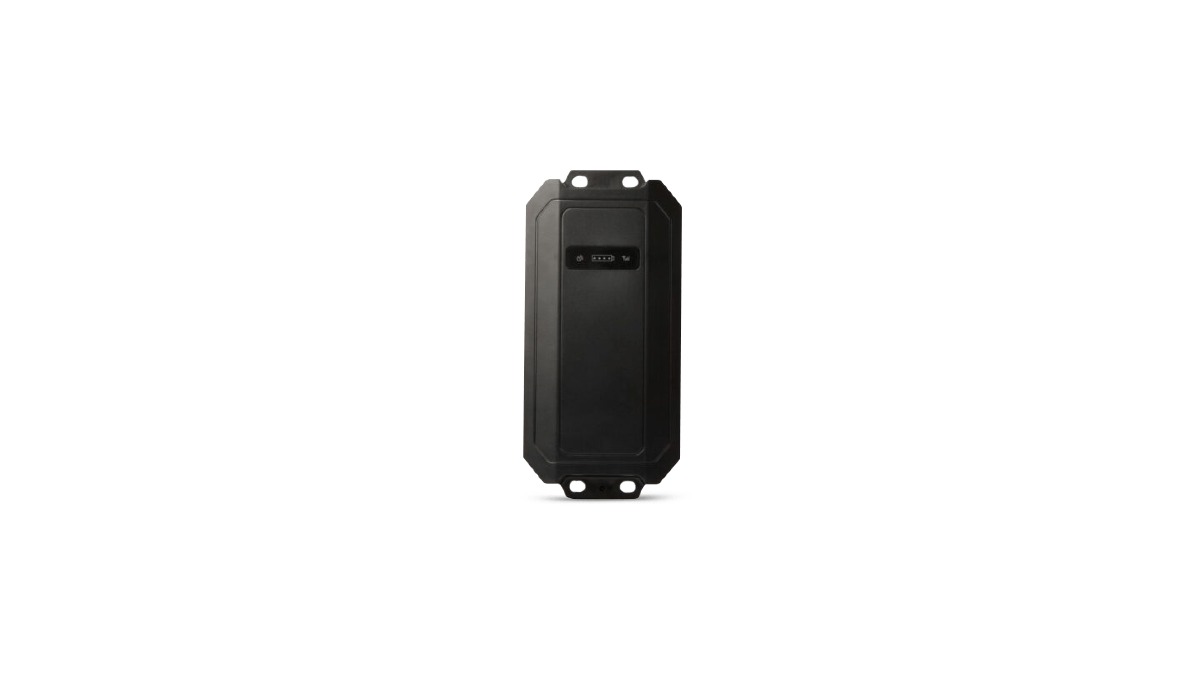
GPX is an AI-powered asset and supply-chain visibility platform, not a hospital-only RTLS vendor. Its AssetTag closes the two gaps that trip up most healthcare buyers: it tracks equipment inside the building without new ceiling hardware, and it keeps tracking once that equipment leaves.
Indoors, AssetTag uses gateway-free BLE that rides the smartphones, facility vehicles, and existing devices already moving through your halls, so there are no exciters or readers to install. Outdoors and in transit, the platform adds cellular and GPS positioning, so a pump delivered to a patient home or a monitor riding between campuses stays on the map. Scout AI layers predictive location and utilization analytics on top, turning raw pings into “where is it, is it in use, and when will you need another.”
Best for: Health systems and DME providers that need both in-facility and in-transit visibility without ripping new infrastructure into the ceiling.
Starting price: Platform subscriptions start at roughly $3.50 per month, with transparent per-asset pricing rather than a custom-quote wall.
Benefits:
- Gateway-free BLE means no ceiling sensors or exciters to buy and install, so coverage scales house-wide instead of stalling in one department.
- A 4-year replaceable battery: swap an inexpensive coin cell instead of recharging tags nightly or replacing whole devices.
- One platform covers indoors and outdoors, so DME, transport, and loaned equipment stay visible after they leave the facility.
- Scout AI predicts location, flags idle or at-risk assets, and surfaces utilization so you buy and rent less.
- Open APIs push location and utilization data into the EMR, CMMS, and ERP systems your teams already run.
2. CenTrak
CenTrak is a clinical-grade RTLS built for large health systems that need certainty about where an asset is, down to the bed or bay. Its second-generation infrared (Gen2IR) distinguishes curtain-divided spaces that BLE or Wi-Fi alone would blur together.
Best for: Large hospitals automating clinical workflows that depend on sub-room accuracy.
Starting price: Custom quote.
Key features: Gen2IR infrared for bed-level accuracy, the ConnectRT platform with AI-assisted asset search, and a broad use-case suite spanning hand-hygiene compliance, staff duress, and temperature monitoring.
Benefits: Clinical-grade precision without line-of-sight gaps; validated across all seven RTLS use-case categories by KLAS; 100-plus integrations and a long hardware warranty.
Drawbacks: Customers report high implementation cost and infrastructure complexity, since full IR precision requires fixed ceiling-mounted sensors throughout the facility.
3. Securitas Healthcare
Built on the AeroScout Wi-Fi heritage, Securitas Healthcare carries one of the largest proven footprints in the category and runs its MobileView platform across existing hospital Wi-Fi, layering in BLE and ultrasound for tighter accuracy.
Best for: Hospitals that want the most battle-tested, large-scale installed base and a platform that rides their current Wi-Fi.
Starting price: Custom quote.
Key features: MobileView with 85-plus certified clinical integrations, the market-leading Hugs infant-protection system, and multi-radio asset, staff, and patient tracking.
Benefits: A dominant install base across 15,000-plus healthcare organizations and repeated Best in KLAS wins; flexibility to run on existing Wi-Fi lowers deployment cost.
Drawbacks: Base Wi-Fi tracking is room-level only, so sub-room precision needs the ultrasound add-on, and the older AeroScout tag hardware is reaching end-of-sale, forcing refreshes.
4. Midmark RTLS
Formerly Versus Technology, Midmark RTLS focuses purely on healthcare with its CareFlow platform, pairing infrared for chair and room-level accuracy with BLE for facility-wide coverage.
Best for: Outpatient clinics and acute-care settings that live and die by exam-room and chair-level workflow.
Starting price: Custom quote.
Key features: An IR-plus-BLE hybrid network, CareFlow staff-duress with precise location pushed into Epic, and asset utilization analytics.
Benefits: Precise sub-room locating when fully deployed, and 30 years of healthcare-specific lineage with deep nurse-call and Epic integration.
Drawbacks: Customers cite badge loss, coverage gaps in common areas, and slow support, and the wired IR layer requires labor-intensive ceiling installation.
5. AiRISTA Flow
AiRISTA Flow takes the opposite approach to the infrared and ultrasound vendors: its Sofia platform runs on BLE and Wi-Fi over the wireless infrastructure a hospital already owns, using Bluetooth Angle-of-Arrival for sub-meter precision where needed.
Best for: Hospitals that want a fast deployment on existing Wi-Fi and BLE without dedicated sensors.
Starting price: Custom quote.
Key features: BLE Angle-of-Arrival gateways, a full badge and tag line covering assets, staff, and patients, and integrations with Cisco, Aruba, and Juniper Mist.
Benefits: Rapid rollout on existing wireless with a quicker payback, plus ISO 9001 and 27001 certification that eases hospital IT and security review.
Drawbacks: A small independent-benchmark footprint, and chair-level accuracy still requires investing in AoA gateways while staff badges are rechargeable rather than replaceable.
6. Sonitor
Sonitor is the one major vendor built on ultrasound. Its Ultrasound Low Energy (ULE) signal is naturally contained by walls, giving clean room-level accuracy, unified with BLE and GPS in the SonitorONE platform.
Best for: Hospitals that want ultrasound-grade room accuracy in high-stakes areas like the ICU or OR.
Starting price: Custom quote.
Key features: ULE as the primary modality, a six-technology platform that lets you pay for accuracy per zone, and an MDuress staff-safety workflow.
Benefits: Ultrasound’s wall containment delivers reliable room accuracy, backed by a Best in KLAS win and 25 years of healthcare-only deployment.
Drawbacks: Infrastructure-heavy, since ULE transmitters must be installed throughout the facility, and the proprietary hardware creates vendor lock-in.
7. Cognosos (formerly Cox Prosight)
Cox Prosight was acquired by Cognosos in late 2024, and Cognosos now runs the platform, layering its LocationAI engine on top to deliver room-level accuracy with far less in-room hardware than infrared or ultrasound systems require.
Best for: Health systems wanting room-level BLE tracking with a lighter hardware footprint.
Starting price: Custom quote.
Key features: Hardware-agnostic BLE software, LocationAI for room-level accuracy without dense readers, and a use-case suite covering assets, hand hygiene, and environmental monitoring.
Benefits: A single-pane software approach and AI-driven accuracy that reduces the in-room hardware bill.
Drawbacks: Cox Prosight is no longer an independent vendor, so buyers contract with Cognosos, and BLE-only accuracy trails infrared or ultrasound in the most demanding clinical spaces.
Match the Tracker to Where Equipment Actually Goes
Start with where your equipment actually goes. If every asset stays inside one building and you need bed-level certainty for clinical workflows, an infrared or ultrasound system like CenTrak, Midmark, or Sonitor will deliver that precision, provided you can fund the fixed sensor infrastructure. If most of your assets stay put but you want a faster, lower-cost rollout on existing Wi-Fi, AiRISTA Flow or Cognosos fit. Our guide to medical equipment tracking systems compares those in-facility platforms head to head.
If your equipment crosses the threshold, to patient homes, ambulances, or sister sites, prioritize a platform that does not go dark outdoors. That is where gateway-free BLE plus cellular and GPS, the approach GPX takes, keeps DME and transport assets visible end to end without a ceiling full of sensors. Finally, weigh the battery model: rechargeable badges and sealed tags carry a labor and replacement cost that a replaceable cell avoids across a large fleet.
The right answer is rarely the most sensors. It is the platform that matches how your assets move, scales past one department, and keeps tracking after equipment leaves the building. See how GPX tracks medical equipment across the facility and out into the field on one platform. For a full breakdown of the technologies and workflows, see our guide to medical equipment tracking.
Frequently Asked Questions (FAQs)
When should you use a GPS tracker instead of an in-facility RTLS system?
Choose a GPS tracker when equipment leaves the building, for ambulances, home-health and DME deliveries, field service, or transfers between sites. GPS and cellular keep those assets visible on the road where indoor RTLS goes dark. For gear that stays inside one facility, an in-facility RTLS system is the better fit. Many operations run both on one platform: BLE indoors, GPS in transit.
How much does a hospital asset-tracking system cost?
It varies widely. Most healthcare RTLS vendors quote custom enterprise pricing based on facility size, the technology used, and how much fixed infrastructure is required, which is why published numbers are rare. Gateway-free platforms that avoid ceiling sensors and offer transparent per-asset subscriptions, starting around a few dollars per asset per month, are typically the most predictable to budget.
What is the ROI of medical equipment tracking?
The payback comes from three places: less staff time spent searching for equipment, fewer rentals and replacement purchases for assets you already own, and better utilization so you buy less. Hospitals that cut “hunting and gathering” time and recover lost mobile equipment commonly justify the system on labor savings and avoided rental costs alone.