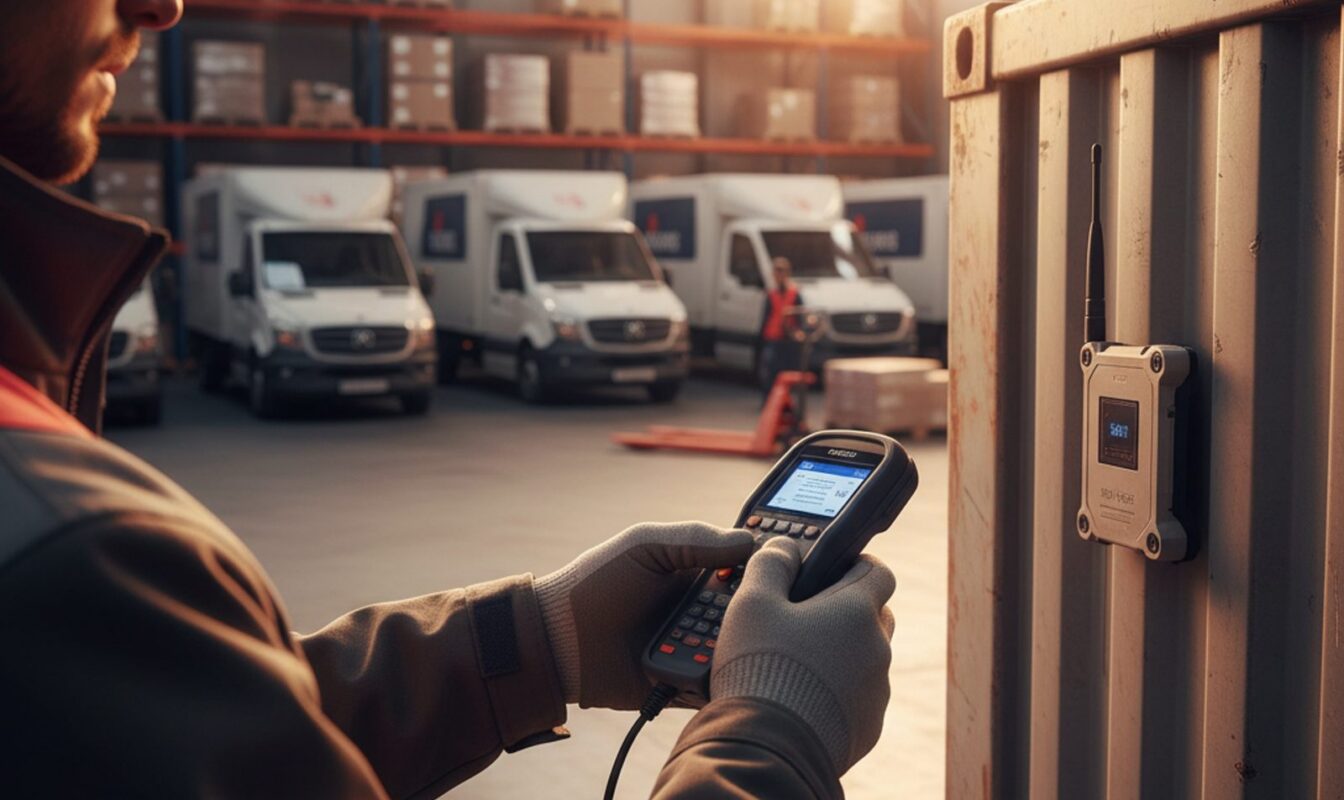


Choosing the right GPS tracking device is less about “can it show a location?” and more about whether it gives your team control when something goes sideways—lost inventory, a silent truck, a high-value shipment that stops unexpectedly, or equipment that walks off a job site. Cargo theft alone is estimated to cost the U.S. economy up to $35B per year, and most operations don’t have the time (or staffing) to chase updates across portals and spreadsheets. In this guide, I’ll break down the top GPS tracking devices to stay ahead in 2026, including what actually matters in the real world (battery strategy, update frequency, coverage, durability, alerting, and platform scalability), and when it’s worth stepping up to an AI-driven visibility layer like Scout so you’re not just collecting pings. You’re preventing problems.
Lost inventory and fleet downtime cost businesses millions annually in unrecovered assets and operational delays. If you manage fleets, equipment, or warehouse operations, you already know how fast things fall apart when visibility drops for even a moment. One silent truck or one misplaced pallet creates immediate financial friction.
Small delays start turning into real costs across your supply chain. The overall economic impact from cargo theft and package loss reached at least 35 billion over the past year. GPS tracking is no longer about convenience. It is about control, accountability, and protecting your bottom line.
Over 104 million units were reported missing or stolen in 2025, impacting businesses across the United States. Real-time visibility is now essential for keeping operations running smoothly as logistics networks grow more complex. The tracking hardware of 2026 is smarter, smaller, and more efficient than previous generations.
At a Glance
- Cargo theft costs the U.S. economy up to $35 billion per year, making recovery capability essential.
- Choosing a GPS tracker is about control when things go wrong, not just showing a location.
- Key real-world factors include battery strategy, update frequency, coverage, durability, and alerting.
- AI-driven visibility layers shift teams from passive location pings to active problem prevention.
- Lost inventory and fleet downtime cost businesses millions annually in unplanned disruptions.
Top GPS Trackers of 2026: Find The Best For Your Needs
Selecting a tracking solution requires a deep understanding of your operational density and asset environment. A logistics team may need a heavy-duty GPS asset tracker that can survive years in a shipping container. A field service company might prioritize small, portable units for specialized equipment.
Reliability is the primary metric for enterprise success in this space. These are the top 7 devices and platforms currently leading the market for professional and high-level tracking needs.
1. GPX Intelligence
Tracker Type: Industrial IoT & Asset Security
Best Tracker: AssetTrack (10-Year Battery)
Best for: Enterprise supply chain intelligence and heavy equipment monitoring via the Scout AI platform.
GPX Intelligence provides a sophisticated bridge between rugged hardware and predictive analytics. While their Scout AI platform handles the data processing and predictive insights, their hardware is built for the “dirt,” not the office. The system focuses on operational resilience by identifying risks and anomalies before they impact the bottom line.
Their flagship product, the AssetTrack, is a non-rechargeable unit designed to last up to 10 years on a single battery, making it the industry standard for non-powered assets like shipping containers and trailers. For assets requiring more frequent updates, the AssetTrack Charge offers a rechargeable alternative. They also offer specialized GPS Stickers for smaller tools and AssetTags that utilize Bluetooth Low Energy (BLE) to create a comprehensive indoor/outdoor tracking mesh.
- Scout AI platform for predictive risk management and data analysis.
- Industrial-grade hardware with IP67 waterproof and dustproof ratings.
- Hybrid tracking capabilities using GPS, Cellular, and Wi-Fi positioning.
2. LandAirSea
Tracker Type: Magnetic Portable & Hardwired Solutions
Best Tracker: LandAirSea Overdrive
Best for: Covert asset recovery and durable outdoor monitoring.
LandAirSea is widely recognized for its robust waterproof design and strong internal magnets. They specialize in “slap-and-track” deployments where speed and ease of installation are paramount. Their devices provide consistent 4G LTE updates and support a “Dark Mode” that disables all indicator lights for covert operations.
The LandAirSea Overdrive is their premier professional unit, featuring a high-capacity battery that lasts 3-4 times longer than the standard 54 model. For vehicle-specific needs, the SYNC plugs directly into the OBD-II port, offering a maintenance-free solution. They also produce the 9100 Solar, which uses integrated solar panels to provide indefinite tracking for assets stored in remote, sunny locations.
- Ultra-strong internal magnets for secure, tool-free attachment.
- SilverCloud app integration for real-time sharing via ShareSpot™.
- Engineered and assembled in the USA for high-level quality control.
3. Tracki
Tracker Type: Micro-Trackers & Universal Attachments
Best Tracker: TrackiPro (10,000mAh)
Best for: International freight and tracking small mobile assets across borders.
Tracki is a global leader in micro-tracking, offering some of the smallest real-time devices available. Their units support worldwide connectivity through an integrated eSIM, functioning in over 190 countries without requiring local SIM cards. This makes them a favorite for international logistics and cross-border shipping.
While the original Tracki 4G is famous for its tiny form factor, the TrackiPro is their flagship for 2026 professional use, boasting a 10,000mAh battery that can last up to a year in power-save mode. Tracki products are uniquely modular, coming with a variety of attachments including magnets, clips, and lanyards. This allows the same device to transition from tracking a high-value piece of luggage to a heavy-duty industrial generator.
- True global roaming across hundreds of international cellular networks.
- Indoors tracking via Wi-Fi and Bluetooth signal sniffing.
- Lifetime warranty and free replacement for lost tracking devices.
4. Optimus
Tracker Type: All-Purpose Portable & Fleet Wired Units
Best Tracker: Optimus 3.0 (with Twin Magnet Case)
Best for: Regional fleet management and high-frequency reporting.
Optimus offers a reliable balance of battery performance and reporting frequency. They are frequently used for monitoring vehicles and mobile equipment across regional networks. Their platform is praised for its simplicity and the ability to set extremely fast update intervals (down to 10 seconds) without massive battery drain.
The Optimus 3.0 is their top-selling portable unit, often paired with their reinforced Heavy Duty Twin Magnet Case for exterior mounting. For fleet managers looking for permanent solutions, the GV50MA Wired Tracker connects directly to vehicle power, while the GV75 offers a waterproof wired option for motorcycles and boats. Their ecosystem is built for users who need consistent, high-resolution historical breadcrumb trails.
- High-frequency reporting for smooth, accurate real-time location maps.
- Flexible subscription tiers with no long-term contract requirements.
- Customizable alerts for geofencing, speed, and low battery notifications.
5. Logistimatics
Tracker Type: Security & Audio-Enhanced Monitoring
Best Tracker: Mobile-200 (Live Audio)
Best for: Personal security, theft verification, and valuable goods protection.
Logistimatics serves the security-conscious market with hardware that offers more than just coordinates. They are the industry leaders in audio-enabled tracking, allowing users to listen to the environment around the device in real-time. This provides critical “ear-witness” context during theft recovery or personal safety incidents.
The Mobile-200 is their flagship 5G/4G device, featuring a rugged magnetic exterior and built-in microphones for live audio monitoring. For industrial long-term needs, they offer the AssetTrack Mini, which provides a 5-year battery life in a compact IP67-rated frame. They also produce the SmartLabel, a disposable peel-and-stick shipment tracker for one-way high-value freight, from $24.99 per device.
- Exclusive live audio monitoring features for real-time environmental context.
- Rugged, “ready-to-work” hardware with internal magnetic mounts.
- Mobile interface optimized for simplicity and quick alert response.
6. Trackimo
Tracker Type: Multi-Band Global Trackers & Personnel Safety
Best Tracker: Trackimo Universal 4G
Best for: Cross-border asset tracking and workforce personnel safety.
Trackimo focuses on global usage with devices that support a wide range of cellular bands and hybrid positioning. They are a dependable choice for assets that move through complex network environments. Their software platform is highly integrated, offering unique features like SOS panic buttons and speed triggers for personnel safety.
The Trackimo Universal 4G is their most versatile product, widely used for everything from drone recovery to international travel. They also offer the Trackimo Guardian, a wearable device specifically designed for children or the elderly with an easy-to-use emergency button. Their 2026 lineup emphasizes “Zero Dead Zone” tracking by utilizing GPS, Wi-Fi, and Bluetooth to ensure location accuracy even inside deep-storage warehouses.
- Extensive global cellular support for consistent cross-border performance.
- Integrated SOS emergency features for workforce and personal safety.
- Open API architecture for white-labeling and enterprise integration.
7. Vyncs
Tracker Type: OBD-II Connected Car Platform
Best Tracker: Vyncs 4G+
Best for: Automated fleet diagnostics and regulatory compliance.
Vyncs is an OBD-II based tracker that draws power directly from the vehicle hardware, eliminating the need for recharging. It is a full-service connected car solution that provides location data alongside engine diagnostics, fuel reports, and driver behavior metrics. This is the top choice for businesses that need to monitor vehicle health without hardware maintenance.
The Vyncs 4G+ is their premier product, offering 3x faster GPS sampling rates compared to their basic models and a “Live Map Auto Refresh” feature. For commercial operations, Vyncs Fleet supports multiple vehicles on a single account with advanced tools for fuel economy and maintenance reminders. Their unique “No Monthly Fee” model (on specific tiers) makes them a highly cost-effective choice for long-term fleet oversight.
- Zero-maintenance power source drawing directly from the vehicle battery.
- Comprehensive engine diagnostics including fault code (DTC) reporting.
- Smart home integration with support for Amazon Alexa and Google Assistant.
Tracking That Fits Your Life
The most effective tracking solutions are the ones that blend seamlessly into your operations. They provide data when you need it without becoming a maintenance burden. Professional-grade hardware ensures that your team stays focused on execution rather than hardware troubleshooting.
| Provider | Hardware Type | Best Flagship Tracker | Primary Strength |
|---|---|---|---|
| GPX Intelligence | Industrial IoT | AssetTrack | Predictive Scout AI |
| LandAirSea | Magnetic Portable | Overdrive | Rugged Durability |
| Tracki | Micro Tracker | TrackiPro | Global Connectivity |
| Optimus | All-Purpose Asset | Optimus 3.0 | High Update Frequency |
| Trackimo | Personnel/SOS | Universal 4G | Personnel Safety |
| Vyncs | OBD-II Dongle | Vyncs 4G+ | Vehicle Health Analytics |
| Logistimatics | Audio-Enhanced | Mobile-200 | Live Audio Context |
Deciding Between Fleet GPS Hardware and Remote Asset Trackers
Selecting the ideal hardware requires balancing data resolution with the physical constraints of your assets. High-frequency reporting is necessary for active vehicle fleets, but stationary equipment in remote sites is better served by long-life units that update once daily. Organizations must prioritize devices that offer network redundancy and support for LTE-M or NB-IoT to prevent data gaps in fringe coverage areas.
The most successful deployments integrate location data directly into existing business workflows to eliminate manual reporting. Transitioning to a professional-grade platform ensures your tracking infrastructure remains functional as global communication standards evolve toward 5G. You must evaluate if your operations require the high-resolution predictive insights of a platform like GPX Scout AI or the simple diagnostic reporting of OBD-II hardware.
By focusing on hardware reliability and software scalability, you protect your operational margins and ensure total asset accountability through 2026. Future-ready systems should prioritize API-first architectures to ensure data portability across the entire distribution network. Investing in the right tracking infrastructure today prevents unmanaged freight expenditure and secures your capital investments for the long term.
Frequently Asked Questions (FAQs)
Do all GPS trackers require a monthly subscription fee?
Most professional-grade real-time trackers require a monthly data subscription because they utilize cellular networks to transmit coordinates to your dashboard. While consumer Bluetooth tags avoid fees, they lack the standalone, long-distance reporting and the 99.9% uptime required for professional asset management and cargo security.
What are the legal requirements for tracking vehicles and personnel?
Legal consent and clear corporate policy are required for workforce monitoring in most jurisdictions. Professional trackers or smartphone-based apps are used for field technician safety and coordination, ensuring that help can be dispatched quickly if an emergency occurs during work hours.
What is the difference between GPS and Bluetooth tracking?
GPS utilizes satellite constellations to provide precise location data anywhere outdoors. Bluetooth tracking is a short-range solution that relies on nearby smartphones to update location. GPS is the standard for tracking moving vehicles and high-value cargo, while Bluetooth is typically used for finding misplaced tools within a facility.
Which hardware provides the longest battery life for long-term asset monitoring?
For daily tracking, the Optimus 3.0 offers strong endurance. In professional B2B environments, industrial GPX hardware is engineered to last between 5 and 10 years depending on the report frequency and specific configuration, making it ideal for long-term equipment oversight.
Do these tracking devices support international roaming for global logistics?
Not all devices are built for global use. Platforms like Trackimo and Tracki are specifically designed with international eSIM technology for cross-border transit. Always verify roaming capabilities and supported cellular bands before deploying hardware for international freight operations.