Top 7 GPS Trackers for Equipment Theft in 2026: Protect Heavy Equipment, Trailers, and Job-Site Assets


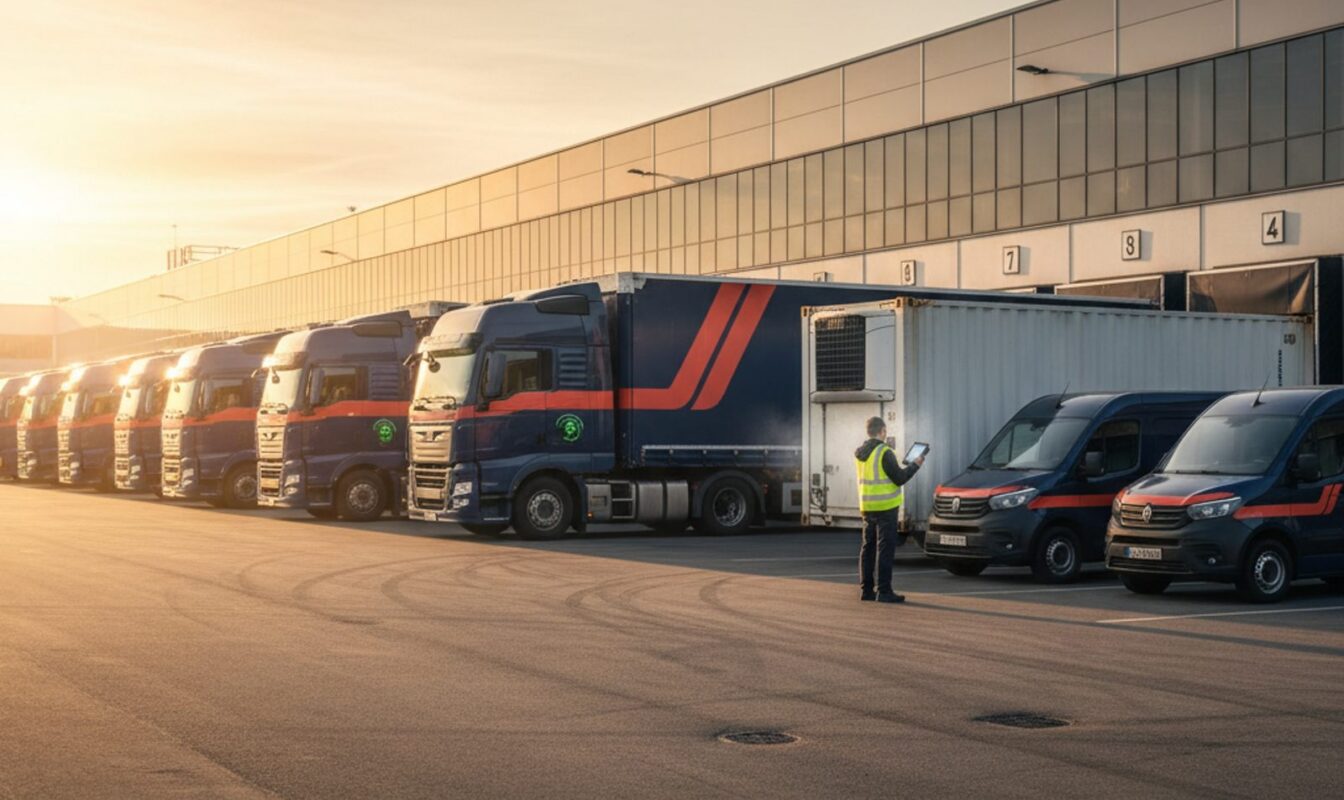
A stolen excavator does not just walk off a job site. It takes your schedule, your rental revenue, your insurance standing, and weeks of replacement lead time with it. Construction and heavy equipment theft costs the U.S. industry an estimated $300 million to $1 billion every year, with more than 11,000 incidents reported annually, according to the NICB and National Equipment Register. The harder number is recovery: fewer than 1 in 5 stolen machines, roughly 21 percent, are ever returned to their owners, according to NICB data compiled for 2026.
The reason recovery rates stay so low is structural. Unlike cars, most heavy equipment has no standardized VIN, machines are easy to repaint and resell, and theft clusters in the quiet hours between 5 PM and 7 AM and across long holiday weekends. A GPS tracker closes that gap. Tracked assets are recovered at far higher rates, frequently within 24 hours, because law enforcement gets a live location instead of a cold report. This guide breaks down the top 7 GPS trackers for equipment theft in 2026, the telematics and AI-powered fleet management features that actually matter on a brutal job site, and how to choose the right one for your mixed construction fleet.
Why Construction Equipment Theft Is Still a Billion-Dollar Problem in 2026
Equipment theft has not slowed down because the economics still favor the thief. High resale value, universal keys across many machine families, organized multi-state theft rings, and the lack of a mandatory product identification number all stack the odds against recovery. For fleet managers, rental houses, and general contractors, the real damage runs well past the sticker price of the machine.
- Lost rental and utilization revenue. A missing skid steer or generator stops earning the moment it disappears, and the gap rarely shows up cleanly on an insurance claim.
- Schedule penalties and idle labor. Crews stand around waiting for a replacement, and delayed milestones can trigger contractual penalties.
- Rising insurance premiums. Repeated claims push contractors into high-risk tiers, and some face policy cancellation after multiple incidents.
- Low recovery odds. Without tracking, most stolen equipment is gone for good, repainted and resold or exported within days.
The pattern is predictable enough to defend against. Theft concentrates after hours and on holiday weekends, targets brand-name machines like loaders and compact excavators, and depends on the asset being invisible once it leaves the yard. Real-time GPS tracking with geofencing breaks all three of those assumptions at once.
What to Look For in a GPS Tracker for Heavy Equipment: Telematics, Smart Geofencing, and Hybrid Tracking
Not every GPS tracker survives a construction environment, and not every tracker is built to stop theft. Before you compare brands, match the hardware and the software to how your equipment actually runs. These are the features that separate a true anti-theft GPS tracker from a basic location dot.
- Real-time location and instant motion alerts. Update intervals matter most during an active theft. Look for trackers that can shift to live, frequent pings the moment unauthorized movement is detected.
- Geofencing and after-hours alerts. A virtual boundary around the yard or job site that fires an alert the instant a machine crosses it, especially during the 5 PM to 7 AM window when most theft happens.
- Rugged, weatherproof hardware. An IP67 rating or better is the floor for dust, vibration, pressure washing, and water exposure. Anything less fails on a job site.
- Hardwired versus battery power. Powered equipment with an engine or alternator pairs best with a hardwired tracker. Unpowered assets like trailers, generators, and attachments need long-life battery or BLE tags.
- Battery life and remote settings. Long battery life keeps unpowered assets protected for years, and remote configuration lets you ramp up reporting frequency during a recovery without a site visit.
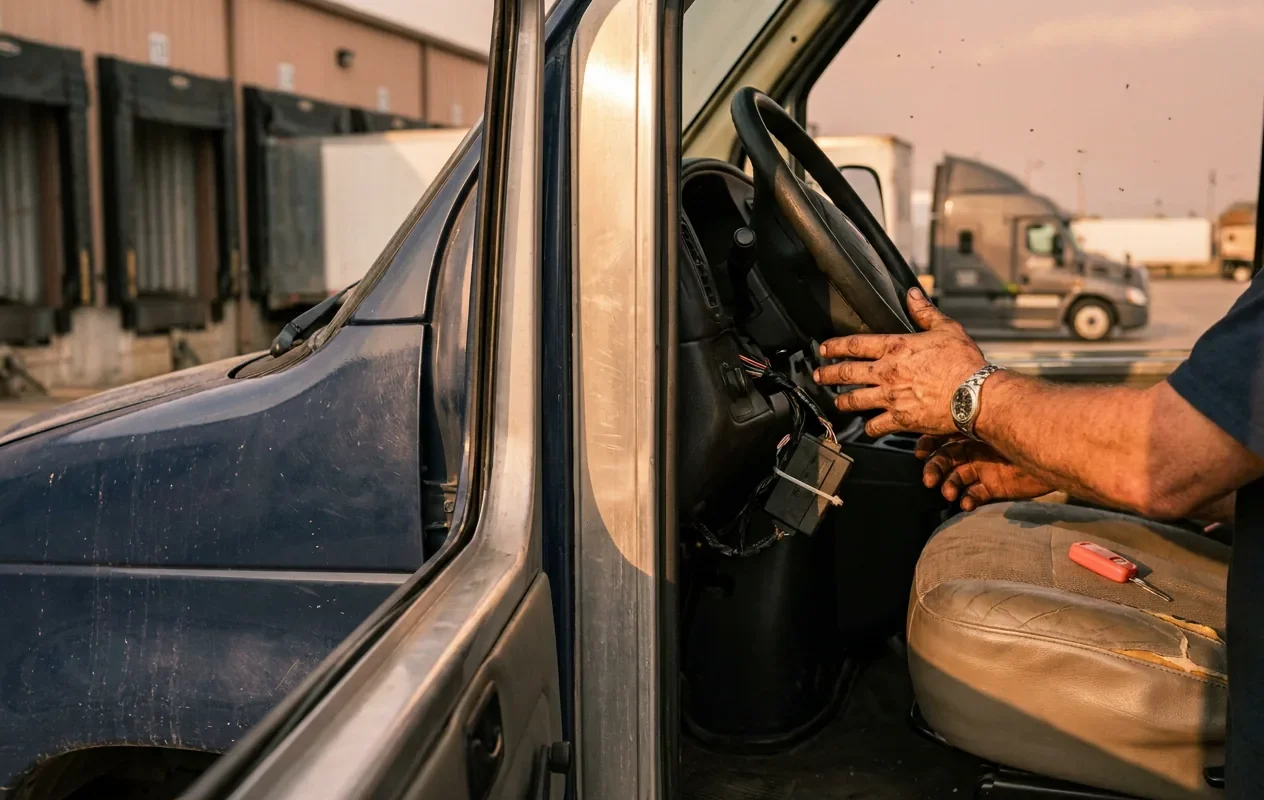
- Anti-tamper and immobilization. Concealed mounting and tamper alerts deter removal. Some hardwired systems add a remote starter disable so you can stop a machine that moves without authorization.
- Mixed-fleet coverage on one platform. If you run both powered machines and unpowered gear, a single dashboard for vehicles, equipment, and BLE beacons saves enormous administrative time, with Bluetooth Low Energy tags covering tools and attachments through a nearby gateway device.
- Telematics depth. Beyond a location dot, the best trackers report engine hours, usage, and fault data. That telematics stream is the raw material for predictive maintenance and accurate billing, not just theft alerts.
- Smart geofencing and AI-filtered alerts. Look for intelligent alerting that learns your operating patterns and suppresses nuisance pings, so alert fatigue does not train your crew to ignore the one alert that counts.
- Hybrid tracking with Wi-Fi and cellular fallback. GPS alone fails inside metal containers and buildings. A hybrid device that falls back to Wi-Fi and cellular triangulation keeps reporting a usable location where pure GPS goes dark.
- Transparent, no-contract pricing. Watch for multi-year lock-ins. Predictable per-device pricing scales cleanly as your fleet grows.
Top 7 GPS Trackers for Equipment Theft in 2026 (Compared)
The lineup below spans the full range of equipment theft protection, from rugged mixed-fleet platforms to budget battery trackers for trailers and generators. We led with the solution built specifically for high-value, mixed construction fleets, then ranked the rest by how well they fit distinct use cases.
1. GPX Intelligence (Best Overall for Mixed Construction Fleets)
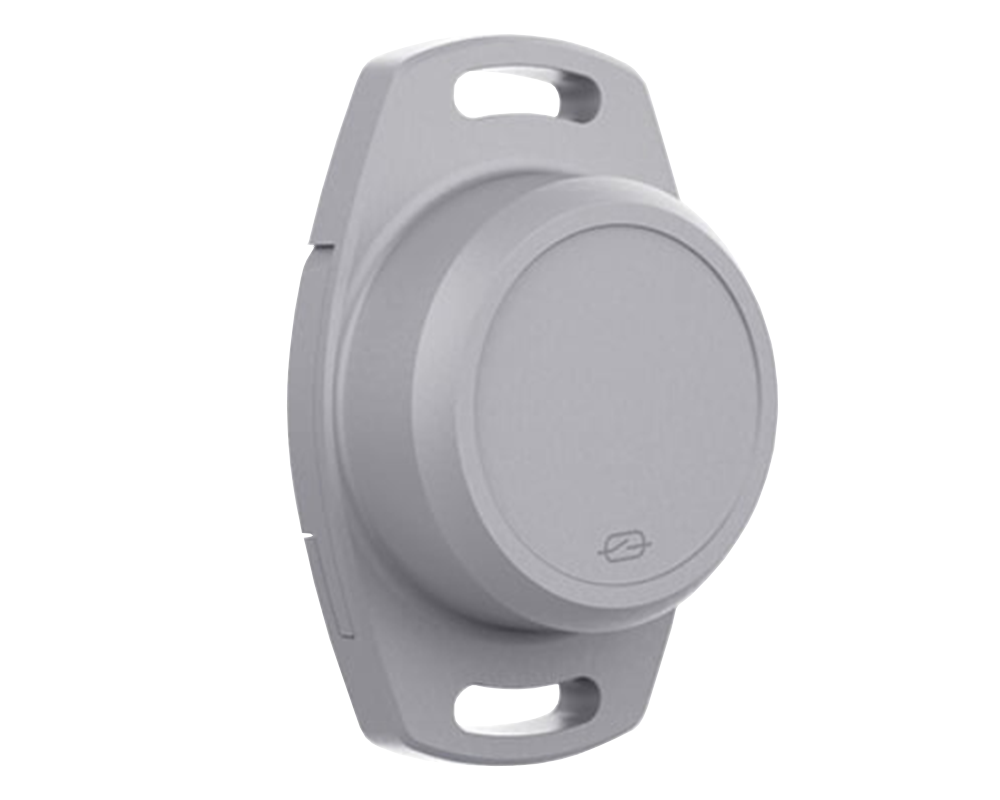
GPX Intelligence is purpose-built for the messy reality of a construction fleet, where powered heavy equipment, trailers, generators, and small attachments all need protection on one platform. The lineup is built around three devices that work together. AssetTrack is the flagship for heavy equipment, trailers, and large containers, with a battery life of up to 10 years and the ability to act as a Bluetooth Low Energy (BLE) gateway for nearby tags. AssetTrack Mini packs the same intelligence into a compact body with up to a 4-year battery for assets where space is tight. The GPX AssetTag is a small, cost-effective BLE tag for individual tools and smaller items that report through a nearby AssetTrack device. That architecture means a skid steer, a tow-behind generator, and a box of attachments can all live on one dashboard.
- Theft protection: Custom geofencing around yards and job sites, plus movement and tamper alerts that fire the moment a device is moved or removed without authorization.
- Recovery Mode: A high-frequency tracking mode you trigger remotely during a theft, feeding law enforcement live, actionable location data instead of a stale last-known point.
- Enhanced Location: When GPS is blocked, GPX falls back to Wi-Fi and cellular tower triangulation, delivering a location reporting success rate above 98 percent even on assets stored indoors or inside containers.
- Cross-border coverage: Devices run on 4G LTE with roaming across the US, Canada, and Mexico, so a machine driven across a state or national border keeps reporting.
- Operational upside: Beyond theft, GPX surfaces utilization, idle time, and engine-hour data so you can right-size your fleet, schedule maintenance, and protect rental margins.
Why it leads: GPX gives contractors and rental operators one system for both powered and unpowered assets, with the geofencing, Recovery Mode, and fallback location that actually drive recovery. In one customer case, a utility company recovered a $120,000 specialty trailer by handing police live tracking data, and a construction firm tracked a stolen toolbox to a pawn shop and recovered it within hours. Explore the full lineup on the GPX construction equipment tracking page.
2. Samsara (Best for Large Fleets That Need Deep Telematics)
Samsara is a strong fit for large operations that want theft protection bundled with full telematics. Hardwired devices pull engine diagnostics and fault codes alongside location, and geofencing plus integrations support after-hours alerting and, in some configurations, immobilization. The trade-off is that Samsara is priced and provisioned for scale, typically through custom quotes, and leans toward powered assets rather than small unpowered gear.
3. Tenna (Best for Hardware-First Mixed Equipment Tracking)
Tenna is built around hardware-based tracking across a wide spread of equipment types, pairing wired GPS units with BLE tags for smaller items. Contractors who want a dedicated equipment tracking platform with strong utilization reporting and geofencing tend to land here. Pricing is quote-based, so it suits mid-size and larger fleets more than a contractor protecting a few machines.
4. Hapn (Best for Hardware Variety Across a Mixed Fleet)
Hapn offers one of the widest hardware ranges in the category, spanning hardwired, battery-powered, and OBD-II devices with full telematics and an open API. That flexibility makes it a practical choice for companies running everything from pickups to powered heavy equipment. Geofencing and movement alerts cover the theft basics, and no-contract pricing keeps it accessible as fleets grow.
5. Tracki (Best Budget Tracker for Smaller Assets)
Tracki is a compact, battery-powered GPS tracker aimed at smaller assets and budget-conscious teams. It delivers real-time tracking, motion alerts, and geofencing at a low monthly price point. For high-value heavy equipment in harsh conditions it is less rugged than purpose-built construction hardware, but it works well for trailers, tool storage, and lower-risk gear.
6. Trak-4 (Best for Trailers, Generators, and Solar Power)
Trak-4 covers a useful middle ground with portable battery, 12V wired, and solar models, plus battery life that can stretch up to 18 months on some configurations. Real-time tracking, instant motion alerts, and geofencing come standard, and plans start around $6.99 per month with no contracts. It is a sensible pick for trailers, generators, and farm or yard equipment that sits unattended.
7. LandAirSea SilverCloud (Best for Covert Vehicle and Trailer Tracking)
LandAirSea SilverCloud is a well-known, compact GPS tracker favored for covert placement on vehicles and trailers. It offers real-time alerts and geofencing with both rechargeable battery and hardwired options. For fleets that want a discreet, recognizable consumer-grade tracker on service vehicles and towables, it is a reliable, affordable layer of protection.
GPS Equipment Tracker Comparison Table (2026)
| GPS Tracker | Best For | Tracking Type | Key Theft Features | Power and Battery | Pricing Model |
|---|---|---|---|---|---|
| GPX Intelligence | Mixed construction fleets (powered and unpowered) | Real-time 4G LTE GPS plus BLE AssetTag | Geofencing, movement and tamper alerts, Recovery Mode | AssetTrack battery up to 10 years, Mini up to 4 years | Subscription, volume pricing |
| Samsara | Large fleets needing deep telematics | Hardwired GPS plus telematics | Geofencing, diagnostics, immobilizer integrations | Vehicle and equipment powered | Custom quote |
| Tenna | Hardware-first mixed equipment tracking | Wired GPS plus BLE tags | Geofencing, utilization, movement alerts | Wired plus battery options | Custom quote |
| Hapn | Hardware variety across a mixed fleet | Hardwired, battery, and OBD-II | Geofencing, movement alerts, open API | Battery and wired options | No-contract subscription |
| Tracki | Smaller assets and tight budgets | Battery-powered GPS | Real-time tracking, motion alerts, geofencing | Rechargeable battery | Low monthly fee |
| Trak-4 | Trailers, generators, and yard gear | Battery, 12V wired, or solar | Instant motion alerts, geofencing | Battery life up to 18 months | From $6.99 per month, no contract |
| LandAirSea SilverCloud | Covert vehicle and trailer tracking | Battery or hardwired GPS | Real-time alerts, geofencing | Rechargeable or wired | Monthly subscription |
How Real-Time Telematics and Smart Geofencing Stop Equipment Theft
A GPS tracker protects equipment in three distinct ways, and the best anti-theft setups use all three together.
- Deterrence. Visible or known tracking makes a machine a poor target. Organized theft rings prefer assets they can move and resell without a live signal following them.
- Detection. Geofencing fires an instant alert the moment equipment crosses a yard or job-site boundary, especially during after-hours windows when no one is on site to notice.
- Recovery. When a machine is taken, real-time location turns a hopeless police report into an active pursuit. Tracked assets are recovered at far higher rates and often within a single day.
The recovery advantage is the whole game. Because heavy equipment lacks the standardized identification that helps recover stolen cars, a live GPS location is frequently the only thing that gets a machine back before it is repainted, parted out, or shipped overseas. The strongest platforms add two recovery accelerators. A high-frequency Recovery Mode, triggered remotely the moment a theft is confirmed, pushes near-constant location updates to you and to law enforcement. And a fallback location layer that uses Wi-Fi and cellular tower triangulation keeps a stolen asset visible even when the GPS signal is blocked inside a container, a metal building, or the back of a box truck.
The ROI of Equipment GPS Tracking Beyond Theft Prevention
The strongest reason to track equipment is that the investment pays off even in the years a theft never happens. A GPS tracker quietly returns value across the whole operation.
- Higher asset utilization. Usage and idle data shows which machines are working and which are sitting, so you can redeploy underused equipment instead of renting or buying more.
- Accurate, defensible billing. Verifiable proof of where a machine was and how long it ran on a job site removes billing disputes and supports cleaner invoicing.
- Proactive maintenance. Engine-hour and usage tracking lets you schedule service before a breakdown, cutting unplanned downtime that often costs more than theft itself.
- Real-time inventory. A single live view of every asset across multiple yards and sites ends the morning scramble of figuring out what is where.
- Possible insurance savings. Many insurers view proactive GPS tracking favorably, and some contractors use it to negotiate lower premiums or qualify for discounts.
That combination is why the smartest buyers stop framing trackers as a security cost and start treating them as an operations platform that happens to also stop theft.
Agentic AI and Predictive Analytics: The Rise of AI-Powered Fleet Management
The biggest shift in equipment tracking for 2026 is not better hardware. It is intelligence. AI-powered fleet management turns the stream of telematics data your trackers already produce into predictions and decisions, moving you from reacting to theft to anticipating it.
- Predictive maintenance. AI reads engine hours, usage patterns, and fault signals to flag a machine trending toward failure, so you service it on your schedule instead of on the side of a road. Because GPX already captures engine-hour and usage data, that telemetry becomes the fuel for predictive service planning.
- Predictive theft patterns. Instead of relying only on fixed rules, AI learns what normal looks like for each asset and each site, then flags the abnormal: a loader that moves at 2 AM on a Sunday, or a trailer drifting toward a known theft corridor. Anomaly detection catches the theft a rigid geofence might miss.
- AI-filtered, smart alerts. Machine learning suppresses the noise that causes alert fatigue, the harmless vibration, the GPS drift, the bird that lands on an excavator, and surfaces only the movements that genuinely matter. Fewer false alarms means your team trusts and acts on the alerts that fire.
- Agentic workflows. The step beyond alerting is action. Agentic systems can recommend or kick off the next move automatically, opening Recovery Mode, notifying the right manager, and packaging a location report for police the moment an anomaly is confirmed.
This is where GPX Intelligence is built to lead. The platform’s telematics depth and hybrid Wi-Fi and cellular location give AI the clean, connected data foundation it needs, and intelligent alerting is designed to cut false positives rather than flood your inbox. As agentic AI matures across fleet management, the operators who win will be the ones whose data was already complete and trustworthy.
Hardwired vs Battery-Powered Trackers for Mixed Construction Fleets
The single biggest hardware decision is power source, and it comes down to whether the asset generates its own electricity.
- Hardwired trackers connect to a machine’s electrical system for continuous power and frequent updates. They are the standard for powered heavy equipment, vehicles, and anything with an engine or alternator, and they enable advanced features like remote starter disable. Self-installation is viable on simple three-wire or OBD-II setups.
- Battery-powered and BLE trackers protect unpowered assets such as trailers, generators, attachments, and tool storage. A long-life device like the GPX AssetTrack carries a battery rated for up to 10 years, so unpowered gear stays covered for years without a charging routine, while small BLE tags such as the GPX AssetTag ride along on tools and report through a nearby AssetTrack. The trade-off is reporting frequency, which you can usually raise remotely during an active recovery.
Most real fleets are mixed, which is why a platform that handles both powered and unpowered assets on one dashboard, like the GPX asset tracking platform, removes the headache of juggling separate systems and logins.
Solving 2026’s Biggest GPS Tracking Pain Points: Alert Fatigue and Signal Loss
Tracking deployments fail for predictable reasons. Knowing them up front saves money and frustration.
- Signal loss inside metal containers. GPS accuracy collapses inside shipping containers, metal cabs, and steel buildings. The fix is hybrid tracking: a device that falls back to Wi-Fi and cellular tower triangulation keeps reporting a usable location where pure GPS goes dark, and BLE beacons can relay through a nearby gateway when a tag alone has no line to the sky.
- Battery drain during recovery. Real-time pinging burns through battery fast. Choose trackers that let you adjust reporting intervals remotely so you only ramp up when it counts.
- Tampering and removal. Thieves who find a tracker will pull it. Conceal placement, use tamper alerts, and add a second hidden tracker on your highest-value machines for dual-tracker protection.
- Alert fatigue. When a tracker pings every time a bird lands on an excavator or the GPS drifts a few feet, crews stop reading the alerts. AI-filtered, smart alerts solve this by learning normal movement and suppressing nuisance pings, so the alerts that fire are the ones worth acting on. Tune geofences to your real operating hours and zones to sharpen them further.
- Rugged failure. Underrated hardware dies from vibration and dust. Insist on IP67 or better for any tracker living on heavy equipment.
- Dead trackers nobody noticed. A tracker only protects an asset while its battery is alive. Build a quick tracker battery check into your routine equipment inspections so a device never goes dark right before a theft.
What to Do If Your Equipment Gets Stolen: A 5-Step Recovery Plan
Speed decides recovery. If a tracked machine goes missing, work this sequence fast.
- Confirm the theft and open Recovery Mode. Verify the asset is actually gone, not just moved by a crew, then switch the tracker into high-frequency Recovery Mode for near-constant location updates.
- Call the police and file a report. Report the theft immediately and get a case number. A fast report with a serial number and a live location gives officers something to act on.
- Share live tracking with law enforcement. Give police real-time access to the location. Platforms like GPX let you create a temporary, restricted login or export a location-history report so officers can follow the asset without delay.
- Notify your insurer. Open a claim early with your report number and tracking records. Documentation speeds reimbursement if recovery takes time.
- Do not pursue the asset yourself. Let police use the live data to recover the equipment safely. Your job is to keep the location flowing to them, not to confront thieves.
This is exactly where tracked fleets pull away from untracked ones. The machines that come home are the ones broadcasting a live position the moment they cross the geofence.
How to Choose the Right GPS Tracker for Equipment Theft Protection
The right tracker is the one that matches your fleet, not the one with the longest spec sheet. Work through these questions in order, and the answer usually becomes obvious.
- What are you protecting? Powered heavy equipment points to hardwired GPS. Unpowered trailers, generators, and attachments point to long-life battery or BLE tags. A mix points to a hybrid platform.
- How fast do you need recovery? If a stolen machine threatens contractual deadlines, prioritize real-time tracking, tight geofencing, and after-hours alerting over price.
- Do you want one dashboard or several? Mixed fleets save real time and money on a single platform that covers vehicles, equipment, and asset tags together.
- What is your total cost of ownership? Weigh hardware, monthly fees, contract terms, and installation. No-contract, per-device pricing scales most predictably.
- How harsh is your environment? Confirm IP67 or better, tamper resistance, and remote configuration before you commit.
For most contractors and rental operators protecting high-value mixed fleets, the strongest combination of real-time GPS, BLE coverage for unpowered assets, geofencing, and after-hours alerting on one platform is what turns equipment theft from a recurring loss into a managed risk.
Protect Your Fleet Before the Next Long Weekend
Equipment theft is predictable, and that means it is preventable. The contractors who recover their machines are the ones who tracked them before they went missing. If you are running a mixed fleet of powered heavy equipment and unpowered assets, GPX Intelligence gives you geofencing, Recovery Mode, fallback Wi-Fi and cellular location, and battery life up to 10 years on a single platform built for the job site. Talk to the GPX team to map the right tracking setup to your equipment, your sites, and your budget.
Frequently Asked Questions (FAQs)
What is the best GPS tracker for heavy equipment theft in 2026?
For mixed construction fleets that include both powered heavy equipment and unpowered assets, GPX Intelligence is the strongest overall choice. Its AssetTrack flagship carries a battery rated up to 10 years and acts as a BLE gateway for AssetTag tool tags, all on one platform with geofencing, movement and tamper alerts, and a high-frequency Recovery Mode that drives recovery. Large fleets focused purely on telematics may prefer Samsara, while budget-conscious teams protecting trailers and generators often choose Trak-4 or Tracki.
Do GPS trackers actually help recover stolen construction equipment?
Yes. Untracked heavy equipment is recovered fewer than 1 in 5 times because it usually lacks a standardized identification number and is quickly repainted or resold. Equipment with active GPS tracking is recovered at far higher rates, frequently within 24 hours, because law enforcement receives a live location instead of a static report.
Should I use a hardwired or battery-powered GPS tracker for equipment?
Use a hardwired tracker for any asset with its own power source, such as an engine or alternator, since it provides continuous power, frequent updates, and features like remote starter disable. Use a long-life battery or BLE tracker for unpowered assets like trailers, generators, and attachments. Many fleets need both, which is why hybrid platforms that cover both on one dashboard are popular.
How much does a GPS tracker for heavy equipment cost?
Pricing varies by hardware type and features. Budget battery trackers start around $6.99 per month per device, while rugged, full-telematics and enterprise platforms are typically priced through custom quotes based on fleet size and feature depth. When comparing costs, weigh hardware, monthly service, contract terms, and installation, and favor transparent no-contract pricing that scales as your fleet grows.
Can thieves defeat a GPS tracker with a jammer?
Jammers can interfere with a raw GPS signal, but they are illegal to use and uncommon in everyday equipment theft. Better trackers reduce the risk further by falling back to Wi-Fi and cellular tower triangulation when GPS is unavailable, so the asset usually keeps reporting a location even under interference or inside a metal structure.
Will a GPS tracker still work if equipment is stored indoors or driven across the border?
Yes on both counts with the right device. For indoor or signal-poor storage, trackers that add Wi-Fi and cellular triangulation can still report a location, with some platforms citing a success rate above 98 percent. For cross-border movement, devices on 4G LTE with roaming across the US, Canada, and Mexico keep transmitting, which matters because stolen equipment is often moved across state and national lines.