

Quick answer
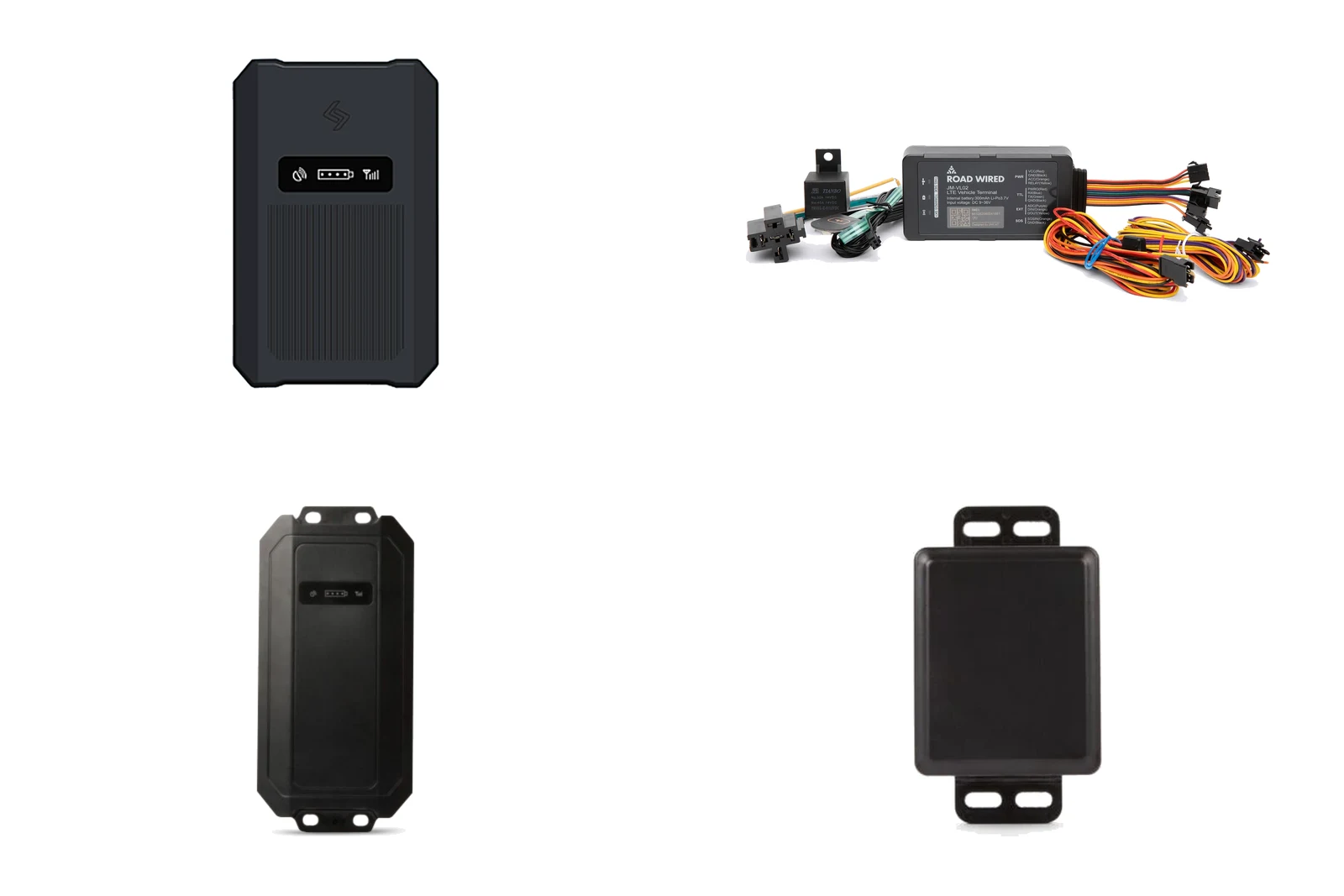
LTE-M fits moving, battery-powered assets. NB-IoT fits stationary assets that send small, infrequent reports. LTE Cat-1 fits higher-data applications with the power budget to match. GPX Intelligence builds AI-powered asset tracking hardware, and its RoadTrack Wired and AssetTrack Voyager trackers run on LTE Cat-M1 and NB2. Pick the network by movement, reporting frequency and tested coverage, not by the label.
GSMA counts 129 live LTE-M networks worldwide in its November 2025 update. The same tracker lists 140 live NB-IoT networks worldwide.
North American buyers have fewer options than those global counts suggest. In November 2024, AT&T confirmed it had stopped certifying new NB-IoT devices and selling NB-IoT data plans, and began moving business IoT customers to its LTE-M network.
Network counts tell you nothing about battery life or coverage on your lanes. A tracker that dies between service visits creates another maintenance job. A missed movement report leaves an asset unaccounted for.
The LTE-M vs NB-IoT for asset tracking decision starts with your workload: how often assets move, when you need reports and how long batteries must last.
| Asset type | Network that fits | Why: battery, movement and coverage | GPX option |
|---|---|---|---|
| In-transit shipments | LTE-M as the starting point | Connected mobility handles route changes; reporting frequency sets the battery requirement | AssetTrack Voyager |
| Powered vehicles | LTE-M for location reporting; Cat-1 only for higher-data applications | Vehicle power changes the battery constraint; coverage on the move still needs validation | RoadTrack Wired |
| Parked non-powered equipment | NB-IoT or LTE-M after site testing | Infrequent reports protect the battery; confirm movement-alert requirements | AssetTrack or AssetTrack Mini (confirm network mode with GPX) |
| Assets in weak-signal spots | Compare LTE-M and NB-IoT at the installation | Indoor signal penetration differs; test completed reports and battery use where the tracker sits | Site pilot before choosing |
What is the difference between LTE-M and NB-IoT for asset tracking?
Start with LTE-M when your tracker travels between coverage areas and needs updates on the move. NB-IoT suits stationary assets with small, infrequent reports, as long as local coverage meets your requirements.
LTE-M and LTE Cat-M1 (also called Cat-M) refer to the same technology in this guide. Cat-NB2 is an NB-IoT device category, not a competing network. LTE Cat-1 is a separate category.
The practical difference is mobility. GSMA recommends network-controlled handover for LTE-M data traffic and reports that equivalent NB-IoT connected mobility lacks wide adoption.
Your tracker also has to get a GPS fix and deliver it. Cellular connectivity says nothing about positioning performance, so test location acquisition and report delivery separately.
What Goes Wrong When the Network Does Not Match the Asset
The battery estimate assumes a quieter asset
A battery estimate is only as good as the reporting schedule behind it. Equipment that sits still during the evaluation and then moves daily in production burns through more location requests and transmissions.
Specify the normal reporting schedule and the exception schedule separately. Include movement alerts, unauthorized relocation and long stretches away from service access.
Ask which settings produced the published battery claim. Then test the tracker against your real workload, including your busiest periods.
The tracker reports while parked but misses movement
A clean yard test proves little about a tracker riding with freight. A parked device and a moving device face different connectivity demands. What matters is whether reports arrive while the asset crosses the places your team needs to see.
Test the actual route with the intended reporting settings. Review gaps around departures, transfers and arrivals, not just the final destination report.
For equipment that usually stays parked, run an unauthorized movement scenario. A configuration that handles routine inventory checks still has to deliver the alerts that justify tracking.
The coverage check misses the installation
A network map does not show the tracker’s position under equipment, beside steel or inside a loaded shipment. The installation belongs in the evaluation, including antenna orientation and the asset’s normal surroundings.
Test the tracker where it will live, not held outside the asset for a demo. Log completed reports, missed reports and the conditions around each gap.
Ask the supplier how weak reception affects battery life. Coverage and battery life are one purchase criterion, not two.
Firmware updates stall on a narrow link
Over-the-air (OTA) firmware updates, also called FOTA, deliver security patches and configuration changes to trackers already in the field. A firmware file is far larger than a location report, so link speed decides what each update costs the battery.
IoT connectivity provider emnify notes that an NB-IoT transmission can last for minutes because of the low data rate, while LTE-M’s higher bandwidth sends more data much faster.
Ask the supplier how updates reach the device on each network and how many updates the battery estimate assumes.
Recovery commands wait for the tracker to wake
When a high-value asset goes missing, your team switches the tracker into a faster recovery mode. That command travels downlink, and a tracker sleeping in Power Saving Mode (PSM) does not receive it until its next scheduled wake-up. Longer sleep cycles mean a longer wait.
Test how long a mode change takes to reach the device on each network with your planned power settings. Then write a maximum command delay into the requirement.
Freight crosses a border the plan does not cover
A tracker that reports cleanly in Texas still has to report after the trailer enters Mexico or Canada. Emnify states that NB-IoT roaming depends on agreements between network operators, which it describes as very limited, while LTE-M roaming works over existing 4G infrastructure.
Ask for the roaming partners on each lane, the network the device uses after the crossing and how reports behave during the switch. Then run a real cross-border shipment before you sign.
The network retires before the hardware does
Fleets that replaced trackers when US carriers shut down 3G in 2022 already know what a retired network costs. On the standards side, GSMA stated in 2018 that NB-IoT and LTE-M will coexist with other 3GPP technologies and fulfil long-term 5G LPWA requirements. That makes them the 5G Massive IoT layer, while 5G RedCap (Reduced Capability) serves a separate class of mid-tier devices.
A standard does not guarantee that every carrier keeps every network running, and AT&T’s NB-IoT exit is the proof. Ask which carriers the device is certified on and what happens to service if one of them retires a network.
Which network is easier on a tracker battery, LTE-M or NB-IoT?
Neither network wins every battery comparison. Compare LTE-M vs NB-IoT for asset tracking using the same reporting schedule, movement pattern, installation and service requirement. The network label does not describe the whole device’s energy use.
Both technologies support power-saving features. GSMA describes Power Saving Mode and extended Discontinuous Reception (eDRX) as mechanisms for reducing device power use. Their value depends on how you configure them against your reporting needs.
For parked equipment, start with the longest reporting interval that still answers your operating question. For shipments, define the events that require an update. Do not request frequent location reports just because the settings allow them.
Ask for a battery estimate tied to these conditions:
- Routine reporting: The location and transmission schedule during normal operation.
- Movement behavior: The reporting changes triggered when the asset starts traveling.
- Exception handling: The alert schedule during unauthorized movement or a disrupted shipment.
- Service access: Your practical window to replace or recharge the battery.
GPX rates AssetTrack at 10 years on one daily GPS fix, with a replaceable battery, and AssetTrack Mini at 5 years. These are product figures. Neither one proves a battery advantage for LTE-M or NB-IoT.
Which network fits moving shipments and vehicles, and which fits parked equipment?
For moving shipments, start with LTE-M and validate delivery across your actual lanes. Connected mobility matters when freight travels between sites and coverage areas.
GPX shipment tracking includes AssetTrack Voyager, a shipment tracker that runs on 4G LTE Cat-M1 and NB2.
For powered vehicles, choose by reporting requirements and installation, not battery capacity. RoadTrack Wired runs on LTE Cat-M1 and NB2, hardwires to 9-36 V DC and takes a fix every 400 m while moving. Vehicle power alone does not create a need for Cat-1.
For parked, non-powered equipment, test both LTE-M and NB-IoT against site coverage and the alert behavior you need. AssetTrack and AssetTrack Mini both mount magnetically, carry IP67 ratings and include anti-tamper protection. Confirm the network mode with GPX for each site.
Parked assets still need a movement test. A stored machine becomes a moving asset during relocation or theft. Decide whether you need a routine inventory position, an instant movement alert or continuous visibility after departure.
On the GPX platform, Scout AI geofences every site in seconds, and unauthorized movement fires an instant alert. The tracker still has to get that report out, so test the network at the site.
For weak-signal locations, run an installation-specific trial. GSMA describes features in both technologies that extend the cellular IoT link budget, measured as Maximum Coupling Loss (MCL), for better indoor signal penetration. No coverage claim replaces evidence from the spot where your tracker operates.
When does an asset tracker need LTE Cat-1 instead?
An asset tracker needs LTE Cat-1 when the application requires more data capacity than the proposed LTE-M or NB-IoT setup provides. Start with the actual payload and reporting requirements. A location-only application gains nothing from the higher category.
Ask what other information must travel with the position. Then have the supplier explain why that workload needs Cat-1 and how the full device meets your power requirement.
LTE Cat-1 bis uses a single receive antenna and keeps Cat-1’s peak rates of 10 Mbps downlink and 5 Mbps uplink. Quectel positions it for mid-tier IoT devices such as POS terminals, PoC radios and security systems. That is higher-data territory, not a multi-year battery tracker.
The GPX trackers confirmed in this guide, RoadTrack Wired and AssetTrack Voyager, run on LTE Cat-M1 and NB2. Treat Cat-1 and Cat-1 bis hardware as a separate buying decision.
Write the requirement as an outcome: location reports that arrive during movement, an acceptable service interval and tested coverage. Then make the supplier justify the radio category against it.
When GPX Is Not the Right Fit
If you are tracking one car, a family vehicle or a pet, GPX’s sister brand Logistimatics serves consumer and small-business buyers. GPX serves businesses tracking 10+ high-value assets and enterprise supply-chain operations.
GPX is also not a dashcam, a telematics suite or an ERP. Fleets that want dashcams and vehicle diagnostics in one system look at telematics platforms such as Samsara. Decide whether you need asset location, vehicle diagnostics or business-process management before you evaluate hardware.
What Should Your Next Tracker Deployment Require?
Your next purchase should demand operating evidence, not longer lists of network labels. Ask for the supported technologies, the enabled configuration, multi-carrier eSIM roaming terms and the automatic network fallback the device uses when its preferred connection drops.
Dual-mode hardware expands what a device supports. It does not prove automatic switching or service everywhere, so confirm the device settings and connectivity plan before counting on both modes.
Put firmware update delivery, a maximum command delay in recovery mode and coverage on every cross-border lane into the written requirement. Each line gives the supplier something to prove rather than promise.
Run a representative pilot that covers moving assets, parked assets and difficult installations. Agree on acceptable reporting gaps and service intervals before the pilot starts, then score the results against them. A spec sheet starts the evaluation. A representative installation finishes it.
Talk to GPX about your asset types, routes and reporting requirements. Bring your battery service target, and the conversation starts with the operating result you need.
Frequently Asked Questions (FAQs)
Are LTE-M and NB-IoT future-proof as 5G networks expand?
On the standards side, yes. GSMA stated in 2018 that NB-IoT and LTE-M will coexist with other 3GPP technologies and fulfil long-term 5G LPWA requirements. Carrier support is a separate question: AT&T stopped selling NB-IoT data plans in November 2024, planned to decommission the network as early as the first quarter of 2025 and moved business customers to LTE-M, so confirm which carriers support each network on your lanes.
How do over-the-air (OTA) firmware updates affect LTE-M vs NB-IoT battery life?
A firmware file is much larger than a location report, so the slower link pays more for every update. On NB-IoT’s low data rate, a transfer can run for minutes, while LTE-M sends the same data faster. Ask the supplier how many updates its battery estimate assumes on each network.
Does NB-IoT work for assets that move between cell towers?
Movement does not rule out NB-IoT, but connected mobility needs careful validation. GSMA reports that NB-IoT connected mobility lacks wide adoption. Start with LTE-M when reports during movement are central to the job.
Which cellular network works best for cross-border asset tracking in North America?
Start with LTE-M for freight that moves between the US, Canada and Mexico. LTE-M roaming works over existing 4G infrastructure, while NB-IoT roaming depends on operator agreements that remain limited. Confirm the roaming partners for each lane and test report delivery across the actual crossing.
What is Cat-1 bis, and how does it differ from LTE-M?
Cat-1 bis is the single-receive-antenna version of LTE Cat-1, with the same 10 Mbps downlink and 5 Mbps uplink peak rates. It targets higher-data devices rather than low-power wide-area network (LPWAN) asset tracking. Choose it when your application needs that capacity and the full device meets your power requirement.
Can one asset tracker support both LTE-M and NB-IoT?
Yes. GPX RoadTrack Wired and AssetTrack Voyager both run on LTE Cat-M1 and NB2. Confirm the enabled configuration and service availability, because dual-mode support alone does not prove automatic switching.