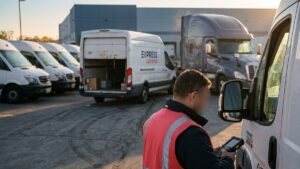

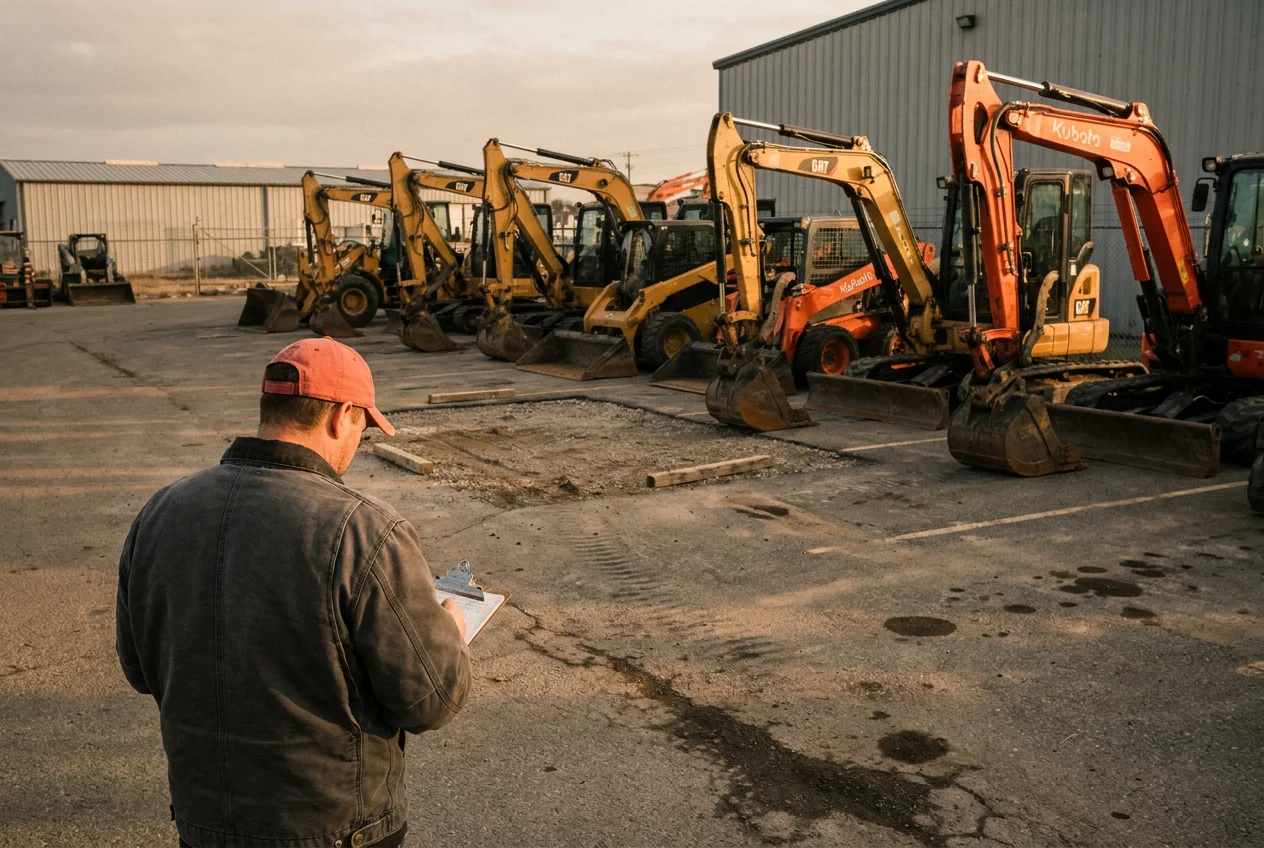
Construction equipment theft costs U.S. operators between $300 million and $1 billion every year, according to the National Equipment Register. The recovery side is harder still: the National Insurance Crime Bureau found in its last national report that only 23 percent of heavy equipment stolen in 2014 was recovered. For rental fleets, the American Rental Association has described theft as a roughly $100 million a year problem, with more than 360 pieces of equipment vanishing each month. GPX geofences flag a rented unit the moment it leaves its site.
Heavy equipment rental fraud lives inside those numbers, and it starts at the counter rather than in the yard. A skid steer rented on a stolen card or a fabricated ID is three states away before the chargeback posts.
Theft rings run the same pattern every time. They rent on bad credentials, move the unit out of the area fast, and resell it online before the branch flags the contract.
Asset visibility is what breaks that pattern. Mount GPX AssetTrack on every high-value unit, conceal an AssetTrack Mini on the inner steel frame, and let Scout AI draw a geofence that alerts you the moment a machine crosses it.
| Control | What It Stops | Detection Speed | Where It Falls Short |
|---|---|---|---|
| GPX AssetTrack & Scout AI | Conversion, out-of-area moves, overdue non-return | Real-time geofence and movement alerts | Requires install time on each high-value unit |
| Digital identity verification for rentals | Walk-in identity and stolen card fraud | At contract signing | Strong synthetic identities still pass |
| First-time renter limits | High-value fraud on brand-new accounts | At contract signing | Slows legitimate new business |
| Daily yard audits | Units that are already gone | Next business day at best | Finds the loss, not the machine |
| Logistimatics trackers | Theft of a single trailer or vehicle | App alerts within minutes | Built for consumer and SMB use, not enterprise fleets |
How Heavy Equipment Rental Fraud Drains Fleet Revenue
The Synthetic Identity and Stolen Card Loop
Theft rings use manufactured identities and stolen card numbers to take out skid steers, mini excavators, and towable generators. The deposit authorization clears on day one, so the counter sees a clean transaction.
The chargeback from the real cardholder lands weeks later. By then the bank has the money back and you have an empty slot in the yard.
Geographic Displacement and the Resale Market
Thieves do not keep what they take. The point of a fraudulent rental is fast conversion to cash.
The unit leaves your operating area within hours, where no employee or local contractor will recognize it. Then it goes up on a digital marketplace or straight to a buyer who thinks the price is a bargain.
Ground-off serial numbers and fresh paint finish the job. Without location data on the asset, the trail ends at your gate.
The Overdue Return Conversion
Not every loss starts with a fake ID. A real customer under financial pressure rents a machine for a weekend job, then stops answering the phone on Monday.
Now a signed contract turns into a recovery project. You send staff to the job site listed on the agreement and find a bare lot.
Every day the unit is missing costs you the rental revenue it should be earning. That lost revenue stacks on top of the value of the machine.
The Insurance Bill After an Unrecovered Loss
The replacement invoice is only the first charge. You pay the deductible, absorb the gap between the carrier payout and the real cost of a like-for-like machine, and wait out the claim while that revenue line sits empty.
Carriers price renewals on loss history. A branch with unrecovered machinery on its record pays more at renewal and negotiates from a weaker position on deductibles and sub-limits. Recovered units keep that history clean.
Front-End Defenses: Stopping Deception at the Counter
Protect inventory before the keys change hands. Require physical ID that matches the name on the payment method, every time.
Address checks are the second layer. If the billing address on the card does not match the driver’s license or the stated corporate office, hold the contract and verify.
Digital identity verification for rentals catches what a visual check misses. Document authentication, selfie-to-ID matching, and business registry lookups test credentials that look perfect across the counter.
First-time renter limits cap exposure. A walk-in with no account history should not leave with three excavators or a trailer of generators.
High-value assets earn larger deposits and verified commercial references. Train counter staff to photograph the tow vehicle and its plate before the machine leaves the lot.
These steps slow checkout. They also send opportunistic thieves looking for an easier target.
Active Visibility: Hardware That Works Past the Gate
Counter checks fail sometimes. Against strong synthetic credentials, the machine leaves your lot and the paperwork still looks perfect.
That is where tracking hardware takes over. A GPS tracker on every high-value unit keeps the asset visible after it passes the gate.
GPX AssetTrack is a long-life battery tracker built for industrial use. The magnetic mount, IP67 waterproof rating, and anti-tamper construction hold up to construction sites and weather.
For deeper concealment, AssetTrack Mini fits inside inner steel frames or under engine cowlings. A device nobody can find does not get pulled off.
Concealment raises a maintenance question, and battery life answers it. AssetTrack runs on a long-life battery, so a hidden unit stays live across many rental cycles instead of pulling a technician into the frame every quarter. Match the reporting interval to asset value: high-risk machinery earns frequent pings, low-risk units stretch the service window.
This hardware feeds an IoT-enabled equipment tracking system built around recovery. Heavy equipment IoT tracking across cellular, GPS, and BLE means that when a renter moves a unit outside the agreed area, you hand police a location history instead of a description.
That distinction decides whether anyone shows up. Departments triage stolen property reports, and a description of a yellow skid steer goes into a queue. Live coordinates plus a movement trail give officers grounds to dispatch and give a prosecutor what a search warrant needs. A verified digital trail shortens the recovery window.
GPX builds this into a broader equipment tracking program for fleets that rent out machinery rather than park it.
Automating Security with AI Geofencing and Alerts
Passive tracking is not enough on high-risk machinery. You need an alert the moment something moves wrong.
Scout AI builds geofences around the branch yard or a specific job site in seconds. Draw the boundary on the map and set the rules.
A zero-turn mower on a residential grounds contract has no reason to cross a state line. Scout AI fires the alert on unauthorized movement, so you call the customer or dispatch recovery while the trail is warm.
You also get an alert when a unit moves after the return date has passed.
AI geofencing for machinery is the first step toward an autonomous control tower over the rental fleet, where the platform flags the exception and the dispatcher acts on it. A reliable GPS tracker for rental equipment moves you off manual paperwork checks and onto automated oversight. You stop waiting for a dishonest renter to pick up the phone.
Connecting Assets to Rental Workflows
Hardware needs the right software around it. Location data has to line up with the contracts your counter staff work from every day.
A standalone map helps nobody if the dispatcher cannot tell which dot belongs to which contract.
Pairing location data with the best equipment rental software gives every asset a digital paper trail. Dispatchers see what sits idle in the yard and what is out on rent.
When a contract closes, the two systems confirm the machine is physically back on the lot. That cuts manual yard audits, settles billing disputes, and catches overdue units early.
When GPX Is Not the Right Fit
We build for enterprise operators securing full fleets of commercial machinery. For a single personal utility trailer or one family vehicle, consumer-grade options fit better: Logistimatics, our B2C and SMB sister brand, and independent trackers such as LandAirSea cover that tier at a consumer price point.
GPX is an AI-powered asset tracking platform for supply chain and equipment visibility across 50+ industries. Telematics anti-theft features belong to a different category: if your priority is OBD-II engine diagnostics, dashcam video, or driver hours-of-service compliance, buy a highway fleet safety suite from Samsara or Motive instead. Our focus stays on keeping physical machines visible and secure.
What Actually Decides Your Rental Fraud Strategy
The decision comes down to how much risk your branch absorbs before it spends. Front-counter verification alone leaves the fleet exposed to organized rings that study rental procedures for a living, and every unrecovered machine prices your next insurance renewal.
Operational control means knowing where every machine sits right now. Concealed hardware and automated alerts cover you when administrative checks fail, and they turn a police report into a recovery.
Price the two paths against each other: the install hours and subscription on your high-value units, against one unrecovered excavator plus the deductible, the lost rental days, and the renewal increase. That comparison picks your strategy for you.
Stop losing high-value machinery to fraudulent renters and organized theft rings. Talk to our team about equipping your fleet with GPX AssetTrack and putting Scout AI on your operating boundaries around the clock.
Frequently Asked Questions (FAQs)
How do geofences prevent rental equipment theft?
A geofence is a digital boundary around an authorized job site or operating area. When a renter moves the machine outside it, the platform sends an alert. You investigate the move the same hour instead of the next week.
What happens if a renter tries to remove the GPS tracker?
GPX AssetTrack combines anti-tamper construction with a magnetic mount that holds firmly to metal. Deploy AssetTrack Mini inside an inner steel frame for a second layer. Concealment is the real defense, because a device nobody finds does not get removed.
How long does the battery last on concealed heavy equipment GPS trackers?
AssetTrack runs on a long-life battery, so a concealed unit stays live through many rental cycles. Reporting frequency drives battery life: more frequent pings shorten it. Set the interval by asset value, then fold battery service into your scheduled fleet maintenance so nobody opens a cowling unplanned.
Can location history help law enforcement recover stolen equipment?
Yes. Officers need specifics to dispatch a unit and to support a search warrant. Handing them a movement history and current coordinates gives them something to act on instead of a description in a queue.
Why do rental companies limit what first-time customers can rent?
New-account limits cap your exposure to organized fraud. Rings built on fabricated identities go after the most expensive machinery on the first visit. Reserving high-value units for established accounts forces new renters to build a record first.
How does synthetic identity theft impact heavy equipment rental fleets?
A synthetic identity blends real data with fabricated details, so the credentials pass a counter check and the account carries no fraud history to flag. The deposit clears, the machine leaves, and the chargeback or unpaid invoice arrives weeks later. Layered digital verification at the counter plus location hardware on the asset is what closes that gap.