
Running a rental fleet means living with the gap between what the contract says and what actually happens on the job site. That gap costs real money every month.
Nearly 1,000 pieces of construction equipment are reported stolen to the National Crime Information Center each month, and the National Insurance Crime Bureau puts the annual loss at $300 million to $1 billion. The monthly count is a floor rather than a ceiling, since many thefts go unreported and no single body tracks them all.
Theft is the loud problem. Dead time is the quiet one. An off-rent unit parked in the wrong corner of a job site earns nothing, blocks the next contract, and pushes scheduled service further out. Below are seven platforms rental operators actually use, and what each one is built to solve.
| Platform | Category | Best For | Core Strength |
|---|---|---|---|
| GPX | IoT asset tracking hardware and AI platform | All asset types: mixed rental fleets, attachments, non-powered gear | AI-powered tracking with multi-network connectivity |
| Point of Rental | Rental ERP | Storefront and general rental branches | Counter, contract and dispatch workflow |
| Texada | Rental ERP and dealer system | Dealerships that rent and sell heavy iron | Asset lifecycle from purchase through resale |
| MCS | Rental ERP | Multi-branch and international operators | Resource planning and delivery routing |
| Wynne | Enterprise rental ERP | Large multi-depot rental enterprises | High transaction volume and financial depth |
| EquipmentShare T3 | Fleet and machine data platform | Yards and contractors running powered iron | Engine data and keypad access control |
| Tenna | Construction asset tracking | Heavy civil contractors with mixed gear | GPS, BLE and QR tags in one dashboard |
1. GPX
GPX is an AI-powered asset tracking platform for mixed rental fleets. It is not a counter system and not a rental ERP. It is the visibility layer that tells your operations team where every unit sits and whether it is working.
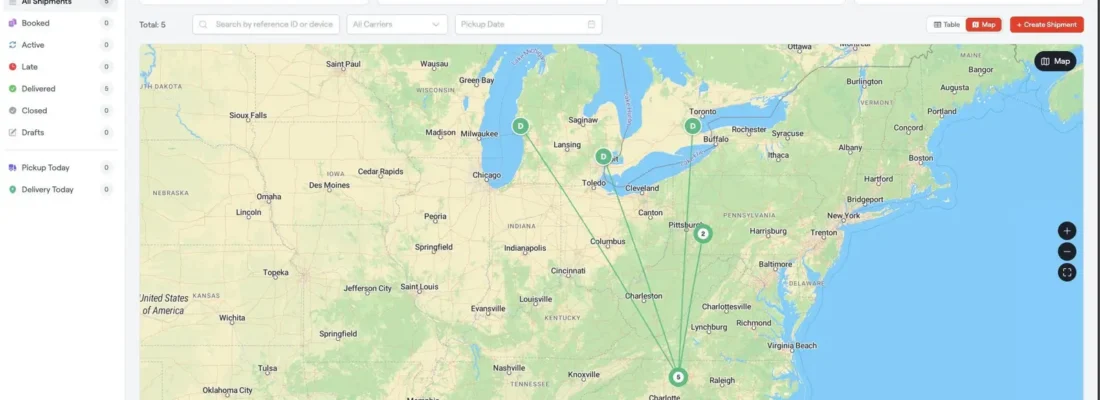
Most yards hit the same wall. Wiring a tracker into a light tower, a breaker or a compaction plate is expensive, and on many attachments it is impossible. GPX works around that with multi-network connectivity across cellular, BLE, satellite and WiFi positioning. A 40-ton excavator and a hydraulic hammer land on the same map.
Scout AI is the layer that turns real-time location data into answers. Ask it in plain English which units have not moved in 14 days, and it answers. It also geofences every yard and site in seconds and fires an anti-theft alert the moment an asset moves without authorization.
Where GPX fits a rental operation:
- Covers the whole fleet without hardwiring every machine. AssetTrack runs 10 years on one daily GPS fix, and BLE asset tags ride along on the equipment around it.
- AssetTag Edge reads at 150 feet outdoors and 75 feet indoors, which is enough to inventory a trailer load of attachments as it rolls into the yard.
- Idle and dwell analytics turn raw movement into real-time utilization data, so off-rent units stranded on a customer site get found and re-rented instead of aging in place.
- Recoveries typically complete in under 8 hours, and GPX tracks more than 250,000 assets across 50-plus industries today.
2. Point of Rental
Point of Rental is inventory and counter software built for the rental industry. It owns the front of the transaction: reservations, electronic signatures, dispatch scheduling and maintenance tickets. Counter staff process payments and follow an asset through its financial life from one screen.
It suits storefront businesses that push high daily contract volume through a counter.
What it does well:
- Deep billing, invoicing and dispute tools right at the counter.
- Preventive maintenance scheduling that keeps service intervals honest.
- Clean integrations with common accounting and CRM systems.
Where it falls short:
- It is a back-office and contract system, not a physical tracking platform.
- Live dots on a map require a third-party hardware integration.
- Rollout at a single-store operation takes longer than most owners plan for.
3. Texada
Texada serves heavy equipment dealerships and large industrial rental companies. The platform connects the rental desk, the service department and accounting in one workflow. Its strength is the full life of heavy iron, from purchase and depreciation through active rental and resale.
Pick it if you both rent and sell large machinery.
What it does well:
- Built around heavy iron, so it handles dealer-side nuances other rental systems ignore.
- Strong mobile app for field mechanics running digital inspections.
- Moves units cleanly between sales inventory and the rental pool.
Where it falls short:
- Heavy for small tool or general rental shops.
- Tracks financial lifecycle far better than physical location.
- New counter staff need real training before they are productive.
4. MCS
MCS is a rental management platform for multi-site operators. Dispatchers use it to plan delivery routes, allocate drivers and move stock between branches. It has a large European footprint and serves enterprise rental operations worldwide.
It fits multi-branch businesses whose biggest cost is transport, not the counter.
What it does well:
- Cross-branch inventory visibility that makes transfers practical instead of theoretical.
- Transport planning that tightens delivery and pickup routing.
- Detailed reporting on utilization and branch profitability.
Where it falls short:
- Enterprise implementation cycles run long.
- Physical location data depends on API links to outside hardware vendors.
- Custom reports usually need vendor support to configure.
5. Wynne
Wynne is enterprise rental software for the largest equipment rental companies. It handles high transaction volume, complex logistics and multi-currency billing. Organizations running tens of thousands of assets across dozens of depots use it as the operational backbone.
What it does well:
- Scales to the biggest multi-depot fleets without breaking.
- Deep financial handling for depreciation and international tax.
- Workflows bend to strict corporate governance rules.
Where it falls short:
- Priced out of reach for mid-market and regional yards.
- The feature depth creates a steep learning curve for daily users.
- You need internal IT staff to run and maintain it.
6. EquipmentShare
EquipmentShare started as a peer-to-peer equipment rental company and grew into a construction technology provider built around its T3 platform. T3 ties machines, operators and materials into one operating system. It leans hard on engine data, keypad access control and machine health.
It fits contractors and yards whose fleet is mostly powered iron.
What it does well:
- Keypad ignitions block unauthorized use and log which operator ran the machine.
- Engine diagnostics surface failures before they turn catastrophic.
- Clear reporting on job site productivity and real machine runtime.
Where it falls short:
- Aimed at the end-user contractor more than the rental counter.
- Installs require tapping the CAN bus or engine wiring.
- Weak coverage for large volumes of non-powered attachments.
7. Tenna
Tenna is a construction asset tracking platform that mixes GPS trackers, BLE tags and QR codes in one dashboard. Contractors use it to follow everything from excavators to hand tools. Matching hardware type to asset value keeps the hardware bill sane on low-value items.
It fits heavy civil contractors juggling machines, trucks and small tools.
What it does well:
- A wide hardware range so the tag cost matches the asset value.
- Solid field app for scanning and reassigning tools on site.
- Vehicle inspection and DOT compliance modules for fleet trucks.
Where it falls short:
- Built for the contractor, not the commercial rental yard.
- No deep billing or rental contract management.
- QR scanning depends on crews remembering to scan.
Five Ways Rental Fleets Lose Money Without Asset Visibility
Running a fleet without location and runtime data creates failures that compound. Here is where the margin actually goes.
- Runtime you cannot prove. A customer rents a machine for an eight-hour shift and runs it fourteen hours through the weekend. Manual meter reads never catch it. You give away the hours and absorb the extra wear.
- Off-rent units stranded on site. A customer calls a machine off-rent and leaves it parked somewhere on a large site. Your driver burns half a day looking. Service slips, and the next contract waits.
- Attachments with nowhere to wire a tracker. Buckets, breakers and plate compactors have no power source, so they fall off the map. Crews move them between zones and they quietly disappear.
- Mixed fleets split across systems. Powered iron reports through one system, trucks through another, attachments through a spreadsheet. Nobody sees the whole yard, so nobody trusts the utilization number.
- Theft recovery that starts too late. Most stolen equipment is gone before anyone files a report. Without an alert at the moment of movement, you are working from a 48-hour-old last known location.
Three Things That Slow Down a Tracking Rollout
Buying the platform is the easy half. Three problems surface in the first ninety days, and planning for them upfront keeps the rollout on schedule.
- Connecting the tracking layer to a legacy rental ERP. Older counter systems expose limited API access, so utilization and runtime data lands in a second dashboard instead of on the contract record. Confirm what the ERP vendor supports before you sign, and settle which system owns the asset record.
- Battery service on non-powered assets. Tags on attachments run on their own cells, not the machine. Choose hardware with replaceable batteries and long service life, such as an AssetTag Edge running up to four years on a replaceable CR2032, then fold battery checks into the inspection that already happens at check-in.
- Alert fatigue from noisy geofences. A geofence drawn tight around a yard fires every time a machine parks near the boundary, and crews start ignoring the alerts that matter. Tune the boundary and the dwell threshold per site, and route unauthorized-movement alerts to a different channel than routine arrivals.
How to Choose Between a Rental ERP and a Tracking Layer
Start with where your money leaks. If the problem is signatures, counter payments and service scheduling, a rental ERP handles the administrative load and you buy the tracking layer separately.
If the losses come from unrecovered assets, disputed engine hours and attachments vanishing on job sites, the ERP will not fix it. You need physical location and runtime data feeding the same system your dispatchers and counter staff already use. The strongest setups pair both: the ERP owns the contract, the tracking layer proves what happened in the field.
One more filter. Count how much of your fleet has no engine to wire into. If attachments, trailers, light towers and containers make up a large share of your revenue, choose mixed fleet management software that tracks unpowered assets natively instead of bolting on a workaround. Modern rental teams treat tracking as an intelligence layer, not a status page.
Stop arguing over runtime hours and start recovering the units you cannot find. Talk to the team at GPX about putting every asset in your yard on one map.
Frequently Asked Questions (FAQs)
What is the difference between rental ERP software and asset tracking software?
Rental ERP software runs the financial and administrative side: payments, contracts, dispatch and maintenance scheduling. Asset tracking software reports the physical location, movement and runtime of the equipment in the field. Most rental operators end up running both.
How do BLE tags track non-powered equipment?
A Bluetooth Low Energy tag attaches to an asset like a bucket or a light tower and broadcasts a signal. Nearby gateways, cellular trackers on larger machines, or a crew member’s phone pick up that signal and report the tag’s position back to the platform. The tag itself needs no power source on the asset.
Can I track runtime hours without hardwiring into the engine?
Yes. Battery-powered trackers use accelerometers and vibration sensors to detect when a machine is actually running. That gives you usage hours for billing without paying a mechanic to tap the ignition wiring on every unit.