

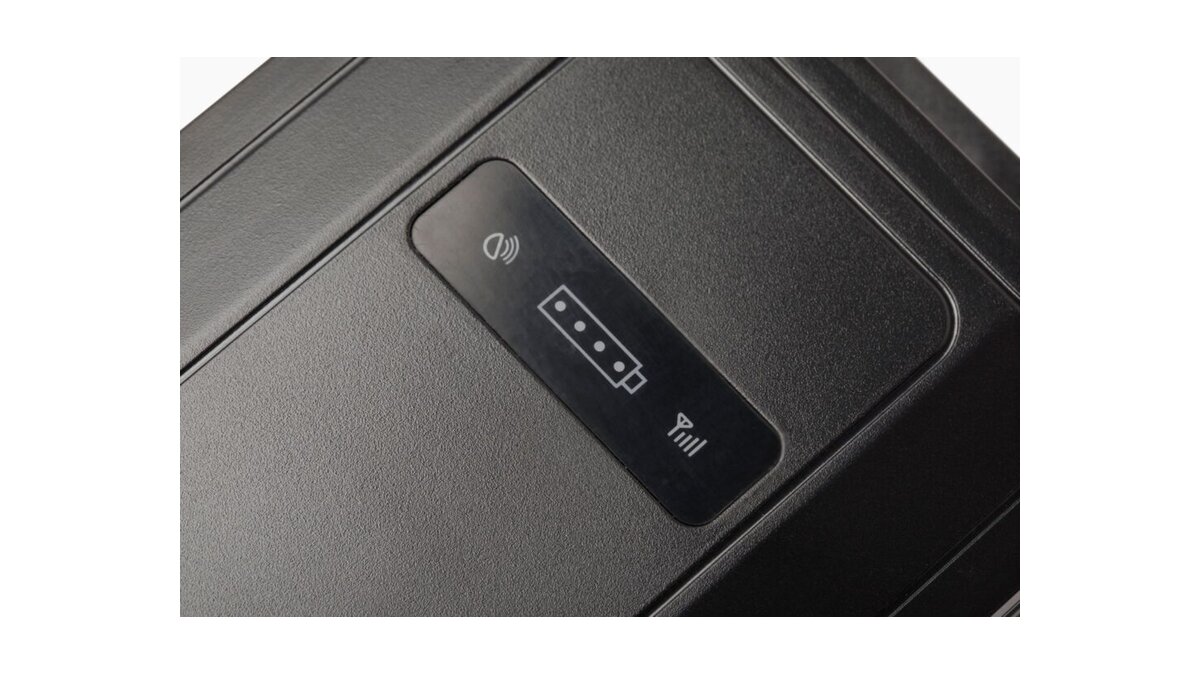
Operating assets around flammable gases, vapors, or combustible dust carries a hard truth: a single spark from standard electronics can trigger a catastrophic explosion. In oil and gas, chemical manufacturing, mining, and agriculture, that risk turns asset tracking into a safety problem, not just a logistics one. The U.S. Chemical Safety Board documented 281 combustible dust incidents between 1980 and 2005, which killed 119 workers and injured 718 more. The financial toll runs just as high, with the largest losses in the hydrocarbon industry reaching into the hundreds of millions of dollars per event.
That reality forces operators to scrutinize every piece of equipment, GPS trackers included. A standard, off-the-shelf tracker is an ignition source waiting for a flammable atmosphere. To operate safely, you need a specialized hazardous location GPS tracker certified under a strict standard like ATEX or Class I, Division 2. Many buyers search for an “explosion proof GPS tracker,” but for a small, battery-powered device the correct engineering route is usually intrinsic safety rather than a flameproof enclosure. These certifications do more than satisfy compliance. They prevent disasters, protect your people, and keep operations running.
Why Standard GPS Trackers Are Prohibited in Hazardous Areas
A standard GPS tracker carries the same components as any consumer device, and those components spark and generate heat. The battery and internal circuitry are the core problem. A battery packs a dense store of energy. Damage or short-circuit its internals, and it throws a spark or heats past the autoignition temperature of nearby gases and dust. Even a routine switching action inside the processor or radio creates a tiny arc.
In a normal environment, none of this matters. In a hazardous location, it becomes a critical ignition source. Hazardous-area-rated equipment removes that risk by design. Every element, from battery chemistry to circuit-board layout to enclosure, is engineered and tested so it cannot release enough energy to ignite a flammable atmosphere, even under fault conditions.
Class I Division 2 vs. ATEX Zone 2: Reading the Markings
Specifying a hazardous location tracker means working with two certification systems: the Class/Division system in North America and the Zone system used across Europe and most of the world (ATEX/IECEx). They share the same goal. Their terminology and structure do not.
The North American Class/Division System (NEC/CEC)
The National Electrical Code (NEC) governs this system in the USA, and the Canadian Electrical Code (CEC) covers Canada. Both sort hazardous locations by the type and presence of the hazardous substance.
- Class: Defines the type of flammable material. Class I covers flammable gases or vapors. Class II covers combustible dust. Class III covers ignitable fibers.
- Division: Defines how likely the hazard is to be present. Division 1 means the hazard exists under normal operating conditions. Division 2 means the hazard appears only under abnormal conditions, such as a container leak or equipment failure.
- Group: Defines the specific substance by its explosive characteristics. For Class I, this ranges from Group A (acetylene) to Group D (propane, natural gas).
A tracker for an oil and gas site often carries a marking like Class I, Division 2, Groups C, D. It stays safe where flammable gases such as ethylene or propane appear only under abnormal conditions.
The ATEX/IECEx Zone System
The ATEX directive is law across the European Union. The IECEx scheme provides an internationally accepted certification framework. Both run on a Zone system.
- Zones for Gases/Vapors (G): Zone 0 (hazard is continuous), Zone 1 (hazard is likely in normal operation), and Zone 2 (hazard is unlikely and short-lived).
- Zones for Dusts (D): Zone 20 (continuous), Zone 21 (likely), and Zone 22 (unlikely).
Division 1 in the US system maps roughly to Zone 0 or 1, and Division 2 maps to Zone 2. An ATEX marking runs longer, like II 2G Ex ib IIC T4 Gb, and it breaks down into equipment group, category, environment, protection type, gas group, temperature class, and protection level.
The Critical T-Code (Temperature Class)
Both systems use a Temperature Class, or “T-Code” (T1 through T6). It ranks among the most important safety ratings because it sets the maximum surface temperature the device can reach. That T-code must stay below the autoignition temperature of the hazardous material. A T4 rating, for example, caps the device at 135°C (275°F), which keeps it safe around substances that ignite above that point.
Key Protection Concepts for Battery-Powered Trackers
Designers reach these safety ratings through several protection methods. For a small, battery-powered device like a GPS tracker, two dominate.
Intrinsic Safety (Ex i)
This is the preferred method for low-power electronics. Intrinsic Safety holds the voltage and current in the circuitry below the level needed to ignite a specific hazardous atmosphere, and standards like UL 913 govern how it is tested and certified. The device keeps that protection even after a fault, such as a short circuit. The levels differ: ‘ia’ stays safe with two faults (Zone 0), ‘ib’ stays safe with one fault (Zone 1), and ‘ic’ stays safe in normal operation (Zone 2). In North American Class I, Division 2 areas, non-incendive protection achieves a similar result by ensuring the device cannot arc or spark enough to ignite gas under normal operation.
Encapsulation (Ex m)
This method seals the circuitry inside a solid, cured resin. The resin blocks the flammable atmosphere from ever reaching the components that spark or heat up, isolating the ignition source from the fuel. It holds up well in the field, but it rules out repair or battery replacement.
Comparison of Hazardous Location Certification Schemes
Match the certification to your region of operation and the specific hazards at your site. An ATEX-certified device does not automatically clear for use in a Class I, Div 2 location in the United States. That requires a matching US certification from a Nationally Recognized Testing Laboratory (NRTL) such as UL or CSA.
| Scheme | Primary Region | Typical Marking | Environment | Core Principle |
|---|---|---|---|---|
| GPX Standard Trackers | Global (Non-Classified Areas) | N/A | General industrial, logistics, and yard management outside classified zones. | Delivers asset visibility across the large majority of a facility that sits outside hazardous-rated areas. |
| NEC/CEC (Class/Division) | North America (USA, Canada) | Class I, Div 2, Groups C,D T4 | Gas or vapor present only under abnormal conditions. | Controls energy and surface temperature to prevent ignition under fault conditions. |
| ATEX Directive | European Union | II 2G Ex ib IIC T4 Gb | Equipment for potentially explosive atmospheres (Zone 1/21, Zone 2/22). | Harmonized EU safety standards; most equipment categories require a Notified Body. |
| IECEx Scheme | International | Ex ib IIC T4 Gb | Global acceptance for explosive atmospheres. | International scheme built on one set of standards (IEC 60079 series) to ease cross-border trade. |
Read the table against your site survey, then pair each classified zone with the scheme that governs it.
How to Verify a Certification Claim
The most dangerous move an operator can make is taking a vendor’s marketing claim at face value. Phrases like “designed to meet” or “HazLoc-compliant” mean nothing without a valid certificate. Certification is non-negotiable, and the burden of proof sits with you.
- Demand the certificate. The manufacturer must hand you a copy of the official certificate from a recognized body (UL, CSA, or Intertek for North America; a Notified Body for ATEX).
- Check the marking. The marking string on the certificate must match the marking on the device exactly, and it must fit your site’s specific Class/Division/Group or Zone.
- Verify it online. Search the certification body’s public directory, such as the UL Product iQ™ database, for the certificate number or company name. This confirms the certificate is authentic, current, and not expired.
- Confirm the scope. The certificate lists the covered model numbers and any conditions of use. Make sure the tracker you buy is the exact model named. A certificate for one variant does not cover another.
Skip this due diligence and you put your facility and personnel at risk, and you expose the operation to serious penalties from regulators like OSHA.
Challenges of Deploying Trackers in Hazardous Areas
Even with a certified device, a hazardous location GPS tracker brings deployment challenges you never face in standard environments.
- Battery replacement: You cannot swap a battery inside a classified area, because the act itself can create a spark. The device goes to a non-hazardous “safe area” for service, or the site issues a hot work permit that adds real administrative burden. That is why long battery life matters so much.
- Mounting restrictions: Hot work such as welding or drilling to mount a bracket is tightly controlled or banned outright. Trackers attach through approved methods like high-strength adhesives or specialized mechanical clamps that carry no ignition risk.
- Recertification after service: Any repair or modification, including a battery change outside the manufacturer’s certified procedure, can void the safety rating. Often only the original manufacturer or a certified shop can do the work.
- IP rating vs. HazLoc rating: A tracker needs both. An Ingress Protection (IP) rating like IP67 guards against dust and water; the hazardous location certification handles ignition. One never implies the other.
- Documentation for audits: Safety managers keep a complete file of certificates for every device used in hazardous areas. That paperwork carries the audits from insurers and regulators.
- Signal attenuation: GPS and cellular signals struggle to penetrate the dense metal of refineries, tank farms, and chemical plants, so a tracker on an oil rig or process unit needs multi-network connectivity across cellular, BLE, GPS, satellite, and WiFi positioning to hold a fix where a single-network device goes dark.
- Cross-region certification: An asset that moves between an ATEX Zone 2 site in Europe and a Class I, Division 2 site in North America needs certification valid in both regions plus global SIM connectivity, or it sits non-compliant the moment it crosses a border.
- System integration: Location data has to flow into existing ERP, EAM, and CMMS platforms. A device that cannot feed those systems leaves maintenance and inventory teams working from a separate screen instead of one source of truth.
- Total cost of ownership: The purchase price is only the start. Certified maintenance, data plans, platform fees, and compliance documentation all add to the lifetime cost, so long battery life and durable certification protect the budget as much as the schedule.
How to Choose the Right Tracker for Your Site’s Safety Profile
A safe asset-tracking strategy across a complex industrial site takes two tracks, not a single universal fix.
First, map your facility in detail and identify every classified hazardous location and its rating (Class, Division, Group, or Zone). Any asset that enters or sits in those areas needs a fully certified hazardous location GPS tracker, whether that is an intrinsically safe asset tag or a certified GPS unit. The safety risk and the regulations leave no other option.
Second, remember that most of a plant, yard, or logistics network sits outside classified zones. Assets in laydown yards, staging areas, maintenance shops, and in transit between facilities do not need a certified tracker, and paying for one there is wasted overhead. A high-performance industrial GPS tracker balances performance, battery life, and cost, and multi-network connectivity across cellular, BLE, GPS, satellite, and WiFi positioning holds a fix even where dense metal blocks a single-network device. Explore the full range of asset tracking devices to match the right unit to each application.
The strongest approach connects both. Deploy certified trackers where safety codes demand them, and tie them into a broader supply chain visibility platform for everything else. You get safety in the critical zones and operational clarity across the whole enterprise.
Ready to cover both the classified and non-classified sides of your operation? Talk to our team to design a hybrid asset-tracking strategy that keeps every asset visible and every zone compliant.
Frequently Asked Questions
What is the main difference between Class I, Division 1 and Division 2?
The difference is how likely a hazardous atmosphere is to be present. Division 1 locations hold flammable gases or vapors under normal operating conditions. Division 2 locations see those same hazards only under abnormal conditions, like an accidental spill or equipment failure.
Can I use an ATEX-rated tracker in the United States?
Not directly. US regulations require equipment certified by a Nationally Recognized Testing Laboratory (NRTL) to NEC standards. A device with an IECEx certification often clears the US market faster, though, because the testing standards line up closely.
What does the “T” rating on a tracker mean?
The T-rating (T1, T4, T6, and so on) marks the maximum surface temperature the device reaches during operation. It is a core safety feature, because that maximum must stay well below the autoignition temperature of any gas or dust in the environment.
Do I need a certified tracker for every asset on an industrial site?
No. Only assets that enter or sit in a classified hazardous location need a certified hazardous location GPS tracker. For the laydown yards, staging areas, and in-transit assets that make up most of a site, a standard high-performance tracker like the GPX AssetTrack line delivers full visibility at a fraction of the cost.
Why can’t I just change the battery in my intrinsically safe tracker?
Changing a battery in the field can compromise the safety rating. Opening the enclosure and connecting a new battery can create a small spark, and the swap can damage the environmental seal (IP rating) or other protective parts. Battery replacement belongs in a designated safe area, following the procedures the manufacturer defines to keep the certification intact.
Author: Mitch Belsley