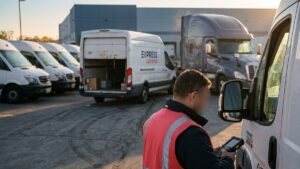

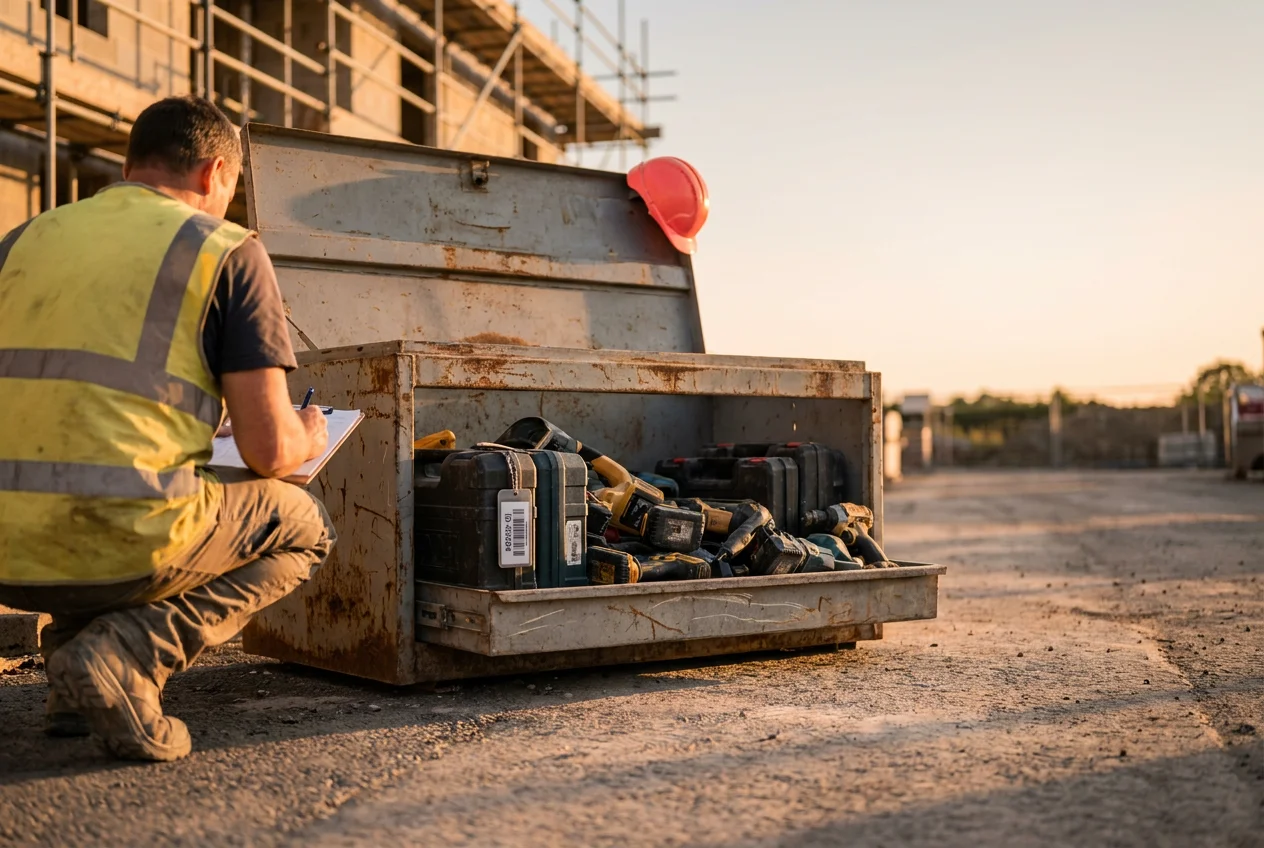
When tools vanish from a locked site, the loss usually starts inside the crew. Contractors spot insider theft with assigned tool kits, check-out records, and after-hours audits. They stop it with the GPX platform: AssetTag Pro tags every high-value item, and Scout AI alerts managers the moment gear moves without authorization.
Missing tools stall projects and inflate replacement budgets. Break-ins make the news. Insider theft drains a site quietly, one impact wrench at a time.
The last national report from the National Insurance Crime Bureau counted 11,625 heavy equipment thefts in 2014, close to 1,000 a month. That volume of missing hardware pushes project schedules back by weeks.
In its 2024 figures, Verisk CargoNet put the average cargo theft at $202,364. Power tools and generators that walk off a secured site create a different problem than a cut fence. You need accountability and position history, not accusations.
Padlocks do not catch an insider who already has a key. Hardware that reports its own movement does.
| System | Best For | Tracking Tech | Hardware Profile |
|---|---|---|---|
| GPX Intelligence | All asset types, from hand tools to heavy equipment | BLE, GPS, cellular | Rugged tags and network gateways |
| Tenna | Mixed heavy equipment fleets | GPS, BLE, QR | Vehicle gateways and trackers |
| Milwaukee ONE-KEY | Milwaukee power tools | Bluetooth community network | Integrated tags and modules |
| ToolWatch | Tool crib inventory management | Barcode, BLE | Scanners and warehouse hubs |
| Motive | Heavy vehicle tracking | GPS, cellular | Dashcams and asset gateways |
| Logistimatics | Single assets and personal vehicles | GPS, cellular | Compact magnetic trackers |
1. GPX Intelligence
GPX builds AI-powered asset tracking for enterprise supply chains and large construction operations. The platform goes beyond dots on a map and turns raw position history into decisions a site manager acts on the same day. That gap is what separates IoT asset tracking solutions from a map pin that updates once a week.
The AssetTag line covers high-value tools and reports through the Hubble Network. Managers see every tool movement and shut down unauthorized transfers before gear reaches the gate.
Continuous monitoring and automated alerts move a contractor off the replacement treadmill and into active asset protection.
Best for: General contractors and site managers who want predictive intelligence and instant alerts.
Pricing: Custom quotes based on deployment size.
Standout features:
- AssetTag Pro delivers up to 225 feet of outdoor range in an IP67 rated enclosure.
- AssetTag Edge weighs 8.5 grams and measures 6 millimeters thin, reporting through a BLE enabled AssetTrack or gateway.
- AssetTag hardware runs on a replaceable coin-cell battery, so a tagged tool stays reportable across a long project.
- Scout AI alerts site managers the moment equipment moves after hours.
Advantages:
- Multi-network connectivity covers sprawling job sites.
- Scout AI flags suspicious tool movement automatically.
- Hardware holds up in severe industrial conditions.
2. Tenna
Tenna runs an equipment management system built for heavy civil contractors. It tracks yellow iron and small attachments through QR codes, Bluetooth trackers, and GPS hardware.
Managers open one map and see the full fleet across every active project. Mechanics schedule preventative maintenance without pulling a machine off a live job.
Best for: Contractors running a varied fleet of large machines and small attachments.
Pricing: Quoted on request, based on fleet size and hardware.
Standout features: Maintenance scheduling and unified inventory views.
Advantages:
- Puts heavy machinery and small tool data in one system.
- Specializes in heavy construction and nothing else.
Disadvantages:
- Full coverage takes a sizable upfront hardware buy.
- The software leans toward maintenance, not AI anomaly detection.
3. Milwaukee ONE-KEY
Milwaukee ONE-KEY runs as an inventory app built into compatible Milwaukee power tools. Bluetooth tags extend it to other brands, and location updates come from the community of ONE-KEY app users.
Foremen check the digital ledger to see which crew member took which tool. Owners flag a missing item as stolen in the app, which locks it out.
Best for: Crews already standardized on Milwaukee power tools.
Pricing: The software is free. Tags and compatible tools carry their own retail cost.
Standout features: Tool lockout and tracking built straight into drills and saws.
Advantages:
- Remote lockout makes a stolen tool worthless to the thief.
- Crews learn basic checkouts in minutes.
Disadvantages:
- Location updates depend on nearby phones running the app.
- No independent cellular connectivity for remote sites.
4. ToolWatch
ToolWatch is an enterprise tool and equipment management platform. It centers on warehouse operations, tool crib check-outs, and field requests.
Crews request tools from the mobile app. Warehouse staff fill those orders with barcodes and scanners. That digital chain of custody keeps tools from disappearing in transit.
Best for: Large operations with dedicated tool crib managers and warehouse staff.
Pricing: Custom quotes based on company size and user count.
Standout features: Billing modules, field requisition workflows, and safety compliance tracking.
Advantages:
- Ties tool usage back to specific project budgets.
- Keeps high-volume warehouse transfers organized.
Disadvantages:
- The workflow is administrative and needs daily staff attention.
- The focus is inventory accounting, not active theft prevention.
5. Motive
Motive sells commercial vehicle tracking and driver safety hardware. Known for electronic logging devices and connected dashcams, it also offers rugged asset gateways for trailers and heavy construction equipment.
Fleet managers watch driver behavior and follow large mobile assets between sites. Safety directors use the same dashboard to cut accident rates and review harsh driving events.
Best for: Transportation managers who want heavy equipment tracking and vehicle compliance in one dashboard.
Pricing: Subscription pricing, quoted on request.
Standout features: AI dashcams, DOT compliance reporting, and heavy equipment geofencing.
Advantages:
- Strong on over-the-road safety compliance and driver monitoring.
- Puts highway fleet data and heavy machinery locations side by side.
Disadvantages:
- Built for vehicles, so hand tools and generators go untracked.
- Pricing fits highway fleets, not stationary job site tools.
Identifying and Stopping Internal Tool Loss
Suspecting your own crew is a management problem before it is a technology problem. Handle it with records, not hunches. Run it alongside the construction site theft prevention protocols you already enforce on site.
Recognizing the Warning Signs
Insider theft does not look like a cut fence or a smashed padlock. Tools go missing between shifts. Gang boxes open without forced entry.
Losses cluster around one crew, one remote site, or one phase of a long project. Superintendents watch impact wrenches and laser levels drop off the weekly count. The construction equipment theft statistics tell the same story every year, and equipment moving after hours with nobody authorized on site is the clearest signal of all.
What Repeat Tool Losses Cost Beyond Replacement
The replacement invoice is the smallest line item. Insurance carriers reprice a policy after a run of unrecovered equipment claims, so missing tools raise premiums for years after the gear is gone.
Schedule damage follows. A missing laser level or core drill stalls a phase, and a contractor who misses dates loses standing on the next bid list. Crews also burn paid hours hunting ghost inventory that left the site weeks earlier, and foremen keep signing counts that never reconcile.
Establishing Fair Accountability Processes
Preventing employee theft in construction starts with documented procedure. Require check-out records and assign specific tool kits to named workers.
Close out each day with a two-person check that every item sits back in the locked container. Post clear employee notice on every site. Crews who know company tools carry tracking hardware stop treating theft as a low-risk opportunity. Open small tool tracking also protects honest employees from blanket suspicion.
Tracking Assets Without False Accusations
Position history settles questions that rumor cannot. BLE asset tags create a time-stamped record of where each tool sat and who was nearby.
AI geofencing for construction sites turns a site boundary into an active alert: when a tool crosses it, the system fires an after-hours movement notice instead of filing a report nobody reads. Managers walk into that conversation with history instead of a theory, and discipline rests on logged facts.
Heavy equipment theft recovery runs on the same record. Investigators work from timestamps and last known positions, not from a crew roster and a guess.
When GPX Is Not the Right Fit
GPX works in B2B enterprise asset tracking and supply chain visibility. Operations that need dashboard cameras, electronic logging devices, or OBD-II engine diagnostics should buy from a highway fleet management provider.
Tracking one personal toolset or a family vehicle is a different job. A consumer unit from LandAirSea or our sister brand Logistimatics fits those small-scale cases at a price that matches them.
Matching Tool Tracking Systems to Your Job Site Operations
Contractors stop internal theft by replacing guesswork with real-time location intelligence. Pick the system by the asset you lose most: crews standardized on one tool brand get fast coverage from that brand’s own inventory app, operations with a staffed tool crib get the most from check-out software, and sites bleeding cordless tools, generators, and small equipment need tags that report movement on their own.
Weigh three things before you sign. Does the hardware report without a nearby phone? Do alerts reach a named manager after hours? Does the record hold up in a disciplinary conversation? A system that fails any one of the three leaves the gap between shift changes wide open.
Stop unauthorized equipment movement before it reaches the gate. Talk to our team about tagging your highest-value tools and see where every drill, saw, and portable generator stands right now.
Frequently Asked Questions (FAQs)
How do you identify internal theft on a job site?
Look for tools missing with no sign of forced entry. Losses that cluster around one shift, one crew, or one location point inside.
Does tracking employee tools require special notices?
Notify employees that company equipment carries tracking devices. Open notice deters theft, keeps trust intact, and protects honest workers from blanket suspicion.
What is the most stolen equipment from construction sites?
Portable, high-value items go first: cordless power tools, portable generators, and small welders. They fit in a personal vehicle and sell quickly for cash.
How do AssetTag and Scout AI stop tool loss?
AssetTag logs the last known position of every tagged tool and reports it through the Hubble Network. Scout AI reads that feed and alerts a site manager the moment an item moves outside its authorized zone or after hours.
What is the difference between BLE tags and GPS trackers?
GPS trackers use satellites and work anywhere outdoors, so they need larger batteries and a cellular plan. BLE tags draw far less power and relay position through nearby gateways or mobile devices.