

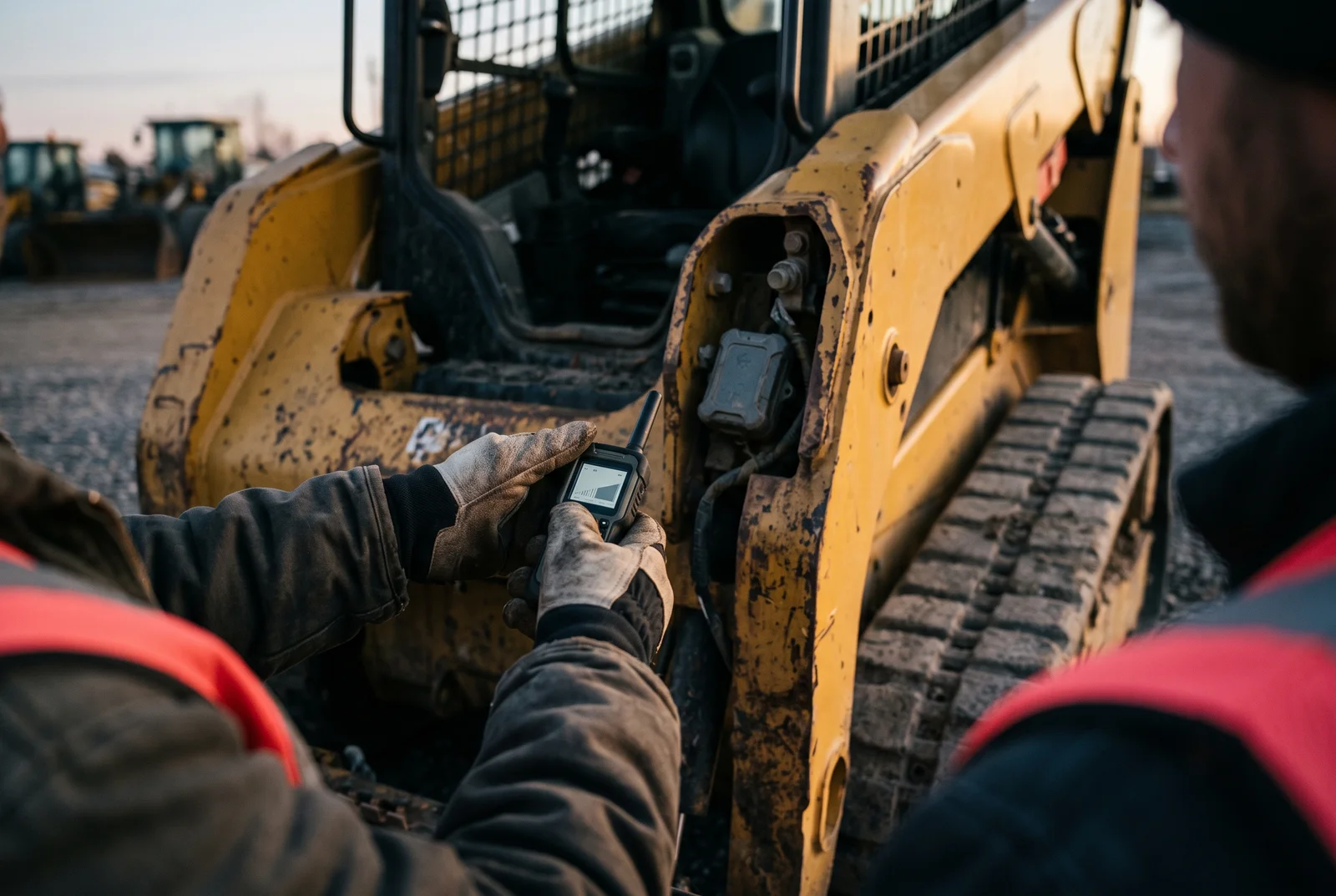
Yes, they can, and they try. A thief finds and kills a basic tracker with a flashlight, a cheap scanner, or a pair of wire cutters. Hardware built for theft response survives all three. The National Insurance Crime Bureau recorded 850,708 vehicle thefts in the United States in 2024, and trailers and machinery sit in the same crosshairs. GPX AssetTrack and RoadTrack Wired are built for that, with tamper alerts and an internal backup battery.
Equipment theft is organized work, not opportunism. Verisk CargoNet recorded 3,607 supply chain crime events across the United States and Canada in 2024, and the average theft cost $202,364. Crews moving that kind of volume sweep for tracking hardware before they move the asset.
So the real question is not whether a tracker gets found. It is what still reports after the attempt. Here is the attack list and what defeats each one.
| Attack Method | How Often It Works | What Defeats It | GPX Hardware |
|---|---|---|---|
| Visual search of hiding spots | Often | Small profile hidden inside structural steel | AssetTrack Mini |
| Handheld RF signal sweeper and bug detector | Sometimes | Brief, infrequent transmission bursts | AssetTrack |
| Cutting primary battery power | Often | 24-hour internal backup battery plus power-loss alert | RoadTrack Wired |
| GPS jamming | Rarely | BLE fallback through a second hidden tag | BLE RoadWired & AssetTag Pro |
| Foil wrap or Faraday bag | Works only while wrapped | Signal-loss alert plus a logged last position | AssetTrack family |
| Pulling the OBD-II plug-in | Often | Hidden 2-wire hardwired install with no port to grab | RoadTrack Wired |
| Insider knowledge of the install point | Often | Restricted install records plus alerts routed off site | Scout AI geofence alerts |
The Order a Thief Works In
Theft crews follow a predictable sequence. Knowing the order tells you which defense matters at which minute.
- Look. They scan wheel wells, the cab, the glove box, and exterior rails for blinking LEDs, exposed wiring, and bulky plastic boxes.
- Sweep. If the visual check comes up empty, out comes a handheld RF signal sweeper and bug detector hunting for a live cellular transmission.
- Cut. They sever the main battery cables on the skid steer or excavator, which silences every accessory running on primary power.
- Jam. The organized crews bring a jammer and flood the local frequencies with noise, so nothing reaches a satellite or a cell tower.
- Wrap. Foil, a shielded pouch, or a closed steel box goes around any device they found but cannot pull out, blocking the radio without touching the hardware.
Hardware that answers all five steps keeps reporting. Hardware that answers one or two goes dark at step three.
Step 1: The Visual Search
Physical obscurity is the first defense, and it is the one most operators get wrong. Thieves know the default install spots because installers repeat them. Rear bumper, glove compartment, exterior rail.
Size and sealing decide where a tracker goes. A unit without real weatherproofing stays in the cab, which is the first place anyone looks. An IP67-rated unit mounts deep under the chassis in the mud and road spray, where nobody is reaching without a creeper and a work light.
AssetTrack Mini holds to structural steel with an internal magnet, runs for years on one battery, and fires a tamper alert the moment someone moves it. Buried inside the frame, it turns the opening visual sweep into wasted time. Our heavy equipment tracking installs put the device where a stranger with a flashlight will not find it.
Step 2: Cheap RF Detectors and Signal Sweeping
When a fleet manager asks whether thieves detect GPS trackers, this is the step they are picturing. Handheld RF signal sweepers and bug detectors are cheap and sold openly online. They pick up a cellular transmission in progress.
That last part is everything. A sweeper finds a radio that is talking. A tracker reporting continuously is a permanent beacon, and a sweep lands on it in seconds.
AssetTrack inverts the math. It wakes, sends one location packet, and drops back to sleep, which is how it lasts for years on a single daily GPS fix. The device is silent for nearly the entire sweep. By the time the sweeper passes over the frame rail, there is nothing to hear.
Step 3: Cutting Power to a Hardwired Unit
Heavy machinery runs 12V and 24V electrical systems. The standard play for stealing a bulldozer or an excavator starts with cutting the main battery cables. That kills the factory alarm and every aftermarket device drawing primary power.
A hardwired tracker without its own cell dies right there. RoadTrack Wired does not. It installs on two wires, switches to a 24-hour internal backup the instant primary voltage drops, and sends a power-loss tamper alert immediately.
That alert is the whole point. It reaches your phone while the machine is still in the yard, not after it clears the state line.
Step 4: GPS Jamming and Signal Blocking
GPS signals arrive from orbit weak. A jammer floods the receiving band with noise and the receiver loses its lock. Operating a jammer is illegal in the United States, which stops nobody who is already stealing an excavator.
Anti-jamming GPS technology has a hard ceiling. No antenna out-shouts a transmitter sitting three feet away, so routing around the jam beats fighting it. Single-network hardware has no answer here. Multi-network hardware does. BLE RoadWired works as a hardwired tracker and a mobile BLE gateway at the same time. AssetTag Pro tags hide inside toolboxes, attachment crates, and trailer bulkheads on a replaceable coin cell.
Jam the GPS and cellular side and the BLE tags keep reporting through any gateway that comes within range: another truck, a forklift, a yard vehicle. GPX runs on a purpose-built network of 150 million+ interconnected Bluetooth gateways, so there is nothing for you to install. A broad-spectrum jammer takes down GPS and cellular together; a narrow one hits GPS alone, which leaves cellular triangulation fallback as a coarse position while the tags carry the precise one. The jam itself fires a tamper alert, which turns interference into evidence instead of a blind spot.
Step 5: Foil Wraps and Faraday Bags
The lowest-tech attack on the list costs almost nothing. Aluminum foil, a shielded pouch, or a steel toolbox with the lid shut forms a Faraday cage, and Faraday cage signal blocking stops the radio in both directions. GPS signal blockers and key-fob shielding pouches sell openly, and both work on a tracker.
No antenna beats physics. What beats the wrap is what happens the second it goes on: the last position before the blackout is on record, the signal-loss alert fires, and the gap becomes the timestamp investigators work backward from.
The practical defense is plurality. Two devices on one asset, one of them a tag nobody knew to look for, means the wrap has to find both. Wrapping a 40-foot trailer is not an option, so the crew shields what it found and drives off with what it missed.
The OBD-II Port Problem
The OBD-II port under the dash is the most obvious hiding place in any vehicle, and every installer and repo agent knows it. AssetTrack OBD still earns its place: it installs in under a minute, and every car and light truck built since 1996 has the port.
On a loaded excavator or a drop trailer, that convenience is the vulnerability. A plug-in comes out in one motion, no tools. Enterprise installs go hardwired and hidden. A 2-wire feed straight to the power source leaves nothing to grab, which is why our trailer tracking hardware skips the port entirely.
The Insider Problem: When the Install Point Is Already Known
Every defense above assumes the thief is guessing. Sometimes he is not. A driver, a yard hand, or a subcontractor who watched the install knows exactly where the device sits, and organized crews recruit for that information.
Hardware does not fix this one. Process does. Keep install locations off shared drives and off work orders. Vary the mounting point across the fleet so one disclosure does not expose every machine. Route tamper and power-loss alerts to someone who is not on site, because an alert that pings the yard phone reaches the person who pulled the device.
Two devices per asset, installed by different people on different days, turn an insider tip into a partial answer.
Where Anti-Theft IoT Asset Tracking Goes Next
Modern logistics teams treat tracking as an intelligence layer, not a status page. The shift underway is from alerts someone reads on Monday to decisions the platform already made Saturday night.
Scout AI geofences every site in seconds and flags unauthorized movement without anyone writing a rule. AI-driven theft prediction is the layer forming on top of it: movement patterns across sites, shifts, and hours score the risk before anything leaves the gate. That is the front edge of agentic asset intelligence, where the autonomous control tower watches the yard and the recovery call starts before the first shift report.
When GPX Is Not the Right Fit
Tracking one pickup, one camper, or a single piece of personal property is not our job. Single-tracker buyers do better with Logistimatics, our consumer and SMB sibling brand, or with off-the-shelf options like Tracki and LandAirSea.
The line sits around ten high-value assets. Above it you need fleet-wide geofencing, tamper alerting, and multi-network fallback. GPX builds for that tier across 50+ industries. We are not a dashcam vendor and not an engine diagnostics suite.
Five Tests Your Next Install Has to Pass
Five questions settle the buy. Does the device fit somewhere a stranger will not look? Does it survive a power cut and tell you it happened? Does it hold a second network when the first one gets jammed? Does it report rarely enough to stay off an RF sweeper? Does anyone outside your install team know where it sits?
Hardware and process that answer yes five times keep working while the theft is in progress. Two yeses hand you a last-known location and a police report.
Stop paying for losses you only find out about on Monday. Talk to our team and we will map the install points on your own equipment and trailers.
Frequently Asked Questions (FAQs)
How do thieves detect GPS trackers?
They start with a visual search of the usual spots: wheel wells, the cab, exterior rails, and the undercarriage. If that turns up nothing, they run a handheld RF signal sweeper and bug detector. The sweeper only picks up a tracker that is transmitting at that moment, so reporting frequency decides whether it gets found.
How do you hide a GPS tracker on heavy equipment to prevent detection?
Mount it inside structural steel instead of the cab, the glove box, or the bumper, where a flashlight sweep will not reach. An IP67-rated device such as AssetTrack Mini holds to the frame with an internal magnet under the chassis, in the mud and spray. Add a second hidden BLE tag in a toolbox or bulkhead so one discovery does not end the trail.
Can thieves disable GPS trackers?
Yes, on basic hardware. Cutting the battery cables kills any device running on primary power, and an OBD-II plug-in pulls out by hand. A hardwired tracker with an internal backup battery keeps reporting after the cables are cut and sends a power-loss alert.
Can a GPS tracker be jammed?
Yes. A jammer floods the local band with noise and blocks the receiver from locking onto satellites. Multi-network setups route around it: GPX BLE RoadWired acts as a gateway while hidden AssetTag Pro tags keep reporting over Bluetooth, and the interference itself triggers a tamper alert.
Does wrapping a GPS tracker in foil or metal block the signal?
Yes, for as long as it stays wrapped. Foil, a shielded pouch, or a sealed steel box forms a Faraday cage and blocks the radio in both directions. A magnet does nothing to a radio signal; metal is what stops it. The wrap also fires a signal-loss alert, and the last position before the blackout stays on record.
Do thieves look for trackers?
Organized crews check before they move anything. They look for blinking lights, exposed wiring, and OBD-II plug-ins, because a tracked asset brings law enforcement to wherever they park it. Opportunistic thieves skip the step, which is how most of them get caught.