

Enterprise asset tracking budgets break after the purchase order is signed. The quoted asset tracking software cost covers a device and a monthly fee. It leaves out installation labor, connectivity, integration work, replacement cycles, and the platform access your operations team needs to act on the data. Total cost of ownership is the only number worth budgeting against.
The cost of no visibility runs higher. Verisk CargoNet logged 3,625 cargo theft incidents across the United States and Canada in 2024, a 27 percent increase over 2023, with an average loss of $202,364 per event. Vehicle loss runs at the same scale: the National Insurance Crime Bureau counted 850,708 vehicles stolen in the United States in 2024. Those figures set the ceiling on what visibility is worth. This guide sets the floor on what it costs.
Key Takeaways for Tracking Budgets
- Hardware drives the spread: a hardwired vehicle tracker and a battery-powered tag on a returnable container sit at opposite ends of the same budget line.
- Subscriptions are the long tail: connectivity and platform access outlive the hardware purchase and compound every month across the fleet.
- Install labor is real money: every hour a truck sits in a bay is an hour it earns nothing.
- Integration is its own line item: pushing location data into an ERP, TMS or WMS costs API access and engineering hours the hardware quote never mentions.
- Disposable labels delete reverse logistics: single-use cellular labels end the cost of getting hardware back.
- Visibility lowers carrying cost: accurate location data cuts the safety stock operations orders to cover blind spots.
Why Tracking Budgets Break After the Quote
Finance and operations teams struggle to build a predictable tracking budget because no two assets cost the same to watch. An excavator, a returnable plastic pallet, and an over-the-road trailer need three different devices at three different price points. Mixing powered machinery with hundreds of non-powered attachments turns one line item into a procurement matrix.
Buyers then anchor on the hardware quote and skip the recurring side. Cellular network fees and platform access accumulate every month for as long as the device stays in service. A tracker that looked cheap at purchase becomes a permanent operating expense on the books.
Installation labor is the third gap. Pulling a commercial truck off the road for a day to splice wires costs real revenue, not just shop time. Teams that skip deployment labor and replacement cycles in the model end up defending an overrun to their CFO in month four.
Three more costs land after go-live, and none of them appear on a hardware quote:
- Software integration: location data is worth little until it reaches the systems that already run the business. Budget API access fees and the engineering hours to map tracker events into your ERP, TMS or WMS, plus the ongoing maintenance when either side changes a schema.
- Cross-border roaming and data overage: freight that crosses a border leaves its home network. Confirm which countries a plan covers, what roaming costs when a shipment leaves that footprint, and what happens to the bill when a high-frequency reporting mode burns through a data allowance.
- Change management and training: alerts only pay off when dispatchers, yard staff and technicians act on them. Fund the training hours, the updated standard operating procedures, and the internal owner who keeps the asset registry accurate after the rollout team moves on.
Hardware Pricing: Powered Vehicles vs Non-Powered Assets
Hardware is the biggest swing factor in any IoT asset tracking total cost of ownership (TCO) model, and the physical requirement sets the price. A tracker wired into an over-the-road truck draws constant power from the vehicle. It carries cellular antennas, power conditioning, a backup battery, and housing rated to survive years of vibration and road salt.
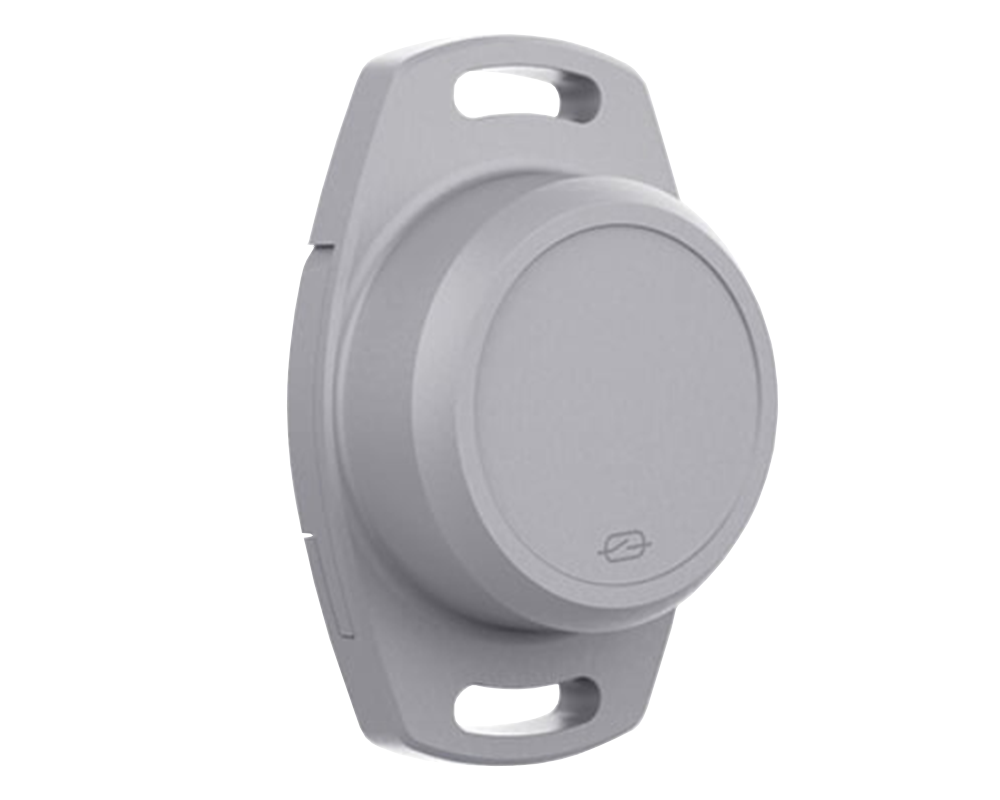
Non-powered assets demand a different build. Returnable containers, flatbed trailers, and construction attachments carry no power source, so the device supplies its own. GPX AssetTrack units run up to 10 years on a single daily GPS fix with a replaceable battery, IP67 sealing, and anti-tamper hardware. That battery engineering, not the radio, is what you are paying for.
Some teams price low cost gps survey equipment when they need to map a job site or measure a stockpile. Survey gear answers a geographic question once. Tracking answers a location question continuously, which is why purpose-built asset trackers and survey instruments are separate budget lines that rarely substitute for each other.
What You Pay For Every Month
Hardware without a platform produces raw coordinates and nothing else. The recurring fee covers cellular network access, cloud storage for the location history, and the interface your operations team uses to run the fleet. Vendors quote this per asset per month, and the figure moves with the intelligence layer, not the hardware.
Entry-level plans deliver location pings, basic geofence alerts, and historical reports. They put dots on a map and leave the analysis to a person.
The higher tiers pay for automation. GPX Scout AI answers plain-English questions across IoT and location data, geofences every site in seconds, and pushes predictive disruption alerts before a delay becomes a chargeback. That is the difference between a status page and an asset tracking ROI you can defend in a budget review. Modern logistics teams treat tracking as an intelligence layer, not a status page.
Cost Structure by Tracker Class
Public price lists for enterprise tracking hardware are rare, and the ones that exist rarely survive a volume negotiation. Cost structure tells you more than a price range. The table below maps how each tracker class spends your money across install, connectivity, and replacement.
| Tracker Class | Power and Install | Recurring Cost Driver | Typical Service Life | Replacement Trigger |
|---|---|---|---|---|
| Hardwired vehicle tracker | 9 to 36 V DC, two-wire install by a technician | Cellular data plus platform access | Life of the vehicle | Vehicle retirement or resale |
| Plug-in vehicle tracker | OBD-II port, installs in under a minute | Cellular data plus platform access | Life of the vehicle | Vehicle retirement or resale |
| Battery cellular asset tracker | Internal magnet, mounts in minutes, no wiring | Cellular data plus platform access | Up to 10 years on one daily fix | Impact damage or loss |
| Rechargeable shipment tracker | Dropped into the load, no mounting | Cellular data plus recharge and return labor | Multiple trips per device | Device not returned by receiver |
| BLE tag | Hang, stick, screw or zip-tie | Gateway coverage, no per-tag cellular plan | 3 to 4 years on a replaceable coin cell | Battery swap or physical damage |
| Disposable cellular label | Peel and stick, tear the tab to activate | Per-shipment unit price plus connectivity | One delivery | Discarded at destination |
Read that table against your own asset mix before you request a quote. A yard holding 400 returnable containers and a fleet of 40 trucks produce completely different totals from the same vendor.
Below roughly 10 high-value assets the enterprise model stops making sense, and the budget question changes entirely. Small-fleet and consumer products such as Logistimatics and Vyncs price per device with a flat monthly fee and no enterprise platform layer, which is the right shape for a single van or a handful of trailers.
The Economics of BLE Tags and Disposable Labels
Not every asset justifies a cellular radio and a monthly line item. Pallets, cartons, tote bins, and medical carts need location certainty inside a defined area, not a global fix every hour. A cellular versus BLE asset tracking cost comparison usually ends the same way: Bluetooth Low Energy (BLE) tags and disposable cellular labels cover that gap at a fraction of the recurring cost.
BLE tags carry no cellular plan at all. GPX AssetTag Edge runs up to four years on a CR2032 at 150 ft outdoors and 75 ft indoors, and AssetTag holds 3 to 4 years on a replaceable CR2477. They report through gateways already in place: GPX operates 100M+ terrestrial gateways in the field, and BLE RoadWired turns any forklift or service vehicle into a mobile gateway. The recurring cost sits with the network, not with each tag.
One-way freight runs on a different model. GPX SmartLabel is a peel-and-stick disposable label: tear the tab, it goes live in seconds, and nothing comes back from the destination. GPX quotes SmartLabel from roughly $9.75 per unit plus roughly $3.50 per month for connectivity, priced per deployment by volume. The receiver discards the label on arrival, which removes reverse logistics from the cost model entirely.
Hidden Costs: Installation Labor and Fleet Downtime
Operations teams consistently underestimate the labor in a fleet-wide rollout. A hardwired unit needs a technician, a two-wire tap into vehicle power, and a service bay. Drilling permanent mounts into a steel chassis adds tooling and time on top of that.
Every hour a commercial vehicle sits in the shop is an hour it generates no revenue. Fleet managers who price that downtime honestly usually change their hardware choice. A device that takes two hours to install costs the operation far more than a magnetic unit that attaches in seconds.
Magnetic trackers and peel-and-stick labels remove that friction. AssetTrack mounts magnetically and AssetTrack OBD plugs into the port in under a minute, so a hundred-unit rollout takes an afternoon instead of a month of shop appointments. Attachment method moves total cost of ownership more than the sticker price does.
Planning for Hardware Replacement Cycles
No electronics survive forever outdoors. Trackers sit through heat, freeze, wash-down chemicals, and forklift impact for years at a time. An honest total cost of ownership model funds replacement from day one.
Devices get crushed, buried under aggregate, or shipped out and never returned. Set your replacement reserve from your own historical loss rate on the assets you are tagging, not from a vendor rule of thumb. Subscriptions keep billing whether or not the device still reports, so audit the platform monthly and cancel connectivity on dead units.
Service life tracks the hardware class. Hardwired vehicle units usually last as long as the truck. AssetTrack runs up to 10 years on a daily fix, and AssetTrack Charge runs up to 7 years per charge. AssetTag batteries are replaceable, so a coin cell swap resets the clock instead of forcing a new purchase. SmartLabels expire by design after one delivery. Pin those numbers down and a five-year forecast stops being guesswork.
How Visibility Affects the Inventory Carrying Cost Formula
Tracking assets costs money. Losing them costs more. The inventory carrying cost formula adds storage space, handling labor, insurance, shrinkage, and the opportunity cost of tied-up capital, then divides that total by average inventory value. The result is the percentage of inventory value you pay each year simply to hold stock.
That percentage is the reason tracking pays. Teams without visibility order safety stock to cover the uncertainty, and every extra unit inflates carrying cost. Accurate location data lets operations run leaner, shrink the buffer, and stop replacing assets that were never actually lost. GPX customers average an 18x return, and recoveries typically complete in under 8 hours.
The math holds across industries. A construction superintendent tracking attachments, a hospital equipment manager tracking infusion pumps, and a 3PL tracking returnable containers all run the same calculation: replacement cost, plus vendor lead time, plus the revenue lost while the asset is missing. Set that number against the monthly tracking fee and the enterprise supply chain visibility ROI argument makes itself.
How to Choose the Right Tracking Mix for Your Budget
Start with the asset mix, not the vendor list. Count powered and non-powered assets separately, decide how often you actually need a position on each class, and match hardware to that frequency instead of buying the most capable device for everything. Then add connectivity, platform access, integration work, install labor, and a replacement reserve to reach a real total.
Build the model once and tracking spend becomes a forecast instead of a surprise. See how supply chain visibility maps to your own asset classes, or talk to our team for a quote built on your actual counts rather than a list price.
Frequently Asked Questions (FAQs)
How much does asset tracking cost?
Cost breaks into four parts: hardware, connectivity, platform access, and install labor. Enterprise vendors quote per asset per month, and the figure moves with asset class and volume rather than a published list price. GPX quotes SmartLabel from roughly $9.75 per unit plus roughly $3.50 per month for connectivity; the rest is priced against your asset mix.
What are the hidden costs of B2B asset tracking systems?
Five costs land after the hardware quote: installation labor and the vehicle downtime that goes with it, API access and engineering hours to feed location data into an ERP or TMS, cross-border roaming and data overage on international freight, training for the people expected to act on alerts, and replacement of units that get damaged or never come back. Price all five before you compare vendors.
What is inventory carrying cost?
It is the percentage of your inventory value you spend each year to hold that inventory. It covers storage space, handling labor, insurance, shrinkage, obsolescence, and the cost of capital sitting in unsold goods.
How do you calculate inventory carrying cost?
Add storage expense, handling labor, insurance premiums, shrinkage, and opportunity cost for the period. Divide that sum by your average inventory value for the same period, then multiply by 100 for a percentage. Run it before and after a tracking deployment to see what visibility returns.
How long do asset trackers last before they need replacing?
Service life sets your replacement budget. GPX AssetTrack runs up to 10 years on one daily GPS fix, AssetTrack Charge runs up to 7 years per charge, and AssetTag holds 3 to 4 years on a replaceable CR2477 coin cell. SmartLabel is single-use and ends its life at the destination.