
Quick answer
Solar trailer GPS trackers fit trailers parked in open sun that need frequent pings. Long-life battery trackers fit untethered trailers in shade, covered storage and drop-and-hook yards. Hardwired trackers fit trailers with constant onboard power. GPX Intelligence sells no solar tracker. Pick the power source by ping rate, sun exposure and maintenance access.
A trailer tracker that dies in the middle of a yard hunt leaves your team walking rows while dispatch waits. Solar panels collect road film and take dock damage. A wired unit can go dark the day after a tractor unhooks. For fleets running 10 or more trailers, the solar vs battery trailer GPS tracker decision starts with two questions: where does the trailer park, and what ping rate do you need? Reliable trailer tracking needs power that matches the work.
A dead tracker also leaves no trail when a parked trailer disappears. Verisk CargoNet estimated 2025 cargo theft losses at about $725 million, up 60% from 2024, and our cargo theft statistics tracker follows the 2026 figures quarter by quarter. An untethered trailer in a drop yard needs a tracker that still reports on day 30, not just day one.
| Power source | What it needs | Where it falls short | Best for |
|---|---|---|---|
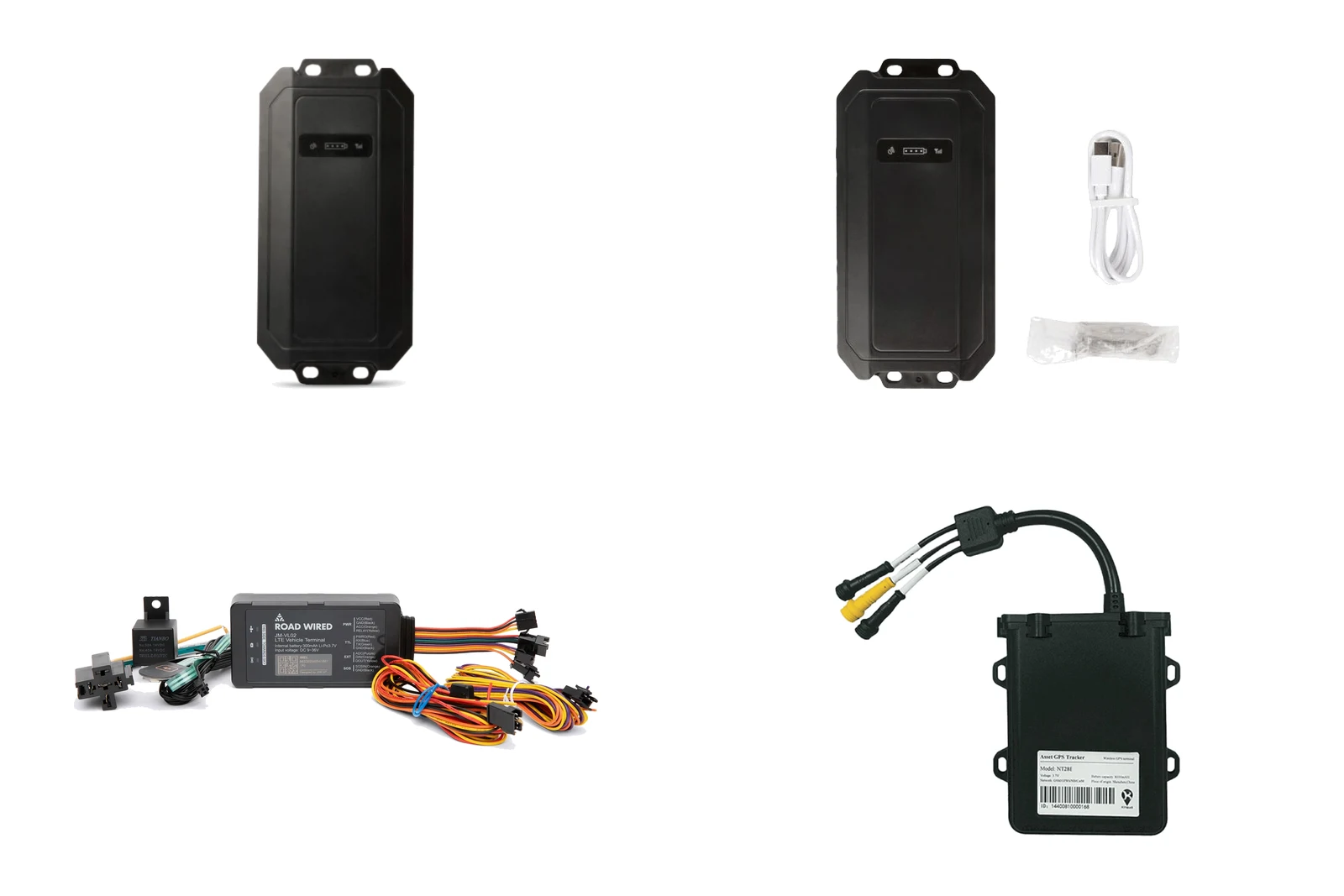
| Long-life battery: AssetTrack | A replaceable battery; up to 10 years on one daily GPS fix | Higher ping rates draw stored energy down faster | Untethered trailers, drop-and-hook yard inventory and covert frame mounting without wiring |
| Rechargeable: AssetTrack Charge | A charging plan; up to 7 years per charge | Needs access for recharging; runtime depends on ping rate | Trailers that return to accessible service locations |
| Hardwired: RoadTrack Wired, BLE RoadWired | Constant power on the trailer, such as a reefer unit battery | 7-way harness power stops when the tractor uncouples; RoadTrack Wired’s 24-hour backup battery covers a limited window | Powered trailers that need frequent pings; BLE RoadWired also detects nearby tagged assets |
| Solar: no GPX product | Sunlight, a sky-facing mount and rechargeable energy storage | Shade, covered storage, snow and road grime interrupt charging; exposed mount is easy to spot | Exposed trailers where charging conditions match the ping rate |
Is a solar GPS tracker better than a battery tracker for a trailer fleet?
Solar wins when available sunlight supports the ping rate you need. A long-life battery wins when charging conditions are unreliable and scheduled location checks cover your operation. Neither power source wins on every trailer.
Solar trackers still run on stored energy. The panel recharges a battery, and that battery powers the device between charging windows. Solar changes how energy gets in. It does not remove battery management.
Open yards favor solar. Frequent pings raise energy demand, so recharging pays off when trailers spend real time in direct sun. Roofed parking, enclosed storage and shifting seasonal assignments break that fit.
GPX sells no solar-powered tracker. Its trailer options are long-life battery, rechargeable and hardwired devices. On a mixed fleet, assign power by each trailer’s duty cycle instead of forcing every unit onto the same hardware.
Field Challenges That Break Trailer Tracker Power Plans
Most tracker power failures come from conditions in the yard and on the road, not from the spec sheet. Check each one against your real trailer assignments.
- Shade and covered storage cut charging. The U.S. Energy Information Administration notes that available sunlight depends on the time of day, location, season and weather. A solar tracker parked indoors runs on its remaining charge, and every ping draws that reserve down. Check the actual parking spot, including shadows from nearby equipment.
- Road grime coats the panel. Road film, de-icing salt, mud and diesel soot build up on a sky-facing panel between trailer washes and block sunlight from the cells. Add panel cleaning to the wash schedule, or plan for weaker charging through winter.
- Winter shifts the energy balance. EnergySage reports that cold temperatures improve solar panel output, and that output starts to degrade once panel temperature rises above 25°C (77°F). Short days and snow on the panel are the real winter risks. Review panel performance and battery performance separately.
- Cold hits rechargeable batteries hard. Battery University warns that charging lithium-ion below freezing plates metallic lithium on the anode and permanently degrades performance and safety. Ask the tracker maker which charging protections the device uses, because sunlight alone does not make charging safe.
- Exposed mounting invites theft. A solar tracker needs a sky-facing spot on the nose or roof, where a thief can see it and strip it before moving the trailer. A non-powered battery tracker can sit on a steel frame member out of sight, as long as the position still supports GPS and cellular reception.
- Impact damage hits exposed casings. Low-hanging branches, automated wash brushes and overhead dock doors strike hardware on the roof and nose. Inspect solar casings after wash cycles and tight yard moves.
- Uncoupling cuts 7-way power. A dry van wired only to the 7-way harness loses its supply the moment the tractor unhooks. A backup battery bridges a short gap, then the tracker goes dark in the drop yard.
- Weak cellular signal drains batteries. In low-signal rural drop yards, the modem spends extra energy searching for a network and retrying transmissions. A runtime figure earned in strong coverage overstates endurance in a weak one.
How long does a non-powered trailer tracker run before it needs a charge or a swap?
Battery life depends on the model and the ping rate. A wireless trailer GPS tracker with long battery life trades frequent pings for longer gaps between service visits. Check the reporting interval behind any runtime claim before you compare headline years.
AssetTrack is a slap-and-track, non-powered asset GPS tracker. It runs up to 10 years on one daily GPS fix. The battery is replaceable, and the magnetic mount attaches to suitable steel surfaces, including frame members out of plain view. That runtime belongs to the daily-fix schedule, not continuous tracking.
More pings mean a bigger energy draw. Do not carry the daily-fix battery figure into a higher-frequency deployment plan.
AssetTrack Charge is rechargeable and runs up to 7 years per charge. GPX rates it separately from AssetTrack’s daily-fix figure. Treat the two numbers as separate product specs, not a head-to-head endurance test.
Check the GPX product lineup against your reporting requirement. A replaceable battery suits planned swaps. A rechargeable device suits trailers that return to accessible service locations, and neither depends on sunlight.
For parked yard inventory, decide whether one location a day meets dispatch needs. For trailers moving between sites, define how fast you need movement to show up. The solar vs battery trailer GPS tracker choice gets much clearer once that requirement is written down.
When should you hardwire a trailer tracker instead?
Hardwire when the trailer has constant onboard power and your operation needs frequent pings without depending on sunlight. On a dry van, the 7-way tractor-trailer harness, including the ABS/AUX circuit, carries power only while a tractor is coupled. A reefer unit battery or another constant circuit on the trailer keeps a wired tracker running after the drop. Confirm the circuit with your installer before you order.
RoadTrack Wired accepts 9-36 V DC through a 2-wire install. It records a GPS fix every 400 m while moving and carries a 24-hour backup battery.
That backup bridges a power interruption. It is not a long-term power plan. If a drop-and-hook trailer sits untethered longer than the backup covers, pick a constant power source or a battery-powered tracker, and document how each trailer gets power while moving and while parked.
BLE RoadWired combines a hardwired 12/24 V GPS tracker with a mobile Bluetooth Low Energy gateway. It runs BLE 5.0, carries an IP68 rating and uses a 2-3 wire install. It tracks the vehicle it is wired into and picks up nearby GPX BLE-tagged assets.
Choose it when you need the powered trailer’s location plus visibility of the tagged assets around it. Keep the trailer power requirement separate from the tags. Nearby tags do not power the gateway.
How Ping Rate Changes the Power Decision
Every location fix and cellular transmission uses energy. A higher ping rate raises the workload whether power comes from a battery, a solar panel or a wired supply. A long runtime claim says nothing about endurance on a frequent reporting interval.
Start with the event you need to act on: an arrival, a departure, an unexpected move or the dwell time of stored equipment. Then pick the reporting interval that makes that event useful to your team. Extra pings nobody acts on just burn battery.
Ask whether the interval is configurable and whether the device switches to motion-triggered reporting when the trailer starts moving. That combination keeps parked trailers on a slow ping and moving trailers on a fast one.
Separate power from connectivity, too. A fully charged tracker still needs a location fix and a cellular path to deliver an update. When you evaluate suppliers, ask for performance figures at your actual ping rate, in your weakest coverage area, with covered parking and seasonal exposure included.
Test the Duty Cycle Before Expanding
Pilot on the trailers with your hardest assignments: open-yard parking, covered storage, rural drop yards and long untethered periods. Log scheduled pings, received pings and every maintenance visit. A clean result in a sunny yard proves little about a roofed winter assignment.
Check mounting access as well. Solar needs sky exposure, and a magnetic battery tracker needs a suitable steel surface such as a frame rail. Both need a position that supports location reception, communications and routine inspection.
Scale up only after the device delivers the reports your team needs under representative conditions. Assign one owner for battery swaps, charging or electrical inspection. Clear maintenance ownership matters as much as the power source.
What’s Next for Trailer Tracker Power Planning
Buyers are pressing suppliers for proof on charging protection, weak-sunlight reporting and the operating conditions behind every runtime figure. Put those questions in writing before a pilot, not after a failed winter.
The bigger shift is from watching dots on a map to acting on what they show. GPX builds AI-powered asset tracking across the hardware, the network and the platform. Its Scout AI analyst answers plain-language questions about location data, such as “Which assets have been idle for more than 48 hours?”, which is how dwell data surfaces trailers sitting unused in the yard.
When GPX Is Not the Right Fit
A fleet committed to solar charging needs a solar supplier, because GPX offers none. LoneStar Tracking’s SolarMAX XL is a solar-powered trailer GPS tracker with a rechargeable battery. Spireon’s FL Solar is a solar trailer tracker in its FleetLocate line.
Trak-4’s Solar GPS Tracker is self-charging and uses a rechargeable battery. Trak-4 says it keeps running through periods without sun. Confirm fit for your storage conditions directly with each supplier.
For a single trailer outside a fleet operation, or a family vehicle, sister brand Logistimatics serves individual tracking needs. GPX serves operators managing 10 or more high-value assets, or any fleet operation.
GPX focuses on asset visibility. Buyers who need dashcams, engine diagnostics or an ERP need a different product category.
Assign a Power Source to Every Trailer Before You Sign
Sort the fleet by how each trailer actually lives, then match the hardware to that group.
- Open-yard trailers on frequent pings: shortlist solar suppliers and ask for charging data at your ping rate, with road grime and winter conditions included.
- Untethered dry vans and stored inventory: pick a long-life battery tracker such as AssetTrack, mount it out of sight on the frame and set a daily ping.
- Trailers that return to a service bay: pick AssetTrack Charge and name the person who owns charging.
- Reefers and trailers with constant onboard power: hardwire RoadTrack Wired, or BLE RoadWired when you also need to see nearby tagged assets.
Run the pilot on your hardest assignments in each group, then approve the fleet purchase on the results.
Talk to GPX about your trailer fleet and map AssetTrack, AssetTrack Charge, RoadTrack Wired or BLE RoadWired to your power availability and ping-rate requirements.
Frequently Asked Questions (FAQs)
How do road grime, theft risk and mounting location affect solar trailer GPS trackers?
A solar tracker needs a sky-facing spot on the nose or roof. Road film, de-icing salt and diesel soot on that panel weaken charging between washes, and the exposed position lets thieves spot and strip the unit. Branches, wash brushes and dock doors also strike exposed casings. A battery tracker can mount out of sight on a steel frame member instead.
What is the difference between a solar GPS tracker and a battery-powered GPS tracker?
A solar GPS tracker uses a panel to recharge its internal battery. A battery-powered, non-powered asset tracker runs on stored energy until the battery needs replacing or recharging. The practical difference is how energy gets replenished during the trailer’s operating cycle.
How long does a trailer GPS tracker’s battery last?
Runtime depends on the product and the ping rate. GPX AssetTrack runs up to 10 years on one daily GPS fix and uses a replaceable battery. AssetTrack Charge runs up to 7 years per charge. Treat the two figures as separate specs, not a direct comparison.
How does GPS ping rate change trailer tracker battery life?
Every ping uses energy for a GPS fix and a cellular transmission, so a higher ping rate shortens battery life. A runtime rated on one daily fix does not carry over to frequent or continuous tracking. Weak cellular coverage adds more drain, because the modem spends longer searching for a network.
Can you hardwire a GPS tracker to a dry van trailer without its own battery?
Yes, but standard 7-way power is live only while a tractor is coupled. RoadTrack Wired carries a 24-hour backup battery that bridges the gap after uncoupling. For dry vans that sit untethered for days, use a battery tracker such as AssetTrack, or wire to constant onboard power such as a reefer unit battery.
Do solar trailer trackers still work in winter or under cover?
Yes, they run on stored battery energy when charging falls short. Short winter days reduce charging time, and snow on the panel blocks sunlight. Under cover, runtime depends on the remaining battery reserve and the ping rate.
Does GPX sell a solar-powered GPS tracker?
No. GPX sells no solar-powered tracker. Its trailer options are AssetTrack, AssetTrack Charge, RoadTrack Wired and BLE RoadWired, covering battery, rechargeable and hardwired power.