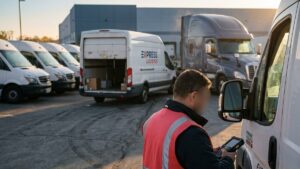

Losing a trailer is more than an inconvenience. It stalls operations, delays deliveries, and shakes client trust. Thieves have gotten sophisticated, and a padlock no longer protects a valuable asset. According to the National Insurance Crime Bureau (NICB), nearly half a million vehicles were reported stolen in the first half of 2023, a figure that includes commercial trailers and heavy equipment. Cargo makes trailers an even richer target: Verisk CargoNet recorded 3,625 cargo theft incidents across the U.S. and Canada in 2024, a record year, with an average loss of $202,364 per event. That threat lands straight on your bottom line.
Operations managers and logistics directors need to get ahead of it. That means understanding how modern thieves work and building a layered defense that pairs physical barriers with real-time tracking. The goal is simple: stop the theft before it happens, or get an alert the second something goes wrong. This guide walks through trailer theft prevention methods, from basic locks to AI-powered asset intelligence.
| Provider | Technology Type | Key Feature | Best For |
|---|---|---|---|
| GPX | AI-Powered Multi-Sensor Tracking | Scout AI Predictive Intelligence | Enterprise & High-Value Assets |
| Samsara | Asset Gateway (Solar/Wired) | Integrated Fleet & VMS Platform | Large fleets already in the Samsara ecosystem |
| Motive | Asset Gateway | AI Dashcam Integration | Trucking & logistics fleets focused on driver-centric data |
| LoJack | Stolen Vehicle Recovery (SVR) | Direct Law Enforcement Integration | Post-theft vehicle and equipment recovery |
| Master Lock | Mechanical Locks & Guards | Physical Deterrence | Basic security & layering with other systems |
| Logistimatics | 4G GPS Tracking | Mobile App & Real-Time Alerts | SMBs & Individual Owners |
The Real Cost of Trailer and Cargo Theft
A stolen trailer sets off a chain of costs. The direct hit is the replacement value of the trailer and its cargo, which runs from thousands to millions of dollars. The indirect costs often hurt more: downtime, missed delivery windows, contract penalties, and higher insurance premiums. In construction, agriculture, and logistics, one stolen trailer can stop a whole project or delivery route cold.
Criminal crews are organized. They target unattended trailers in open lots, truck stops, and even company yards. They bring their own tractors, hook up, and drive off in minutes. Some use signal jammers to defeat basic GPS trackers or run strategic cargo theft, intercepting high-value shipments in transit. Your job is to deploy security that counters these tactics and delivers actionable intelligence the moment an asset is at risk.
Layer 1: Physical Deterrents
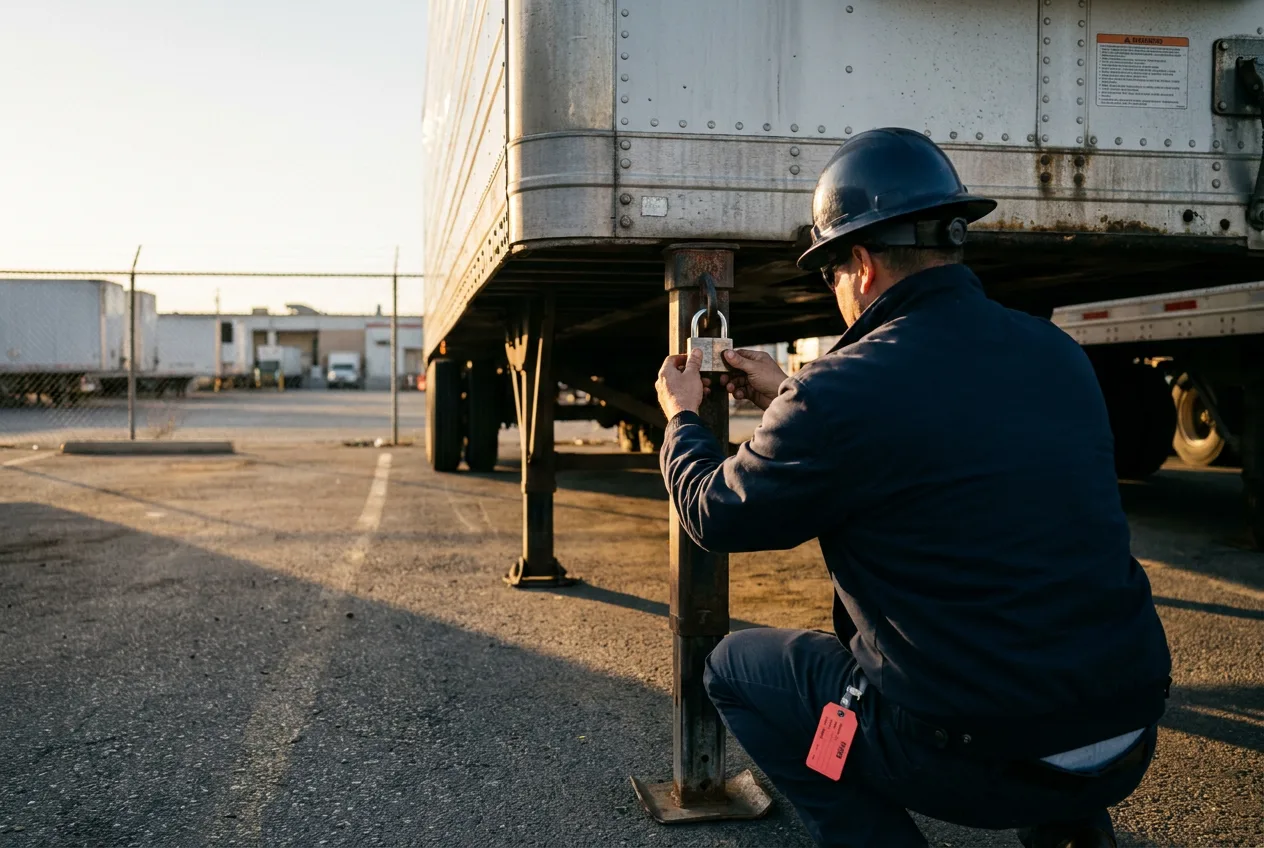
Your first line of defense is hardware that makes the trailer a harder target. These devices turn away opportunistic, low-skill thieves.
- King pin locks: These fit over the trailer’s king pin and stop a tractor from coupling with it. They are essential for any dropped trailer.
- Coupler locks: For bumper-pull trailers, these lock the coupling mechanism so it can’t attach to a tow vehicle’s ball hitch.
- Glad-hand locks: These secure the trailer’s air lines and stop a thief from connecting their tractor’s brakes, making the trailer difficult and dangerous to move.
- Wheel clamps and boots: A highly visible deterrent, a wheel clamp physically stops the wheel from rotating.
These locks matter, but they aren’t foolproof. A determined thief with bolt cutters, an angle grinder, or a pick set defeats them fast. Their real value is buying time and turning away amateurs. Treat them as one part of a layered strategy, not a complete answer.
Layer 2: Active GPS Tracking
The next layer tells you where your asset is. GPS tracking is the backbone of modern trailer theft prevention. Unlike a passive lock, a GPS tracker gives you live location data for monitoring and recovery.
But not all GPS is equal. Legacy systems give you “dots on a map” and update only now and then. They lose signal in urban canyons and inside buildings, and skilled thieves can detect and disable them. They beat a lock, but they stay reactive. They confirm a theft happened without preventing it or giving you the insight to tighten your security.
AI-Powered Asset Intelligence with GPX
For teams that want to close blind spots and get ahead of theft, an AI-powered asset intelligence platform is the answer. GPX goes past traditional tracking. We turn raw location data into insights that prevent theft, sharpen operations, and protect your margins. You get clear control over every asset, everywhere.
The GPX platform runs on multi-sensor data fusion and advanced AI. That delivers security and control physical locks and legacy GPS can’t match.
- Multi-Sensor Fusion for Full Visibility: GPX devices combine GPS, cellular (4G/5G LTE-M), BLE, and WiFi scanning to hold an accurate location signal. Move a trailer indoors where GPS drops, and the platform switches to other signals to keep tracking. That closes the blind spots where thefts succeed.
- Predictive Intelligence with Scout AI: Our Scout AI reads movement patterns, historical data, and geofence boundaries to flag anomalies early. It catches an unauthorized hook-up, spots a trailer off its route, or alerts you to a door-open event in the wrong place. It doesn’t just show the problem. It tells you what to do.
- Dynamic Geofencing and Instant Alerts: Build self-learning perimeters around yards, job sites, and routes. The moment a trailer leaves its zone or moves outside approved hours, your team gets an alert by SMS, email, and push. You act immediately, often stopping a theft in progress.
- Covert Tracking with Smart Labels: For high-value cargo inside the trailer, GPX Smart Labels are disposable, peel-and-stick trackers. Put them on pallets, crates, or products for granular visibility and a backup layer if the trailer itself is compromised.
- Hardware Built for Harsh Environments: Our devices handle extreme temperatures, moisture, and vibration. With solar charging, long-life batteries, and wired options, you deploy a reliable, low-maintenance tracker for any trailer type.
Where Trailer Security Programs Stall Without Integration
Rolling out security across a large, spread-out fleet brings its own obstacles. Get ahead of these four and your program holds up under real conditions.
- Integration with existing software: A tracking platform that cannot feed your TMS or ERP creates a second system to check. GPX is platform-agnostic and pushes location and status data straight into the tools your team already runs, so TMS integration stops being a manual export.
- Scaling across thousands of assets: Deploying and maintaining trackers on hundreds of non-powered trailers strains any operation. GPX hardware ships with long-life batteries, solar options, and self-registering setup, so scaling IoT asset tracking across a distributed fleet does not add headcount.
- Alert fatigue: A system that fires on every minor movement gets ignored. Scout AI prioritizes real anomalies over noise, so your team acts on the alerts that signal actual theft or unauthorized use.
- Internal theft and unauthorized use: Assets do not only disappear to outside crews. Employees moving trailers off-hours or off-route cost real money. Geofencing and predictive asset management flag off-hours movement and off-route trips, giving you a record of who moved what and when.
Evaluating Other Trailer Security Technologies
GPX delivers a full AI-driven solution, but it helps to see where other tools fit. Different technologies serve different jobs, and an honest comparison matters.
Fleet Management Platforms
Providers like Samsara and Motive offer asset gateways that plug into their fleet management ecosystems. They fit companies already invested in that provider’s video and vehicle telematics.
- Pros: A single platform for vehicles and assets streamlines reporting. Hardware is easy to install, with solar and battery options.
- Cons: They often treat asset tracking as a secondary feature and skip the AI-driven predictive analytics and multi-sensor fusion of a dedicated platform.
Stolen Vehicle Recovery (SVR) Services
Services like LoJack have a long track record. Their model recovers an asset after it’s reported stolen, using a proprietary radio signal that helps law enforcement locate the vehicle.
- Pros: Strong police relationships aid recovery. The radio signal resists common cellular and GPS jammers.
- Cons: This is purely reactive and focused on recovery, not prevention. It gives the owner no real-time visibility or operational data.
Consumer & SMB GPS Trackers
Our sibling brand, Logistimatics, offers effective, affordable 4G GPS tracking. It’s a strong fit for small businesses, owner-operators, and personal trailers.
- Pros: Cost-effective, easy to run from a mobile app, with reliable real-time tracking and core alerts like geofencing.
- Cons: It doesn’t offer the enterprise-grade API integration, scalability, and deep AI analytics that large, complex operations need.
How to Move From Reactive Loss to Proactive Asset Control
Securing trailers today takes a strategic, layered approach. Hoping a lock holds is an invitation to loss. Start by assessing your vulnerabilities. Where do trailers sit unattended? What are the assets worth? What does a theft actually cost your operation? Those answers set the security level you need.
For any business with valuable mobile assets, basic and reactive measures no longer cut it. The strongest strategy pairs physical deterrents with real-time, intelligent tracking. That posture deters thieves and delivers the intelligence to stop theft in progress and recover assets fast. An AI-powered platform like GPX turns security from a cost center into an operational advantage, giving you the data to protect assets and use them more efficiently across your supply chain.
Ready to see how AI-powered asset intelligence protects your trailers and sharpens your operations? Request a demo to get started.
For simpler consumer or small-business needs, budget GPS brands like Logistimatics or LandAirSea cover basic vehicle and personal tracking, though without the scale, multi-year battery life, and analytics that a business-grade platform provides.
Frequently Asked Questions (FAQs)
How does AI asset tracking differ from traditional GPS?
Traditional GPS tells you where an asset is. AI asset tracking, like GPX, tells you what to do about it. It analyzes location, sensor data, and historical patterns to predict problems, catch anomalies, and send prescriptive alerts, going past “dots on a map” to real operational intelligence.
What is the best trailer theft prevention device?
The best solution is layered. Start with physical deterrents like quality king pin and coupler locks. The critical layer is an advanced GPS tracker, ideally one with AI like GPX, giving you real-time alerts, multi-sensor visibility, and predictive analytics that prevent theft before it happens.
How can I prevent cargo theft from my trailer?
Preventing cargo theft means securing the trailer and the cargo inside. Lock the trailer, add an AI tracking system, and use high-security seals on the doors. Then place covert trackers like GPX Smart Labels on individual pallets or high-value items for a second layer if the doors are breached.
How do GPS trackers for trailers get power?
Trailer trackers run on several power sources. Many use long-life batteries that last years on one charge. Others use solar panels to recharge continuously, ideal for trailers parked outdoors. For refrigerated or powered trailers, trackers can hardwire into the trailer’s power system for a constant charge.
What should I do if my trailer with a GPS tracker is stolen?
Act fast and use your tracking data. Open the platform to pull the trailer’s live location, then report the theft to police with those exact coordinates. With GPX, real-time alerts and Scout AI flag the unauthorized movement the moment it starts, and the multi-sensor signal keeps tracking even if a thief drives the trailer indoors or tries to jam GPS. Share the live location with law enforcement to speed recovery.
How common is cargo theft and what does the average incident cost?
Verisk CargoNet recorded 3,625 cargo theft incidents across the U.S. and Canada in 2024, a record year. The average loss per incident reached $202,364, making cargo theft a direct and measurable threat to operating margins.