
Single-use corrugate makes you buy your packaging again every quarter. Returnable transport packaging turns that recurring spend into a durable asset you own. The math works only when the containers come back.
Containers and packaging make up the largest share of municipal solid waste in the United States. The EPA puts the number at 82.2 million tons, or 28.1 percent of total generation. That pressure pushes manufacturers toward closed-loop systems, and the operational problem is harder than the environmental one. When assets disappear into a customer facility or a scrap yard, you pay twice: once for the reusable container, again for the single-use replacement.
The Fast Version
- Returnable plastic packaging replaces consumables with durable assets built for repeat trips.
- A container’s rated trip count means nothing if it disappears on trip three.
- Total cost of ownership has to include reverse logistics, washing, and annual shrinkage.
- Manual audits burn labor, stall reconciliation, and leave Tier 2 liability unsettled.
- IoT asset tracking closes the blind spots and puts accountability on remote customer sites.
Where Closed-Loop Systems Leak
A reusable container program looks clean on a spreadsheet. You take the capital cost, divide by expected trips, and show a large cut in consumable spend. The model breaks the moment those assets leave your dock.
Containers sit idle at customer sites, get repurposed for internal storage, or go missing outright. Without location data, you have no way to enforce a return agreement or find stranded assets. Teams fall back on spreadsheets and annual physical counts.
Those counts carry their own bill. Staff walk yards with clipboards for days, plant supervisors get pulled off the floor, and the reconciliation still lands weeks after the quarter closes. By the time the variance report reaches finance, the containers have moved again.
The liability argument is worse. When a bin vanishes between your plant and a Tier 2 supplier, neither side holds evidence, so the replacement invoice gets disputed and the relationship absorbs the damage. Scan records prove a container left your dock. They prove nothing about who held it last.
Unaccounted assets also break your reporting. Circular economy logistics claims rest on documented reuse rates, and a fleet you cannot count is a fleet you cannot certify. ESG disclosures then fall back on estimates that auditors reject.
Then you buy safety stock to cover the gap, and shrinkage cost overtakes the projected savings. Treat these containers as capital equipment, not commodities. You cannot fix a closed loop until you know where it breaks.
Core Types of Returnable Plastic Packaging
Form factor follows the freight. Each supply chain needs specific dimensions, polymer grades, and handling profiles to protect parts in transit. Logistics teams group these assets as returnable transport items (RTIs), and RTI management treats every one of them as tracked capital rather than packaging.
Handheld Totes and Bins
Totes dominate automotive milk runs, pharmaceutical distribution, and retail fulfillment. They are injection molded and stack tight to maximize pallet density. Because one worker carries one unassisted, they post the highest rate of unauthorized repurposing. Customer sites keep them for their own work in process.
Intermediate Bulk Containers (IBCs)
IBCsmove bulk liquids, specialty chemicals, and food ingredients. A rigid outer cage protects the inner plastic tank. Unit cost runs high and inspection and cleaning rules are strict, so a lost IBC hits the budget hard. Chemical and food manufacturers track these individually.
Collapsible Bulk Boxes
Heavy manufacturing and agriculture run on knockdown bins. Structural foam molding handles the load. The real advantage shows up on the return leg. The walls fold flat, so you fit far more empties on a trailer than assembled boxes allow.
Plastic Drums
High-density polyethylene (HDPE) drums replace steel and fiber. They resist corrosion and guard against contamination, which matters for harsh chemicals and sterile powders. Tight-head drums handle liquids and open-head drums take dry bulk. Like IBCs, they need certified washing between cycles.
Lifespan and Trip Cycle Realities
Returnable packaging is built for punishment. The polymers handle temperature swings, chemical exposure, and daily forklift contact. Trip ratings vary widely by container type, polymer, and duty cycle, so get the rating for your exact part number from the supplier in writing.
Real operations rarely match the lab. A container rated for years of service returns nothing if it is lost on trip four. Sun exposure degrades plastic in an outdoor yard. Forks puncture walls during a rushed load. More often, the box outlives its rating but leaves your inventory because a Tier 2 supplier never put it on the return truck.
Fleet lifespan depends on movement. Idle time kills ROI. A container parked behind a customer facility for six months is dead to your operation no matter how good the plastic looks. High utilization requires constant dwell-time monitoring across every site.
Calculating Total Cost of Ownership
Moving off single-use packaging calls for a total cost of ownership (TCO) analysis. You weigh ongoing operating cost against the recurring purchase price of expendables.
Capital expenditure is the easy number. Price the fleet by container type, volume, and tooling, and lock the quote before you model anything else. Reverse logistics comes next. You pay fuel, driver hours, and trailer space to bring empty boxes home.
Washing and maintenance add another line. Food-grade and chemical containers need certified cleaning between trips to prevent cross contamination. Budget the labor and utilities for an in-house wash bay, or the per-cycle fee from a third-party pooler.
Audit labor belongs in the same model. Every physical count consumes supervisor hours, delays the close, and produces a number that expires the moment the next truck leaves.
Shrinkage is the volatile input. Every container you cannot find gets replaced at full price, and replacement spend scales directly with your annual loss rate. Measure your own loss rate by container type and model the program against that number, not a vendor average. Control shrinkage and the program pays. Ignore it and the program bleeds.
How Companies Track Returnable Containers, Cable Drums, and Packaging Assets
Operators get control by moving past manual barcode scans to IoT asset tracking sensors. Passive tracking needs a person to scan a label at a choke point. If nobody scans the cable drum on its way out the door, that asset drops off the system until the next annual count.
IoT asset tracking sensors collect the data on their own. Bluetooth Low Energy (BLE) tags and cellular trackers mount directly to the asset and report without human help. Cellular trackers send GPS coordinates to the cloud from the road. BLE tags report through a large network of phones, vehicles and devices, so there are no gateways to install at your docks or inside trailers. That hardware turns a plain bin into smart returnable packaging, and it is how returnable container trackingkeeps a pool visible at sites you do not control.
The combination delivers AI-powered supply chain visibilitythat never waits on a human scan. You see when a bulk box arrives at a customer plant, how long it sits, and when it leaves on the return truck. Missed scans stop mattering, and you get an alert the moment an asset dwells too long somewhere it should not be. That same record settles the Tier 2 liability argument with timestamps instead of opinions.
Why OTIF Performance Depends on Your Empty Containers
On-Time In-Full (OTIF) is enforced by major retailers and OEMs, and suppliers who miss the window face chargebacks or lost contracts. Most teams measure OTIF on finished goods and raw materials only. The container is a prerequisite for the shipment.
Missing returnable packaging causes OTIF misses directly. You cannot ship an automotive assembly without its custom dunnage. You cannot fill a liquid chemical order when the IBCs sit at another plant. The line stops because nobody can find the empties.
A stopped production line costs far more than a replacement bin. Accurate location data puts the right containers at the right plant on the day the schedule calls for them. It also keeps you from air freighting empty boxes to save a customer line.
Returnable Packaging Tracking Options Compared
Here is how the common approaches stack up for an RTI fleet that travels beyond your own four walls.
| Option | Best fit | Coverage | What you see | Limitation |
|---|---|---|---|---|
| GPX Intelligence | Enterprise RTI fleets across plants, yards, and customer sites | Multi-network connectivity: cellular, BLE, GPS, satellite, WiFi positioning | Real-time location, dwell time, and anomaly alerts in one platform | Built for B2B fleets, not single-unit consumer use |
| Barcode and QR scanning | Controlled docks with disciplined scan procedures | Scan points only | Last scanned checkpoint | One missed scan and the asset disappears |
| Fixed RFID portals | High-volume tote flow through fixed doorways | Portal read zones | Entry and exit events | No visibility once the asset leaves your property |
| Spreadsheets and physical audits | Small pilots and one-time counts | Manual | A point-in-time count | Stale the day after the audit |
| Logistimatics | SMB fleets and smaller asset counts | Cellular GPS | Location history and basic alerts | Lighter enterprise workflow and integration depth |
An operation running a few dozen bins on local routes does not need an enterprise deployment. Budget units from Logistimaticsor LandAirSea cover that scale at a lower price point, though neither carries the multi-site workflow depth an enterprise RTI program demands.
The Specs That Decide Whether Your Containers Come Back
The right system moves you from hunting assets to running a fleet. Start with hardware that survives the same environment as the container. Look for IP67 sealing against dust and water immersion, and specify IP69K if the asset goes through high-pressure washdown.
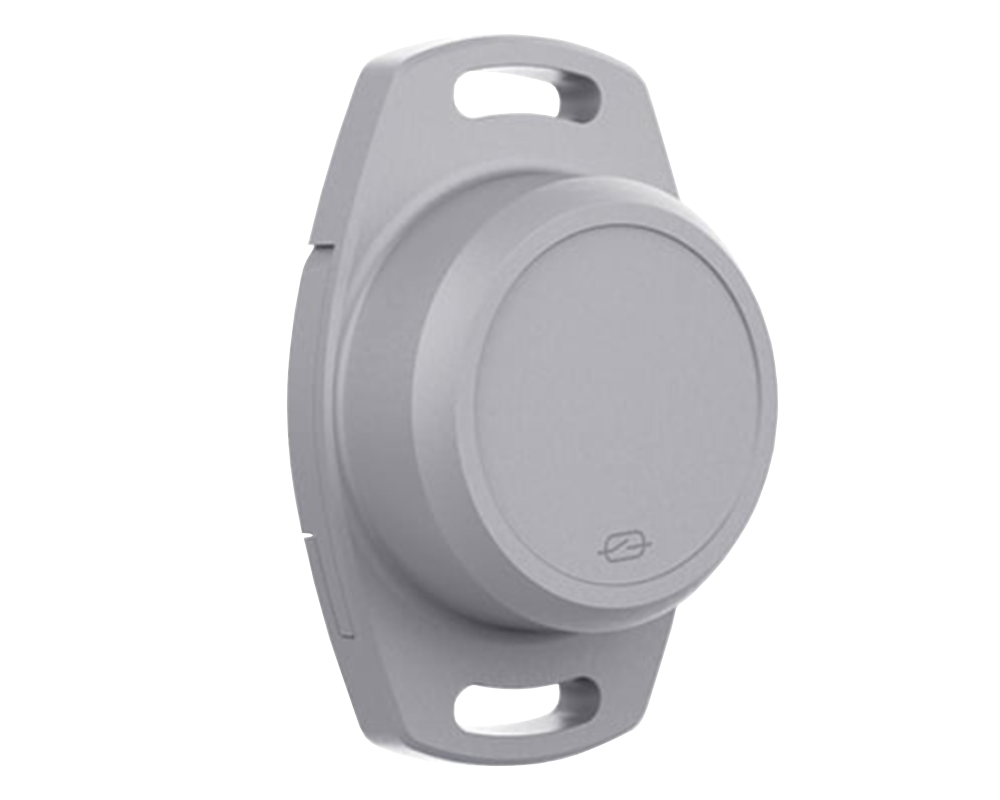
Battery life sets your maintenance schedule. The sensor has to outlast the trip cycle. Swapping batteries on ten thousand moving containers is not a plan, so pick low-power BLE tags or cellular devices rated for multi-year service. AssetTag Pro, for example, runs three to five years, depending on the model, and costs as low as $45/yr per tag with the hardware included.
Judge the software as hard as the hardware. Raw pings do nothing on their own. The platform has to flag the anomaly, like a container sitting past its agreed dwell time at a customer site. With Scout AI, operators ask plain-English questions about inventory and find stranded assets without opening a spreadsheet. That is the step from a status page toward an autonomous control tower that reroutes empties before a line goes down.
Stop writing off missing containers as a cost of doing business. Turn location data into accountability across your closed-loop network. Talk to our teamand see how multi-network connectivity stretches the trip cycle of every asset you own.
Frequently Asked Questions (FAQs)
How do US manufacturers track returnable packaging and IBCs?
Manufacturers pair BLE tags for yard and indoor localization with cellular GPS trackers for over-the-road transit. GPX runs both on one platform through multi-network connectivity, so moving freight and assets parked at remote customer sites report into the same record.
What is the average shrinkage rate for returnable transport items (RTIs)?
No single published figure covers every program, because loss rates swing with container value, route length, and how many hands touch the asset. Measure your own rate by container type across a full year, then model the fleet against that number instead of a vendor average. Teams that switch from annual counts to continuous tracking routinely find the real rate sits above what the spreadsheet showed.
What determines the lifespan of returnable plastic packaging?
Polymer grade, duty cycle, and handling discipline set the physical limit, and your supplier publishes a trip rating for each part number. In practice, loss and theft end most container lifecycles before wear does, which is why active tracking protects the ROI.
How do IoT GPS trackers improve the ROI of closed-loop packaging?
Trackers pay back by extending how many trips each container completes before it disappears. Every recovered bin is a purchase you do not repeat, and higher recovery lets you cut the safety stock sitting idle as insurance. Scout AI surfaces stranded assets in plain English, so retrieval happens in days rather than at the next annual count.
How does asset tracking for returnable packaging reduce costs?
Tracking cuts the safety stock you buy to cover hoarding and permanent loss. It also removes the audit labor spent walking yards with clipboards, and it gives you dated evidence when a supplier disputes responsibility for a missing asset.
Can we integrate returnable packaging tracking with existing ERP systems?
Yes. Asset intelligence platforms push live location and status data into your ERP or enterprise asset management software. That gives you one source of truth instead of a separate dashboard nobody watches.