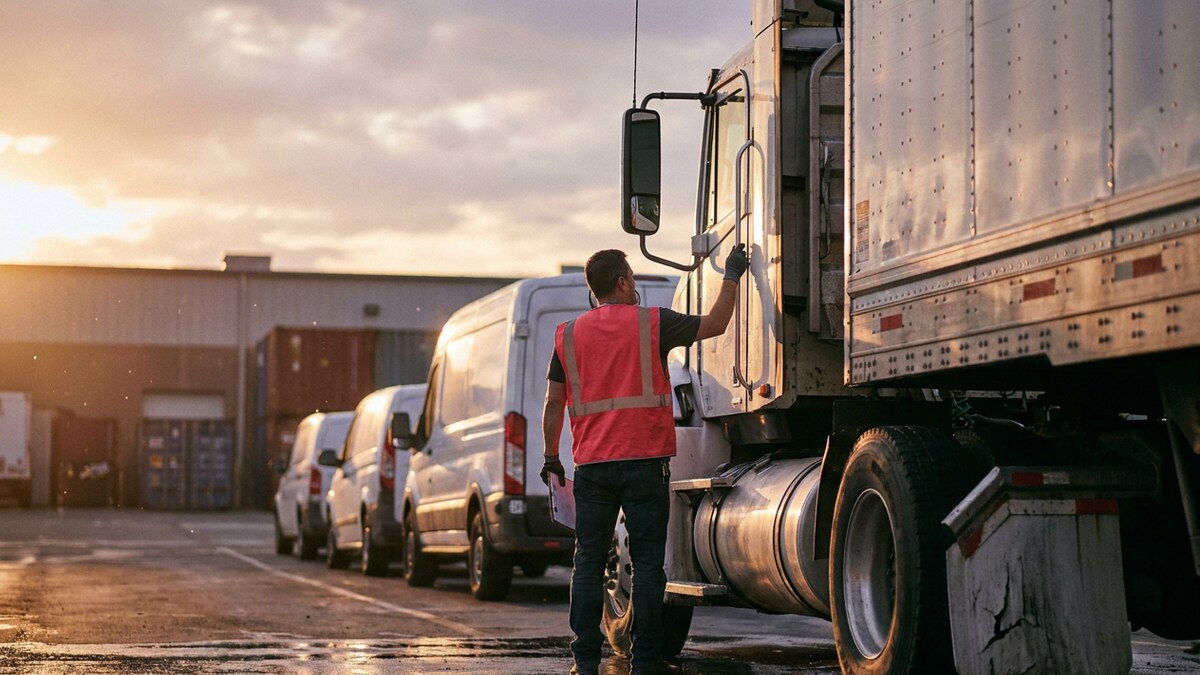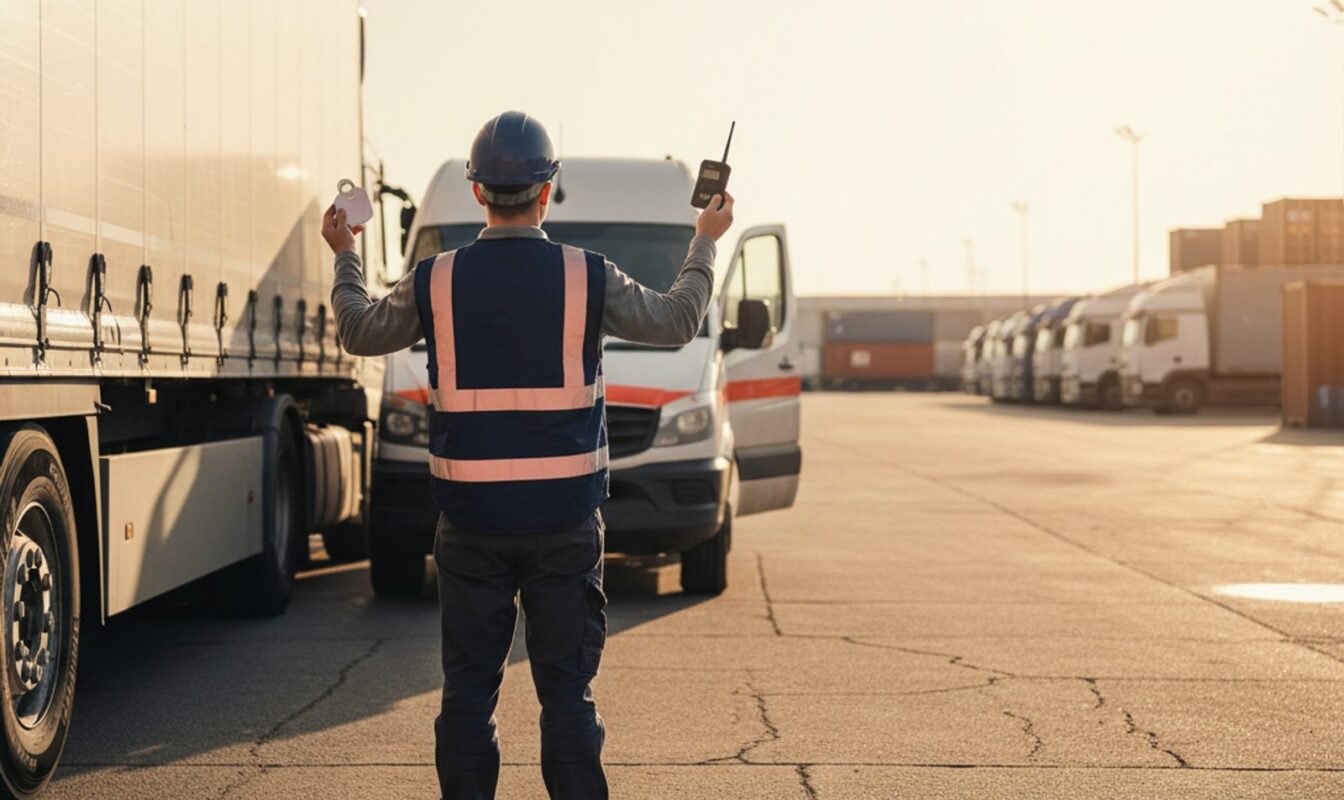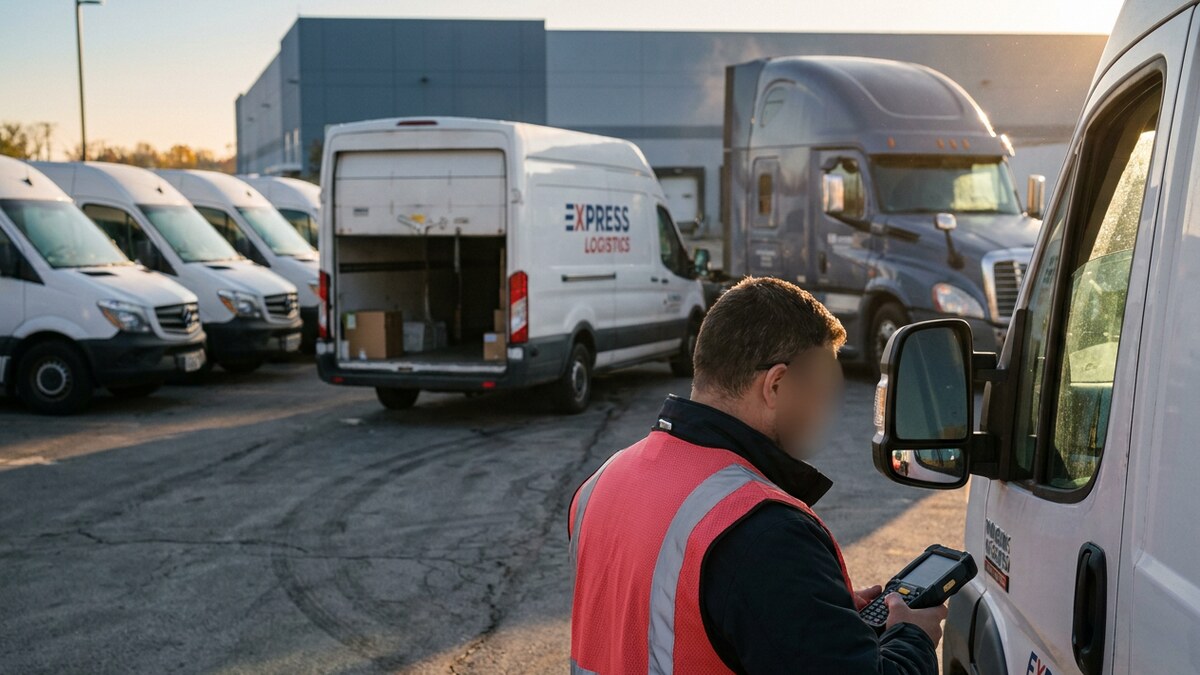
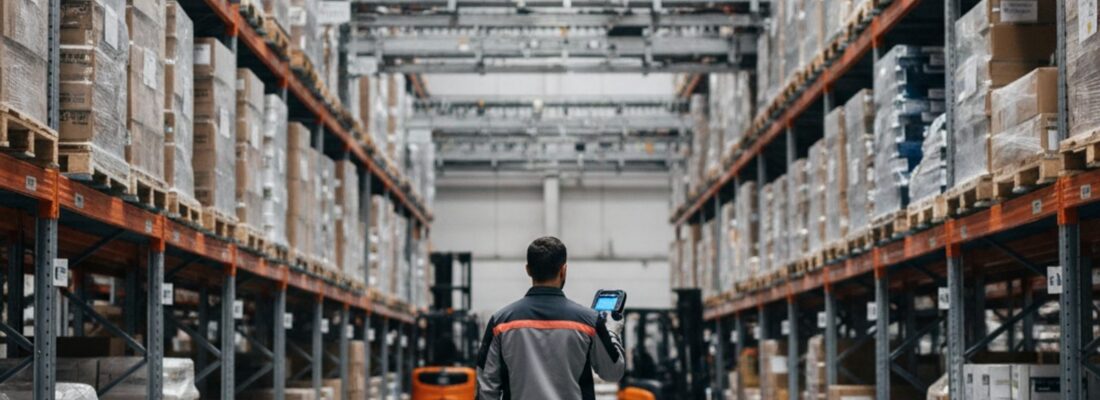

Assets vanish the moment they cross a facility threshold. A trailer backs into the building, a pallet rolls through the bay doors, and the location signal drops. Your supply chain visibility ends at the bay door, and your team burns half a shift walking the floor to find equipment that never left the property.
That blind spot carries a price. IHL Group’s 2026 study puts the annual cost of stockouts and overstocks at $1.7 trillion, or 6.2 percent of global retail sales. Buyers are spending to close it. MarketsandMarkets values the indoor location market at $18.35 billion in 2026, rising to $50.10 billion by 2031 at a 22.3 percent CAGR.
Solving indoor visibility used to mean a construction project. Facility teams hardwired buildings with access points, network switches, and antennas at every choke point. An infrastructure-free indoor positioning system (IPS) flips that model. Smart tags broadcast, and gateways already moving through the building hear them. Nothing gets bolted to a ceiling.
| Product / Brand | Core Technology | Fixed Infrastructure Needed | Best For | Starting Price |
|---|---|---|---|---|
| GPX | BLE tags plus mobile and terrestrial gateways | None to install | Enterprise asset visibility across 50+ industries | SmartLabel about $9.75/unit plus about $3.50/mo |
| Zebra Technologies | Passive UHF RFID | Heavy: fixed readers and antennas | High-volume dock and conveyor read points | Not publicly listed |
| Link Labs AirFinder OnSite | XLE and Bluetooth LE | Moderate: access points plus a gateway | Manufacturing work-in-progress tracking | Not publicly listed |
| Kontakt.io | Bluetooth LE RTLS | Moderate: plug-in gateways per zone | Hospital and clinical asset tracking | Not publicly listed |
| Kinexon | Ultra-wideband (UWB) | Heavy: ceiling-mounted anchors | Shop-floor and automotive precision tracking | Not publicly listed |
GPX
GPX builds AI-powered asset tracking for enterprise operations. It makes the tags, the trackers, the network, and the platform, so assets stay visible as they move from the open road into an enclosed building. GPX serves 50+ industries and watches more than $2 billion in customer assets.
Indoor coverage runs on gateway-free BLE asset tracking. AssetTag Edge uses Bluetooth 5.0 and reads at 150 ft outdoors and 75 ft indoors, with up to four years on a replaceable CR2032. BLE RoadWired turns a vehicle into a mobile BLE gateway, so forklifts and yard trucks map the building while they work. More than 150 million terrestrial gateways are already in the field, which means your facility installs nothing.
Teams query the data in plain English through Scout AI: where an asset sits, how long it has been idle, when a shipment lands. Deployments go live in days, not quarters, because there is no cabling schedule to wait on.
- Best for: Enterprise asset visibility across 50+ industries.
- Starting price: SmartLabel runs about $9.75 per unit plus about $3.50 per month.
- Standout features: Mobile BLE gateways, disposable peel-and-stick SmartLabel shipment tags, and Scout AI location analytics.
- Trade-off: BLE reports zone-level position, not centimeter coordinates for robotic guidance.
Zebra Technologies
Zebra Technologies is a hardware giant. It sells barcode scanners, industrial printers, mobile computers, and passive UHF RFID. Its indoor tracking work centers on fixed readers that record inventory as it crosses a specific line.
That architecture demands engineering up front. Crews mount readers and antennas at dock doors, conveyors, and portals, then connect them to the corporate network. Assets register at a read point and go dark in between.
- Best for: High-volume read points inside dedicated distribution centers.
- Starting price: Not publicly listed.
- Strength: Passive tags carry no battery and cost less per unit than active tags.
- Limitation: Fixed readers need cabling, IT oversight, and a floor plan that stays put.
Link Labs AirFinder OnSite
Link Labs sells AirFinder OnSite for industrial indoor positioning. The system pairs Bluetooth tags with its own Xtreme Low Energy (XLE) protocol to track assets across plants and distribution centers.
The cost lands below legacy real-time location systems, but hardware still goes into the building. Tags report to access points, and access points report to a gateway. Someone maps the floor, places the reference points, and keeps them powered.
- Best for: Work-in-progress tracking across large manufacturing plants.
- Starting price: Not publicly listed.
- Strength: Long tag battery life and consistent zone-level data indoors.
- Limitation: Access points and reference beacons need placement, power, and ongoing battery service.
Kontakt.io
Kontakt.io builds real-time location systems for care operations. It tags IV pumps, wheelchairs, beds, and staff badges, then feeds that location data into EHR and clinical workflows.
Room-level certainty in a hospital takes density. Teams install plug-in gateways through patient rooms and corridors so every tag stays within earshot of a receiver. The result fits a controlled clinical building. It does not fit a yard, a job site, or a cross-dock.
- Best for: Hospitals and clinical environments that need room-level certainty.
- Starting price: Not publicly listed.
- Strength: Healthcare-specific workflows and small tags that fit medical equipment.
- Limitation: Gateway density drives the cost, and coverage stops at the building line.
Kinexon
Kinexon runs ultra-wideband for shop-floor automation, automotive plants, and professional sports. When a robot needs to know exactly where a part sits, UWB answers that question better than anything else on this list.
Precision costs infrastructure. UWB anchors mount across the ceiling and wire back to the network, which turns the rollout into a capital project. Coverage also ends at the edge of the anchored zone, so the asset disappears the second it leaves.
- Best for: Automotive OEMs and robotic automation that need centimeter-level accuracy.
- Starting price: Not publicly listed.
- Strength: The highest spatial accuracy available indoors, with sub-second update rates.
- Limitation: High install cost, and no visibility outside the anchored area.
Why Indoor Tracking Breaks: Six Failure Points
Satellite Signals Die at the Door
GPS depends on a clear line of sight to satellites, and those signals arrive weak. Metal roofs, concrete walls, and dense racking block them outright. The tracker then falls back on cell-tower triangulation, which throws the position hundreds or thousands of feet off. An asset on rack 14 shows up across the street, and nobody trusts the map after that.
The Handoff From Outdoor GPS to Indoor BLE
Most operations run two systems and hope they meet in the middle. A cellular tracker follows the trailer up to the gate, then a separate indoor platform picks up the pallet somewhere inside. Between those two records sits a gap nobody owns. The asset shows one last outdoor fix, then a first indoor read twenty minutes later, and the audit trail breaks at exactly the moment the exception happened. Continuous indoor-outdoor tracking takes one tag identity on one platform across both environments, not two vendors reconciling timestamps after the fact.
The Accuracy Trap
Vendors sell indoor tracking on pinpoint accuracy. Buyers picture an icon sitting on the exact pallet position. Most operations do not need that. Finding the right staging lane, the right building sector, or confirming arrival at a specific site recovers the lost hours. Paying for centimeter anchors when zone-level answers solve the problem is the most common procurement mistake in this category.
Install Disruption and Network Lock-In
Fixed readers change the building. You need IT approval to put new devices on the network, plus power and ethernet runs to the ceiling. That means lifts, closed aisles, and lost throughput during install. Then the network locks you in. Move a rack line, and you pay a contractor to move the access points with it.
What Fixed Networks Cost Over Five Years
The sticker price on an anchor or a reader is the smallest line in the total cost of ownership. Add the site survey, the electrician, the lift rental, the network ports, the security review, and the aisle downtime during installation. Then add the five-year tail: firmware maintenance, replacement anchors, and a fresh survey every time the racking moves. A fixed network is a capital project with an operating tail behind it. A tag-based system is an operating cost with hardware you move by hand. Compare the two across five years, not at the quote line.
Battery Service Across Thousands of Tags
Tag counts scale faster than the team that services them. Ten thousand tags on a two-year cell becomes a standing labor program: locate every tag, open it, swap the cell, log the change. Chemistry and reporting interval decide whether that program exists at all. AssetTag Edge runs up to four years on a replaceable CR2032, and AssetTag Pro holds up to 3 years (up to 5 on AssetTag Pro Max), on a replaceable watch battery, which pushes the service interval past most asset refresh cycles. On one-way freight, SmartLabel removes the question: it ships with the load, and nothing comes back for service.
Mobile Relays Close the IoT Asset Management Gap
Infrastructure-free systems put the intelligence in the tag instead of the ceiling. Tags broadcast continuously, and gateways in motion pick up the signal: a vehicle-mounted BLE hub, a handheld in a picker’s pocket, a tracker sitting on the next trailer. A forklift becomes a moving gateway. A yard truck maps the dock every time it circles the building. Coverage grows with traffic, not with capital spend.
What Comes Next: Agentic Asset Intelligence Indoors
Indoor position is the last missing feed for the autonomous control tower. Once inside-the-building location joins in-transit data, the system stops reporting and starts acting: flagging the container that missed its dock window, releasing the crew that no longer needs to search, rerouting the shipment before the customer calls. Modern logistics teams treat tracking as an intelligence layer, not a status page. The operations that get there first will be the ones that never had to wire a building to do it.
How to Choose Indoor Tracking That Fits Your Facility
Start with the accuracy your work actually requires. Robotic assembly that positions parts to the millimeter justifies anchored UWB and the budget behind it. Everything else, from tools and containers to trailers and clinical equipment, runs fine on zone-level certainty.
Then count your buildings. Visibility across hundreds of sites and third-party warehouses rules out hardwiring on day one, because you do not control those ceilings. Pick a system that travels with the asset and reports on its own. Weigh deployment speed, battery service load, and the full five-year install cost, not the tag price, before you commit to a fixed network.
Stop paying labor to hunt for assets inside your own buildings. Talk to the GPX team and put infrastructure-free indoor tracking to work across your sites.
Frequently Asked Questions (FAQs)
How does asset tracking move from outdoor GPS to indoor BLE without losing visibility?
It takes one tag identity carried across both networks. An AssetTag rides the asset and reports through cellular GPS trackers outdoors. Once the asset moves inside, the same tag is heard by mobile BLE gateways such as BLE RoadWired on a forklift or yard truck. The platform stitches both reads into a single timeline, so the last outdoor fix and the first indoor zone belong to the same record.
How does gateway-free BLE tracking work without fixed readers?
BLE tags such as AssetTag Edge broadcast an identifier on a set interval. Instead of bolted-down readers, authorized mobile devices and vehicle hubs like BLE RoadWired hear the broadcast and pass the location to the cloud platform. Every vehicle and handheld that moves through the building extends coverage.
How accurate is infrastructure-free indoor tracking?
Expect zone-level accuracy: the room, the dock, the staging lane, the sector. That is enough to cut search time to minutes. Centimeter accuracy requires ceiling-mounted UWB anchors and the capital project that comes with them.