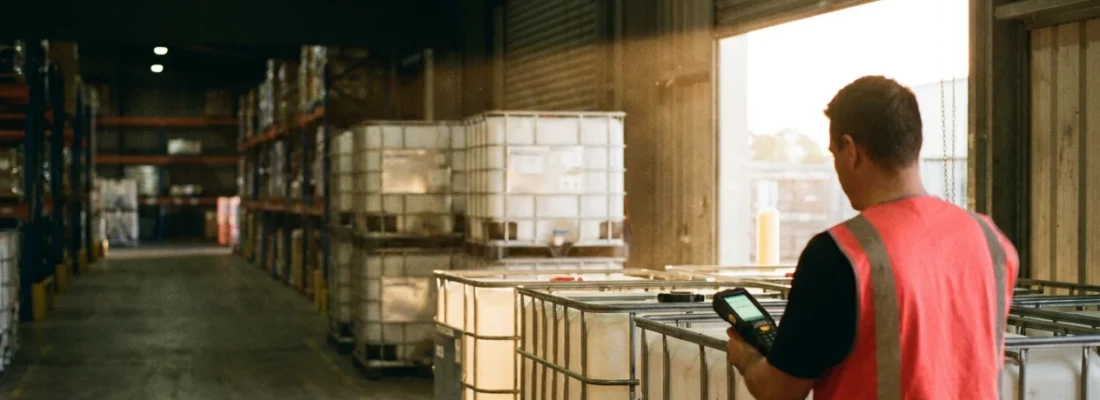

Chemical and food processors build specialized pools of Intermediate Bulk Containers to move volatile, high value, and temperature sensitive liquids across the country. Keeping track of those totes is as hard as moving the product inside them. Containers stall in customer yards, sit unwashed in staging areas, or drop off the network entirely.
Lost returnable containers push companies into constant replacement cycles. Grand View Research tracks sustained growth in the global returnable packaging market, and that investment only pays back when the assets come home. Replacing one stainless steel chemical tote runs into the thousands of dollars. Across 246,000 returnable containers tracked on our platform, the pattern is the same: once every tote reports its own location, the custody chain holds and the repurchase cycle stops.
Key Takeaways: IBC Location Intelligence
- Kill phantom inventory. Hard location data stops plant teams from hoarding totes they do not need.
- Automate hazmat and FSMA records. Digital custody logs replace paper binders during regulatory audits.
- Verify sanitation. A geofence around the wash bay proves every food grade cleaning cycle happened.
- Invoice detention accurately. Dwell data pushed into your ERP turns customer storage time into billable line items.
- Cut capital spend. Recovering assets you already own offsets the budget for new tote purchases.
Where Container Management Breaks Down
- Unchecked customer dwell time. Totes sit empty at destination facilities for weeks. Customers treat them as free storage instead of returning them. Without location data, operators cannot enforce return SLAs or bill accurate detention charges.
- Missed fill and wash cycles. Food grade and chemical IBCs need strict maintenance to prevent cross contamination. Every container gets washed, inspected, and certified before its next fill. Lose visibility and you lose the trip count, and with it any certainty that the tote actually cleared sanitation.
- Broken hazmat custody chains. Hazardous materials shipments require unbroken documentation at every stage under 49 CFR Part 172. When a chemical tote goes missing, the processor carries the regulatory exposure. Auditors want exact location histories, and manual yard checks will not produce them.
- Phantom inventory. Facility managers stockpile clean totes to protect their own production runs. That artificial scarcity hides working assets from the rest of the network. Procurement buys new containers while hundreds of good IBCs sit idle at another site.
- Disconnected systems. Dwell data that lives only in a tracking portal never reaches the people who invoice. With no feed into SAP, Oracle, or the WMS of record, detention charges go uncollected and the container count in the ERP drifts away from the physical pool.
The Financial Toll of Invisible Assets
Every lost tote hits operating margin directly. A standard 275 gallon poly container costs a few hundred dollars. Specialized stainless steel IBCs built for volatile chemical transport cost thousands, and procurement ends up buying assets the company already owns.
The damage goes past the container itself. Missing totes stall production schedules. A plant without sanitized containers cannot package finished product, which creates floor bottlenecks and blown delivery windows.
Asset tracking moves the operation from reactive searching to predictable performance. Operators know how many totes are available, where they sit, and what their sanitation status is.
Domestic Totes Are Not Ocean Freight
Operators often confuse domestic IBC visibility with international container shipping. Ocean platforms follow the steel box on the vessel using carrier and port data. That will never tell a plant manager whether a 275 gallon poly tote is parked in a customer yard in Ohio.
Real IBC tracking puts a self contained sensor on the tote itself. The tag reports regardless of which regional carrier moves the asset. The intelligence lives on the container, not on a shipping manifest.
Hardware Built for Unpowered Environments
Tracking an IBC differs from tracking a powered vehicle. A vehicle tracker draws power from the vehicle battery. Construction equipment GPS wires straight into the machine electrical system and charges continuously. IBC totes carry no power source at all, so the sensor supplies its own for years.
That rules out consumer hardware, and it rules out passive tags. Passive RFID reports only when a tote crosses a fixed reader portal, which leaves every mile in between dark. Active GPS tags and heavy duty BLE (Bluetooth Low Energy) nodes report on their own schedule wherever the container sits. For lower value returnables, industrial tracking stickers with onboard location tech do the job.
GPX builds AssetTag Pro for exactly these conditions. The tag carries IP67 sealing against water and dust and a battery that lasts up to 3 years (up to 5 on AssetTag Pro Max), as low as $45/yr per tag with the hardware included, so smart chemical totes keep reporting through high pressure washdowns, chemical exposure, and rough handling in food and hazmat operations.
Indoor and Outdoor Location Intelligence
Full visibility means tracking totes in transit and inside concrete facilities. GPS performs on the open highway and fails inside a plant. Multi-network connectivity closes that gap by combining cellular, GPS, and BLE.
When an IBC enters a wash facility, phones, forklifts and facility vehicles on a Bluetooth network of more than 150 million gateways pick up the tag and place it on site, with no readers to install. Once the tote hits a truck and leaves the yard, the tag hands off to cellular and GPS. The asset stays on the map from the staging area to the state line.
Tying Totes to the Broader Fleet
Container data gets more useful next to transport data. When a chemical tote leaves the plant, it rides on a truck. Pairing IBC data with fleet GPS tracking gives logistics teams the full journey, predictive ETAs, and immediate flags on route deviations.
Final delivery is where this pays off. Traditional last mile tracking depends on driver updates and barcode scans at the dock. One missed scan and the asset drops off the ledger. Active tags remove that dependency. The tag reports the moment it reaches the customer facility, and the IoT supply chain visibility platform logs the delivery on its own. You get a clean digital custody record without asking anyone to remember anything.
Automating Wash Cycle and FSMA Compliance
Chemical and food IBC pools run on their wash cycles. One contaminated tote can spoil a production run and trigger a recall. Tracking those cycles by hand puts human error inside a regulated process.
With returnable container tracking, operators draw virtual fences around wash facilities. A dirty tote enters the bay and the platform logs the arrival. It leaves and the system flips the status to “clean and ready to fill.” That automated cycle count becomes your evidence during hazmat and FDA audits.
Food grade pools carry a second obligation. FSMA Section 204 requires additional traceability records for foods on the Food Traceability List, and container level location history feeds those records without a separate data entry step.
Scout AI runs inside the platform and watches those cycles continuously. It flags any tote that skipped the wash facility before the container rejoins the active pool. Operators ask plain questions and get back a list of totes due for maintenance or inspection.
Keeping Totes Visible Across Borders and Inside Your ERP
Chemical and food pools rarely stop at a state line. Totes run from Texas plants into Monterrey and from Ontario back into the Midwest. Single carrier cellular hardware goes quiet the moment it crosses a border and loses its home network. Multi-network connectivity solves that: the tag roams across cellular partners, falls back to satellite in dead zones, and keeps reporting the whole route.
The second gap is the one finance feels. GPX is platform-agnostic, so container events push into SAP, Oracle, or your WMS of record through API and webhook feeds. Detention clocks start automatically, charges land on the invoice, and the ERP container count matches the physical pool instead of drifting from it. The result is a live digital twin of the container pool rather than a spreadsheet that ages by the hour.
IBC Tracking Platforms Compared
| Provider | Best For | Tracking Approach | Indoor Visibility | Network Coverage |
|---|---|---|---|---|
| GPX Intelligence | All asset types, including chemical and food grade IBC pools | Battery powered tags fixed to each tote, plus Scout AI analysis | Yes, over a Bluetooth network with no gateways to install | Cellular, GPS, BLE, satellite, WiFi |
| Samsara | Powered vehicles and heavy equipment | Wired vehicle trackers with add on asset gateways | Limited | Cellular and GPS |
| Tive | In transit shipment condition monitoring | Single trip and reusable shipment trackers | Limited | Cellular |
| Roambee | Sensor deployments billed as a service | Leased sensor kits per shipment or asset | Partial, with gateways | Cellular and BLE |
| Logistimatics | SMB fleets and smaller returnable pools | Compact cellular trackers | Limited | Cellular and GPS |
Tag the Totes That Cost You the Most, Then Work Down the Pool
Asset value and physical environment set the rollout order. Stainless steel totes carrying hazmat liquids earn a sensor first: they cost the most to replace and carry the heaviest audit exposure. Poly totes on short regional loops follow, often on lower cost industrial tracking stickers.
Put a number on what you wrote off last year and the hours your team burns chasing containers. That figure is your budget. Then pick hardware that survives your wash bay and a platform that prevents loss instead of reporting it after the fact.
Operations running a handful of totes rather than a national pool land on SMB tier hardware instead. Logistimatics and Spytec cover a small pool at a lower price point, without the indoor gateway layer or custody logging an audited chemical operation needs.
Stop buying containers that are already sitting idle in a customer yard. Take control of the IBC pool and turn location data into operational agility. Talk to our team to see how GPX Intelligence secures your assets.
Frequently Asked Questions (FAQs)
How does IBC tracking reduce container replacement costs?
Active sensors show the exact location of every tote in the network. Instead of buying new containers to cover a shortage that is not real, operators find and retrieve idle assets from customer yards and internal staging areas.
How does IBC tracking software integrate with ERP and WMS systems?
The GPX platform is platform-agnostic, so container events move into SAP, Oracle, and WMS or TMS systems of record through APIs and webhooks. Dwell and geofence events trigger detention billing automatically, and the ERP container count stays matched to the physical pool.
Can tracking tags survive food grade wash cycles?
Yes. Enterprise tags rated IP67 or higher are sealed against water and dust. They hold up to high pressure, high temperature sanitation without failing.
What is the battery life on an IBC tracking tag?
Battery life tracks reporting frequency and the network the tag uses. AssetTag Pro runs up to 3 years (up to 5 on AssetTag Pro Max), and long range GPS trackers on daily reporting schedules stretch further. Aggressive ping intervals shorten that window.
How do smart IBC trackers automate hazmat and FDA FSMA compliance audits?
The platform builds a time stamped digital log of every container journey, wash cycle, and facility dwell. That record gives hazmat auditors proof of custody under 49 CFR Part 172 and feeds the traceability records FSMA Section 204 requires for listed foods. Scout AI flags any container that rejoins the pool without clearing sanitation.
How do you track totes inside a plant or wash facility?
Indoor visibility runs on Bluetooth Low Energy instead of satellite signals. BLE tags are picked up by devices on the Bluetooth network inside the building, which places the tote on site where GPS cannot reach through concrete.