

The EU Packaging and Packaging Waste Regulation (PPWR) sets a hard deadline. From 1 January 2030, at least 40 percent of the transport packaging an operator uses inside the EU must be reusable and running in a re-use system. Pallets, plastic crates, drums, and intermediate bulk containers (IBCs) all count as Returnable Transport Items (RTIs), and all sit in scope.
Regulators are not easing off. The European Commission projected EU packaging waste would climb 19 percent by 2030 without new rules, and 46 percent for plastic packaging. That forecast is what put reuse quotas on your calendar. PPWR has been in application since 12 August 2026, so the 2030 quota is no longer a future rulemaking. It is a measurement problem with a fixed close date.
Here is where operations teams get stuck. You cannot report against a reuse target or claim a fee reduction without proof that a specific container finished a specific return cycle. Dock scans and shipping logs do not hold up under audit at volume.
Key Takeaways
- EPR compliance rests on asset-level proof of reuse, not estimated return rates.
- IoT container tracking devices automate cycle counting and close the missed-scan gap in manual logs.
- Border dwell time distorts utilization metrics unless location data explains it.
- RTI cycle records have to match your ERP and TMS data, or auditors will find the gap.
- The same serialized reuse data populates Digital Product Passport fields and Scope 3 emissions reporting.
- Teams that baseline reuse rates now will hold the trip history 2030 reporting requires.
Where RTI Reuse Records Break Down
Fragmented custody chains
When a returnable container leaves your dock, reverse logistics visibility ends there. A barcode scan records the departure and nothing after it.
Take an automotive OEM tracking heavy steel racks. Once a rack enters a Tier-1 supplier site, the OEM is blind until it comes back. If that supplier keeps racks for internal storage, cycle counts fall, replacement racks get purchased, and the reuse number falls with them.
Dwell time nobody can verify
Regulators want evidence of active circulation. A pallet parked in a yard for six months does nothing for your reuse rate.
Legacy systems back into return rates by comparing purchase volume against current inventory. That math does not survive scrutiny. You need the actual count of origin-to-destination-and-back trips each asset completed in the reporting year.
Manual dwell tracking fails in the obvious place. Nobody scans empty pallets sitting in the rain, so the report marks those assets as lost and inflates your packaging waste footprint.
The eco-modulated fee audit
EPR fees are modulated on packaging performance, so what you place on the market and how long it circulates drives what you pay. Claiming the benefit means producing structured, time-stamped evidence on request.
Spreadsheets and conflicting system records tell different stories in an audit. When a regulator asks for the cycle history of one batch of IBCs, manual compilation takes weeks and still leaves holes. Denied reductions cancel out the economics of reusable packaging.
Asset-Level Tracking as the Evidence Layer
Fleet tracking platforms track the truck. Automated EPR compliance reporting needs the container.
Multi-network devices combining GPS, cellular, and Bluetooth Low Energy (BLE) hold connectivity no matter which carrier moves the load. GPX runs BLE across a purpose-built network of 3 billion+ interconnected Bluetooth gateways, so coverage never depends on one consumer phone platform.
Arrival and departure log automatically at every site. That produces a time-stamped record of each cycle, and the trip count becomes the baseline metric behind every filing. Operations teams stop chasing bills of lading and third-party warehouse scans.
GPX tracks 246,000 returnable containers across customer deployments. At that scale, manual cycle counting stops working entirely, which is why returnable container tracking has to log trips on its own.
Comparing Platforms for RTI Compliance Evidence
Most visibility platforms answer “where is my shipment,” not “how many times did this crate come back.” The difference surfaces fast in an audit.
| Platform | Networks | Best For | Reuse-Cycle Evidence | Key Strength |
|---|---|---|---|---|
| GPX Intelligence | Cellular + BLE + GPS + Satellite + WiFi | Universal asset & fleet tracking | Serialized cycle counts and geofenced trip logs per container | AI-powered tracking with multi-network connectivity |
| Tive | Cellular | Single-shipment condition monitoring | Per-shipment trip records, not asset lifecycle | Real-time temperature and shock data |
| project44 | Carrier data feeds + API | Carrier network visibility | Shipment-level ETAs without container-level custody | Broad carrier integration coverage |
| Samsara | Cellular | Fleet management and driver safety | Vehicle trip history, cargo tracked by proxy | Driver-safety and dashcam integration |
| Controlant | Cellular + IoT loggers | Pharma cold chain compliance | Logger records tied to shipments, not returnable assets | Regulated cold-chain audit trails |
Shipment tools report on loads. EPR reporting asks about assets. If a platform cannot tie a cycle count to a serialized container, it cannot carry your filing.
Cross-Border Moves and Customs Dwell Time
The Pre-Arrival Processing System (PAPS) covers truck shipments entering the United States, and it requires accurate shipment data filed before the truck reaches the border. Returnable assets crossing in both directions add a second layer to your records.
Pair clearance status with live location and border delays stop corrupting your numbers. When a load of reusable totes waits at a crossing, the system logs that time as customs, not as idle possession.
Keep customs documentation and location history in one interface. Border officers get proof of origin and cargo detail on request, and your domestic reuse reporting stays clean.
Structuring Location Data for Automated EPR Compliance Reporting
Raw pings satisfy nobody. Every coordinate has to resolve to a named customer site, distribution center, or maintenance yard.
Geofences turn latitude and longitude into operational events. An asset crossing a boundary closes one trip phase and opens the next, with no human input.
From there, reporting is a query. Scout AI answers plain-English questions such as the average cycle count for a container class last quarter, and returns figures you drop straight into a filing.
Feeding Digital Product Passports and Scope 3 Reporting
The Digital Product Passport arrives through the EU Ecodesign for Sustainable Products Regulation, and it asks for structured, machine-readable data about a product and the packaging that carries it. Free-text spreadsheets fail that format test on the first submission.
Serialized RTI records settle the standardization question before it turns into an IT project. Each container already carries a unique ID, a site history, and a running cycle count, which is the exact shape a passport field expects.
The same records carry your Scope 3 case. Every proven reuse cycle is packaging you never manufactured, shipped, or disposed of, so the sustainability team reports a reduction backed by asset history instead of a supplier estimate. One dataset answers the regulator and the ESG committee.
Matching Tracking Data to Legacy ERP, TMS, and WMS Records
Standalone tracking apps create a second version of the truth. Auditors look for consistency across systems, and a mismatch is the fastest way to fail.
The bottleneck is rarely the tracker. It is the integration queue. A continuous IoT location stream lands on an SAP or Oracle instance built for batch transactions, the request joins an IT backlog, and the reporting deadline holds still while it waits.
Open APIs and scheduled event pushes remove that dependency. Cycle counts and dwell times post into your ERP and TMS as structured events rather than raw pings, so the receiving system handles a volume it already recognizes. When the TMS registers a delivery, the tracking platform confirms which serialized containers actually arrived.
High-volume retail operations feel this hardest. Millions of totes and rolling cages move every year, and each indoor handoff into a distribution center has to record cleanly or the reuse counter drifts. If your ERP shows 500 active pallets and tracking sees 300, you have an audit finding waiting.
Hardware That Outlasts the Reporting Period
IoT container tracking devices set your data quality. A tracker that dies at month six breaks the audit trail permanently, and the cycle counts for that container stop being defensible.
For indoor zone-level visibility, AssetTag Pro uses BLE to confirm which plant, distribution center or yard a container occupies. Its battery lasts up to 3 years (up to 5 on AssetTag Pro Max), the enclosure is rated IP67 for dust and immersion, and the subscription starts as low as $45/yr per tag with the hardware included.
Sanitation is where RTI programs quietly lose their data. Food-grade totes and chemical IBCs run through high-temperature caustic wash cycles that cook adhesives and degrade cells rated only for ambient conditions. Match the enclosure rating and the mounting method to the wash spec before you tag a pool, and confirm the battery chemistry tolerates the temperature the line actually runs. Containers that go through high-pressure washdown need an enclosure rated above IP67.
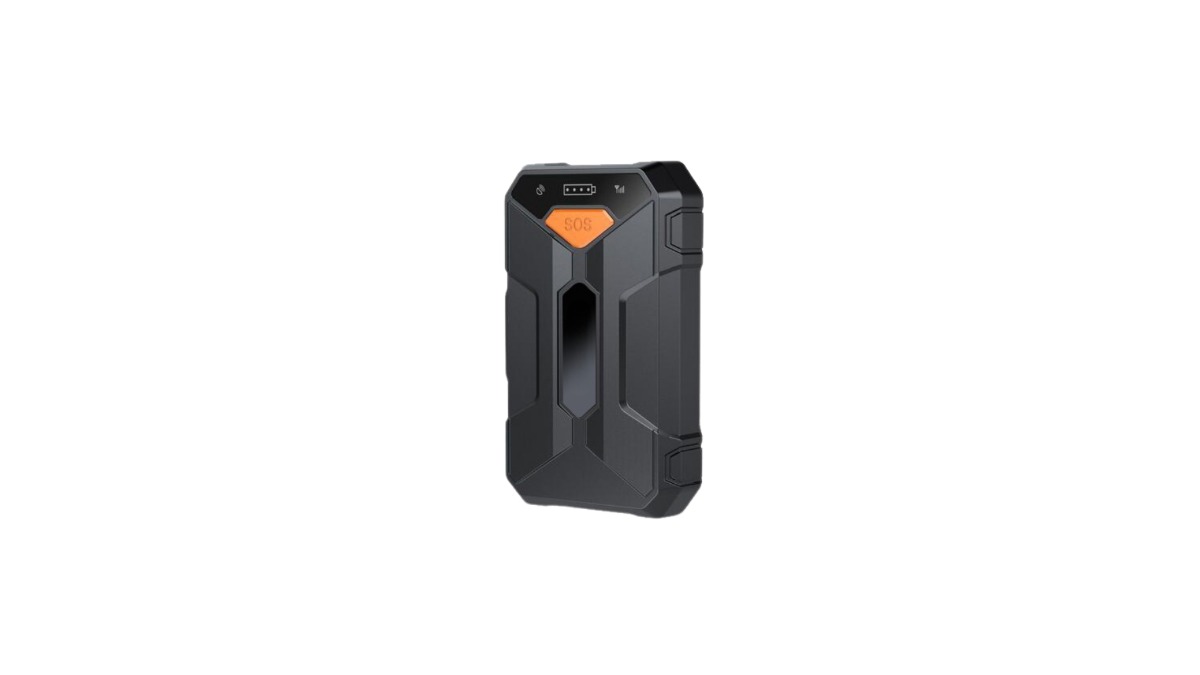
For over-the-road moves, multi-network cellular trackers hold connection across regional carriers. The AssetTrack GPS family runs up to 10 years on daily reporting, which covers a full compliance cycle without a field visit.
Build the 2030 Baseline Now
You cannot improve a number you have never measured. A credible baseline takes a full year of trip history, and 2030 leaves less room than it appears.
Tag the high-value pools first: automotive racks, chemical IBCs, heavy equipment containers. Early data exposes where assets stall, and location intelligence names the customer site causing the shortage.
Clearing those bottlenecks now protects you from non-compliance penalties and from a forced packaging redesign later.
What Comes Next: Autonomous Control Tower Reporting
Compliance reporting is moving from quarterly cleanup to continuous monitoring. The shift from passive tracking to agentic asset intelligence means the system flags a container that missed its return window while you still have time to recover it.
Modern logistics teams treat tracking as an intelligence layer, not a status page. Expect reuse quotas, fee positions, passport fields, and container recovery actions to run inside one autonomous control tower workflow built on AI-powered supply chain visibility.
The Four Tests Your Reuse Evidence Has to Pass
One question settles this: will an auditor accept your evidence? If your reporting rests on assumed return rates or dock scans, the answer is no.
Score every option against four tests before you commit a pool of assets to it.
- Serialized cycle counts. Every trip tied to a container ID, never to a shipment number.
- Geofenced dwell time. Every coordinate resolved to a named site, with customs time separated from idle time.
- Two-way ERP and TMS integration. Structured events posting into SAP, Oracle, or your TMS without a manual export.
- Hardware matched to the route. Battery life and enclosure rating rated for the wash line, the yard, and the full reporting period.
Move from estimated returns to proven cycles. Talk to our team about turning RTI location data into reporting an auditor signs off on.
Frequently Asked Questions (FAQs)
What is EPR compliance for Returnable Transport Items?
Extended producer responsibility makes the producer financially accountable for the packaging it places on the market. For Returnable Transport Items, compliance means documenting that each asset circulates in a re-use system instead of entering the waste stream. Regulators expect asset-level records, not aggregated estimates.
How does asset tracking prove container reuse under PPWR?
Tracking devices log every arrival and departure with a time stamp and a site name. Those events roll up into a cycle count per serialized container. That count is the evidence behind your reuse percentage, and it replaces manual counting with a record an auditor traces end to end.
How do eco-modulated fees work for returnable packaging?
EPR schemes adjust producer fees based on packaging performance, so better-performing packaging carries a lower rate. Securing the lower rate requires documented evidence of circulation and lifecycle duration across your supply chain. Missing data means paying the standard rate.
How does IoT container tracking support Digital Product Passports (DPP)?
A Digital Product Passport requires structured, machine-readable data rather than narrative documentation. IoT container tracking devices produce exactly that: a unique asset ID, time-stamped site events, and a running cycle count per container. Those fields map straight into passport and packaging-compliance schemas, so one feed serves PPWR reporting and DPP requirements without a second data project.
How do you integrate RTI tracking data with legacy SAP and WMS systems?
Through open APIs that post structured events instead of raw location pings. Cycle counts, dwell times, and arrival confirmations write into SAP, Oracle, or your WMS on a schedule the receiving system already handles, which keeps the work off the IT backlog. The tracking platform stays the system of record for asset location while your ERP stays the system of record for the transaction.
What hardware works best for tracking Returnable Transport Items?
Pair BLE tags for indoor and yard visibility with multi-network cellular trackers for over-the-road moves. AssetTag Pro runs up to 3 years (up to 5 on AssetTag Pro Max), with no charging, and costs as low as $45/yr per tag with the hardware included. Scout AI then turns that location history into cycle reports ready for a compliance filing.