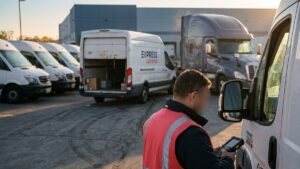


FDA lists July 20, 2028 as the compliance date for its food traceability rule, and food and pharmaceutical shippers are rebuilding their record keeping now. Temperature-sensitive freight carries no room for blind spots in transit, and the choice between passive logging and real-time tracking decides whether you salvage a load or scrap it. GPX pairs AssetTemp sensors with its trackers so every location fix carries a temperature and humidity reading.
Finding a temperature spike after the truck arrives is too late. GPX pairs BLE RoadWired gateways with AssetTemp sensors to stream live climate data across every handoff. Here is how passive data loggers and IoT cold chain tracking differ on the dock.
| Solution Brand | Visibility Method | Alerting Type | Cost Impact | Compliance Records | Best Use Case |
|---|---|---|---|---|---|
| GPX Intelligence | Real-Time Cellular and BLE | Predictive Excursion Alerts | Subscription Platform | Automated Cloud Archive | High-Value Multi-Handoff Freight |
| Sensitech | Passive USB Data Loggers | Post-Transit Review | Low Per-Trip Unit Cost | Manual PDF Downloads | Stable Single-Lane Shipments |
| Copeland | Cellular and Traditional Loggers | Active and Passive Options | Hardware Dependent | Automated and Manual | Agricultural Food Distribution |
| Onset InTemp | Bluetooth Mobile Loggers | Local App Notifications | Moderate Unit Cost | Mobile App Synchronization | Short-Haul Medical Logistics |
| Elpro | Specialized PDF Indicators | Programmed Alarm States | Premium Unit Pricing | Integrated Cloud Database | Clinical Trial Transits |
Gaps in Traditional Temperature Logistics
Post-Arrival Excursion Discovery
Data loggers record trailer and container temperature reliably. The flaw is access. Someone at the destination has to plug in the USB stick or pull the PDF.
Say a reefer fails three hours into a two-day run. The freight is ruined that afternoon, and you find out 45 hours later at the receiving dock.
An IoT cold chain monitoring system pushes readings over cellular as they happen. Operations gets an alert the moment temperature crosses the threshold. A dispatcher then routes the driver to a repair shop or has them reset the reefer.
The Dock and Yard Handoff Blind Spot
Transit is one phase. High-value freight also sits in drop yards, cross-docks, and short-term storage.
Loggers keep recording during those stops, but nobody sees the data while the asset is parked and unpowered. Real-time systems close that gap.
Pair Bluetooth sensors with fixed gateways at the facility and mobile gateways on yard trucks. Every location fix then carries a condition reading, so facility managers know which staged trailer holds temperature and which one needs a mechanic today.
Calibration and Alert Fatigue From Blunt Thresholds
Medical and agricultural loads run on tight limits. A few degrees for a few minutes ruins biologics and cuts produce shelf life.
Passive USB temperature loggers track only high and low boundaries. They cannot tell a 30-second door opening at a delivery stop from a failed compressor.
Dispatchers paged for every door swing stop reading the alerts, and the one that matters gets dismissed with the rest. Platforms built on predictive cold chain analytics fire temperature excursion alerts on sustained deviation instead of momentary spikes, so operations chases real climate threats and skips the false alarms. A connected temperature and humidity tracking setup puts those thresholds under operator control.
Disconnected Records and Missing TMS Integration
Temperature data earns its value only where the rest of the operation reads it. Logger PDFs land in an inbox or a shared drive, outside the transportation management system that routes the load and bills the customer.
That split forces staff to retype readings into claims, quality holds, and customer reports. Supply chain visibility platforms with open APIs push condition data straight into TMS, ERP, and quality workflows, so one excursion opens a hold without a manual handoff.
GPX runs platform-agnostic across ERP, EAM, WMS, and TMS systems of record, which keeps automated condition monitoring inside the tools your team already operates.
Single-Use Tracker Waste and Sustainability Reporting
Single-use cellular trackers ship with a battery, a radio, and a SIM, then go in the trash at the destination. High-volume lanes turn that into a recurring hardware line item and a rising electronic waste figure your sustainability team has to report.
Reusable BLE sensor tags change the math. A tag paired to gateways already mounted on trucks and docks rides the same lane repeatedly, so per-shipment cost falls as volume climbs and the waste stream stops growing.
Regulatory Record Keeping Pressure
Compliance runs on precise history and clean traceability. Food shippers work under the Food Safety Modernization Act, and the July 20, 2028 FSMA 204 deadline covers the foods on the FDA list.
The rule requires traceability records for those foods. It does not mandate real-time telemetry, and manual logger downloads slow the audit trail either way.
Pharmaceutical distributors answer parallel expectations under USP General Chapter <1083> on good distribution practices, which addresses environmental conditions in transit as guidance rather than a binding mandate. Pharmaceutical GDP compliance rests on a complete and retrievable history, and cloud-connected sensors log every reading centrally, so reporting happens without anyone retrieving a file.
1. GPX
GPX runs an AI-powered asset tracking platform for enterprise supply chains. We go beyond dots on a map by tying precise location to continuous environmental data. Sensors pair with gateways, so operators keep eyes on high-value inventory through every handoff.
Best for: High-value food and pharmaceutical shippers that need active alerting across multiple handoffs.
Pricing: Available on request.
Standout features: The AssetTemp is a BLE 4.2 temperature and humidity sensor rated from -4 F to 140 F. Typical accuracy is plus or minus 0.5 F at 0.2 F resolution. The IPX4 splash-resistant housing installs without tools and transmits up to 120 meters to a paired GPX BLE tracker or fixed gateway. A BLE RoadWired hardwired tracker doubles as a mobile gateway on the truck, so every location fix carries a verified condition reading. Scout AI acts as an in-platform analyst that predicts ETAs and flags climate risk early.
- Live temperature and humidity visibility across every transit phase.
- Toolless sensor install that pairs with mobile or fixed facility gateways.
- Scout AI turns raw telemetry into operational clarity.
- Automated compliance logging, with no PDF retrieval by hand.
2. Sensitech
Sensitech has shipped cold chain hardware for decades. The TempTale series of temperature data loggers is its best known line. Shippers use these devices for baseline compliance on global freight lanes.
Best for: Single-lane shipments that need basic compliance documentation.
Pricing: Available on request.
Standout features: USB and PDF export, broad global validation, tight calibration standards for pharmaceutical work.
- Pros: Trusted baseline for global regulatory compliance.
- Pros: Simple to operate at the receiving dock.
- Cons: Reactive data access rules out mid-transit intervention.
- Cons: Staff download and file each PDF report by hand.
3. Copeland GO
Copeland runs the GO tracker line that Emerson managed before the 2023 carve-out. The portfolio covers traditional data loggers and active cellular trackers for agriculture and food.
Best for: Agricultural exporters and high-volume food distributors.
Pricing: Available on request.
Standout features: Global cellular connectivity on active models, automated reporting, multiple form factors for different cargo types.
- Pros: Wide selection of active and passive monitoring devices.
- Pros: Long track record in perishable food and agriculture.
- Cons: Single-use active trackers pile up electronic waste.
- Cons: Separate hardware stacks for logging and live tracking complicate big deployments.
4. Onset InTemp
Onset builds the InTemp series of Bluetooth data loggers for pharmaceutical and medical device shippers. The system swaps the USB cable for a smartphone app that pulls data locally.
Best for: Medical clinics, pharmacies, and short-haul pharma logistics.
Pricing: Available on request.
Standout features: Mobile app synchronization, encrypted data transfer, automated PDF reports from a phone or tablet.
- Pros: No need to plug devices into a computer.
- Pros: Meets strict medical distribution calibration standards.
- Cons: Acts as a passive logger unless a phone is nearby to bridge the data.
- Cons: Dock workers have to install and run a specific app.
5. Elpro
Elpro makes the LIBERO line of temperature indicators and PDF loggers. The focus is high-compliance biopharma freight and global clinical trial logistics.
Best for: Clinical trials and tightly regulated biological transit.
Pricing: Available on request.
Standout features: Multi-level alarm programming, long-duration monitoring, cloud database for compliance audits.
- Pros: Strong calibration accuracy for sensitive biologics.
- Pros: Clean cloud software for long-term compliance archives.
- Cons: High per-unit cost on single-trip shipments.
- Cons: No multi-sensor fleet view for heavy industrial operations.
When GPX Is Not the Right Fit
GPX serves enterprise operators with complex supply chains and large asset counts. For a single personal tracker, a residential refrigerator, or a family vehicle, consumer sensor brands such as SensorPush cover that market, and our sister brand Logistimatics serves the same consumer and SMB tier on shared engineering DNA.
We stay focused on agentic asset intelligence across industrial fleets and facilities. We do not sell consumer mapping tools, dashcams, or driver coaching systems.
Match the Monitoring Tier to What One Load Is Worth
The decision comes down to what one lost load costs you. Passive data loggers deliver low-cost compliance on stable lanes with lower-value freight.
Real-time IoT telemetry protects high-value inventory across multi-handoff routes. If you cannot absorb a single rejected shipment, you need temperature excursion alerts while the truck is still moving.
Score your lanes on four inputs: freight value per load, number of handoffs, how tight the temperature band runs, and how fast your audit team needs records. Two or more scoring high puts that lane in the real-time column of the table above. Modern logistics teams treat tracking as an intelligence layer, not a status page.
Ready to close the gaps in your temperature-sensitive lanes? Talk to our team and see how live sensors replace after-the-fact PDFs with operational control.
Frequently Asked Questions (FAQs)
What is the primary difference between a data logger and a real-time monitor?
A data logger records temperature for review after the shipment lands. A real-time monitor transmits readings during transit over cellular or Bluetooth. Live monitors let you fix a problem in motion, while loggers only document a failure that already happened.
Do active temperature sensors require permanent vehicle wiring?
No. Modern cold chain monitoring uses wireless sensor tags. The GPX AssetTemp installs without tools and sends data over Bluetooth to a fixed facility gateway or to a mobile hub such as the BLE RoadWired tracker on the truck.
What is the ROI of upgrading from USB data loggers to real-time IoT sensors?
The math starts with one rejected load. Weigh the value of a single spoiled or quarantined shipment against the annual platform cost across the lanes that carry it. Operations moving high-value pharmaceutical or fresh freight recover the spend the first time a dispatcher saves a load in transit, while stable low-value lanes keep a better return on passive loggers.
How does real-time monitoring help with FSMA 204 compliance?
The FDA rule requires traceability records for listed high-risk foods. It centers on records, not live telemetry. Cloud-connected sensors still shorten the work, because they collect and store readings automatically and keep audit records accurate and accessible.
Will a Bluetooth sensor transmit data while a trailer sits in a drop yard?
Yes, as long as a gateway is in range. Fixed gateways at the cross-dock and mobile gateways on yard trucks keep sensors pushing location and temperature updates. That setup removes the blind spot around disconnected trailers.