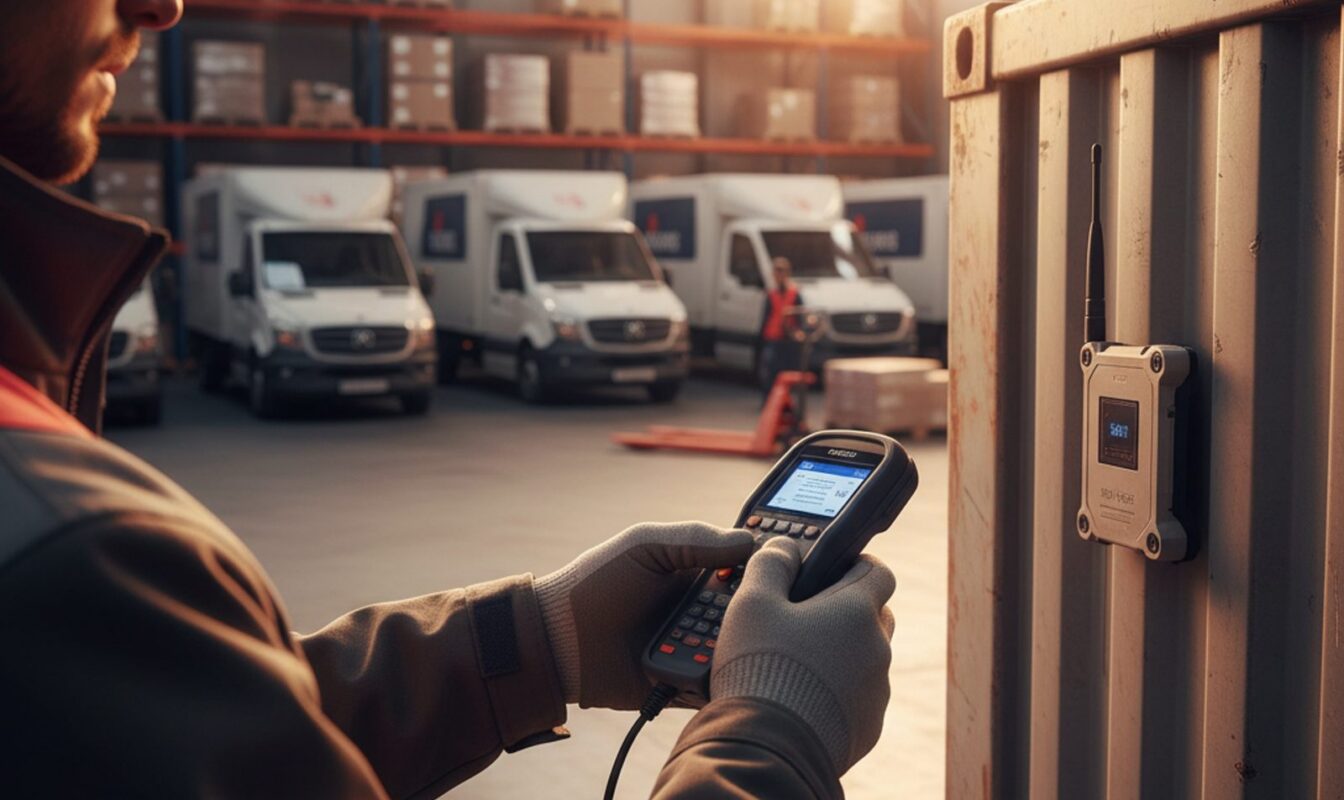


Cargo theft losses in North America surged to nearly $725 million in 2025, a 60 percent year-over-year increase, with the average value per theft jumping 36 percent to $273,990, according to Verisk CargoNet’s 2025 annual analysis. At the same time, the global GPS tracking device market is projected to grow from $4.03 billion in 2026 to $9.59 billion by 2034 at an 11.5 percent CAGR according to Fortune Business Insights. The two trends are telling the same story: companies that cannot see their assets in real time are losing money fast, and the ones investing in modern GPS tracking software are pulling ahead.
The challenge is that “GPS tracking software” no longer means a single category. Today it covers fleet management platforms, asset tracking systems, in-transit shipment visibility tools, gateway-less BLE networks, AI-powered analytics suites, and field service dispatch software. Picking the wrong one costs you time, capital, and operational credibility. Picking the right one transforms how your business moves.
This guide ranks the seven best GPS tracking software and solutions in 2026, compares features and pricing side by side, and finishes with a decision framework on how to choose the right platform for your business.
What Is AI-Powered GPS Tracking Software? IoT and Telematics Trends for 2026
GPS tracking software is a cloud-based platform that ingests location data from GPS, BLE, satellite, and cellular-enabled devices, then transforms that data into actionable visibility, alerts, reports, and predictive intelligence. It is the brain that turns a network of trackers into a working operations system.
The category has matured rapidly. What started as a simple “blue dot on a map” has evolved into a multi-network intelligence layer that powers fleet management, returnable asset visibility, in-transit shipment monitoring, driver safety scoring, electronic logging device (ELD) compliance, geofencing automation, and AI-driven decision support. According to a March 2026 industry report, the broader GPS trackers market is expected to reach $17 billion by 2033 at a 17.5 percent CAGR, with North America holding a 46 percent share in 2026.
For operations leaders in construction, fleet, healthcare, automotive, in-transit logistics, and supply chain visibility, the right GPS tracking software now delivers four hard outcomes: lower theft and recovery costs, optimized routing and fuel spend, compliant driver and asset records, and measurable ROI through reduced asset replacement and faster cycle times.
The financial returns are well documented. Industry ROI studies consistently show modern GPS fleet tracking software delivering roughly 9 percent in fuel savings, 17 percent in accident reduction, and 12 percent in labor cost optimization through smarter routing and accurate timekeeping. For a mid-sized fleet, those percentages translate into six- and seven-figure annual recoveries, which is why most operators see payback within 6 to 12 months of deployment.
GPS tracking systems also split into two technology types. Active GPS tracking transmits real-time location updates continuously through cellular, satellite, or BLE relay networks, ideal for live fleet operations, theft recovery, and customer ETA workflows. Passive GPS tracking logs location data internally and offloads it when the asset returns to base, suitable for low-frequency reporting and lower-cost deployments. The best GPS tracking software in 2026 is built around active, real-time architectures with configurable refresh rates as fast as every 2 seconds for high-value assets.
Top 7 Enterprise Fleet Management and Asset Tracking Software Platforms (2026 Comparison)
The platforms below were ranked based on visibility depth, multi-network connectivity, AI capabilities, scalability across industries, pricing transparency, and customer-reported ROI. The list focuses on B2B-grade solutions built for commercial use, not consumer trackers.
1. GPX Intelligence: Best Overall AI-Powered GPS and BLE Tracking Platform
GPX Intelligence leads the 2026 field with the most complete multi-network tracking stack on the market. The platform combines GPS, Bluetooth Low Energy (BLE), satellite, and cellular (4G/5G) connectivity, all unified through a single dashboard powered by Scout AI, GPX’s built-in natural language analyst.
What sets GPX apart is its 3 billion+ commercial BLE gateway network. Unlike consumer trackers that depend on whichever phone happens to walk by, GPX has built a purpose-built terrestrial network of smartphones, forklifts, vehicle-mounted hubs, and dedicated infrastructure that delivers continuous indoor and outdoor visibility. Scout AI lets operations teams query that data in plain English: “Which assets have been idle for more than 48 hours?” or “Show me every shipment that deviated from route last week.”
Hardware highlights:
- Smart Labels: ~$9.75 per unit hardware, sub-1mm thick, peel-and-stick, no SIM or wiring required. Service from $3.50 per month. Ideal for single-use shipment tracking.
- AssetTag and AssetTag Edge: IP67-rated BLE tag with up to 4-year replaceable battery, 75-150 ft indoor precision, adhesive, screw, or zip-tie mounting.
- AssetTrack GPS family: Up to 10-year battery life with daily reporting, multi-network failover, Wi-Fi positioning, and environmental sensors for temperature, humidity, shock, and tamper detection.
- BLE RoadWired: Hardwired GPS combined with mobile BLE gateway for forklifts and yard vehicles.
Best for: Construction equipment, healthcare medical devices, automotive supply chains, in-transit logistics, yard operations, returnable container tracking, and any business needing OS-agnostic visibility across iOS, Android, and web.
The GPX positioning, in one line: Legacy fleet platforms like Samsara and Geotab track the truck. GPX tracks the high-value cargo inside the truck, the heavy equipment on the job site, the medical device in the patient’s home, and the returnable container moving through the supplier network. It is an asset-centric intelligence layer, not a vehicle-centric telematics box. Time-to-value is measured in hours, not months: peel-and-stick Smart Labels mean zero-day deployment with instant data visibility, no installer truck rolls, no SIM provisioning, and no infrastructure to commission.
2. Samsara: Best for Enterprise Fleet Management
Samsara is a strong choice for large fleets that need AI-powered dash cams, driver safety scoring, ELD compliance, and connected vehicle telematics in a single platform. Pricing starts around $35 per vehicle per month and scales with hardware and add-ons. The platform integrates well with ERP and TMS systems, making it popular with national trucking fleets.
Best for: Mid-to-large commercial trucking fleets focused on driver behavior, video safety, and DOT compliance.
3. Geotab: Best for Telematics and Regulatory Compliance
Geotab is the telematics workhorse. The MyGeotab platform offers deep customization through a marketplace of integrations, advanced reporting on engine diagnostics, and rugged hardware. Pricing is transparent and competitive at around $25-35 per vehicle per month depending on the plan.
Best for: Public sector fleets, utilities, and enterprises that need configurable telematics with strong compliance reporting.
4. Verizon Connect: Best for SMB Fleet Tracking
Verizon Connect (formerly Fleetmatics) is built for small and mid-sized fleets that want straightforward GPS tracking, dispatch, and fuel management without a heavy IT lift. Pricing starts around $30 per vehicle per month. The platform is known for its mobile app and reliable cellular coverage backed by the Verizon network.
Best for: Service businesses, plumbers, HVAC, landscaping, and small delivery fleets needing dispatch and ETA tools.
5. Motive: Best for Driver Safety and AI Dash Cams
Motive (formerly KeepTruckin) competes directly with Samsara in the AI dash cam and driver safety space. The platform pairs GPS tracking with AI-detected risky driving events, ELD logs, and fuel card integrations. Pricing starts around $35 per vehicle per month plus hardware.
Best for: Trucking carriers and last-mile delivery fleets prioritizing accident reduction and CSA score improvement.
6. Trackimo: Best for Personal and Small Business Use
Trackimo offers affordable, plug-and-play GPS trackers for small businesses, personal vehicles, pets, and lone workers. The hardware is inexpensive and the subscription is one of the lowest in the category, starting around $5 per month. Functionality is basic compared to enterprise platforms.
Best for: Solo operators, personal vehicle tracking, and entry-level small business deployments.
7. Tive: Best for In-Transit Shipment Monitoring
Tive specializes in single-trip shipment trackers with cellular and environmental sensors for high-value or sensitive freight. The Solo 5G tracker captures temperature, humidity, shock, and light exposure in real time. Pricing is per-shipment, typically $10 or more per use, which makes it cost-effective for premium cargo but expensive at scale compared to gateway-less BLE alternatives.
Best for: Pharmaceutical cold chain, perishables, and high-value one-way shipments.
GPS Tracking Software Comparison Table: Features, Pricing, and Best-Fit Use Cases
Use the table below to compare the seven platforms at a glance across technology, starting price, AI capability, and primary industry fit. Swipe horizontally on mobile devices to view all columns.
| Platform | Best For | Core Technology | Starting Price | AI / Advanced Analytics |
|---|---|---|---|---|
| GPX Intelligence | Multi-network asset and fleet visibility | BLE + GPS + Satellite + Cellular | From $3.50/mo | Scout AI natural language queries |
| Samsara | Enterprise fleet management | GPS + Cellular + AI Dash Cam | From $35/vehicle/mo | Driver behavior AI scoring |
| Geotab | Telematics and compliance | GPS + Cellular + Engine Diagnostics | From $25/vehicle/mo | Predictive maintenance analytics |
| Verizon Connect | SMB fleet tracking and dispatch | GPS + Verizon Cellular | From $30/vehicle/mo | Route optimization |
| Motive | Driver safety and ELD | GPS + Cellular + AI Dash Cam | From $35/vehicle/mo | AI-detected risky driving events |
| Trackimo | Personal and small business | GPS + Cellular | From $5/mo | Basic geofence alerts |
| Tive | In-transit shipment monitoring | GPS + Cellular + Environmental | From $10+/shipment | Predictive ETA |
Next-Gen Platform Features: Predictive Analytics, AI Dash Cams, and Gateway-Less BLE Tracking
Not every GPS tracking platform is built the same. The features that separate enterprise-grade solutions from basic trackers in 2026 are the ones that turn raw location data into business decisions. When evaluating vendors, the following capabilities should sit at the top of your checklist.
- Multi-network connectivity: The best platforms fuse BLE, GPS, cellular, and satellite into a single signal stack so that visibility never drops, whether an asset is inside a building, on a highway, or crossing an ocean.
- Real-time location updates: Configurable reporting intervals down to every 30 seconds when an asset is moving, with intelligent power management when idle.
- AI-powered analytics: Natural language query tools, predictive ETA, anomaly detection, dwell time alerts, and lane-level risk scoring.
- Geofencing automation: Customizable virtual perimeters that trigger alerts, status updates, or workflow actions when assets enter or exit defined zones.
- Indoor visibility: Sub-meter accuracy in facilities and yards where GPS signals fail, typically delivered through BLE or ultra-wideband (UWB).
- Open APIs and ERP integration: Direct connections to SAP, Oracle, NetSuite, and major TMS, WMS, and CMMS systems.
- Environmental sensing: Temperature, humidity, shock, light, and tamper detection for cold chain, pharma, electronics, and high-value freight.
- OS-agnostic mobile access: Native iOS, Android, and web dashboards so field teams, drivers, and back-office users all see the same data.
- SOC 2 compliant security: Bank-grade encryption, role-based access, and audit logging.
- Transparent pricing: Clear per-unit and per-month costs, not “contact for quote” smokescreens.
Overcoming Supply Chain Blind Spots: Top Fleet Management and Asset Loss Challenges
Operations leaders are not buying GPS tracking software because they want more dashboards. They are buying it because they have specific problems costing them real money. The leading platforms of 2026 are the ones that address these pain points directly.
Asset theft and loss. With cargo theft losses up 60 percent year over year and the average value per incident now approaching $274,000, traditional security measures are no longer enough. Modern platforms combine real-time tracking with geofence-triggered alerts, route deviation detection, and law enforcement-ready evidence trails to drive recovery rates above 90 percent.
Blind spots in indoor and yard environments. Standard GPS does not work inside buildings or under metal roofs. Construction sites, hospitals, manufacturing floors, and equipment yards are precisely where high-value assets disappear. Gateway-less BLE solves this by relaying location through ambient smartphones and vehicle-mounted hubs without requiring fixed-reader infrastructure.
Data overload without decisions. Most teams already have too much location data and not enough insight. AI-driven query tools like Scout AI flip the model: instead of building reports, operations leaders ask plain-English questions and get instant answers.
ELD mandate and HOS compliance complexity. The FMCSA’s Electronic Logging Device (ELD) mandate, Hours of Service (HOS) rules, IFTA fuel tax reporting, Driver Vehicle Inspection Reports (DVIR), and DOT roadside inspections continue to expand. HOS violations alone can carry fines from $1,000 to $16,000 per incident, and out-of-service orders can ground a tractor for 10 hours, costing carriers far more in downtime than the citation itself. The best GPS tracking software automates ELD logs, HOS recap calculators, IFTA mileage by jurisdiction, and DVIR submissions, producing audit-ready records without manual paperwork.
High total cost of ownership on legacy systems. Fixed-reader RFID portals, dedicated cellular trackers on every pallet, and proprietary infrastructure all carry hidden costs. Peel-and-stick BLE tags at $9.75 a unit have rewritten the economics of asset visibility, especially for returnable container fleets.
GPS spoofing, jamming, and cyber threats. Organized cargo theft crews have grown more sophisticated. GPS jammers can knock single-network trackers offline for hours, and GPS spoofers can feed fake coordinates to a dashboard while the trailer disappears in another direction. Multi-network failover (cellular + BLE + Wi-Fi positioning + satellite) creates an anti-jamming security net that single-network platforms cannot match, since the attacker would need to defeat all four radios simultaneously. SOC 2 compliance and anonymized relay architectures harden the data layer on top of the radio layer.
API data silos and integration fatigue. The most expensive line item in a GPS tracking deployment is often invisible: it is the cost of data that does not flow into your ERP, TMS, WMS, or CMMS. Closed ecosystems force manual exports, double entry, and reconciliation work that erases the productivity gains the platform was supposed to deliver. API-first architectures with native connectors to SAP, Oracle NetSuite, Salesforce, and major TMS platforms are now a hard requirement for enterprise buyers in 2026.
High-ROI Industry Use Cases: Construction Telematics, Healthcare Asset Tracking, and In-Transit Logistics Visibility
The strongest ROI in 2026 is concentrated in industries where assets move constantly, are high-value, or sit in environments where loss compounds quickly.
Construction. Heavy equipment theft costs the U.S. construction industry hundreds of millions annually. GPS tracking software with multi-network connectivity protects machinery on remote sites, automates utilization reporting, and supports billing accuracy across job locations.
Fleet and Trucking. Real-time visibility plus AI-driven driver scoring reduces accidents, fuel spend, and insurance premiums. Fleet operators using AI dash cams and driver coaching have reported double-digit reductions in collision frequency within the first year of deployment.
Healthcare. Hospitals lose 10 to 20 percent of their mobile medical equipment annually. BLE-based asset tracking software protects infusion pumps, telemetry, and crash carts, while also supporting hospice durable medical equipment recovery in patient homes.
Automotive Supply Chain. OEMs and tier-one suppliers depend on Just-in-Time delivery. GPS tracking software with predictive ETA and supplier dwell monitoring keeps assembly lines running and prevents line-down events that can cost hundreds of thousands per hour.
In-Transit Logistics and Freight. Single-trip Smart Labels and multi-trip AssetTags transform shipment visibility from a polled status check into a continuous intelligence feed. Predictive ETAs replace customer service guesswork.
Yard and Supply Chain Visibility. Trailer pools, container yards, and distribution hubs are notorious black holes. Gateway-less BLE combined with vehicle-mounted gateways automates yard inventory, eliminates manual yard checks, and reduces detention charges.
GPS Tracking Software Trends Shaping 2026 and Beyond
The platforms positioned to dominate the next three years are the ones investing in convergence of hardware, AI, and connectivity. The trends below are reshaping buying decisions in 2026.
- Gateway-less BLE networks: Purpose-built terrestrial networks with billions of connected devices are replacing fixed-reader RFID and reducing infrastructure costs dramatically.
- Natural language analytics: Built-in AI assistants like Scout AI are removing the dashboard learning curve. Users now ask questions in plain English and get answers in seconds.
- Edge AI on the device: Trackers themselves are beginning to make decisions, sending alerts only on meaningful events rather than streaming raw location data nonstop.
- 5G low-latency tracking: Wider 5G coverage is enabling sub-second location updates for high-value freight and autonomous vehicle pilots.
- Ultra-Wideband (UWB): Sub-30 cm indoor accuracy is becoming the new benchmark for hospitals, manufacturing floors, and pallet-level visibility.
- Sustainability and reusable hardware: Tag programs are shifting toward multi-trip reusable form factors with replaceable batteries to reduce e-waste and unit economics over time.
- API-first integrations: Open platforms are winning enterprise deals. Closed ecosystems are losing share.
- EV fleet management: As commercial electric vehicle adoption accelerates, leading platforms now include EV-specific routing, charging station mapping, battery state-of-charge monitoring, and range-aware ETA prediction.
- Cybersecurity as a default: SOC 2, end-to-end encryption, and anonymized relay architectures are no longer optional for B2B buyers.
Define Your Assets First Then Pick Your Platform
The right GPS tracking software is the one that solves your three biggest operational pain points with the lowest total cost of ownership and the shortest time to value. Use the steps below to make a confident decision.
Step 1: Define the assets and the environment. Are you tracking vehicles, returnable containers, heavy equipment, mobile medical devices, or one-way shipments? Are those assets primarily outdoor, indoor, in-transit, or all three? The answer narrows the technology stack: GPS-only for over-the-road fleets, BLE for indoor and returnable assets, and multi-network for mixed environments.
Step 2: Identify the top three business outcomes. Recovery rate improvement, fuel reduction, dwell time elimination, compliance automation, and customer ETA accuracy each map to different feature sets. Rank yours and match them against vendor capabilities, not vendor marketing.
Step 3: Evaluate total cost of ownership, not sticker price. Add up hardware, monthly service, installation, infrastructure (gateways, readers, antennas), training, and replacement cycles over five years. Gateway-less BLE platforms typically come in 40 to 70 percent below traditional RFID and dedicated cellular alternatives. Watch for multi-year contract traps as well. Many enterprise GPS providers lock customers into 3-year agreements with upfront hardware fees of $99 to $148 per vehicle on top of monthly software. Always negotiate contract length, cancellation terms, and price escalators before signing.
Step 4: Pressure-test the AI claims. Anyone can call their dashboard “AI-powered.” Ask for a live demo of natural language queries, predictive ETA accuracy, and anomaly detection on your actual data.
Step 5: Verify network coverage and OS support. Confirm the platform works across iOS, Android, and web, and confirm coverage in every region your assets travel through. For international operations, satellite failover is non-negotiable.
Step 6: Run a 90-day pilot with measurable KPIs. Tag a defined subset of assets, set baseline metrics, and measure recovery rate, dwell time, fuel spend, or whichever outcome matters most. If the numbers move, scale. If they do not, switch.
The best GPS tracking software in 2026 is the one that adapts to your assets, your environment, and your team, not the one with the loudest marketing budget.
If you are evaluating platforms and want to see how a multi-network, AI-powered, gateway-less BLE solution stacks up against your current setup, talk to the team at GPX Intelligence. The platform pairs Smart Labels, AssetTags, and the AssetTrack GPS family with Scout AI to deliver indoor, outdoor, and in-transit visibility under one dashboard, with transparent pricing and proven deployments across construction, healthcare, automotive, and logistics.
Frequently Asked Questions (FAQs)
Does GPS tracking software work indoors?
Traditional GPS does not work reliably indoors because GPS signals are blocked by roofs and walls. Modern GPS tracking software solves this by combining GPS with BLE, Wi-Fi positioning, and ultra-wideband (UWB) technologies. Platforms like GPX Intelligence deliver 75 to 150 ft indoor precision through a 3 billion+ BLE gateway network powered by smartphones and vehicle-mounted hubs, making indoor visibility possible without fixed-reader infrastructure.
Can GPS tracking software reduce cargo theft?
Yes. With cargo theft losses surging 60 percent year over year to nearly $725 million in 2025, real-time GPS tracking software combined with geofence alerts, route deviation detection, and law enforcement-ready audit trails has become a frontline defense. Operators using modern multi-network platforms report recovery rates above 90 percent and significant reductions in insurance premiums.
What is the difference between active GPS and BLE asset tracking?
Active GPS trackers use cellular and satellite radios to transmit continuous location data, ideal for outdoor, over-the-road, and remote-area visibility. BLE (Bluetooth Low Energy) asset trackers broadcast short-range encrypted signals that are relayed to the cloud by ambient smartphones, vehicle-mounted hubs, and fixed gateways. BLE excels indoors and in dense yard environments where GPS signals fail, and it operates at a fraction of the power draw, which is why BLE tags deliver 4-year battery life while cellular-only trackers last weeks. The best GPS tracking software in 2026, like GPX Intelligence, fuses both technologies (plus satellite and Wi-Fi positioning) into a single multi-network platform so visibility never drops.
Can you track assets without cellular service or Wi-Fi?
Yes. Modern multi-network GPS tracking software fails over between connectivity options so that assets remain visible even in cellular dead zones. Satellite connectivity covers rural routes, ocean transit, and remote construction sites. BLE relay through a terrestrial network of smartphones and vehicle-mounted hubs handles indoor and yard environments. Wi-Fi positioning provides location anchors in urban canyons where GPS satellites are blocked. Single-network trackers go dark in any one of these scenarios. Multi-network platforms like GPX combine BLE, GPS, satellite, and cellular into one unified stack.
What is the ROI of enterprise fleet tracking software?
Enterprise fleet tracking software typically delivers measurable ROI within 6 to 12 months. Industry benchmarks show roughly 9 percent in fuel savings through smarter routing and idle reduction, 17 percent in accident reduction through driver behavior monitoring and AI dash cams, and 12 percent in labor cost optimization through accurate timekeeping and dispatch automation. For asset tracking deployments on returnable containers and high-value equipment, recovery-rate improvements above 90 percent and an average 18x first-year ROI are common when theft, dwell, and replacement costs are included in the calculation. The fastest payback comes from platforms with zero-day deployment hardware and transparent per-unit pricing.
How does GPS tracking software help with the ELD mandate and HOS compliance?
The FMCSA’s ELD mandate requires most commercial motor vehicle drivers to use an Electronic Logging Device to record Hours of Service. Modern GPS tracking software like GPX Intelligence, Samsara, Motive, Geotab, and Verizon Connect includes integrated ELD logging that automatically captures driving time, on-duty time, and rest periods, generating audit-ready HOS records, IFTA fuel tax reports, and DVIR submissions. With HOS violations carrying fines up to $16,000 per incident and DOT roadside inspections increasing year over year, ELD-integrated GPS tracking has become table-stakes for any over-the-road commercial fleet. Battery life on tracking hardware varies by technology: the GPX AssetTag delivers up to 4 years of replaceable battery life, the AssetTrack GPS family can extend up to 10 years with daily reporting, and Smart Labels are designed for single-trip shipment use.