
Cargo theft stopped being a padlock problem. Verisk CargoNet put estimated 2025 losses at $725 million, roughly 60 percent above the prior year, and the average value per theft reached $273,990, up 36 percent from $202,364. Criminal rings moved past grabbing random trailers. They hit specific high-value loads, which is why shippers now budget for predictive IoT freight visibility instead of stronger locks. GPX tracks high-value freight from inside the load with the SmartLabel and the in-box MicroTrack, alongside its shipment tracking platform.
Visibility has to live inside the freight, not just on the truck hauling it. GPX Intelligence secures high-value shipments with the SmartLabel and MicroTrack. Both ride hidden inside pallets and cartons, so your team keeps eyes on the load even when carrier tracking goes dark.
Supply chain crime and B2B freight theft now operate as highly organized, multi-million-dollar syndicates. That changes the math for logistics and security managers. Door seals and bolt locks do nothing once thieves already know what sits on the manifest.
Total supply chain crime events across the United States and Canada held flat at 3,594, against 3,607 a year earlier. Severity is what moved.
Confirmed cargo thefts rose 18 percent, from 2,243 to 2,646. Thieves strike less often and take far more every time they connect.
| Cargo Theft Metric | 2025 Verisk CargoNet Data | Year-Over-Year Change |
|---|---|---|
| Estimated Total Losses | $725 million | Up about 60% |
| Average Value Per Theft | $273,990 | Up 36% (from $202,364) |
| Supply Chain Crime Events | 3,594 incidents (US & Canada) | Flat (3,607 prior year) |
| Confirmed Cargo Thefts | 2,646 incidents | Up 18% (from 2,243) |
| Food & Beverage Thefts | High-liquidity consumables | Reported up 47% |
| Industrial Metals Thefts | Copper-led | Reported up 77% |
The Shift to Fictitious Pickups and Strategic Theft
Modern cargo thieves rarely cut locks at a dark rest stop. They run fraud rings. CargoNet’s data points to a fast move toward strategic theft built on fictitious pickups and double-brokering schemes.
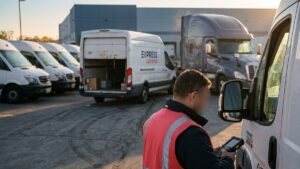
The pattern is simple. Criminals register a fake carrier identity, win the bid on a high-value load, and drive off the loading dock in daylight. Dock staff hand over the freight because the paperwork looks clean.
This approach walks straight past gate security. Thieves deceive warehouse clerks and transportation managers instead of breaching a fence.
Once the truck clears the yard, the load goes to an unauthorized warehouse. Crews strip the original packaging, reload onto different pallets, and push the goods into secondary markets. Tracking the pallet itself is the only reliable way to tell whether your freight reached the real consignee.
Why Legacy Freight Security Creates IoT Visibility Blind Spots That Cost Shippers
Thieves Target High-Liquidity Commodities
Criminals know what pays on the resale market. CargoNet reported food and beverage thefts up 47 percent year over year. Energy drinks, premium alcohol and frozen meat carry no traceable serial numbers, so crews liquidate them through unregulated channels before a case file even opens.
Industrial metals rose faster, reported up 77 percent, with copper driving most of the volume. Strong construction demand keeps copper prices high and resale easy.
When a ring already has your manifest, door seals and padlocks add no real deterrent. Assume the manifest leaked before the truck left the yard, then plan security around that assumption.
Thieves Work the Busiest Freight Corridors
Theft clusters around major distribution hubs and port markets, where heavy daily volume hides illegal activity. CargoNet has consistently ranked California, Texas, Illinois, Georgia, Florida and New Jersey among the top states for cargo theft.
Carrier tracking in these metros updates too slowly to catch a route deviation in time. By the time dispatch notices the truck went off route, crews have unloaded at a rogue cross-dock and dropped the empty trailer.
Driver and Carrier Connectivity Fails Under Pressure
A driver’s cell phone or a third-party ELD is a single point of failure for load visibility. Criminals clone legitimate carrier identities to win loads off digital freight boards.
After a fictitious pickup, they feed the broker false transit updates. Then the tracking app goes off, or the burner phone goes in a ditch.
The moment that device goes dark, your operations team has nothing. Without a standalone device inside the freight, you have no independent confirmation of where the shipment sits. That gap stalls law enforcement and puts physical recovery out of reach.
What a Theft Costs After the Truck Is Gone
The loss does not stop at the invoice value of the freight. Recovery odds fall with every hour the load sits unaccounted for, because investigators need a current location before they act. A device inside the shipment shortens that wait, because it reports its own position instead of waiting on a call to the carrier.
Jurisdiction adds another layer. CargoNet counts incidents across the United States and Canada, and freight that crosses a national border moves into a different agency’s caseload while carrier tracking stays behind.
Insurance is the quiet cost. Cargo underwriters price risk on the controls you document at renewal. A tracking record owned by a driver’s phone or a broker’s status update gives your team nothing to put in front of an adjuster after a claim.
How to Secure High-Value Freight Against Strategic Theft
Separate freight tracking from truck tracking. Put the device in the cargo, and visibility survives a carrier that stops communicating.
In-Box and On-Pallet Tracking
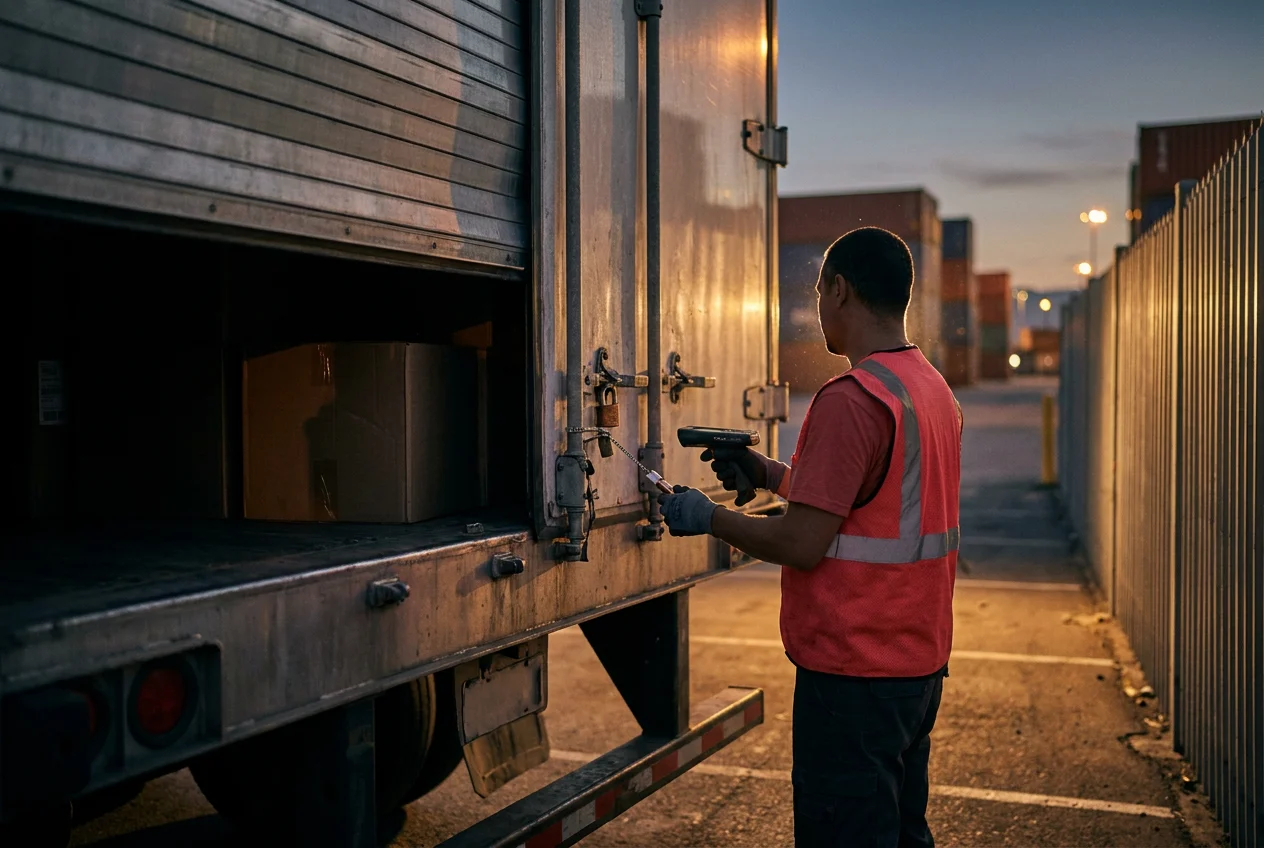
A tracker inside the packaging means the signal travels with the goods. The GPX MicroTrack ships inside the box, out of sight of the driver and the warehouse crew. It is palm-sized at 99 g, rechargeable and IP67-rated.
If thieves breach the trailer and transfer pallets to another vehicle, MicroTrack keeps reporting coordinates. Scout AI reads those signals and fires an instant alert on unauthorized movement while the load is still recoverable.
Geofence-Confirmed Departure and Arrival
Automated alerts take human error out of the process. Scout AI geofences a site in seconds, so a new high-risk lane gets covered the same day instead of waiting on a configuration project.
When a shipment carrying a GPX tracker leaves a secure zone off schedule, the platform alerts the operations team right away. That catches fictitious pickups while the truck is still close. Early warning buys the hours you need to intercept the load before it crosses a state line.
Disposable Labels for One-Way Freight
Reverse logistics kills most single-trip tracking programs. Nobody wants to chase hardware back from a customer dock.
The SmartLabel removes that problem. Tear the tab and the label goes live in seconds. It cannot be powered off, so no handler switches it off mid-route, and nothing needs recovering at the destination. Shippers get end-to-end visibility on high-volume one-way freight with no hardware to retrieve.
Long-Life Hardware for Returnable Assets
Dedicated lanes and company-owned trailers need hardware that survives industrial abuse. AssetTrack runs for years on one daily GPS fix, mounts magnetically, carries an IP67 rating and sends anti-tamper alerts. The battery is replaceable, so a unit stays in service well past its first cell.
For shipments rather than fixed assets, AssetTrack Voyager works one-way or recharge-and-reuse. It takes hybrid-mode fixes, picks up WiFi position at the cross-dock and confirms arrival against a geofence.
When Enterprise Tracking Exceeds Your Requirements
Enterprise shipment intelligence is more platform than some jobs need. The practical threshold sits around 10 high-value assets: below that, a single tracker on one car, one trailer or a family vehicle is a consumer purchase. Buyers at that scale are better served by Logistimatics, our consumer and SMB sibling brand, or by a standalone option such as Bouncie.
GPX is a location intelligence company that builds the tags, the trackers, the network and the platform. It is not a telematics suite and not a dashcam product. We secure physical assets and turn location data into decisions. We do not report engine diagnostics, fuel burn or driver behavior scores.
Which Lanes Deserve Device-Level Tracking First
Rank your lanes by load value and exposure, then put devices at the top of that list. At an average loss of $273,990 per theft, one hit on a high-value lane outweighs a year of device spend across the whole network. Lanes that run through the top-theft states or park overnight in unsecured drop yards go first.
Then ask who owns your visibility today. If the answer is a driver’s phone or a broker’s status update, you have no independent record. A device inside the freight gives you a second source of truth that nobody switches off, and it feeds the predictive alerting that turns a route deviation into an intercept instead of a claim.
Protect your freight with intelligence that goes beyond dots on a map. Talk to our team about deploying SmartLabel, MicroTrack and Scout AI across your highest-risk lanes.
When GPX Is Not the Right Fit
GPX fits shippers moving high-value or high-volume freight who need location evidence on every load. If you send an occasional single parcel, a consumer tracker from our sister brand Logistimatics is the simpler option. GPX also does not replace carrier vetting, cargo seals or insurance. It adds the live position that turns a theft report into a recovery. For the procedural side, see our cargo theft prevention guide.
Frequently Asked Questions (FAQs)
How does AI asset tracking differ from traditional GPS?
Traditional GPS drops location pings on a map. AI asset tracking pairs location data with environmental sensor readings and reads the combined picture. Scout AI answers plain-English questions over that data, predicts disruption and flags unauthorized movement automatically. The point is preventing a loss, not documenting one after the fact.
What are the most common methods of cargo theft?
Straight theft from unsecured yards and lots still accounts for a large share of incidents. Strategic theft is the faster-growing category. Fictitious pickups, double-brokering and carrier identity theft let crews take high-value freight without tripping a single facility alarm.
How does IoT pallet tracking improve stolen cargo recovery rates?
A tracker riding inside the pallet keeps reporting after thieves move the load to another vehicle, so investigators work from a live position instead of a last-known carrier ping. That is the difference between a recovery and a claim.
How does the GPX SmartLabel work for freight tracking?
The SmartLabel is a peel-and-stick disposable shipment label built for high-volume one-way freight. Tear the tab and it goes live in seconds, and it cannot be powered off, so thieves get no switch to flip. Nothing needs recovering at the destination, which keeps reverse logistics out of the program entirely.
Does cargo tracking integrate with existing supply chain software?
Yes. Enterprise tracking platforms push location data into your transportation management system through an API. Coordinates layer over your existing shipping records. Your team reads freight positions in one place instead of logging into a separate visibility portal.
How quickly can B2B shippers deploy IoT tracking devices on high-risk freight?
Deployment takes minutes per shipment once hardware reaches your dock. MicroTrack and SmartLabel need no wiring, mounting or specialized install, so warehouse staff drop the tracker in the carton or stick the label on the pallet wrap right before the load goes on the truck. Full programs go live in days, not quarters.