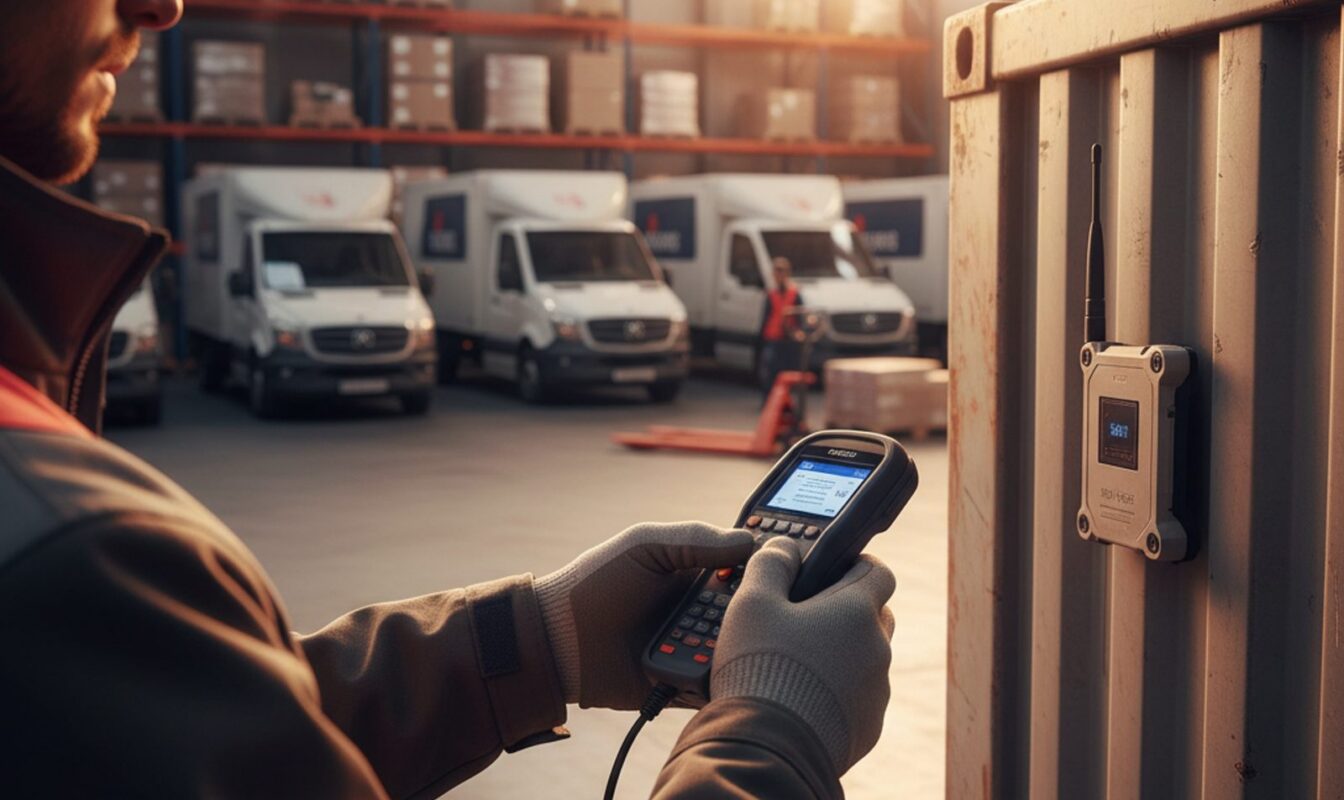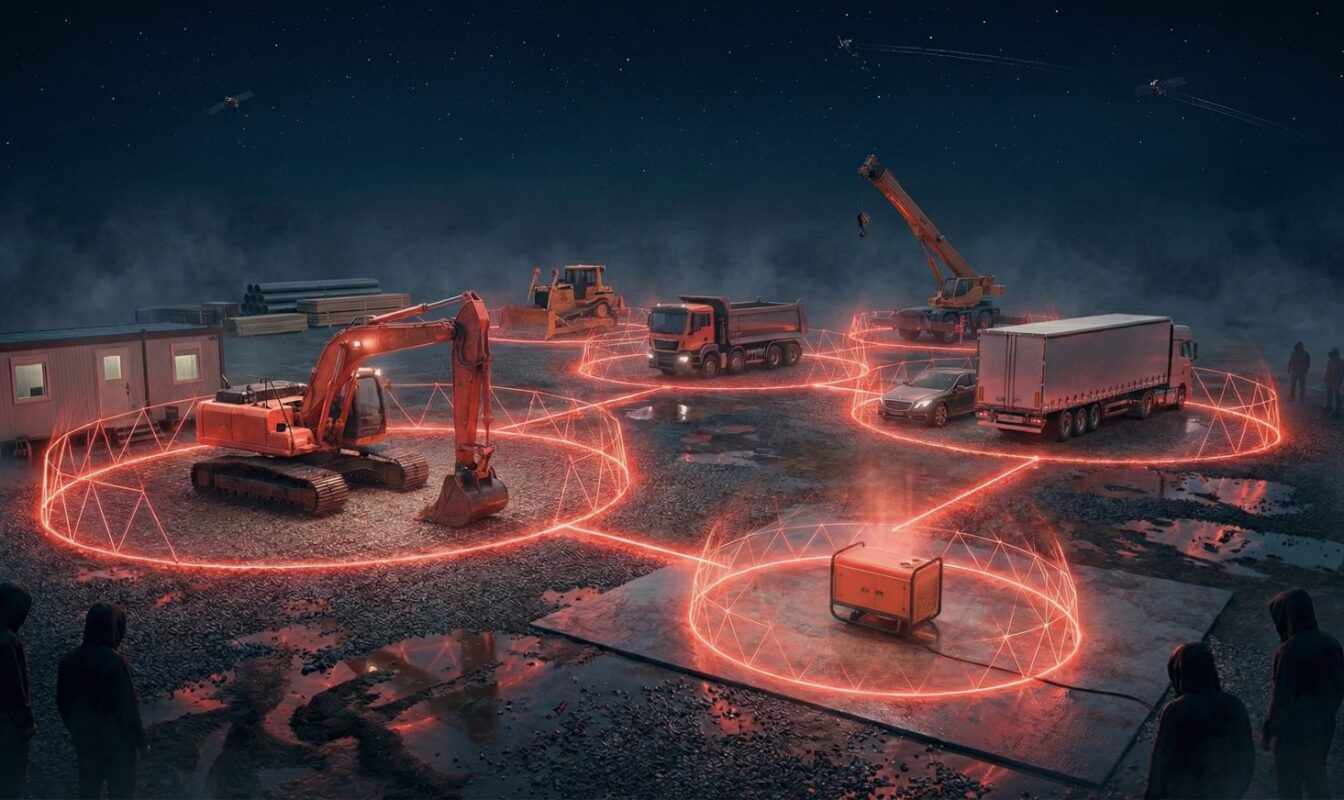


Your physical assets move constantly. Heavy equipment, returnable containers, tools, and in-transit inventory all carry value, and all vanish from view without the right system. That blind spot costs money through loss, underutilization, and delays, and it erodes the supply chain visibility every operation now depends on. Fueled by ongoing supply chain volatility, the market reflects the stakes: according to Grand View Research, the asset tracking market reached USD 24.1 billion in 2024 and will hit USD 51.6 billion by 2030.
Theft drives a large share of that loss. The National Equipment Register and NICB estimate stolen construction equipment costs U.S. businesses $300 million to $1 billion every year, and that figure excludes tools and downtime. A capable asset tracking system does more than show a dot on a map. It secures high-value equipment, automates inventory, and pushes utilization higher.
Choosing the right platform is the hard part. Bad asset data creates “ghost assets” that inflate taxes and insurance premiums. Missing real-time status leads to preventable theft and idle downtime. The right system solves all three with reliable, scalable, and affordable visibility.
| Platform | Network | Best For | Starting Price | Key Strength |
|---|---|---|---|---|
| GPX AssetTag Pro | Gateway-less terrestrial + BLE | Non-powered assets at scale | Free hardware, $45/year | Multi-year replaceable battery |
| Samsara | 4G LTE / Satellite | Enterprise fleets & safety | $27/mo per vehicle | AI dashcams & compliance |
| Verizon Connect | Cellular | Mobile workforces | $23.50/mo per vehicle | Integrated OEM hardware |
| AT&T / Fleet Complete | LTE-M / Satellite | High-value industrial assets | Quote-based | AT&T network reach |
| Zebra Technologies | RFID / Barcode / Wi-Fi | Enterprise RTLS & inventory | Quote-based | Rugged hardware range |
| Tenna | GPS / RFID / Barcode | Construction & heavy equipment | Quote-based | Industry-specific workflows |
| Asset Panda | Cloud / Mobile | Customizable lifecycle mgmt | Quote-based | Highly flexible platform |
| Geotab | Cellular | Global enterprise fleets | Quote-based | Extensive 3rd-party marketplace |
1. GPX AssetTag Pro
GPX built AssetTag Pro for non-powered equipment and high-value assets at scale. The tracker removes the two biggest barriers to adoption: hardware cost and battery upkeep. The hardware is free, and a sealed battery runs for years while sending 20 to 30 location reports a day. It runs on a gateway-less terrestrial network, so you get no complex installs, no cellular contracts, and no SIM fees. That makes it a simple, scalable way to watch everything from shipping containers and trailers to construction equipment and reusable packaging. See GPX’s dedicated asset tracking solutions.
- Location: USA
- Best for: Teams tracking thousands of non-powered assets without high hardware costs or maintenance overhead.
- Pricing: Subscriptions start at $45 per year per device, hardware included free.
- Connectivity: Gateway-less terrestrial network and Bluetooth Low Energy (BLE).
- Standout features: Free hardware, a sealed multi-year battery with no maintenance, no SIM cards or cellular fees, and 20 to 30 location reports per day.
Strengths
- Zero hardware cost removes the upfront capital expense that usually blocks large-scale asset tracking deployments.
- The multi-year sealed battery keeps assets in the field for long stretches without recharging or battery swaps.
- A gateway-less, SIM-free design cuts out major points of failure and supports rapid peel-and-stick installation.
- A flat annual fee per device makes budgeting simple and avoids surprise data overage charges.
- Up to 30 daily location updates deliver far more granularity than most non-powered asset trackers.
2. Samsara
Samsara is a major player in connected operations. Its platform combines GPS tracking, AI-powered dashcams, driver safety coaching, and compliance management in one system. It fits large fleets and complex industrial operations that manage vehicles, equipment, and workers together. Buyers praise the intuitive interface and the depth of its safety and efficiency features.
- Location: San Francisco, CA, USA
- Best for: Large fleets and industrial operations focused on AI-powered safety, compliance, and full telematics.
- Pricing: Starts at $27 to $33 per vehicle per month; requires a minimum three-year contract.
- Connectivity: 4G LTE cellular, Wi-Fi hotspot, and optional satellite.
- Standout features: AI dashcams with in-cab coaching, automated ELD and IFTA compliance, environmental monitors, and a unified cloud platform.
Strengths
- User-friendly platform simplifies complex operations.
- AI-driven safety features deliver proactive driver coaching.
- Strong automation of regulatory compliance tasks.
- Wide hardware range covers different vehicles and equipment.
Limitations
- Pricing runs well above many competitors.
- Multi-year contracts with upfront payment are common.
- Pricing is not transparent and requires a custom quote.
- Contract length and early termination fees raise switching costs.
3. Verizon Connect
Verizon Connect puts its telecommunications infrastructure behind fleet management and mobile workforce tools for businesses of every size. The platform pairs GPS fleet tracking with dispatching, scheduling, and field service management. It offers the Hum device for consumers and small businesses alongside integrated hardware for enterprise fleets, which suits companies already inside the Verizon network.
- Location: Alpharetta, GA, USA
- Best for: Businesses running mobile workforces and fleets that need integrated field service tools.
- Pricing: Starts around $23.50 per vehicle per month.
- Connectivity: Cellular.
- Standout features: Integrated OEM hardware, mobile workforce management software, driver behavior monitoring, and the Hum connected vehicle device.
Strengths
- Wide feature set covers diverse fleet and field service needs.
- Integrated hardware and software simplify deployment.
- Strong tools for managing mobile employees and optimizing routes.
Limitations
- Customer satisfaction scores trail some competitors.
- Full pricing is not public and requires a direct sales inquiry.
4. AT&T Business / Fleet Complete
With Fleet Complete, AT&T Business delivers asset tracking for high-value equipment that needs mission-critical visibility. It is a strong option for non-powered industrial assets such as trailers, containers, and heavy machinery, especially in remote areas. The system runs on AT&T’s cellular network, including LTE-M for IoT asset tracking, and adds satellite connectivity for full coverage. A customizable dashboard tracks location, status, and utilization.
- Location: Dallas, TX, USA
- Best for: Businesses that need cost-effective, mission-critical visibility for high-value assets on the AT&T network.
- Connectivity: LTE-M, 3G/4G, and satellite options.
- Standout features: AT1+ Asset Trackers, a collaboration with Geoforce for non-powered equipment, solar and battery-powered devices, and customizable alerts.
Strengths
- Runs on the secure, reliable AT&T wireless network.
- Delivers strong visibility for assets with no on-site supervision.
- Data-driven insights improve operational efficiency.
- Supports a wide range of powered and non-powered assets.
Limitations
- Full solution pricing is not public.
- Reliance on one carrier network limits flexibility in some regions.
5. Zebra Technologies
Zebra Technologies leads in enterprise hardware for data capture and asset identification. While most companies here are software-first, Zebra supplies the rugged hardware that anchors many tracking systems: barcode scanners, RFID readers, mobile computers, and printers. Its software, including MotionWorks and Asset Tracker Lite, powers real-time location systems (RTLS) inside warehouses, plants, and hospitals to optimize inventory and workflows.
- Location: Lincolnshire, IL, USA
- Best for: Manufacturing, healthcare, and retail enterprises that need rugged hardware for real-time visibility and inventory management.
- Connectivity: RFID, barcode, Wi-Fi, Bluetooth, Ethernet.
- Standout features: A broad range of specialized hardware, RTLS capability, the Zebra Aurora software suite, and integrations with platforms like ServiceNow.
Strengths
- Industry leader in RFID and barcode hardware, which drives high accuracy.
- Deep, real-time visibility into asset status and utilization.
- Offers both enterprise systems and a license-free option for small businesses.
Limitations
- Requires significant upfront hardware investment.
- Enterprise deployments run complex and need specialized expertise.
- Full enterprise pricing comes only through a custom quote.
6. Tenna
Tenna built its asset tracking system for construction and other industrial sectors that run mixed equipment fleets. The platform tracks everything from heavy machinery and vehicles to mid-sized equipment and small tools. It combines GPS, RFID, and barcode technologies into one unified view of company assets. Its standout edge is built-in work order management and maintenance tracking, which tie asset location directly to daily tasks.
- Location: New Hope, PA, USA
- Best for: Construction companies and industrial fleets that need full tracking for a mixed fleet of equipment and tools.
- Connectivity: GPS, RFID, and barcode.
- Standout features: Support for mixed equipment fleets, integrated work order management, equipment maintenance tracking, and ERP integrations.
Strengths
- Built specifically for the construction industry.
- Versatile tracking supports a wide range of asset types and sizes.
- Work order support connects asset data to daily operations.
Limitations
- Pricing is not public.
- As a smaller company, it lacks the global support footprint of larger competitors.
7. Asset Panda
Asset Panda offers a configurable, cloud-based platform for managing the full lifecycle of physical and digital assets. Its strength is flexibility: teams customize nearly every part of the platform, from data fields to reporting dashboards. Strong mobile features, including offline access and a built-in barcode scanner, suit field teams running audits, inspections, or maintenance. It serves industries from IT and education to construction.
- Location: Frisco, TX, USA
- Best for: Organizations that want a highly customizable, cloud-based platform for managing the full lifecycle of diverse assets.
- Connectivity: Cloud-based with mobile app access.
- Standout features: Configurable workflows, advanced mobile capabilities with offline use, check-in/check-out functionality, and built-in barcode technology.
Strengths
- Exceptional flexibility adapts to almost any business process.
- Mobile-first design enables field teams.
- Full feature set covers maintenance, compliance, and auditing.
- Offers a 14-day free trial.
Limitations
- Public pricing is not available and requires a quote.
- Deep configurability creates a steeper learning curve for some users.
8. Geotab
Geotab is a global telematics leader with millions of connected vehicles on its platform. Its open platform for fleet management is known for advanced data analytics and a large marketplace of third-party integrations. Businesses build a customized GPS tracking setup for compliance, EV management, or route optimization. Its focus is vehicle fleets, though the platform extends to other powered assets.
- Location: Oakville, Ontario, Canada
- Best for: Global enterprises and public sector organizations that need advanced telematics with strong integration options.
- Connectivity: Cellular.
- Standout features: The MyGeotab cloud platform, a marketplace with over 430 solutions, advanced data analytics and AI, and strong support for electric vehicles (EVs).
Strengths
- Ranked among the best for breadth of third-party integrations.
- Powerful data analytics and AI tools improve fleet safety and efficiency.
- Large global footprint supports reliability and scale.
Limitations
- Pricing is not transparent and runs through a reseller.
- A vehicle-telematics focus adds unnecessary complexity for simple asset tracking.
- Compliance features carry regulatory penalties if managed incorrectly.
Four Deployment Issues That Break Any Tracking Platform
Even the best platform stumbles when these four issues go unaddressed. Weigh each one against your operation before you sign a contract.
- Data security. Location and operational data is proprietary. A breach exposes where your high-value equipment sits and how your operation runs, so vet each vendor’s encryption, access controls, and data-residency terms.
- Network coverage gaps. Assets in remote yards, fields, or border regions drop off the map when a system leans on a single cellular carrier. Match the network to where your assets actually travel, and favor multi-network or satellite fallback for rural sites.
- Long implementation cycles. Enterprise RTLS and heavy-integration platforms can take months to deploy, delaying time-to-value. Peel-and-stick trackers that go live in days protect your timeline.
- Battery lifecycle at scale. Managing charging and replacement across thousands of devices drains labor budgets. Multi-year sealed batteries beat frequent charging when you deploy at volume.
A Short Checklist Before You Commit to a Platform
The best asset tracking system depends on your operations. Evaluate your needs across a few key areas before you commit. These questions clarify which solution balances features, scalability, and cost for your organization.
- Asset type: Are you tracking powered vehicles, non-powered equipment, small tools, or in-transit goods? The power source and physical form of your assets dictate the right hardware and network.
- Operating environment: Will your assets stay inside one facility (RTLS or BLE), travel across the country (cellular), or work in remote areas with no cell service (satellite)?
- Data requirements: Do you need simple location pings a few times a day, or real-time tracking with sensor data like temperature, humidity, and impact detection?
- Total cost of ownership: Look past the monthly subscription. Factor in hardware, installation, maintenance like battery replacements, and contract lock-in. A low monthly fee misleads when hardware costs run high.
- Integration needs: Does the platform connect with your ERP, Warehouse Management System (WMS), or other business software? Check for open APIs and pre-built integrations.
Define these parameters first, and you narrow the field fast to a partner that solves today’s problems and scales with your business tomorrow.
Ready to move beyond dots on a map and gain real operational intelligence? See how GPX delivers simple, scalable, affordable supply chain visibility for your non-powered assets. Get started with GPX today.
Frequently Asked Questions (FAQs)
What is an asset tracking system?
An asset tracking system pairs hardware and software to monitor the location, status, and condition of a company’s physical assets. It uses technologies like GPS, BLE, RFID, or barcodes to collect data, then sends it to a central platform for analysis and reporting. The goal is better asset utilization, less loss, and smoother operations.
How do I choose between GPS, BLE, and RFID for tracking?
The choice comes down to your use case. GPS tracks assets over long distances outdoors, like vehicles or shipping containers. BLE (Bluetooth Low Energy) suits short-range indoor tracking within a defined area like a warehouse or hospital. RFID handles rapid, non-line-of-sight identification at checkpoints, such as scanning a pallet as it passes through a doorway.
What’s the difference between tracking powered and non-powered assets?
Powered assets like vehicles or heavy machinery carry their own power source to run a tracking device. Non-powered assets such as trailers, containers, or tools need trackers with their own long-life batteries. Non-powered solutions must stay highly energy-efficient to avoid frequent, costly battery replacements.
How much does an asset tracking system cost?
Costs vary by provider and technology. Most pricing combines a one-time hardware cost per asset with a recurring monthly or annual software subscription. Some providers, including GPX, bundle the hardware free with a subscription, which cuts the upfront investment sharply.
How does an asset tracking system improve business ROI?
An asset tracking system drives ROI on three fronts: it cuts theft and replacement costs, raises utilization so you buy and rent less equipment, and eliminates ghost assets that inflate tax and insurance bills. Automated inventory also reclaims the labor hours teams spend on manual counts. Together, recovered assets, higher uptime, and lower carrying costs help the subscription and hardware pay for themselves.