
Quick answer
Rental fleets track equipment with GPS trackers on every unit and Bluetooth tags on attachments, all on one map. GPX suits mixed rental fleets: battery GPS trackers with up to a 10-year battery cover unpowered units without wiring, Bluetooth tags cover attachments, and idle and dwell data back up utilization billing, theft alerts and recovery.
Renting out equipment means fighting theft, idle assets, and messy maintenance schedules every day. Lose one high-value machine and your margin disappears. Leave gear idle and it turns into a liability on your books. The money at risk is real. The National Equipment Register reports that heavy equipment theft costs U.S. companies $300 million to $1 billion each year. That number skips the hidden costs: project delays, billing disputes, and wasted maintenance trips.
Smart operators track their fleets now instead of guessing. The market backs the shift. Grand View Research projects the construction equipment rental market will grow at a 5.9% compound annual rate through 2030. A GPS tracker for rental equipment is core infrastructure today, not a nice-to-have. These systems protect your assets, verify billing hours, and schedule service before something breaks.
| Provider | Best For | Key Technology | Durability (IP Rating) | Unique Feature |
|---|---|---|---|---|
| GPX Intelligence | Enterprise-wide asset intelligence | AI & Multi-Sensor (GPS, BLE, Cellular, Satellite) | IP67 | Scout AI Predictive Insights |
| Samsara | Unified fleet & equipment platform | GPS, Cellular | IP67 / IP69K | Integrated Video & Fleet Dashboards |
| Trackunit | Construction OEM integration | GPS, BLE, Cellular | IP67 | Machine-level health data |
| Tenna | Construction-specific workflows | GPS, Cellular, QR Codes | IP67 | Mixed-asset tracking on one platform |
| Verizon Connect | Large fleets with existing Verizon services | GPS, Cellular | IP67 | Integration with Verizon network |
| Logistimatics | SMBs & straightforward tracking | GPS, 4G Cellular | Weather-resistant cases available | Simple interface & affordable plans |
What asset tracking companies do rental equipment businesses use?
The names that come up for rental fleets are GPX Intelligence, Samsara, Trackunit, Tenna and Verizon Connect, compared one by one below. The right choice usually comes down to three questions: how much of the fleet has no power source, whether you need hours and idle data to back up billing, and whether attachments and small tools need tracking too.
GPX is built for mixed rental fleets. Battery-powered AssetTrack units (up to a 10-year battery on one daily fix) cover light towers, trailers, compactors and other unpowered equipment without wiring, AssetTag Pro tags cover attachments, and idle and dwell analytics show which units are sitting in the yard so they can go back out on rent.
#1: GPX Intelligence
GPX Intelligence goes past dots on a map. The platform turns location and sensor data into decisions you can act on. It fuses GPS, BLE, cellular, and satellite connectivity, so you see every asset, from a remote excavator to a hand tool in the yard. This is an asset intelligence platform, not just an equipment tracker.
Scout AI is where GPX pulls ahead. It reads real-time data to schedule predictive maintenance, flag idle assets, and automate reporting. Instead of a raw engine-hour number, Scout AI tells you which machine runs less than its peers or which part is about to fail. GPX also offers disposable Smart Labels for low-value items and returnable packaging, so nothing falls off your inventory map.
#2: Samsara
Samsara runs a broad connected-operations platform that ties vehicles, equipment, and job sites together. Its AG26 unpowered asset gateway appeals to companies already running Samsara for fleet management. You watch trucks, generators, and trailers on one dashboard.
- Best for: Companies that want one platform for vehicles and equipment together.
- Pricing: Custom quote based on hardware and subscription tier.
- Standout features: Tight links to fleet video and driver-safety tools, a large app marketplace, and a clean interface.
Advantages: One platform simplifies vendor management and pulls your data together. The hardware holds up in harsh environments.
Disadvantages: Samsara is built around vehicles first. Equipment tracking works well but feels secondary. Track only non-vehicle assets and you pay for features you won’t use.
#3: Trackunit
Trackunit focuses almost entirely on construction. It integrates directly with major OEMs like JCB, Komatsu, and Yanmar, pulling machine-level data straight from onboard systems. You get far more than location.
- Best for: Construction companies, especially those running partner-OEM fleets.
- Pricing: Available on request; hardware plus a SaaS subscription.
- Standout features: Deep OEM telematics, access-control keypads, and Trackunit Manager for construction workflows.
Advantages: Trackunit surfaces fuel use, fault codes, and engine hours for each machine. Its construction focus keeps every feature relevant.
Disadvantages: The platform fits construction and little else. Diversified rental companies with non-OEM assets will find it narrow.
#4: Tenna
Tenna tracks mixed construction fleets, from heavy iron to hand tools. It offers cellular GPS trackers, Bluetooth BLE tags, and QR codes, all feeding one system. Superintendents and yard managers get a full site inventory.
- Best for: Construction firms tracking a wide asset range, from heavy equipment to individual tools.
- Pricing: Customized to your tracker mix and software plan.
- Standout features: Tiered hardware that matches tracker cost to asset value, plus maintenance scheduling and project-management integrations.
Advantages: Tracking almost any asset on one platform is a strong fit for site management. The software targets construction workflows directly.
Disadvantages: Tenna centers on construction. Logistics, agriculture, and general rental operations will find it too specialized.
#5: Verizon Connect
Verizon Connect runs equipment tracking on its national network. It fits large enterprises, especially companies already buying Verizon services. The platform shows equipment location, engine hours, and usage to tighten security and efficiency.
- Best for: Large enterprises and existing Verizon customers that want a scalable tracker from a major provider.
- Pricing: Custom quote, usually on multi-year contracts.
- Standout features: Strong network coverage, durable hardware, and links to Verizon’s fleet and field-service platforms.
Advantages: A major network stands behind it. The platform scales to very large fleets of vehicles and assets.
Disadvantages: It ranks among the pricier options and takes time to learn. Like Samsara, it grew from vehicle fleets, so pure asset management feels less tailored than a specialist like GPX.
Why Theft and Billing Errors Drain Rental Revenue
Without modern tracking, rental companies hit the same expensive problems. These aren’t minor annoyances. They cut revenue, frustrate customers, and inflate costs.
- Theft and unauthorized use: High-value assets on open job sites draw thieves. A heavy equipment GPS tracker sends location data and geofence alerts the moment an asset leaves its zone.
- Billing inaccuracy: Usage-hour disputes are common. Automatic engine-runtime tracking gives you proof of use and stops revenue leakage.
- Poor utilization: You need to know which assets sit idle and which stay in demand. Equipment utilization data guides your buying and allocation calls.
- Maintenance coordination: Service based on real usage, not the calendar, prevents breakdowns and extends equipment life. Engine-hour monitoring runs this automatically.
- Lost or misplaced assets: Hunting for gear across big yards and multiple sites burns labor. Instant location visibility ends that waste.
- Higher insurance premiums: Insurers price theft risk into your rates. Documented GPS tracking and a strong recovery record strengthen your case for lower premiums on high-value fleets.
- Inaccurate job costing: Assigning equipment hours to the right project, client, or cost center is guesswork without runtime data. Automated engine-hour logs tie every asset cost to the job that incurred it.
- Operator accountability: Usage data shows how and when equipment runs, flags unsafe operation, and gives you records for operator training and risk management.
- Idle time and emissions reporting: Tracking idle hours and fuel burn feeds sustainability reporting and trims the fuel wasted on machines left running.
Deciding Between Hardwired and Battery Trackers for Rentals
The right GPS tracker for rental equipment depends on how you actually operate. No single setup fits everyone. Weigh these factors before you commit.
Start with your asset mix. Do you track powered machines like excavators, or unpowered gear like light towers and message boards? Powered assets run hardwired trackers that never need a battery swap. Unpowered assets need long-life battery units. Asset value matters too. A cheap BLE tag or QR code covers a small tool; a six-figure crane needs a multi-sensor device with satellite backup.
Next, judge the software. Look past the map. Does it deliver utilization reports, maintenance alerts, and automatic geofencing? Larger operations should demand AI insights like GPX’s Scout AI, which predicts trends and prescribes action. Check integration too. Connecting tracker data to your ERP or billing software sharpens your whole operation.
Finally, weigh total cost of ownership, not just the hardware sticker price. Add monthly fees, contract length, and any extra charges. The payoff is what counts. A system that stops one stolen machine or lifts fleet utilization pays for itself many times over. Pick a partner that ships a full asset intelligence platform, not just a device, and delivers measurable financial gains.
Want to see how AI-powered asset intelligence changes your rental operation? Explore GPX’s equipment and asset tracking solutions and move past location toward full operational control.
For simpler consumer or small-business needs, budget GPS brands like Logistimatics or Vyncs cover basic vehicle and personal tracking, though without the scale, multi-year battery life, and analytics that a business-grade platform provides.
How GPS Tracking Works for Leased Equipment
GPS tracking on leased equipment works by fitting a tracker to the asset itself, so the owner keeps location and usage visibility for the whole term no matter who is operating the machine. The lessee runs the equipment; the lessor sees where it is, whether it is moving, and how hard it is being used.
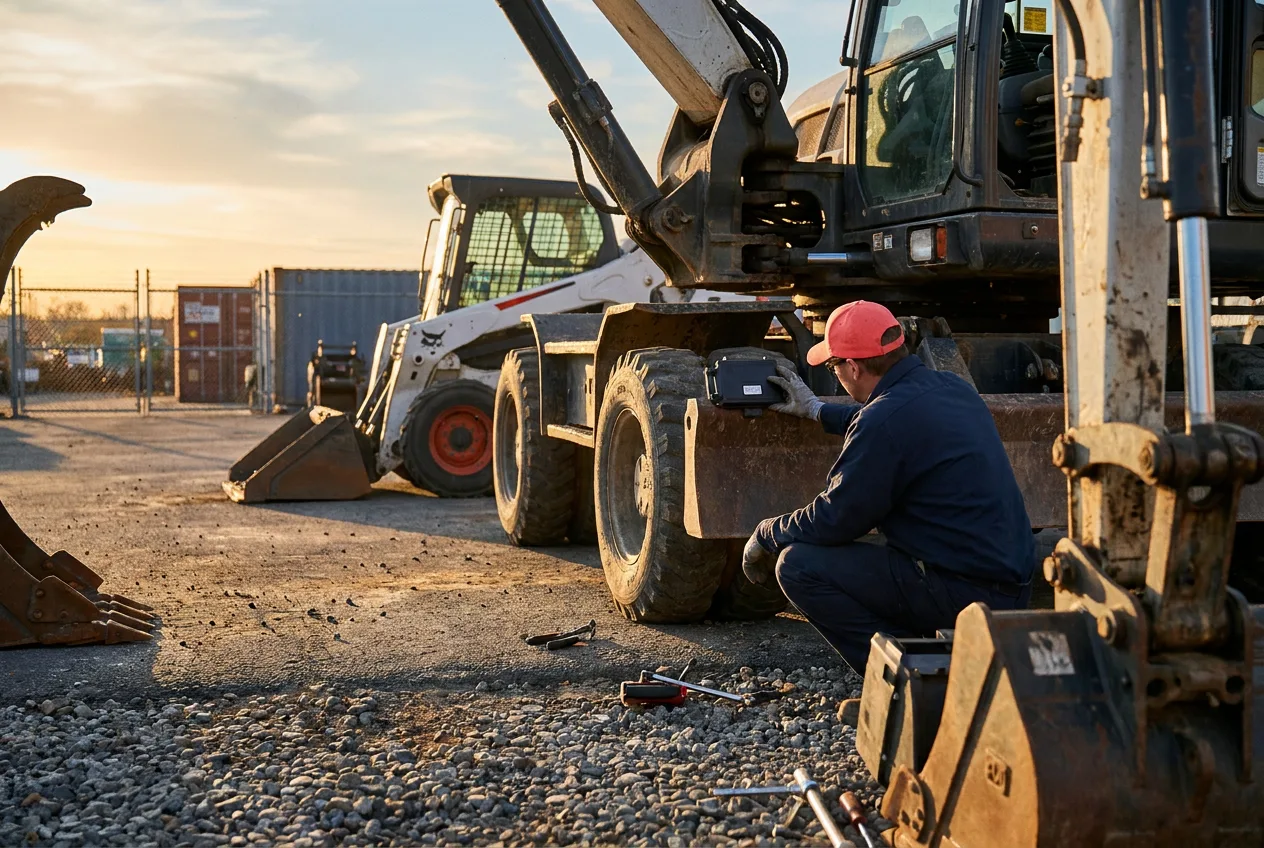
- Match the tracker to the power source. Powered machines such as excavators take hardwired trackers that never need a battery swap. Unpowered units such as light towers, trailers, and compactors take battery trackers like GPX AssetTrack, which runs up to 10 years on one daily fix.
- Draw the agreed area as a geofence. A geofence around the authorized job site or operating area sends an alert when the asset leaves it, so an out-of-area move is investigated the same hour instead of the next week.
- Watch the return date. Scout AI can alert you when a unit moves after its return date has passed, which is often the first sign an overdue lease is turning into a recovery job.
- Use runtime for billing. Engine-runtime records give proof of use when usage hours are disputed.
- Close the loop at return. When a contract closes, location data confirms the machine is physically back on the lot.
Frequently Asked Questions (FAQs)
What is the typical ROI for an equipment GPS tracking system?
Return comes from three places: recovered theft losses, higher utilization, and fewer emergency repairs. Recovering a single stolen machine or lifting fleet utilization by a few points often covers a full year of tracking cost. Judge the system on total cost of ownership against those gains, not on hardware price alone.
What’s the difference between GPX and Samsara or Verizon Connect?
Samsara and Verizon Connect started as vehicle telematics platforms and added equipment tracking later. GPX is asset-first. Every layer, from multi-sensor hardware to Scout AI analytics, targets the challenge of managing diverse, high-value assets, with or without an engine.
How long does it take to deploy GPX across an equipment fleet?
Deployment depends on fleet size, but our systems activate fast. Many battery-powered trackers install in minutes. For enterprise-wide rollouts, our team builds a phased plan that keeps your operation running.
How secure is GPX’s data and platform?
Security comes first. The GPX platform runs on enterprise-grade cloud infrastructure with end-to-end encryption for data in transit and at rest. Strong security protocols protect your operational data and platform integrity.
Should rental equipment use hardwired or battery GPS trackers?
It depends on the asset. Powered machines like excavators run hardwired trackers that never need a battery swap, while unpowered gear like light towers and message boards needs long-life battery units. Asset value matters too: a BLE tag or QR code covers a small tool, but a high-value crane needs a multi-sensor device with satellite backup.
Can GPS tracking lower insurance premiums for a rental fleet?
It can strengthen your case. Insurers price theft risk into your rates, and documented GPS tracking with a strong recovery record supports lower premiums on high-value fleets. Tracking also verifies billing hours and flags idle assets, and the return comes from three places: recovered theft losses, higher utilization, and fewer emergency repairs.