
A construction jobsite moves fast. Crews rotate across zones, subcontractors come and go, heavy equipment shifts between bays, and tools walk off site without a paper trail. When a regulator asks where a crew was at 2:14 p.m., or when an alarm sounds and a foreman needs every worker accounted for in ninety seconds, guesswork is not an option. IoT jobsite tracking turns that guesswork into a live, verifiable record.
This guide breaks down the seven tracking solutions construction teams rely on most, with a focus on three outcomes that matter on every active site: worker safety, regulatory compliance, and emergency response when something goes wrong and people need to evacuate to a designated muster station. Each solution below maps to a real jobsite scenario, and the comparison table further down shows where each one fits.
The 7 Construction Tracking Solutions at a Glance
- Cellular GPS tracking for vehicles, fleets, and heavy equipment.
- BLE tool tracking tags for small assets and deep indoor signal loss.
- Automated geofencing for hazardous zone security and theft alerts.
- IoT wearables for lone worker safety and fall detection.
- Emergency evacuation systems for automated muster station headcounts.
- Heavy machinery telematics for predictive maintenance and uptime.
- Automated safety software for audit-ready OSHA records.
Why IoT Jobsite Tracking is Critical for OSHA Compliance
Construction remains one of the highest-risk industries in the United States, and the cost of poor visibility shows up in people, assets, and accountability. OSHA does not just expect safe sites. It enforces accurate logs, immediate incident reporting, and strict control over who enters hazardous zones. Manual sign-in sheets and memory do not survive an inspection. IoT tracking creates the time-stamped, location-stamped evidence that proves compliance on demand.
Two visibility gaps hit construction harder than any other industry:
- The concrete signal trap. Traditional GPS goes completely blind inside a concrete pour or a subterranean basement, which is exactly where fall risks, confined-space hazards, and structural dangers are highest. Sites lose visibility at the precise moment density and risk climb.
- Ghost assets. Many contractors keep paying taxes, insurance, and storage fees on equipment that was lost or stolen months ago, because no one tracked its exit. These ghost assets sit on the balance sheet as phantom value while draining real cash every quarter.
Closing these gaps is the foundation of an audit-ready, defensible safety program. The seven solutions below are organized so you can match capability to the specific risk you need to control.
How Smart Tracking Lowers Jobsite Risk and Insurance Premiums
Tracking technology pays for itself in two line items most contractors underestimate: wasted skilled labor and rising insurance costs.
The first is the daily treasure hunt. On a busy site, highly paid skilled tradesmen routinely burn 45 minutes a day walking the project to find a shared generator, a laser level, or a missing toolbox. Multiply that across a full crew and a full schedule and the lost billable hours dwarf the cost of a tracking system. Live asset location ends the hunt and puts that time back into the build.
The second is liability. Insurers are raising premiums on contractors who cannot document their safety processes. Verifiable tracking data changes that conversation. When you can show timestamped evacuation drills, hazard-zone controls, and a complete equipment audit trail, you hold the evidence to negotiate better rates and lower your exposure. Smart tracking turns safety from a cost center into a documented asset at renewal time.
1. Cellular GPS Heavy Equipment Tracking for Fleets
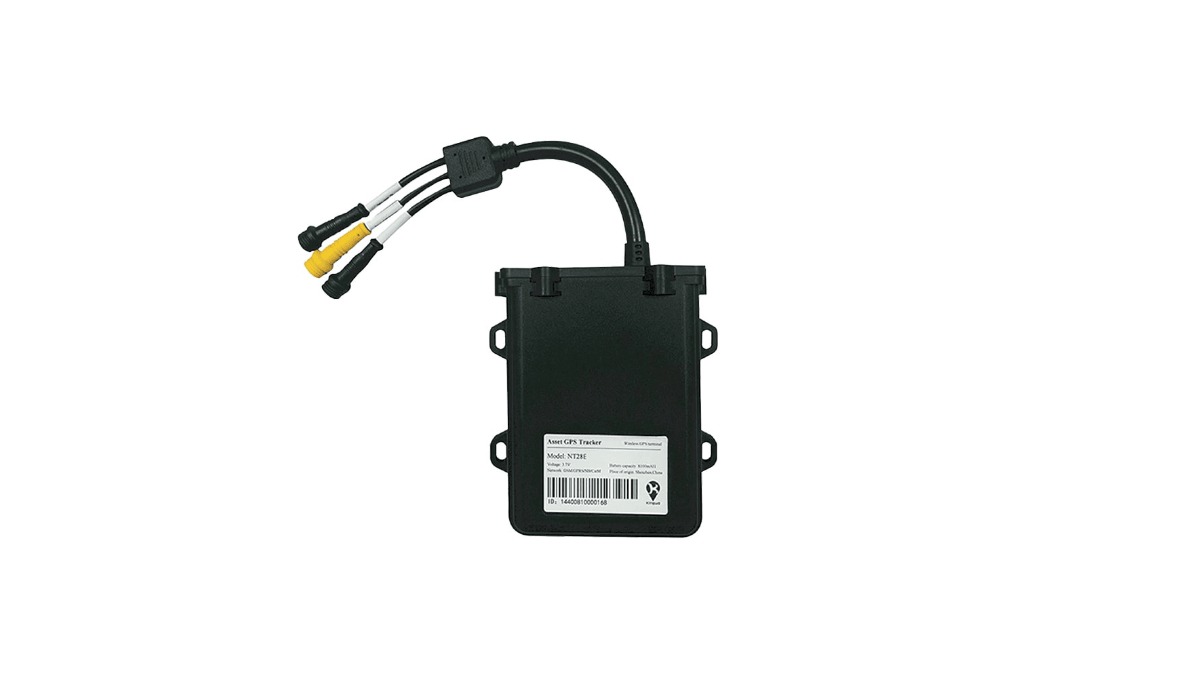
Cellular GPS tracking is the foundation of jobsite visibility for anything that moves and lives outdoors: pickup trucks, dump trucks, excavators, loaders, trailers, and towable equipment. A cellular GPS tracker reports location, movement, and run-time, so you always know which asset is on which site and whether it left after hours.
For safety and theft prevention, GPS trackers deliver immediate value:
- Recover stolen equipment with live location and movement history.
- Confirm that high-value machinery stays on the assigned project.
- Verify deliveries and equipment transfers between sites with timestamped routes.
- Reduce insurance exposure with documented asset location.
On the compliance side, the same location and run-time data feeds utilization reports, billing verification, and equipment-hour logs that contractors otherwise reconstruct by hand. GPS tracking is best for outdoor, powered, or vehicle-based assets where cellular and satellite signal is strong.
2. BLE Tool Tracking Tags for Deep Indoor Signal Loss
GPS handles the big outdoor assets, but most of what disappears from a jobsite is small: power tools, survey gear, laser levels, safety equipment, and material carts. These items are too numerous and too low-power for a full cellular tracker on each one. This is where Bluetooth Low Energy (BLE) tool tracking tags carry the load, especially inside structures where GPS fails.
The GPX AssetTag is built for exactly this job. It is a compact BLE tag with a 4-year battery life and a replaceable battery, so a tag stays in service for the length of most projects without maintenance. Tags broadcast to gateways and mobile devices on site, which means you keep visibility in subterranean basements and enclosed pours where GPS goes dark.
BLE asset tags excel where GPS struggles:
- Track hundreds of small tools and pieces of equipment cost-effectively.
- Maintain visibility inside partially built structures, basements, and enclosed areas.
- Flag tools that leave a defined zone or the site entirely.
- Speed up tool checkouts and end-of-shift accountability, ending the daily treasure hunt.
For most contractors, GPS trackers and BLE tags work as a pair: GPS for the fleet and machinery, BLE tags for everything smaller and everything indoors.
3. Automated Geofencing Alerts for Hazardous Zone Security
Geofencing is the software layer that turns raw location data into action. You draw a virtual boundary around a designated location, a jobsite perimeter, a staging yard, or a hazardous zone, and the system alerts you the moment a tagged asset or worker crosses that line, in either direction.
This is the single most important capability for the “something happens and people need to be in the right place” scenarios. Geofencing answers two questions instantly:
- Did someone or something leave a designated safe area? An asset that exits the jobsite after designated working hours triggers a theft alert and enables immediate recovery before the asset is lost permanently. A worker who steps outside a confirmed safe zone during an incident is flagged for follow-up.
- Did someone enter a zone they should not be in? A worker entering a crane swing radius, an open excavation, or an energized area triggers a real-time alert so a supervisor can respond before an incident occurs.
Geofences also support compliance by automatically logging entries and exits, which creates a defensible record of who was where and when. Pair geofencing with GPS and BLE tracking and you move from passive location data to active risk control.
4. Construction Wearables: IoT Lone Worker Fall Detection
Construction work often isolates people: a single worker in a basement, on a roof, inside a tank, or finishing a punch list after the main crew leaves. IoT wearables give those workers a lifeline and give supervisors live awareness of where their people are.
Worker-worn devices and wearable tags support several safety functions:
- Fall detection and no-motion alerts that signal when a worker stops moving.
- One-touch SOS buttons that send location-tagged distress signals.
- Real-time worker location for supervisors during normal operations and emergencies.
- Check-in confirmation for lone workers on extended or off-hour tasks.
Beyond the immediate safety benefit, wearables build the worker-presence data that mustering and compliance reporting depend on, which connects directly to the next solution.
5. Emergency Evacuation Systems for Muster Station Headcounts
When an alarm sounds, the clock starts. A fire, a gas leak, a structural concern, or a severe weather warning means every person needs to move to a designated muster station, and a supervisor needs to confirm a complete headcount in ninety seconds. Manual roll calls are slow, error-prone, and dangerous when they send someone back into a hazard to look for a name.
Emergency evacuation systems solve this directly. Each worker carries a tag or device. The muster station has a reader or gateway. As workers arrive at the designated location, the system checks them off automatically and shows, in real time:
- Who has reached the muster station and is confirmed safe.
- Who is still unaccounted for and where they were last detected.
- A timestamped evacuation record for incident review and compliance.
This is where geofencing, wearables, and BLE tags converge into a life-safety system. Instead of a clipboard and a hope, the foreman gets a live, accurate roster and can direct rescue or all-clear decisions on facts. For compliance and insurance, the automated evacuation log proves that drills and real events were managed to standard.
6. Heavy Machinery Telematics and Predictive Maintenance
Telematics goes a step beyond location and reports on how equipment is being used and how it is performing. For heavy machinery, dozers, excavators, lifts, and generators, this data protects the asset, the operator, and the schedule.
Telematics delivers value across safety, cost, and compliance:
- Predictive maintenance: Engine fault alerts and run-time data flag wear before a breakdown, so you service equipment on condition instead of after a costly failure.
- Cost control: Idle, fuel, and overuse data catch waste, extend equipment life, and protect uptime on critical machinery.
- Compliance: Service-hour logs and inspection records that support warranty terms, rental agreements, and audit requirements.
Telematics is the right choice when the asset is high-value, mechanically complex, and central to schedule. It turns equipment from a black box into a monitored, accountable resource.
7. Automated Safety Software for Audit-Ready OSHA Records
The final solution is less about hardware and more about what you do with everything the other six collect. Automated safety software consolidates location, presence, and event data into the records contractors are required to produce for regulators, insurers, owners, and labor authorities.
Strong reporting capability turns tracking data into proof:
- OSHA-aligned records of worker presence, zone entries, and incident response.
- Prevailing wage and labor-hour documentation tied to verified on-site time.
- Subcontractor accountability with timestamped site access logs.
- Evacuation and drill records that demonstrate emergency readiness.
- Equipment utilization and maintenance histories for billing and audits.
A site that captures rich tracking data but cannot report on it cleanly has done half the work. Automated reporting is what converts visibility into defensible, audit-ready evidence.
Construction IoT Tracking Solutions Compared
The table below summarizes how the core tracking technologies line up by what they track, where they work, power profile, and the construction scenario each one fits best. Swipe horizontally on mobile to see all columns.
| Solution | What It Tracks | Indoor / Outdoor | Power Profile | Best Construction Use |
|---|---|---|---|---|
| Cellular GPS Tracker | Vehicles, heavy machinery, trailers | Outdoor | Wired or rechargeable | Fleet location, theft recovery, utilization |
| GPX AssetTag (BLE) | Tools, small equipment, gear | Indoor and outdoor | 4-year battery life, replaceable | Tool accountability, indoor visibility, mustering tags |
| Geofencing Layer | Any tagged asset or worker | Both | Software, no added hardware | Zone alerts, hazardous-area control, exit detection |
| IoT Worker Wearable | Personnel, lone workers | Both | Rechargeable | Fall detection, SOS, lone-worker safety |
| Heavy Machinery Telematics | Machinery health and usage | Outdoor | Wired to equipment | Predictive maintenance, fuel, operator safety |
How to Choose the Best Construction IoT Tracking System
There is no single tracker that does everything, and any vendor who claims otherwise is selling a feature, not a system. The best construction IoT tracking system starts with the risk you most need to control on your specific site. Work through these questions in order:
- Start with your highest risk. If theft and ghost assets drive your costs, lead with GPS trackers and BLE tags. If worker safety and emergency readiness are the priority, build around wearables, geofencing, and mustering first.
- Match the technology to the environment. Open, outdoor assets call for GPS and telematics. Indoor, structural, and small-asset visibility calls for BLE tags like the GPX AssetTag, which holds a 4-year replaceable battery and reads where GPS fades.
- Confirm geofencing and alerting are built in. Location data only protects a site when it triggers action. Designated-zone entry and exit alerts are what turn tracking into prevention.
- Demand evacuation and headcount support. If an emergency would force a manual roll call today, prioritize a system that automates mustering at a designated muster station.
- Insist on clean OSHA reporting. The data is only as useful as the audit-ready records you can export for OSHA, insurers, and project owners.
The strongest jobsites do not pick one solution. They layer GPS, BLE tags, geofencing, wearables, telematics, and reporting into a single view, then scale it across projects. The result is a site where you always know where your people and equipment are, where alerts fire before incidents happen, and where a complete headcount at the muster station is a matter of seconds, not a search.
Track Your Jobsite with Confidence
GPX builds IoT tracking solutions designed for the realities of construction: rugged conditions, mixed indoor and outdoor environments, and the safety and compliance demands of an active site. From the long-life GPX AssetTag to geofencing and mustering capability, GPX gives contractors the visibility to protect people, assets, and accountability. Contact the GPX team to design a tracking system matched to your sites and your risk profile.
Frequently Asked Questions (FAQs)
What is the difference between GPS and BLE equipment tracking?
GPS tracking relies on cellular and satellite networks, which makes it ideal for large, powered outdoor fleet assets like excavators. BLE (Bluetooth Low Energy) relies on local gateways and mesh networks, which makes it highly cost-effective for tracking hundreds of small, non-powered tools, even indoors where GPS signals fail.
Do construction wearables violate worker privacy?
Modern jobsite tracking systems focus on safety and compliance, not micromanagement. Location data stays within the geofenced jobsite boundary, and off-site movements are ignored. Systems built around tags like the GPX AssetTag track personnel only during active shifts for mustering and hazard prevention.
Does OSHA require electronic jobsite tracking?
OSHA does not strictly mandate electronic tracking, but it rigidly enforces accurate log keeping, immediate incident reporting, and hazard zone control. Automated tracking and geofencing provide the audit-ready evidence needed to instantly prove compliance during an OSHA inspection.
How does geofencing prevent jobsite theft?
A geofence creates an invisible digital perimeter around your site or staging yard. When a tagged asset, such as a skid steer or a toolbox, crosses that boundary after designated working hours, the system instantly triggers an alert to management, enabling immediate recovery action before the asset is lost permanently.
Can tracking systems help with emergency evacuation and mustering?
Yes. With workers carrying tags and a reader at the muster station, the system automatically confirms who has reached the designated location and who is still unaccounted for. Supervisors get a live, accurate headcount in seconds and a timestamped evacuation record for incident review.