
A small, cheap, long-life tracker is a great idea. For personal items, it delivers simple peace of mind. For businesses, the problem is bigger. You have to manage thousands of critical assets across job sites, supply chains, and facilities.
A consumer-grade tag does not scale. You lose centralized control, and the location data turns unpredictable. Visibility gaps also cost real money. A McKinsey global supply chain survey found only 7% of companies have end-to-end, real-time visibility across their networks. Theft makes it worse. Verisk’s CargoNet reported cargo theft hit record levels in 2024, with strategic theft (deceptive schemes that reroute and steal entire shipments) climbing from 8% of events in 2020 to about a third.
This is where an AirTag for business comes in. It keeps the core appeal, a small size, long battery life, and low price, then adds the enterprise platform that professional use demands. You get past simple “find my” tracking. You get predictable reporting, rugged hardware, and a supply chain visibility platform built to manage assets at scale.
| Product / Brand | Typical Battery Life | Reporting Method | Management Platform | Hardware Cost |
|---|---|---|---|---|
| GPX AssetTag Pro | ~3 Years (replaceable) | 20-30 Reports/Day | Enterprise AI Platform | Free (with subscription) |
| Tile for Business | 1-3 Years | Crowdsourced (Bluetooth) | Centralized Dashboard | Upfront device purchase |
| Samsara (Asset Gateways) | Up to 5 Years | Configurable (Cellular) | Connected Operations Cloud | Upfront device purchase |
| Logistimatics | Varies (Rechargeable) | On-Demand & Scheduled (Cellular) | Web & Mobile App | Upfront device purchase |
1. GPX: The AirTag Concept, Reimagined for Business
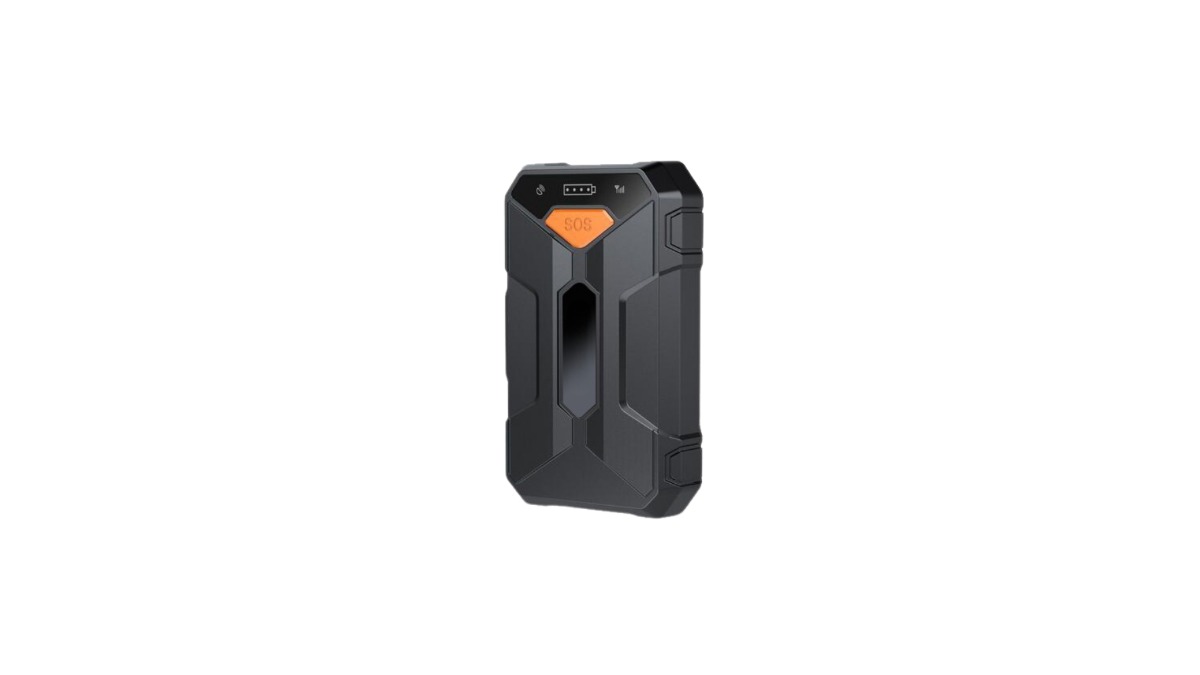
GPX takes the small, long-life tracker and builds it for tough commercial jobs. The GPX AssetTag Pro is a compact, durable tag with a sealed battery that lasts about three years. It needs no recharging, no battery swaps, and no wiring. Instead of a crowdsourced network, it uses a dedicated, gateway-less low-power terrestrial network to deliver 20 to 30 location reports per day. You get reliable data without the power drain or cost of a traditional GPS tracker. The device carries no SIM and no cellular modem, so there are no carrier fees to manage.
The platform is the real difference. GPX gives you a multi-user system that views and controls thousands of assets at once. Geofencing, custom alerts, and reporting dashboards turn raw location pings into operational insight. Hardware is free under a subscription that starts from $45 per device per year at scale, so it finally pays to track the long-tail assets you used to ignore. It fits teams running returnable transport items (RTIs) and containers, automotive dunnage, medical equipment like IV poles, heavy equipment and contractor tools across job sites, and in-transit freight.
2. Tile for Business: Crowdsourced Tracking for Populated Areas
Tile for Business adapts the popular consumer product for commercial use. It uses the same tech: small Bluetooth tags that ping any phone running the Tile app within range. The location updates on a map you view from a central dashboard. The model runs on Tile’s large global user network, so it works best for items moving through cities and suburbs where Tile users are dense.
- Best for: Lower-value assets like tools, medical devices, or electronics that mostly move through populated areas.
- Pricing: Buy the Tile devices upfront. Tile Premium for Business adds location history and data exports.
- Standout features: Uses the wide Tile consumer network for location updates. You can group and manage assets from one dashboard.
Pros:
- Very large, passive tracking network.
- Low upfront hardware cost.
- Simple to deploy: attach the tag and go.
Cons:
- Updates are passive and unpredictable, tied to a nearby network user.
- Not suited to remote, industrial, or low-traffic areas.
- Missing the scheduled reporting and alerts that critical logistics needs.
3. Samsara: Integrated Asset Tracking for the Connected Fleet
Samsara is a major name in connected operations, best known for vehicle tracking and fleet management. It also sells a line of rugged asset gateways, the AG series, that monitor equipment, trailers, and other unpowered assets. These units fit into Samsara’s wider platform, so a company already running Samsara for its fleet can see its other assets in the same system. The hardware is tough and offers long battery life with configurable check-in rates.
- Best for: Companies already invested in Samsara for fleet management that want to extend tracking to trailers and large equipment.
- Pricing: Buy the hardware upfront, then pay a recurring license fee for software and connectivity.
- Standout features: Tight integration with Samsara’s vehicle tracking, safety cameras, and site monitoring. Industrial-grade hardware built for harsh conditions.
Pros:
- One platform for both vehicles and assets.
- High-quality, durable hardware with long battery life.
- Rich data and reporting inside a full platform.
Cons:
- Expensive if you only need asset tracking.
- The platform runs complex and can be overkill for simpler needs.
- Hardware is larger and pricier than AirTag-style tags, so it fits smaller, lower-value assets poorly.
What AirTags Cannot Do at Business Scale
Consumer trackers like Apple’s AirTag introduced millions of people to tracking. Deploy them across a business, though, and the limits show fast. A platform built for commercial use closes those gaps.
Scalability and Centralized Management
One employee can manage a few personal tags from a phone. A business has to manage hundreds or thousands of assets. A real business platform gives you a central dashboard with multi-user access, permission levels, asset grouping, and bulk actions. It’s the difference between a personal address book and a full CRM.
Predictable and Actionable Reporting
Crowdsourced networks report a location only when a compatible phone passes by. That is too random for time-sensitive logistics or inventory. A commercial solution delivers scheduled check-ins, say every hour or 30 times a day, so operations managers get reliable data. That data drives geofence alerts, dwell-time analysis, and start/stop reports, far more than a last-seen pin on a map.
Hardware Durability and Fitness for Purpose
Consumer trackers are usually small plastic fobs. Industrial assets ask for more. Business-grade trackers ship rugged, weatherproof housings rated IP67 or higher, wide operating temperature ranges, and mounting options like screw-down flanges. The device survives a construction site, a refrigerated container, or the vibration of a long haul.
Security, Privacy, and Control
Tracking company assets on employee-owned phones and personal accounts creates real security and privacy risk. A dedicated business platform keeps all data owned and controlled by the company inside a secure, private environment. You drop the mess of personal accounts, and operations keep running when an employee leaves.
Integration With ERP, WMS, and TMS Systems
A tracking tool stuck in its own silo forces manual data entry and leaves blind spots between systems. Enterprise operations need location and status to flow straight into the ERP, WMS, or TMS that already runs the business. A commercial platform ships documented APIs and prebuilt connectors, so tracking data updates inventory records, triggers replenishment, and reconciles shipments on its own.
Turning Data Noise Into Actionable Intelligence
Thousands of tags generate millions of location pings, and raw pings are noise, not insight. Consumer apps and thin platforms dump that firehose on your team and leave the analysis to them. A platform with built-in analytics and AI filters the signal: it surfaces the idle asset, the late shipment, and the geofence breach that actually need a decision.
Lifecycle Management Across Thousands of Devices
Deploying, maintaining, and retiring thousands of devices is an operational job of its own. Battery replacement schedules, firmware updates, reverse logistics for returned units, and clean decommissioning all scale with fleet size. A business platform tracks device health and battery status across the whole deployment, so no asset goes dark unnoticed.
Why AirTags alert the people you are trying to catch
Apple builds unwanted-tracking alerts into AirTag on purpose. If an AirTag that is separated from its owner is seen moving with someone over time, their iPhone shows an alert, and Android phones (6.0 or later) can notify them too, a cross-platform standard Apple and Google worked on together (Apple Support). That protects people from being followed, but it also means a thief driving off with your trailer or tools can be told a tracker is riding along. Business trackers such as GPX AssetTrack report over cellular to your own account and do not announce themselves to whoever is carrying the asset.
The Future of Low-Cost, High-Volume Asset Tracking
The jump from simple consumer tags to real business trackers is speeding up. The BLE indoor-location and RTLS market is projected to grow from $4.3 billion in 2025 to $11.8 billion by 2030, a 22.5% compound annual growth rate, with asset tracking as its single largest application. Hardware and connectivity keep getting cheaper, so it now pays to monitor assets you once wrote off as untrackable. That opens new gains in efficiency and loss prevention across dozens of industries.
Tracking is moving past location. The next wave of low-cost tags builds in more sensors as standard. Temperature, humidity, shock, and light sensors enable cold chain monitoring and tell you not just the where but the how and the what of an asset’s condition. A shipper learns that a pallet sits in Phoenix, and that its temperature ran too hot for two hours.
The biggest shift is AI on top of all that new data. An AI platform does not just paint thousands of dots on a map. It flags anomalies on its own, predicts ETAs more accurately, catches assets at risk of loss or delay, and tells operations teams exactly what to do next. That is the move from collecting data to acting on it.
How to Know Which Asset Tracking Solution Fits Your Business
The right choice starts with your operation, not the hardware. The best device tracking software solves your specific problems and scales as you grow, and the asset tracking devices behind it should match how and where your assets move. Weigh these factors as you compare options:
- Asset volume and type: Are you tracking ten high-value machines or 10,000 returnable pallets? Scale sets your need for a strong management platform.
- Operating environment: Indoors, outdoors, remote, or crossing the country? The setting decides whether Bluetooth, GPS, a real-time location system (RTLS), or multi-network cellular fits best.
- Reporting frequency: Is yesterday’s last-seen update enough, or do you need location and status several times a day?
- Data and integration needs: Do you just find lost items, or feed location and status into an ERP, WMS, or other system to automate work?
- Total cost of ownership: Look past the sticker price. Add subscription fees, battery replacement, and the cost of bad data. Free hardware with a subscription often lands a lower, steadier TCO.
If your needs are smaller, a simple consumer or small-business GPS option may be enough: budget brands like Logistimatics or Spytec cover basic vehicle and asset tracking, though without the centralized management, scheduled reporting, and analytics that business-scale operations depend on.
Want to see what a true business-grade platform does for your operation? GPX pairs an enterprise platform with rugged hardware to track your most critical assets and return value fast. Contact our team to get started and request a demo.
Frequently Asked Questions (FAQs)
What is the best device tracking software for businesses?
It depends on your scale and needs. Look for a central dashboard for every asset, multi-user roles and permissions, strong reporting and analytics, and custom alerts like geofences. Enterprise-grade platforms manage thousands of devices, while simple apps suit small-scale use.
Can you use Apple AirTags for business inventory?
You can, but it carries real limits for most business uses. AirTags run on a passive, crowdsourced network, so updates are unpredictable and fall short for logistics. They also lack a central dashboard to administer hundreds of tags and user permissions. For a deeper look, compare consumer trackers and business-grade GPS solutions.
How much does a business GPS tracker cost?
Business trackers usually follow one of two models. The first is an upfront hardware buy, from $50 to over $200 per device, plus a monthly subscription for data and platform access. The second, used by GPX, provides the hardware free with a subscription that covers hardware, data, and platform, starting from $45 per device per year.
What’s the difference between Bluetooth and GPS trackers for assets?
Bluetooth trackers like Tile or AirTags have short range and depend on nearby smartphones to report a location, so updates stay unpredictable. GPS trackers talk straight to satellites for a precise fix anywhere on earth, but they traditionally use more power. Modern business trackers often blend GPS with low-power cellular networks like LTE-M to get the best of both.
How do gateway-less trackers work?
Gateway-less trackers like the GPX AssetTag Pro report over a proven low-power terrestrial network, with no local gateway box, no Wi-Fi, and no SIM card. That removes the need for a powered gateway or a crowdsourced phone network, so you get reliable, direct-to-cloud location reporting from almost anywhere, without cellular fees.
Why do consumer-grade trackers like AirTags fall short for business use?
Businesses must manage thousands of critical assets across job sites, supply chains, and facilities. A consumer-grade tag does not scale: you lose centralized control and location data turns unpredictable. A McKinsey survey found only 7% of companies have end-to-end, real-time visibility across their networks, a gap a consumer device cannot close.