The Best Alternative to AirTags in 2026: A Practical Guide for People and Businesses

The best AirTag alternative depends entirely on your ecosystem. For Android users, the Samsung Galaxy SmartTag2 or a Chipolo ONE Point on the Google Find My Device network are top choices. For businesses and fleets, consumer Bluetooth tags fail at scale: you need a hybrid BLE and live GPS system like the GPX AssetTag to get centralized dashboards, geofencing, API access, and multi-year battery life without draining resources.
Apple released the AirTag 2 in January 2026 with a new ultra-wideband (UWB) chip, a louder speaker, and longer-range Precision Finding. It is a genuinely good device. It also comes with a hard limit that no software update will ever fix: it only works if you own an iPhone.
That single constraint is why “alternative to AirTags” has become one of the fastest-growing tracking searches of the year. Android households want in. Mixed-device families want one ecosystem that works for everyone. And a much larger group, businesses tracking vehicles, heavy equipment, and supply chain inventory, have realized that a coin-sized consumer tracker was never built for enterprise asset management.
This guide breaks down the strongest AirTag alternatives available right now, the hidden subscription trade-offs, and a clear framework for choosing the right tracker, whether you are protecting your car keys or a fleet of work trucks.
Why Are Users Switching From Apple AirTags in 2026? (Pain Points & Limitations)
The AirTag made everyday item tracking mainstream, but its popularity exposed its technical limits fast. When you look at search behavior, the reasons people hunt for an alternative cluster around a few critical pain points.
- The iPhone-only walled garden. The AirTag has no native Android app and never will. If anyone in your household, logistics team, or business runs Android, the AirTag is a non-starter for shared use.
- Short-range, not real-time. AirTags do not contain a GPS chip. They rely on Bluetooth (BLE) and the crowd-sourced Find My network. On a quiet rural highway or an empty job site at 2 a.m., that “last seen” ping can be hours old.
- Failure to track moving vehicles. Because it depends on nearby phones rather than cellular (4G/5G) or satellite signal, an AirTag cannot provide continuous, live telemetry for a car, trailer, or piece of heavy equipment.
- Privacy and anti-stalking concerns. The same network density that makes AirTags effective created well-documented misuse risks, prompting both Apple and Google to roll out unknown-tracker alerts.
- Zero enterprise features. There is no central dashboard, no geofencing, no utilization reporting, no open API, and no role-based access to manage hundreds of tags across a workforce.
Knowing which of these matters most to you is the difference between buying another consumer gadget and choosing a tool that actually solves your problem.
AirTag vs. Real-Time GPS Trackers vs. IoT Asset Tags: What Is the Core Difference?
Most “AirTag alternative” lists lazily compare one Bluetooth puck against another. That misses the bigger picture. There are three distinct tracking technologies competing for the same search, and they are built for completely different jobs.
- Bluetooth (BLE) finders like AirTag, Tile, and Chipolo are short-range devices dependent on a crowd-sourced phone network. They are excellent for keys, backpacks, and wallets. They are weak for anything that travels far from dense, populated areas.
- Cellular and satellite GPS trackers report live, pinpoint location anywhere with signal, independent of nearby phones. They are the right tool for fleets, high-value assets, and anti-theft recovery. The trade-off is higher power draw and recurring cellular data costs.
- Hybrid BLE + GPS asset tags combine long-life Bluetooth beacons with GPS gateway infrastructure. You get pinpoint yard-level and indoor visibility on hundreds of assets without burning through batteries or paying a cellular fee on every single tag.
The mistake businesses make is forcing one technology to do all three jobs. The smarter approach, and the one GPX is built around, is matching the technology to the asset: GPS where things move, BLE where things cluster, and a single platform tying it together.
Top 5 Best AirTag Alternatives in 2026 (For Android, iOS, and Enterprise)
Here is how the leading market options stack up across the factors that actually matter: platform compatibility, technology, network range, battery life, subscription cost, and whether there is any real business capability behind the device.
| Tracker | Best For | Technology | Range / Network | Battery Life | Subscription | Business Features |
|---|---|---|---|---|---|---|
| GPX AssetTag & GPS Trackers | Fleets, heavy equipment, logistics & asset visibility | Hybrid BLE + GPS | Live GPS plus yard/indoor BLE | Up to 4-year battery (replaceable) | Platform-based, no per-tag bleed | Dashboard, geofencing, API, roles |
| Apple AirTag 2 | iPhone-only personal items | Bluetooth + UWB | Apple Find My network | About 1 year (replaceable CR2032) | None | None |
| Samsung Galaxy SmartTag2 | Samsung Galaxy users | Bluetooth + UWB | SmartThings Find network | Up to ~500 days | None | Limited, consumer-only |
| Tile Pro | Mixed iOS/Android households | Bluetooth | Tile / Life360 network | About 1 year (replaceable) | History & alerts behind Premium | None |
| Chipolo ONE Point | Android users (Google network) | Bluetooth | Google Find My Device | About 1 year (replaceable) | None | None |
| Cellular GPS trackers | Single vehicles, live tracking | Cellular GPS | Live anywhere with signal | Days to ~2 weeks; recharge | $10-25/month per device | Varies, often basic |
The pattern is hard to miss. Consumer Bluetooth tags are cheap and subscription-free, but they cap out at personal use. Standalone cellular GPS trackers go anywhere but burn batteries in days and stack monthly fees on every device. A purpose-built platform is what closes the gap between “find my keys” and “manage 400 assets across three job sites.”
No-Subscription GPS Trackers & Bluetooth Tags: Hidden Costs to Watch For
“GPS tracker no subscription” is one of the highest-intent queries in this space, and for good reason. The headline price of a tracker is rarely the total cost of ownership. The trap is the locked feature.
Several popular consumer trackers are free to set up but quietly gate the features you actually need, such as 30-day location history, smart left-behind alerts, and geofencing, behind a monthly premium plan. Tile, for example, keeps long-term location history behind its Premium tier. For one keychain that is a minor annoyance. For fifty assets, paying a per-feature monthly fee with no data export, no geofencing, and no multi-user management gets expensive fast.
When you evaluate “subscription-free,” ask three questions:
- Is location history included, or is it last-known-location only? The free tier of many trackers shows where something was last seen, not where it has been.
- Are alerts and geofencing free? These are often the first features moved behind a paywall.
- What does the cost look like at scale? A $3/month feature is trivial on one device and brutal across a hundred.
For business deployments, a platform-based model, where the intelligence lives in the software and individual tags do not each carry a recurring cellular fee, almost always wins on total cost of ownership.
The Ultimate AirTag Alternative for Android Users & Google Find My Device
If your biggest reason for leaving the AirTag is Android compatibility, the landscape improved drastically by 2026 thanks to the expansion of the Google Find My Device network.
- Best for Samsung users: the Galaxy SmartTag2 delivers ultra-wideband Precision Finding and excellent battery life, though it remains locked to the Samsung ecosystem.
- Best for broad Android use: trackers like the Chipolo ONE Point ride exclusively on Google’s native network, using hundreds of millions of Android phones worldwide to locate your items, making them the truest 1:1 AirTag equivalent for non-Apple users.
For a business with a mixed-device workforce, the calculus changes. You do not want location data fragmented across Apple’s network for the iPhone users and Google’s for the Android users. You want one platform that does not care what phone an employee carries, because the tracking infrastructure belongs to you, not to a phone maker’s crowd-sourced network.
B2B Fleet & Asset Tracking: Why Consumer Tags Fail Businesses
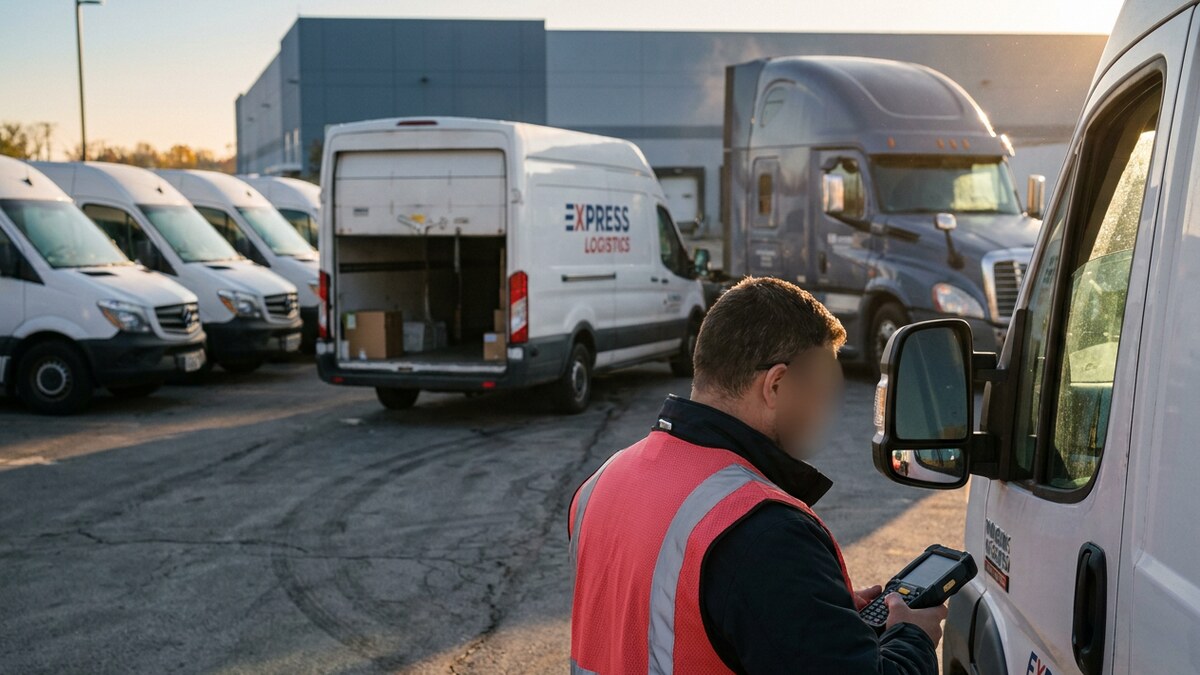
This is where the consumer-versus-business gap becomes a chasm, and where the right answer almost never looks like a coin-sized puck. If you manage logistics, construction equipment, power tools, medical devices, or a fleet of delivery vans, you face challenges a consumer tracker was simply not engineered to handle.
- Continuous visibility on moving assets. A delivery van needs live 4G/5G GPS telemetry, not a location that only refreshes when a pedestrian walks by.
- Scalability without battery chaos. Tagging hundreds of assets with trackers that die in months is a maintenance nightmare. Long-life IoT tags, like the GPX AssetTag with its replaceable 4-year battery, keep fleets visible without constant recharging.
- Complex yard and indoor tracking. GPS struggles indoors and in dense yards. BLE gateways fill that gap, giving you zone-level visibility in places satellites cannot reach, across construction sites, hospital wings, automotive lots, and fleet yards.
- A real management layer. Geofencing, theft alerts, utilization reporting, open APIs, and role-based access are table stakes for operations, and entirely absent from consumer tags.
This is the core of how GPX approaches the problem. Rather than asking a single device to be everything, GPX pairs live GPS for moving assets with long-life BLE tags for clustered ones, and unifies both in one platform with the dashboards, alerts, and reporting that operations teams depend on. For construction, fleet, healthcare, automotive, and in-transit logistics, that combination delivers what an AirTag fundamentally cannot: dependable, manageable visibility at scale.
Privacy First: Anti-Stalking Features and Enterprise Data Security in 2026
Any small tracker can, in theory, be misused, which is why privacy belongs on your checklist. Both Apple and Google now broadcast unknown-tracker alerts that warn a person if a tag they do not own appears to be traveling with them, and most reputable trackers support end-to-end encryption and audible alerts for unidentified devices nearby.
For business deployments, privacy means something different: data security and access control. You need role-based access so location data is visible only to authorized dispatchers or fleet managers, alongside strict audit trails so you know who accessed what. Consumer tags rarely offer either; a managed enterprise platform should treat both as standard.
Smart Buyer’s Guide: How to Choose the Right Tracker for Your Needs
There is no single “best” AirTag alternative, only the right one for the job in front of you. Work through these questions in order and the answer usually becomes obvious.
- What are you actually tracking? A backpack points to a Bluetooth finder. A skid steer or a delivery van points to an enterprise GPS system.
- Does it move far from dense populations? If your asset leaves the city limits, crowd-sourced phone networks will leave you with stale data. You need true cellular or satellite GPS.
- How many devices, and who manages them? For two personal items, a simple app is fine. For 50+ business assets, you need a dashboard with geofencing, API integrations, and reporting, not a consumer app.
- What phones are in play? An all-iPhone household can lean on AirTag. A mixed or Android environment needs a dual-network tag or, for business, a platform that is phone-agnostic.
- What is the true cost at scale? Add up subscriptions, locked features, and battery replacement over a few years. The cheapest tag is rarely the cheapest system.
For individuals, that logic usually lands on a Google- or Apple-network Bluetooth tracker. For any organization tracking assets that move, cluster, or carry real value, it lands on a purpose-built platform that combines GPS and BLE, skips per-tag subscription bleed, and delivers the management tools an AirTag was never meant to provide.
Track What Matters with GPX Intelligence
If you have outgrown consumer trackers, or you knew from the start that a coin-sized tag was never going to manage your fleet, equipment, or inventory, GPX builds the alternative that scales with you. With hybrid GPS and long-life BLE asset tags, a unified visibility platform, and the geofencing, alerts, API access, and reporting that operations actually run on, GPX turns scattered “last seen” dots into reliable, real-time asset intelligence. Talk to the GPX team to find the right tracking solution for your operation.
Frequently Asked Questions (FAQs)
What is the best alternative to AirTags for Android users in 2026?
For general Android users, trackers built for the Google Find My Device network, like the Chipolo ONE Point, offer the best global reach by tapping hundreds of millions of Android phones. For Samsung Galaxy owners, the Galaxy SmartTag2 is the premium choice with ultra-wideband Precision Finding, though it is locked to the Samsung ecosystem. For mixed-device businesses, a phone-agnostic platform like GPX avoids fragmenting your data across competing phone networks.
Can I use an AirTag to track my car or business fleet?
No. AirTags rely on nearby iPhones to relay their location and have no built-in GPS receiver, so the position can be badly out of date when the item leaves crowded areas. For reliable vehicle or fleet tracking you need a dedicated cellular GPS tracker that reports live, continuous location regardless of who is nearby, which is what GPX’s GPS solutions are built to deliver.
Are there GPS trackers for businesses with no monthly subscription?
Many consumer Bluetooth tags are subscription-free, but they lack business features. For enterprise tracking, look for hybrid BLE plus GPS systems that use gateway networks. These let you track hundreds of BLE tags without paying an individual cellular subscription for each asset, while keeping the geofencing, reporting, and dashboard tools in one platform.
What is the difference between a Bluetooth tag and an IoT GPS tracker?
A Bluetooth tag has a short range, often up to a few hundred feet, and relies on other people’s smartphones to relay its location, making it ideal for keys and bags. An IoT GPS tracker uses satellites to pinpoint its exact location and cellular networks to transmit that data live to a centralized dashboard, making it the right tool for commercial fleets and high-value assets in motion.
What is the best AirTag alternative for business asset tracking?
Consumer tags lack the dashboards, geofencing, reporting, and scale that businesses need. A purpose-built platform that combines live GPS for moving assets with long-life BLE tags for clustered assets, like GPX, is the better fit. It provides centralized visibility, role-based access, API integrations, and management tools across construction, fleet, healthcare, automotive, and in-transit environments without per-tag subscription costs.
What is new in the AirTag 2 released in 2026?
Apple released the AirTag 2 in January 2026 with a new ultra-wideband chip, a louder speaker, and longer-range Precision Finding. It remains limited to iPhone users, which is the primary reason demand for cross-platform tracking alternatives continues to grow.