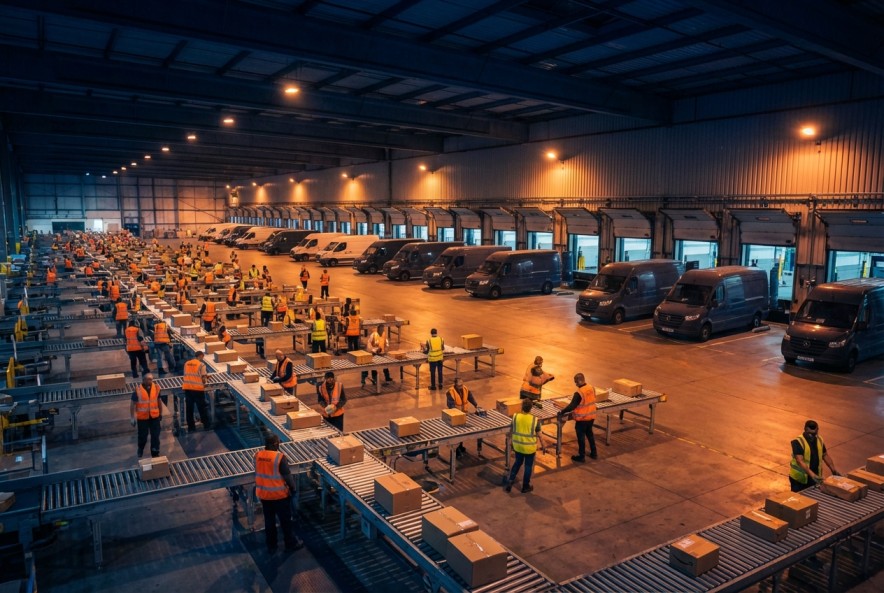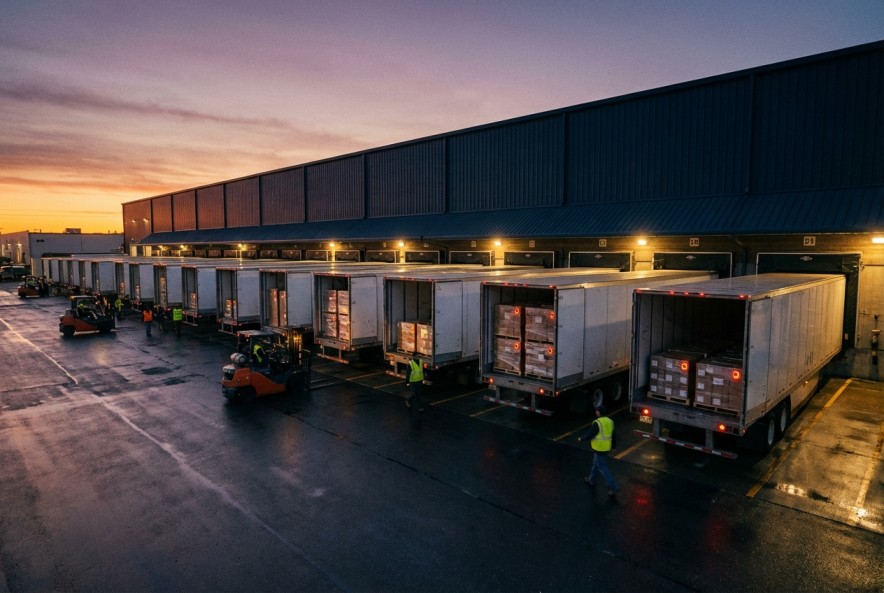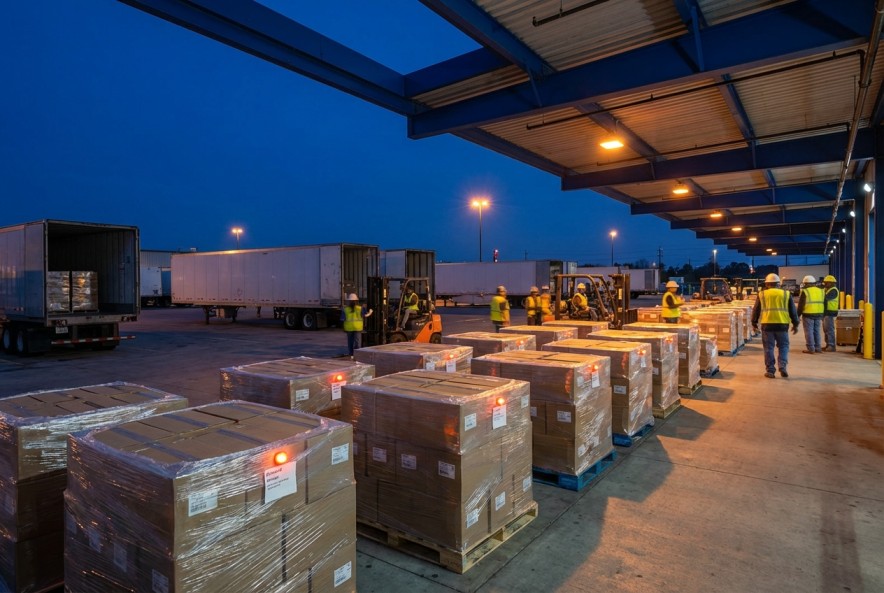
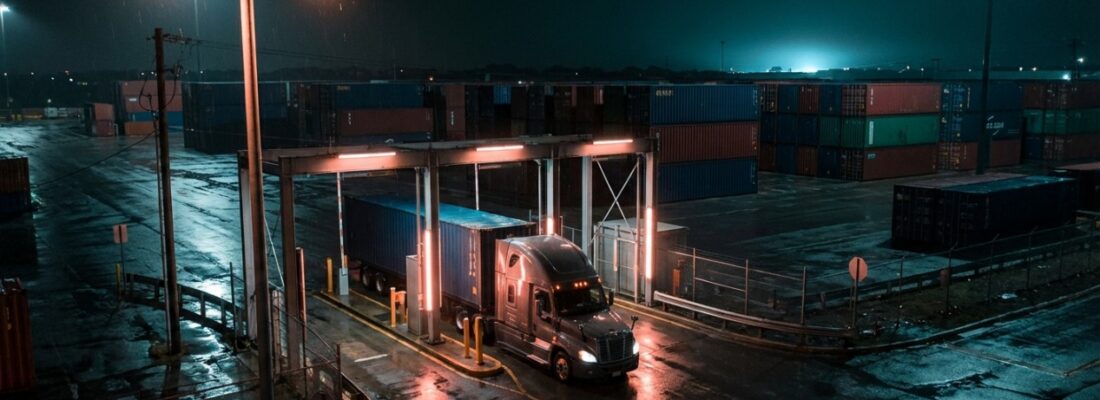

Every minute a trailer sits idle in your yard costs money. Drivers circle looking for dock assignments. Dispatchers field constant calls asking “where’s my trailer?” Yard jockeys waste hours hunting for equipment that could be anywhere across acres of pavement. For too many operations, the yard remains a black hole where visibility disappears and detention fees pile up.
The problem runs deeper than lost trailers. When yard operations rely on clipboard checks, radio calls, and spreadsheets, small inefficiencies cascade into major disruptions. Dock doors sit empty while loaded trailers wait in the wrong spots. Inbound shipments arrive with no receiving plan. Carriers rack up detention charges while your team scrambles to locate equipment. These daily friction points drain margins and damage carrier relationships.
The dock and yard management systems market reached $4.32 billion in 2025 and is projected to hit $7.6 billion by 2030, reflecting an 11.95% CAGR as companies invest in tools that bring structure and automation to this critical space. According to industry research, integrated visibility solutions saved the trucking sector over $1.2 billion in detention costs during 2024 alone. Companies still relying on manual tracking methods are not just inefficient. They are losing time and money with every delayed truck.
Here are seven yard management software solutions helping logistics teams turn chaotic yards into organized, data-driven operations.
Comparing the Leading YMS Platforms
| YMS Platform | Best For | Key Strength | Deployment |
|---|---|---|---|
| Project44 | Enterprise Supply Chains | AI-Powered Predictive Arrivals | Cloud |
| C3 Yard | Complex Multi-Site Ops | Shuttle Coordination | Cloud |
| YardView | SMBs & Fast Adoption | Drag-and-Drop Simplicity | Cloud |
| GoRamp | Quick Implementation | Driver Self-Service Check-In | Cloud |
| Kaleris | Ports & Terminals | RTLS & Computer Vision | Cloud / On-Premise |
| Samsara | Private Fleets | IoT Telematics Integration | Cloud |
| Yard Management Solutions | Operational Clarity | Mobile Task Assignments | Cloud |
1. Project44 (Movement Platform)
Project44 has evolved from a shipment tracking provider into a comprehensive decision intelligence platform that connects over 1.5 billion shipments annually for more than 1,000 leading brands. The platform unifies yard activity with broader supply chain visibility, allowing facilities to see inbound freight status and prepare operations before trucks arrive. Its API-first architecture integrates with SAP and other enterprise systems, making it a strong choice for organizations already invested in the Project44 ecosystem.
Key Features
- Predictive arrival visibility powered by AI-driven analytics
- Automated gate management and dock scheduling workflows
- Unified platform connecting transportation, yard, and warehouse data
Drawbacks
- Search functionality has limitations on batch shipment queries, requiring users to break searches into smaller batches
- Tracking accuracy for smaller regional carriers can be inconsistent compared to major carriers
Best For: Enterprise shippers and logistics providers already using Project44 for transportation visibility who want to extend that intelligence into yard operations.
2. C3 Yard
C3 Yard is an enterprise-grade yard management system built for high-volume distribution centers handling thousands of trailer moves per day. Founded in 2000, C3 Solutions has built a reputation for handling complex industrial environments where workflows extend beyond simple trailer tracking. The platform uses AI-driven algorithms to optimize shunter task assignments and can reduce detention fees by up to 90% according to company benchmarks. C3’s system integrates through REST APIs and supports SSO via SAML or OAuth for enterprise security requirements.
Key Features
- Advanced yard orchestration including internal shuttle coordination
- Configurable workflows for specialized operations like hazardous goods staging
- Custom reporting dashboards for dock usage and driver productivity
Drawbacks
- Steep learning curve due to extensive customization options; new users require significant training
- Reporting features and data extraction tools need further development according to user feedback
Best For: Large distribution centers, manufacturing facilities, and retail operations with complex yard workflows requiring highly customizable automation.
3. YardView
YardView focuses on simplicity and fast adoption, making it an accessible entry point for companies transitioning away from spreadsheets or manual tracking methods. The platform emphasizes visual clarity with drag-and-drop yard maps that display real-time equipment positions. YardView targets mid-market companies that need improved visibility without the complexity of enterprise-grade systems, offering a quick deployment model that gets teams operational within weeks rather than months.
Key Features
- Drag-and-drop digital yard maps for real-time equipment movement
- Dwell-time alerts that help prevent detention and demurrage fees
- Quick deployment with user-friendly interface design
Drawbacks
- Limited advanced automation features compared to enterprise platforms
- May lack the depth of integration options required for complex multi-system environments
Best For: Small to mid-sized distribution centers looking for an intuitive, visual approach to yard management without extensive implementation requirements.
4. GoRamp
GoRamp is built for speed and ease of implementation, helping facilities modernize scheduling without long deployment cycles. Trusted by over 30,000 companies, GoRamp emphasizes carrier self-service capabilities that reduce phone calls and manual coordination. The platform reports measurable results including a 95% reduction in detention fees and 75% faster yard checks for customers who implement the full solution. Its lightweight approach makes it particularly attractive for operations that need quick wins without enterprise-level complexity.
Key Features
- Appointment-based dock scheduling system
- Driver self-service check-in to reduce gate congestion
- Automated SMS notifications connecting carriers and warehouse teams
Drawbacks
- Less suited for highly complex yard orchestration with multiple shuttle operations
- Advanced analytics and reporting capabilities are more limited than enterprise alternatives
Best For: Facilities prioritizing rapid implementation and carrier self-service over deep customization and complex automation workflows.
5. Kaleris (Navis Smart Yard)
Kaleris is purpose-built for high-volume environments such as ports, intermodal terminals, and large industrial facilities where asset tracking precision is mission critical. The platform leverages Real-Time Locating Systems (RTLS) and computer vision technology to deliver highly accurate trailer positioning that GPS alone cannot achieve in dense yard environments. Kaleris launched an enhanced Yard Management System in March 2025 designed to improve transportation flow for both inbound and outbound shipments across complex terminal operations.
Key Features
- Real-Time Locating Systems (RTLS) for highly accurate asset tracking
- Computer vision and automation support for yard operations
- Management of intermodal transfers and large-scale terminal workflows
Drawbacks
- Higher implementation complexity and cost compared to cloud-first alternatives
- Primarily designed for terminal and port environments; may be overbuilt for standard distribution yards
Best For: Ports, intermodal terminals, and large industrial facilities requiring precision asset tracking with RTLS and computer vision capabilities.
6. Samsara
Samsara combines telematics hardware with software visibility, making it especially valuable for companies operating private fleets alongside yard operations. The platform connects over 1 million assets and provides real-time GPS tracking with updates as frequent as every second for active trailers. Samsara’s strength lies in unifying fleet management, driver safety, ELD compliance, and yard visibility in a single dashboard. The company’s trailer tracking solution eliminates “yard hunts” by showing precise trailer locations accessible through the driver mobile app.
Key Features
- Real-time trailer and vehicle tracking using IoT sensors
- Automatic geofencing alerts for yard entry and exit events
- Unified visibility across fleet operations and yard activity
Drawbacks
- Requires three-year contract commitment; pricing can be costly for smaller operations
- Customer support response times have been criticized as slow in user reviews
Best For: Companies with private fleets seeking a unified platform for telematics, ELD compliance, driver safety, and yard visibility in one solution.
7. Yard Management Solutions (Eagle View)
Yard Management Solutions focuses on operational clarity through intuitive visualization and streamlined communication tools. In February 2024, the company launched Magic Dock, an automated dock door scheduler designed to transform appointment scheduling and trailer movements through systematic automation rather than manual coordination. The platform targets operations that want improved visibility without the complexity of full enterprise systems, emphasizing mobile accessibility for yard jockeys and real-time updates for operations managers.
Key Features
- Live digital yard view showing trailer locations in real time
- Mobile task assignments for yard jockeys and spotters
- Instant inventory updates whenever equipment moves
Drawbacks
- Smaller vendor with less extensive integration ecosystem compared to larger platforms
- May lack some advanced features required for highly complex, multi-site operations
Best For: Mid-sized yards seeking straightforward visualization and mobile-first task management without enterprise-level complexity.
Key Capabilities Driving YMS Selection
When evaluating yard management systems, technical buyers and operations leaders prioritize several advanced capabilities that have become essential for modern yard operations.
API and Webhook Architecture
Technical buyers require robust documentation on REST APIs and real-time data synchronization capabilities with legacy enterprise resource planning software. Seamless integration with existing TMS and WMS platforms eliminates data silos and enables automated workflows across the supply chain.
Hardware Protocols: RFID vs. BLE vs. GPS
Hardware selection is a critical decision for digital yard implementations. Passive RFID tags offer low-cost identification at fixed checkpoints. Active BLE sensors provide room-level positioning within the yard. GPS trackers deliver precise coordinates for accurate trailer positioning and extend visibility beyond the facility gates.
Detention and Demurrage ROI Data
Corporate finance teams require specific financial models demonstrating how automated gate management reduces carrier penalty fees. Leading YMS platforms now include built-in analytics that calculate detention cost avoidance and project ROI timelines based on facility throughput.
Emissions and Idle Time Tracking
Sustainability officers search for reporting features that calculate carbon reductions achieved by minimizing truck idling in the yard. YMS platforms with environmental dashboards help organizations meet ESG reporting requirements and demonstrate measurable progress toward emissions targets.
Autonomous Yard Operations
Forward-looking technical queries focus on system integrations with autonomous yard trucks and automated shuttle networks. As autonomous vehicle technology matures, YMS platforms that support these integrations will provide competitive advantages for high-volume facilities.
Connecting YMS to a Visibility Platform
A yard management system improves what happens inside your facility, but supply chain visibility should not stop at the gate. Many logistics teams are now connecting their YMS and WMS platforms with visibility tracking platforms to extend real-time insight beyond the yard.
When GPS data feeds directly into yard software, teams can prepare dock doors before trucks arrive, automate check-ins based on geofencing, and coordinate labor more accurately. Instead of reacting to arrivals, operations become proactive. Yard teams know what is coming, when it will arrive, and how to prepare in advance.
This connection creates a continuous visibility chain. The warehouse system tracks inventory, the yard system tracks on-site assets, and GPS tracking fills the gap in transit. Together, they turn disconnected logistics steps into a coordinated workflow.
How to Choose the Right YMS
Selecting the right yard management system starts with understanding your operational complexity. Simple yards with predictable volumes may thrive with intuitive platforms like YardView or GoRamp that prioritize fast deployment and ease of use. Complex multi-site operations with thousands of daily trailer moves require the deep customization and AI-driven optimization found in enterprise solutions like C3 Yard or Project44.
Integration requirements often determine success or failure. Evaluate how each platform connects with your existing TMS, WMS, and ERP systems. Native API integrations reduce implementation time and ensure real-time data synchronization. Hardware compatibility matters too: consider whether your facility needs GPS tracking for large outdoor yards, BLE beacons for covered areas, or RFID readers at fixed gate checkpoints. For operations requiring visibility beyond the yard gate, platforms like GPX extend tracking into transit, feeding real-time location data directly into yard software so teams can prepare dock doors before trucks arrive and automate check-ins using geofencing.
Finally, build a clear ROI case before committing. Quantify your current detention and demurrage costs, calculate the labor hours spent on manual tracking, and project the efficiency gains from automated scheduling. Platforms with built-in analytics help demonstrate measurable savings that justify the investment and accelerate stakeholder approval. The facilities that invest in digital yard management today will be the ones that reduce costs, improve carrier relationships, and scale operations without adding headcount tomorrow.
Frequently Asked Questions (FAQs)
How does a yard management system integrate with GPS tracking?
A yard management system controls on-site assets, while GPS tracking fills the visibility gap for equipment in transit. When GPS data feeds directly into yard software, facilities can prepare dock doors before trucks arrive and automate check-ins using geofencing.
What hardware is required to track trailers in a digital yard?
Digital yards typically utilize a combination of GPS trackers, BLE beacons, and RFID tags attached to trailers and containers. Gate sensors and IoT telematics hardware feed location data directly into the central software platform for accurate positioning.
Can yard software reduce carrier detention fees?
Yes. Facilities adopting digital gate management and automated scheduling improve coordination and significantly reduce the idle time that triggers detention and demurrage penalties.
What is the standard deployment timeline for cloud-based yard operations?
Implementation ranges from four to twelve weeks. The exact timeline depends heavily on the complexity of required API connections, hardware installation at the gates, and staff training requirements.
How do automated dock scheduling workflows operate?
Automated systems use appointment-based scheduling where carriers book time slots through a web portal or application. The software matches these appointments with predictive arrival data to optimize dock usage and prevent gate congestion.