7 Best Medical Equipment and Device Tracking Systems (2026 Buyer’s Guide)

Walk any hospital floor and you will find the same quiet drain on time and money: nurses hunting for an infusion pump, a technician chasing a missing portable monitor, a discharge held up because no wheelchair is in sight. The U.S. healthcare industry loses an estimated $14 billion in staff productivity every year simply because clinicians spend their shifts searching for equipment that should be a click away.
That waste is exactly why investment in tracking has accelerated. The global high-value healthcare asset tracking and recovery platforms market sits at $2.5 billion in 2026 and is projected to reach $7.0 billion by 2036, growing at a 10.8% compound annual rate. Below are the seven systems leading that shift, what each does best, and a clear framework for choosing the right one for your facility.
Key Takeaways
- Medical equipment tracking systems use tags, sensors, and software to show the real-time location, status, and utilization of mobile devices across a facility or fleet.
- The two main families are clinical-grade RTLS (room-level accuracy inside a building) and GPS plus BLE trackers (visibility indoors, outdoors, and in transit). The strongest programs blend both.
- GPX Intelligence leads for mobile, multi-site, and in-transit equipment with gateway-less GPS plus BLE, an AssetTag with replaceable 4-year battery life, and Scout AI analytics, with no ceiling infrastructure required.
- The fastest payback comes from tagging high-value, high-mobility devices first: think infusion pumps, telemetry boxes, wheelchairs, and portable diagnostics.
- Choose based on where your equipment goes, how precise you need to be, and your appetite for infrastructure.
What Is a Medical Equipment Tracking System? (RTLS, BLE & IoT Explained)
A medical equipment tracking system uses tags, sensors, and software to show the real-time location, status, and usage of mobile medical devices across a facility or fleet. Instead of relying on paper logs, spreadsheets, or memory, staff open a dashboard or app and see where every infusion pump, ventilator, telemetry box, wheelchair, or portable ultrasound is right now.
Most systems fall into two families:
- Real-Time Location Systems (RTLS): Fixed readers and ceiling infrastructure deliver room-level or bay-level accuracy inside a building. These are the clinical-grade systems built for large hospitals.
- GPS and BLE asset trackers: Battery-powered tags that report location indoors and outdoors, ideal for equipment that moves between buildings, into vehicles, into patient homes, or across a rental fleet.
The strongest programs often blend both: clinical RTLS for inside the four walls and GPS plus BLE for everything that leaves them.
Comparing the Top 7 Healthcare Asset Tracking Platforms (2026 Market Leaders)
| Provider | Best For | Core Technology | Standout Strength |
|---|---|---|---|
| GPX Intelligence | Mobile equipment across sites and in transit | GPS + BLE (gateway-less) | Indoor and outdoor visibility with no ceiling infrastructure |
| CenTrak | Large hospital systems needing clinical-grade accuracy | BLE, RF, Infrared, Ultrasound | Certainty-based room and bay-level locating |
| Securitas Healthcare | Facilities standardizing on Wi-Fi | Wi-Fi RTLS + RFID | Unified asset, patient, and temperature monitoring |
| Zebra Technologies | Hospitals already on Zebra hardware | RFID, BLE, Wi-Fi | Deep barcode and scanning ecosystem |
| Midmark RTLS | Clinical workflow and presence detection | Infrared + RF | Precise certainty of who and what is in a room |
| Sonitor Technologies | Room-level accuracy without line-of-sight limits | Ultrasound + BLE | High-precision locating that respects room walls |
| AiRISTA Flow | Multi-use deployments (assets, staff, environment) | Wi-Fi + BLE | Flexible tags spanning many use cases |
1. GPX Intelligence: Gateway-Less GPS and BLE Tracking for Mobile Medical Equipment
GPX Intelligence is a U.S. GPS and BLE manufacturer built for assets that refuse to stay in one place. In a healthcare setting that means home-health and durable medical equipment (DME), rental and loaner fleets, off-site clinic gear, mobile imaging units, and any device that travels between buildings or into a vehicle. The platform pairs the AssetTrack family of GPS plus BLE trackers with the compact AssetTag, so a single tracker relays the position of every nearby tag. That mesh-networked approach maps locations indoors and outdoors without the ceiling readers, anchors, and cabling that traditional in-facility RTLS requires.
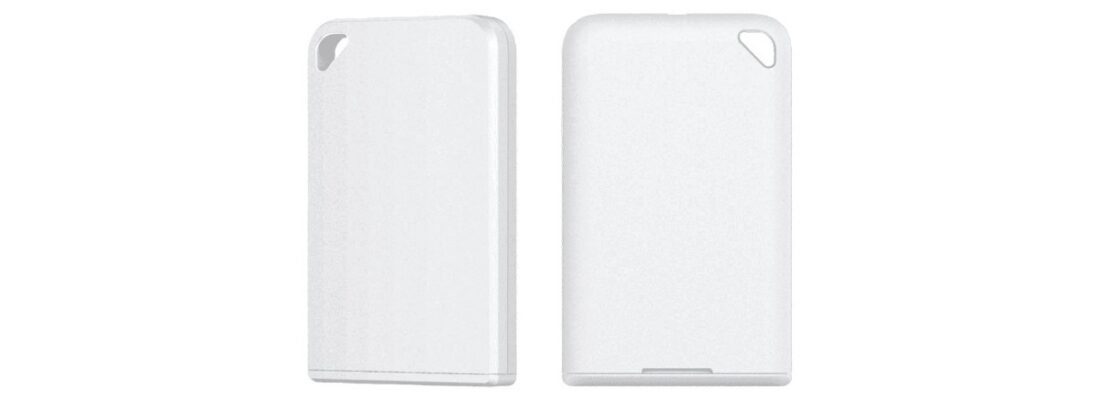
The AssetTag carries a replaceable coin battery with 4-year battery life, an IP67 weatherproof enclosure, and three mounting options (sticker, screw, or hang). Paired BLE accessories add condition monitoring for temperature, humidity, shock, and tamper, which matters for cold-chain medications and sensitive diagnostics. Its Scout AI layer turns raw location pings into utilization insight, dwell-time alerts, geofence breaches, and theft recovery support, so teams act on patterns rather than dots on a map.
Best for: Health systems and equipment-rental operators tracking mobile devices across multiple sites, home health, and in-transit logistics without heavy infrastructure.
- GPS plus BLE coverage that follows equipment indoors, outdoors, and on the road
- No ceiling infrastructure to install, so deployment is fast and low-cost
- AssetTag with replaceable battery and 4-year battery life for long deployments
- Scout AI for utilization analytics, geofencing, and recovery
- Condition monitoring (temperature, humidity, shock, and tamper) for sensitive and cold-chain devices
2. CenTrak: Clinical-Grade RTLS for Enterprise Hospitals
CenTrak is one of the most widely deployed clinical-grade RTLS platforms in large U.S. hospital systems. It combines BLE, RF, infrared, and ultrasound to deliver certainty-based location down to the room and bay, which matters for use cases like hand-hygiene compliance, patient flow, and nurse-call automation. CenTrak integrates with a long list of electronic health record and clinical systems, making it a fit for facilities that want location data woven directly into existing workflows.
Best for: Multi-building hospital networks that need certainty-grade accuracy and tight clinical system integration.
- Multiple locating technologies for precise, certainty-based positioning
- Strong integration ecosystem across clinical platforms
- Mature platform with broad enterprise hospital adoption
3. Securitas Healthcare (formerly Stanley Healthcare): Wi-Fi RTLS at Scale
Securitas Healthcare, the platform formerly known as Stanley Healthcare and built on AeroScout technology, leans on a facility’s existing Wi-Fi network to locate tagged assets. Its SmartTag and MobileView tools combine asset tracking with patient security, infant protection, and temperature monitoring in one environment, which appeals to facilities that prefer a single vendor across several safety and visibility needs.
Best for: Hospitals standardizing on Wi-Fi that want assets, patient safety, and environmental monitoring under one roof.
- Uses existing Wi-Fi infrastructure to reduce new hardware
- Combines asset, patient, infant, and temperature monitoring
- Established presence across acute and long-term care settings
4. Zebra Technologies: RFID and BLE Across a Connected Hospital
Zebra Technologies brings decades of barcode, scanning, and RFID experience to healthcare. Its MotionWorks and InView tools give real-time visibility and process analytics, and the company’s strength is the breadth of its hardware ecosystem, from handheld scanners to printers to RFID readers. For hospitals already running Zebra devices at the bedside, adding asset visibility on the same backbone is a natural extension.
Best for: Facilities already invested in Zebra scanning and printing hardware that want tracking on the same platform.
- Mature RFID and BLE hardware portfolio
- Process analytics that extend beyond simple location
- Strong fit for hospitals standardized on Zebra devices
5. Midmark RTLS (formerly Versus Technology): Workflow and Presence Detection
Midmark RTLS, built on the former Versus Technology platform, uses infrared combined with RF to deliver high certainty about which room a person or device is in. That precision powers clinical workflow use cases such as automated patient-flow timing, staff location, and exam-room turnover. Where some systems estimate location, infrared confirms presence inside a specific space, which reduces false reads in dense floor plans.
Best for: Outpatient clinics and hospitals focused on clinical workflow timing and exact room-level presence.
- Infrared plus RF for confident, room-bounded location
- Built around clinical workflow and patient-flow analytics
- Reduces false reads in tightly packed layouts
6. Sonitor Technologies: Ultrasound Precision That Respects Room Walls
Sonitor Technologies uses ultrasound as its locating signal, which is contained by physical walls and therefore delivers reliable room-level accuracy without the line-of-sight constraints of pure infrared. The SonitorONE platform packs several locating technologies into a single beacon, giving facilities room-level certainty for assets, staff, and patients in complex clinical environments.
Best for: Facilities that need accurate room-level locating in dense, wall-divided spaces.
- Ultrasound signal naturally contained by room boundaries
- Multiple locating technologies in one beacon
- Reliable accuracy in complex clinical floor plans
7. AiRISTA Flow: Flexible Wi-Fi and BLE for Multi-Use Programs
AiRISTA Flow unifies Wi-Fi and BLE in a platform designed to serve many use cases at once. The same tag infrastructure can support asset tracking, staff duress and safety, temperature monitoring, and contact tracing, which makes it attractive to facilities that want one program to grow into several. Its flexibility suits health systems that expect their needs to expand over time.
Best for: Health systems wanting one platform that scales from asset tracking into staff safety and environmental monitoring.
- Combined Wi-Fi and BLE for broad coverage options
- One tag family supporting multiple programs
- Scales as facility requirements grow
Must-Have Features in a Smart Hospital Asset Management Solution
Once you move past the brand names, the right choice comes down to a short list of capabilities that decide whether a system saves time or adds work:
- Location accuracy that matches the job: Room-level certainty for clinical workflow, broader zone or GPS coverage for equipment that travels.
- Infrastructure requirements: Ceiling readers and cabling raise cost and timeline. Gateway-less GPS plus BLE deploys faster where heavy infrastructure is not justified.
- Battery life and serviceability: Tags with multi-year, replaceable batteries lower total cost of ownership and avoid forced replacement cycles.
- Utilization analytics: Knowing how often a device is used is what right-sizes purchasing and rental spend, not just knowing where it is.
- Maintenance scheduling and calibration alerts: Automated reminders keep devices inspected, calibrated, and audit-ready, often through a CMMS connection.
- Condition monitoring: Temperature, humidity, and shock sensing protects cold-chain medications, blood products, and sensitive diagnostics.
- Compliance support: Audit trails, role-based access, HIPAA-aligned data handling, and FDA UDI alignment matter when location data sits beside clinical systems.
- Integration: Confirm the platform connects to your EHR, CMMS, and existing safety systems.
- Indoor and outdoor coverage: Equipment that leaves the building needs tracking that follows it into vehicles and patient homes.
- Security and data protection: In healthcare, location data lives next to sensitive systems, so vendor security posture matters.
RTLS Technologies Compared: BLE, RFID, Wi-Fi, Infrared, Ultrasound, and GPS
No single signal wins every scenario. The technology should follow the use case:
- BLE (Bluetooth Low Energy): Long battery life, low cost, strong for asset visibility at zone and proximity level, and increasingly the standard for tag-based tracking.
- RFID: Inexpensive passive tags for inventory and check-in or check-out points, with shorter read range than active systems.
- Wi-Fi: Uses existing network infrastructure, good for broad coverage, with accuracy that varies by access-point density.
- Infrared: Confirms presence inside a specific room because the signal does not pass through walls, ideal for workflow certainty.
- Ultrasound: Room-level accuracy contained by walls, without strict line-of-sight requirements.
- GPS: The only practical option for equipment outdoors, in transit, or across multiple sites.
This is why blended programs are winning. GPS plus BLE handles the mobile and in-transit layer, while clinical RTLS handles room-level certainty inside the hospital.
Mobile Hospital Assets That Go Missing Between Departments
Even well-funded facilities run into the same obstacles, and the cost is human as well as financial. Naming them makes the buying decision clearer:
- Equipment that disappears between departments: Studies show 10% to 20% of mobile hospital assets go missing or stolen each year at roughly $3,000 per item. Tag the high-value, high-mobility devices first to capture the largest savings fast.
- Nurse burnout and the hunting-and-gathering toll: Beyond the $14 billion in lost productivity, there is a retention cost. Nurses can spend up to an hour per shift hunting for IV pumps and telemetry boxes, time that drains morale and feeds burnout on already stretched teams. Giving that hour back to patient care is a staffing win, not just an efficiency one.
- The clean-versus-dirty status gap: Knowing where a device is solves only half the problem. Staff also need to know its status: in use, awaiting cleaning, or ready for the next patient. Systems that tie location to workflow status keep ready equipment moving instead of sitting idle.
- Theft, from casual pilfering to organized crime: Losses range from items quietly walking out the door to coordinated rings targeting high-value devices. Geofence alerts and recovery support deter both.
- Loaned, demo, and rental equipment that never returns: Manufacturer demo units and rented devices are easy to lose once they leave a controlled space. GPS-based tracking follows them off-site and flags overdue returns.
- Staff hoarding devices “just in case”: When clinicians cannot trust that equipment will be available, they stash it. Real-time visibility restores that trust and frees hidden inventory back into circulation.
- Over-purchasing and rental overspend: Many hospitals own 20% to 30% more equipment than they need. Utilization data lets you right-size purchases and cut emergency rental fees.
- The preventive maintenance scavenger hunt: Before a Joint Commission survey, clinical engineering teams can lose days tracking down serial numbers for scheduled calibration. Tying location and service history to each device ends that scramble and keeps records audit-ready.
- Signal interference and dead zones: Wi-Fi RTLS can struggle with structural interference and electronic blind spots in dense clinical spaces. Gateway-less GPS plus BLE sidesteps that infrastructure dependency, holding visibility where fixed networks go dark.
- Infrastructure cost and timeline: Full RTLS build-outs take budget and months. For mobile and multi-site assets, gateway-less GPS plus BLE avoids that overhead.
Beyond the Hospital: Tracking Mobile DME, Loaner Fleets & Home Health Devices
Some of the hardest equipment to keep visible is the equipment that leaves the building. Durable medical equipment (DME) such as wheelchairs, oxygen concentrators, CPAP units, and hospital beds moves into patient homes. Manufacturer demo and loaner devices travel between sales reps, clinics, and evaluation sites. Rental fleets cycle through dozens of facilities. In-facility RTLS cannot see any of it once the device crosses the threshold.
This is where GPS plus BLE tracking earns its keep. A cellular GPS tracker reports location anywhere there is signal, while geofencing flags when a device leaves an approved zone or fails to return on schedule. For DME providers and device manufacturers, that visibility cuts replacement costs, speeds recovery, and creates a clean record of where each unit has been.
Compliance and Audit Readiness: FDA UDI, HIPAA, and Joint Commission
In healthcare, tracking is not only an efficiency project. It is a compliance one. Three requirements shape most buying decisions:
- FDA Unique Device Identification (UDI): Systems that capture UDI data make it easier to trace devices, manage recalls, and satisfy regulators, especially for higher-risk Class II and Class III devices.
- Maintenance and calibration audits: The Joint Commission and similar bodies expect proof that equipment is inspected and calibrated on schedule. Location and service histories turn a pre-survey scramble into a standing report.
- HIPAA and data security: Because location platforms sit next to clinical systems, they should support encryption, role-based access, and HIPAA-aligned data handling.
A system that produces a clean audit trail protects both patients and the balance sheet, and it removes a recurring source of stress for compliance teams.
The Future of Medical Equipment Tracking: AI, IoT, and Predictive Analytics
The next wave moves from knowing where a device is to predicting what it will need. AI-driven analytics forecast utilization peaks so facilities staff and stock accordingly. Predictive maintenance flags a failing pump before it quits during a procedure. Deeper IoT integration ties trackers into EHR and CMMS systems, and connected location data is increasingly used to verify device provenance across the supply chain. Choosing a platform with an analytics layer today, built on real-time location data, positions a facility to adopt these capabilities without replacing hardware later.
Match the System to Where Equipment Actually Goes
The best system is the one matched to where your equipment actually goes. Start with three questions. First, does your equipment stay inside one building, or does it move between sites, into vehicles, and into patient homes? If it travels, a GPS plus BLE solution like GPX Intelligence keeps eyes on it everywhere, while a fixed RTLS sees only what stays inside the walls. Second, how precise do you need to be? Clinical workflow timing needs room-level certainty from infrared or ultrasound platforms, while asset utilization and loss prevention are well served by BLE and GPS. Third, what is your appetite for infrastructure? If a fast, low-cost rollout matters, gateway-less tracking removes the ceiling readers and cabling that drive cost and delay.
Map those answers to the seven options above and the shortlist becomes obvious. For mobile equipment, multi-site visibility, and in-transit assets without heavy infrastructure, explore the GPX asset tracking platform and the BLE-powered GPX AssetTag to see how gateway-less GPS plus BLE can deliver visibility in days, not months. Talk with the GPX team to scope a pilot on your highest-value, highest-mobility devices.
Frequently Asked Questions (FAQs)
What is the difference between RTLS and GPS asset tracking in healthcare?
RTLS uses fixed readers and ceiling infrastructure to locate tagged items at room or bay level inside a building. GPS asset tracking follows equipment outdoors, in vehicles, and across multiple sites. Many facilities combine both: RTLS for in-room certainty and GPS plus BLE for anything mobile or in transit.
How much does a medical equipment tracking system cost?
Costs vary widely based on infrastructure. Legacy ceiling-mounted RTLS can run into the millions to deploy across a hospital network, while modern gateway-less BLE and GPS systems cut upfront hardware costs by up to 70% because there are no readers or cabling to install. Most vendors price per tracked asset plus a software subscription.
What is the ROI of a medical equipment tracking system?
Hospitals typically see a return within 12 to 18 months. The value comes from reduced equipment hoarding, lower rental and replacement spend, less theft, and recovered nursing hours. With 10% to 20% of mobile assets going missing each year and billions lost industry-wide to search time, tagging high-value mobile devices first usually delivers the fastest payback.
Are medical equipment tracking systems HIPAA compliant?
Tracking platforms locate devices rather than store patient records, but because they often integrate with clinical systems, they should support HIPAA-aligned data handling, encryption, and role-based access. Confirm the vendor’s security posture and ask how location data is stored and who can see it before you deploy.
How do you track medical equipment outside the hospital?
Tracking mobile assets like DME, loaner units, and rental fleets requires cellular GPS and BLE trackers. These gateway-less devices report location from vehicles and patient homes without relying on hospital Wi-Fi, and geofencing flags when a device leaves an approved zone or fails to return on schedule, which speeds recovery if a unit goes missing.