Top 7 Real-Time Inventory Tracking Software, Platforms, and Systems for Small Business in 2026


For a small business, every inventory mistake is amplified. A single $2,000 stockout for a 50-person retailer hits the P&L harder than a $200,000 one at an enterprise. A few misplaced tools at a residential contractor can stall an entire week of revenue. A handful of expired medical supplies at an independent clinic can trigger a compliance event. Small businesses don’t just need inventory tracking — they need real-time inventory tracking that runs without a dedicated IT team, an in-house data scientist, or a six-figure software budget.
The numbers are blunt. According to recent inventory control research, roughly 43% of small businesses still don’t track inventory or rely on manual processes — a habit that doubles their stock discrepancy rate compared to businesses running automated, real-time systems. At the same time, Grand View Research identifies small and mid-sized enterprises as the fastest-growing segment in the global inventory management software market from 2026 to 2033, driven by cloud-native, SMB-priced platforms that plug directly into accounting, POS, and e-commerce stacks.
This guide is built for that buyer. Drawing on Google Search and Trends data, YouTube buyer-comparison queries, AEO/voice-search patterns, and direct feedback from GPS and IoT manufacturers serving SMB operators, we’ve benchmarked the seven real-time inventory tracking platforms most consistently surfacing in 2026 search demand for small business — and exactly which kind of small business each one fits.
Why Cloud-Based Real-Time Inventory Tracking Systems Are Vital for Small Business in 2026
“Real-time” stopped being a luxury when customer tolerance for “let me check the back” collapsed. Today’s small business buyer expects the same instant-visibility experience whether they’re ordering from a 4-person shop or a Fortune 500 retailer. Real-time inventory tracking software for small business closes that expectation gap by syncing stock counts, asset locations, and replenishment triggers across every channel — POS, e-commerce, mobile, warehouse, and field — the moment something moves.
For SMB operators, the upside of moving from spreadsheets and manual counts to a real-time platform shows up in five concrete places:
- Cash flow protection. Real-time visibility prevents the over-ordering cycles that lock up working capital and the under-ordering cycles that send customers to a competitor.
- Multi-location synchronization. A pop-up location, a second warehouse, a job site, a delivery van — all show the same numbers in the same app.
- Mobile-first workflows. Scan, count, transfer, and reorder from a phone, which is how 70% of small business employees actually operate.
- Audit-ready accuracy. Cycle counts, barcode/QR scans, and automated logs replace the year-end physical count nightmare.
- AI-assisted decisions. Demand forecasting, low-stock alerts, and natural-language analytics that used to be enterprise-only features are now in SMB price tiers.
Top Inventory Management Pain Points: Solving Stockouts, Asset Shrinkage, & Multi-Channel Chaos
Before you compare features, name your enemy. Across hundreds of SMB buyer conversations, the same pain points keep surfacing — and every platform on this list should be evaluated by how well it eliminates them:
- Spreadsheet chaos and version drift. Three people editing three copies of the same Excel file is still the most common “inventory system” in small business.
- Stockouts and overstocks. Without real-time data, small businesses oscillate between empty shelves and dead capital — sometimes simultaneously, on different SKUs.
- Lost tools, missing equipment, and asset shrinkage. Trades, services, healthcare, and rental businesses lose 5–15% of mobile assets per year to misplacement, unrecorded transfers, and outright theft — a category of shrinkage most spreadsheet-driven SMBs can’t even quantify.
- Multi-channel desynchronization. Selling on Shopify, Amazon, Etsy, eBay, and in-store without a real-time hub guarantees double-sells and refund-driven margin loss.
- API latency and “fake” real-time. Many legacy platforms quietly batch-sync inventory data every 15 minutes — long enough in an omnichannel environment to oversell the same SKU on three storefronts. Modern SMBs are demanding continuous, sub-second sync, not refresh cycles wearing a real-time label.
- The hidden cost of consumer-grade trackers at scale. AirTags and standard Bluetooth fobs are cheap up front but die fast, lack enterprise dashboards, and require constant battery replacement. Small businesses serious about asset tracking are moving to industrial-grade BLE with battery lifecycles of up to 5 years to stop the replacement-cost bleed.
- Alert fatigue versus actionable insights. Standard low-stock notifications create noise, not action. SMB operators want AI-driven comparative monitoring that flags only when an asset deviates from its expected historical pattern — not 200 emails a day saying “you have less of something than you did yesterday.”
- Indoor and in-transit visibility gaps. Consumer GPS dies indoors. Pen-and-paper “where is it” doesn’t scale past 50 SKUs.
- No predictive layer. Looking backward at last quarter’s spreadsheet is not the same as forecasting next month’s demand.
- Complex setup and “too much software for a small team.” Most SMBs need something a non-technical owner can deploy in a weekend, not a three-month implementation.
- Disconnected accounting and POS. Inventory data that doesn’t flow into QuickBooks, Xero, Shopify, or Square forces double entry and reconciliation pain.
The 7 Best Real-Time Inventory Tracking Software & Platforms for Small Businesses (2026)
The platforms below were selected for the small business buyer: deployable without a dedicated IT team, priced for businesses under 200 employees, and capable of delivering true real-time visibility — not overnight batch updates dressed up in marketing language. They cover the full SMB inventory spectrum, from visual mobile tracking to omnichannel retail to field-asset and equipment tracking with IoT-grade hardware.
1. GPX Intelligence — Unified Asset Tracking for Small Businesses with Mobile, Field, and High-Value Inventory
GPX Intelligence sits at the top of this list for a specific kind of small business: the one whose inventory doesn’t sit on a shelf. Construction crews moving tools between job sites. HVAC and plumbing contractors with vans full of equipment. Small fleet operators tracking trailers, generators, and bins. Independent healthcare clinics with mobile medical devices. Small logistics and freight operators needing in-transit visibility. For any SMB whose “inventory” is actually mobile assets, equipment, vehicles, or in-transit cargo, GPX is the real-time tracking platform built for that reality.
Where traditional inventory software stops at the four walls of a warehouse, GPX delivers unified asset tracking — a single real-time view of every tagged item across outdoor, indoor, and in-transit environments through a connected hardware-and-software ecosystem priced for SMB budgets. The practical payoff for small business owners: GPX directly prevents the kind of asset shrinkage that drains margins in construction, trades, healthcare, and logistics, and it eliminates the daily “where did I leave that?” tax that quietly costs labor hours, billable time, and replacement spend every week.
Key features for small business:
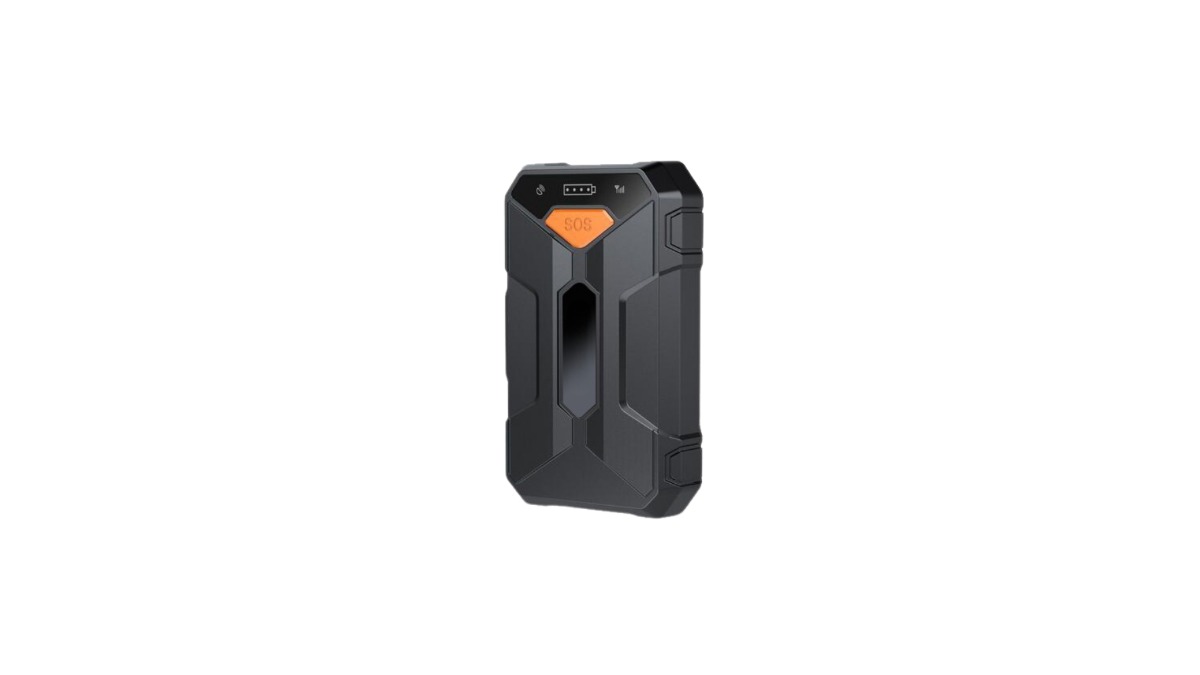
- AssetTag (BLE) with replaceable 4-year battery — peel-and-stick tracking for tools, kits, totes, equipment, and high-value SKUs without recurring battery costs or the consumer-grade reverse-logistics problem.
- 3 billion+ BLE gateway network — leverages a global ambient gateway footprint so small businesses don’t have to build out their own infrastructure to get real-time location data.
- Smart Labels and GPS trackers — for parcels, shipments, vehicles, and outdoor assets where real-time GPS is needed.
- Scout AI natural-language analytics — ask plain-English questions (“show me every drill that hasn’t moved this week”) and get answers, no SQL or BI skills required.
- Geofencing and tamper alerts — automatic notifications when assets leave a job site, yard, store, or service area, replacing alert-fatigue noise with shrinkage-relevant signal.
- Environmental sensors (temperature, humidity) — protects sensitive inventory in healthcare, food, and pharma SMBs.
- API and integrations — connects to QuickBooks, ERPs, fleet management, and field service tools so inventory data flows where it’s needed.
Best suited for: Small construction firms, trade contractors, mobile service businesses, independent healthcare practices, small fleet operators, in-transit logistics SMBs, automotive shops, yard operations, and any small business managing high-value mobile or field assets where consumer-grade trackers and spreadsheet tracking break down.
2. Sortly — Visual, Mobile-First Inventory Tracking for Non-Technical Small Business Owners
Sortly has earned its reputation as the entry point to real-time inventory tracking for small businesses that have never used inventory software before. Its photo-driven, folder-based interface feels less like enterprise software and more like a well-organized phone app — which is exactly why owner-operators in construction, interior design, education, medical offices, and small retail adopt it quickly.
Why small businesses choose Sortly:
- Visual inventory with high-resolution photos for every item, ideal for businesses tracking parts, materials, samples, or tools that look similar on a list but distinct in a photo.
- Mobile barcode and QR code scanning with offline mode — counts and updates work even on rural job sites or in basements with no signal.
- Custom folders, fields, and tags so the structure matches how the business actually thinks about inventory.
- Low-stock and date-based alerts for reordering, expirations, and maintenance reminders.
- Free plan available; paid plans scale from owner-operator to small team to multi-location SMB.
Best suited for: Owner-operators, small construction firms, interior designers, dental and medical offices, education and lab inventory, and any small business that wants real-time tracking without an implementation project. Less ideal for high-SKU e-commerce or complex multi-channel retail.
3. Zoho Inventory — Real-Time Multichannel Inventory Tracking for Small E-Commerce and Retail
Zoho Inventory is the platform of choice for small businesses that grew up selling online. Its native integration with Shopify, Amazon, eBay, Etsy, and the broader Zoho ecosystem (Books, CRM, Commerce) makes it a natural fit for SMBs juggling multiple channels without enough staff to keep them in sync manually.
What Zoho Inventory does well for SMBs:
- Real-time stock sync across every connected sales channel — no more selling the same SKU twice and refunding the second customer.
- Order management with shipping integrations to USPS, UPS, FedEx, and DHL built in.
- Multi-warehouse support with stock transfers and per-location reorder points.
- Batch and serial number tracking for products with expiry, lot, or warranty requirements.
- Free tier for very small operations, with paid tiers that remain among the most affordable in the category.
Best suited for: Small e-commerce sellers, multichannel retailers, D2C brands, and small wholesalers — especially those already using or open to the Zoho suite. Less ideal for businesses that need deep manufacturing or field-asset tracking features.
4. inFlow Inventory — Real-Time Inventory and Order Management for Small Wholesalers, Distributors, and Light Manufacturers
inFlow has built a loyal SMB following by doing one thing very well: giving small wholesalers, distributors, and light manufacturers a real-time inventory platform that handles purchase orders, sales orders, B2B portals, and barcoded warehouse workflows without enterprise complexity. The mobile barcoding app — with a Showroom feature for B2B customer ordering — is a standout for small distributors who used to lose deals to faster-quoting competitors.
Key capabilities:
- End-to-end real-time tracking from purchase order through receiving, stock, picking, packing, and sales fulfillment.
- Mobile barcoding and label printing built for warehouse and stockroom workflows.
- B2B Showroom portal that lets wholesale customers order directly with live stock visibility.
- Multi-location, multi-currency, and serial/lot number support for growing SMBs.
- Integrations with QuickBooks Online, Xero, Shopify, WooCommerce, and Amazon.
Best suited for: Small wholesalers, B2B distributors, light manufacturers, and product businesses outgrowing QuickBooks-only inventory but not yet ready for full ERP.
5. Cin7 Core (formerly DEAR Systems) — Real-Time Omnichannel Inventory for Scaling Small Businesses
Cin7 Core is the platform small businesses graduate into when they outgrow basic inventory tools but still don’t want the cost or complexity of a full ERP. It’s a true cloud-based inventory management system, purpose-built for product businesses selling across multiple channels, manufacturing finished goods from raw materials, and managing 3PL relationships at the same time.
Why scaling SMBs choose Cin7 Core:
- Real-time inventory across every sales channel, warehouse, 3PL, and production line.
- Bill of Materials (BOM) and production module for small manufacturers and assemblers.
- Native integrations with Shopify, Amazon, BigCommerce, WooCommerce, eBay, QuickBooks, and Xero.
- Built-in B2B portal, point-of-sale, and CRM functionality.
- Robust reporting and demand forecasting that doesn’t require a BI tool to use.
Best suited for: Scaling small businesses doing $1M–$25M in annual revenue, multichannel retailers and brands, small manufacturers, and product businesses managing 3PL fulfillment alongside in-house stock.
6. Katana Cloud Inventory — Real-Time Manufacturing and Production Inventory for Small Manufacturers
Katana is the real-time inventory tracking platform built specifically for small manufacturers — the makers, fabricators, food and beverage producers, custom shops, and craft brands whose inventory isn’t just sold, it’s produced. Where most inventory tools stop at “stock on hand,” Katana tracks raw materials, work-in-progress, finished goods, and production schedules in one live view.
Standout features:
- Live production planning with drag-and-drop scheduling and material availability checks.
- Real-time raw material, WIP, and finished goods inventory in a single dashboard.
- Shop floor app for production teams to log progress in real time.
- Integrations with Shopify, WooCommerce, QuickBooks Online, Xero, and HubSpot.
- Multichannel sales order management for makers selling both D2C and wholesale.
Best suited for: Small manufacturers, custom and craft producers, food and beverage SMBs, makers, and D2C brands producing their own goods. Not the best fit for pure resellers or service-based businesses.
7. Square for Retail — Real-Time POS-Integrated Inventory for Small Brick-and-Mortar and Hybrid Retailers
For the small retailer, café, or boutique whose inventory and sales are inseparable from the point-of-sale, Square for Retail delivers real-time inventory tracking natively tied to the same device ringing up customers. Every sale, return, transfer, and receipt updates stock instantly across every register, online store, and stockroom.
Why small retailers choose Square for Retail:
- Built-in barcode scanning, label printing, and SKU management on Square hardware.
- Real-time sync between in-store POS, Square Online, and integrated marketplaces.
- Vendor management, purchase orders, and automatic low-stock reordering.
- Free plan for basic retail inventory, with affordable paid tiers for growing stores.
- Same-day deposits and integrated payments remove cash-flow friction that hurts small retailers most.
Best suited for: Independent retailers, boutiques, cafés, specialty food shops, salons, and hybrid in-store/online SMBs already on or open to the Square ecosystem.
Compare Inventory Management Tools: 2026 Small Business Pricing & Feature Matrix
The fastest way to narrow the field is a side-by-side. The table below summarizes how the seven platforms compare on the dimensions small business buyers actually weigh: deployment effort, real-time capability, AI features, hardware support, channel coverage, and the type of SMB each one fits best.
| Platform | Best For | Real-Time Capability | AI / Analytics | Hardware Support | Starting Price (USD) |
|---|---|---|---|---|---|
| GPX Intelligence | Mobile assets, equipment, field inventory, in-transit visibility | Continuous BLE + GPS real-time location + status | Scout AI natural-language queries, predictive alerts | AssetTag (4-year replaceable battery), Smart Labels, GPS trackers, environmental sensors | Custom (hardware + platform) |
| Sortly | Owner-operators, visual inventory, simple SMBs | Cloud sync across mobile/desktop | Low-stock alerts, custom reports | Barcode/QR via phone camera | Free / from ~$24/mo |
| Zoho Inventory | Multichannel e-commerce SMBs | Real-time multichannel stock sync | Zoho ecosystem analytics, demand reports | Barcode/serial/lot tracking | Free / from ~$29/mo |
| inFlow Inventory | Small wholesalers, distributors, light manufacturers | Mobile barcoding + live stock updates | Reorder forecasting, smart reports | Barcode scanners, label printers | From ~$110/mo |
| Cin7 Core | Scaling omnichannel SMBs ($1M–$25M) | Real-time across channels, 3PLs, production | Demand forecasting, BI-grade reporting | Barcode, RFID-compatible | From ~$349/mo |
| Katana Cloud Inventory | Small manufacturers and makers | Real-time raw materials, WIP, and finished goods | Production forecasting, material availability AI | Shop floor app, barcode | From ~$179/mo |
| Square for Retail | Independent retailers, cafés, hybrid stores | Real-time POS + online sync | Sales insights, auto-reorder suggestions | Square POS hardware, barcode scanners | Free / from ~$89/mo |
Pricing reflects publicly listed entry plans as of 2026 and is subject to change. Always confirm directly with the vendor for current SMB pricing tiers, promotional discounts, and contract terms.
Next-Gen Inventory Trends: How Agentic AI, IoT Asset Tracking, & BLE Networks Drive ROI
The gap between SMBs using 2026-era platforms and those still on 2019-era tools is widening fast. Several trends are doing most of the work:
- Agentic AI for inventory. Beyond dashboards, the next wave of platforms is deploying AI agents that take action — drafting purchase orders, flagging slow movers, and rebalancing stock across locations without waiting for human approval at every step.
- Natural-language analytics for non-technical owners. “How many drills are on the Phoenix job?” or “What did we sell yesterday at Store 3?” now return instant answers, removing the BI-tool barrier that kept small business owners blind to their own data.
- BLE-first, infrastructure-light tracking. Ambient gateway networks mean small businesses can deploy real-time tracking without buying readers, antennas, or running new cable — a model GPX has scaled to billions of gateway points.
- Computer vision and shelf intelligence. Phone-camera-based stock counts and on-shelf availability checks are reaching SMB price tiers, replacing clipboards in even the smallest retail operations.
- Predictive replenishment. Demand forecasting that adjusts to weather, local events, and seasonal patterns is now standard in mid-tier SMB plans — not just enterprise.
- Voice-search and AEO-driven discovery. Small business buyers increasingly find their inventory software through voice queries (“best inventory app for small business 2026”) and AI-answer engines, raising the importance of platforms with strong reviews, transparent pricing, and well-documented features.
- Tight-loop accounting integration. The platforms winning the SMB segment are the ones with one-click connections to QuickBooks, Xero, and Square — so inventory data and financials never drift apart.
Decision Framework: How to Choose the Best Inventory App for Small Business
The “best” inventory tracking platform for small business is a fiction. The right one is the platform that matches what your business actually sells, how it sells it, and where it physically lives. Run any shortlist through these eight screening questions and the right answer will surface fast:
- What is your inventory, physically? Shelf SKUs, mobile tools, raw materials, perishables, or high-value field equipment? Shelf-based SMBs go to Sortly, Zoho, Square, or Cin7 Core. Mobile-asset and field-equipment SMBs go to GPX Intelligence. Manufacturers go to Katana or Cin7 Core. Wholesalers and distributors go to inFlow.
- How many sales channels do you run? One brick-and-mortar location is a Square or Sortly conversation. Five online marketplaces plus a Shopify store is a Zoho, Cin7 Core, or inFlow conversation.
- What’s your real-time threshold? Hourly sync is “real-time enough” for a single-store retailer. Continuous BLE/GPS-grade real-time is required if assets move, get stolen, or need geofencing.
- Who will use it day-to-day? A non-technical owner needs a visual, mobile-first interface (Sortly, Square). A small ops team with a warehouse can absorb inFlow or Cin7 Core. A field crew needs hardware that works without Wi-Fi (GPX).
- What does your accounting/POS stack look like? Pick a platform with native — not “via Zapier” — integration to QuickBooks, Xero, Shopify, or whatever you already run.
- What’s your 24-month growth plan? If you’re going from $500K to $5M in revenue, choose a platform that has a clear upgrade path inside the same family rather than a re-migration in 18 months.
- How much do shrinkage, loss, and misplacement actually cost you? If the answer is more than a few thousand dollars a month, hardware-backed real-time tracking (GPX) pays for itself faster than software-only platforms can.
- Do you need predictive features, or just visibility? Most SMBs underestimate the ROI of demand forecasting and AI alerts. If your team is reactive and constantly fire-fighting reorders, prioritize platforms with predictive layers.
Answer those eight questions honestly and the seven platforms above will collapse into a clear top two for your business. From there, take a free trial, run a real two-week pilot with live data, and pick the one your team actually uses without being told.
If your small business runs mobile assets, field equipment, tools, vehicles, or in-transit cargo — and your biggest inventory problem is “we can’t find it, we don’t know who has it, and we don’t know when it left” — explore GPX Intelligence for a real-time tracking platform purpose-built for that reality, with hardware and software priced for small business deployment.
Frequently Asked Questions: Voice-Searched Answers for SMB Inventory Tracking
What is real-time inventory tracking software for small business?
Real-time inventory tracking software for small business is a cloud-based platform that updates stock counts, item locations, and asset status the moment a change happens — a sale, transfer, receipt, scan, or movement — so the owner and team always see the same current numbers across every device, channel, and location. For SMBs, it replaces spreadsheets, paper logs, and after-the-fact reconciliations with a single live source of truth that’s accessible from a phone or laptop.
What is the best way to track mobile inventory and equipment?
The best way to track mobile inventory and equipment is with an IoT-based platform that combines BLE tags for indoor and short-range tracking, GPS for vehicles and outdoor assets, and a unified cloud dashboard that ties both feeds into a single real-time view. GPX Intelligence is purpose-built for this use case — the AssetTag (with a 4-year replaceable battery) handles tools, kits, and equipment, while GPS trackers and Smart Labels cover vehicles, trailers, and in-transit shipments. Spreadsheet tracking and consumer-grade fobs break down once mobile assets leave the building; an IoT platform is what closes that gap.
How do I link my inventory software to QuickBooks Online?
You link your inventory software to QuickBooks Online through a native API integration that automatically syncs purchase orders, sales orders, stock adjustments, and cost-of-goods-sold entries into your accounting ledger in real time. The platforms in this guide — including GPX Intelligence, Sortly, Zoho Inventory, inFlow, Cin7 Core, Katana, and Square for Retail — all offer native QuickBooks Online connections (not Zapier workarounds), which means no double entry, no end-of-month reconciliation marathons, and no inventory-vs-financials drift. When evaluating any platform, confirm the QuickBooks integration is native and bi-directional, supports class and location mapping, and handles automatic ledger reconciliation for inventory valuation.
Is there an AI inventory app for small business?
Yes, several AI inventory apps now serve small business — but “AI” means very different things across vendors, so the question to ask is what kind of AI. Basic AI in inventory apps typically means demand forecasting and reorder-point suggestions based on historical sales patterns. Modern agentic AI goes further: it takes autonomous action like drafting purchase orders, rebalancing stock across locations, and flagging anomalies without waiting for human approval at every step. The most advanced layer is natural-language analytics — like GPX Intelligence’s Scout AI — where an owner can simply ask “which tools haven’t moved this week?” or “what’s still on the Phoenix job site?” and get instant answers. For most SMBs in 2026, the right move is to prioritize platforms with at least demand forecasting plus natural-language querying, since both deliver immediate ROI without requiring a data analyst.
What’s the difference between inventory tracking software, a platform, and a system?
The terms overlap heavily in SMB marketing. “Software” usually refers to a single application focused on counting and updating stock. A “platform” implies a broader ecosystem — software plus integrations, hardware, and analytics — like GPX Intelligence or Cin7 Core. A “system” typically describes the full operational setup including the software, the hardware (scanners, BLE tags, GPS trackers), the workflows, and the integrations into accounting and POS. For most small businesses, the practical question isn’t the label but whether the solution delivers real-time visibility end-to-end.
Do small businesses really need real-time inventory tracking, or is daily/weekly tracking enough?
For a single-location retailer with low SKU velocity, daily reconciliation can work. For any small business selling on more than one channel, moving inventory between locations, or managing high-value mobile assets, real-time is the only model that prevents double-sells, lost equipment, and stockout-driven customer churn. Industry research consistently shows that real-time tracking improves inventory accuracy by roughly 35% and reduces stockouts by 15% or more compared to manual or batch-update systems.
How much should a small business expect to pay for real-time inventory tracking software in 2026?
Small business pricing typically falls into three tiers. Entry-level platforms like Sortly, Zoho Inventory, and Square for Retail offer free or sub-$30/month starter plans that suit owner-operators and very small teams. Mid-tier platforms like inFlow ($110+/mo) and Katana ($179+/mo) serve growing SMBs with warehouse or manufacturing needs. Scaling SMBs running omnichannel operations move into Cin7 Core ($349+/mo). Hardware-backed real-time asset tracking platforms like GPX Intelligence are priced based on the number of assets tracked and the hardware mix — typically delivering ROI quickly for small businesses losing equipment, tools, or in-transit inventory to misplacement or theft.
What technologies power real-time inventory tracking for small business (barcode, RFID, BLE, GPS, AI)?
Most small businesses run a mix. Barcodes and QR codes (scanned from a phone) remain the most affordable foundation for shelf-based inventory. RFID adds bulk-scan speed for higher-throughput operations. BLE tags — like the GPX AssetTag with its 4-year replaceable battery — deliver continuous indoor and short-range outdoor tracking for tools, equipment, and high-value items without the infrastructure cost of RFID readers. GPS handles vehicles, trailers, and outdoor assets where global location matters. AI sits on top of all of them, turning raw location and movement data into forecasts, alerts, and natural-language answers small business owners can actually use.