
Warehouse theft is no longer a petty problem solved by a padlock and a camera at the loading dock. It is an organized, data-driven business, and it is winning. Verisk CargoNet reports that cargo theft losses surged to nearly $725 million in 2025, a 60 percent jump in a single year, with the average individual theft now worth $273,990. Inside the four walls, the picture is just as brutal: the Appriss Retail 2026 benchmark found U.S. companies lost $90 billion to inventory shrink in 2025, and 73 percent of that loss was preventable.
That last number is the one that should keep operations leaders up at night. Preventable means it is a visibility problem, not an act of God. When a pallet of high-value electronics goes missing between the receiving dock and the staging lane, the issue is almost never that nobody cared. It is that nobody could see it move, and nobody got an alert until the cycle count came up short days later.
This guide breaks down the seven GPS and Bluetooth tracking devices that close that gap. We will cover what each one does best, which warehouse theft scenario it is built for, and how to match the right tracker to the way your facility actually loses inventory. By the end, you will know exactly which device belongs on your highest-risk assets.
The Rise of Organized Cargo Theft: Why Traditional Warehouse Security Fails
Most facilities already have cameras, fences, and badge access. Yet the losses keep growing. The reason is simple: traditional security tells you something happened after the fact. It does not tell you where your inventory is right now, and it does not move with the asset once it leaves the lot. Modern theft exploits exactly these blind spots.
Here are the pain points that camera systems and manual cycle counts consistently fail to solve:
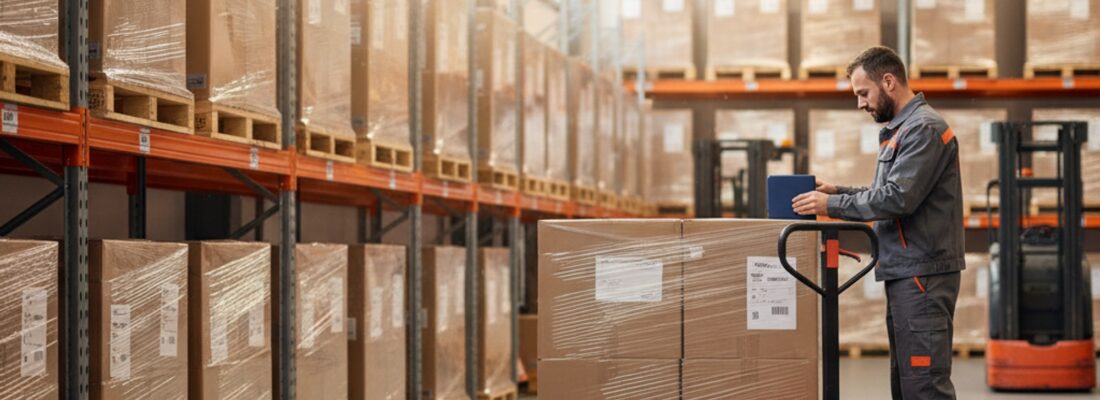
- The blind handoff: Inventory disappears in the gaps between receiving, put-away, staging, and outbound. Cameras cover zones, but they do not follow a single tote across all of them.
- Insider risk: Employee theft and collusion remain a leading driver of shrink. People who know the camera angles and the cycle-count schedule are the hardest to catch with passive tools.
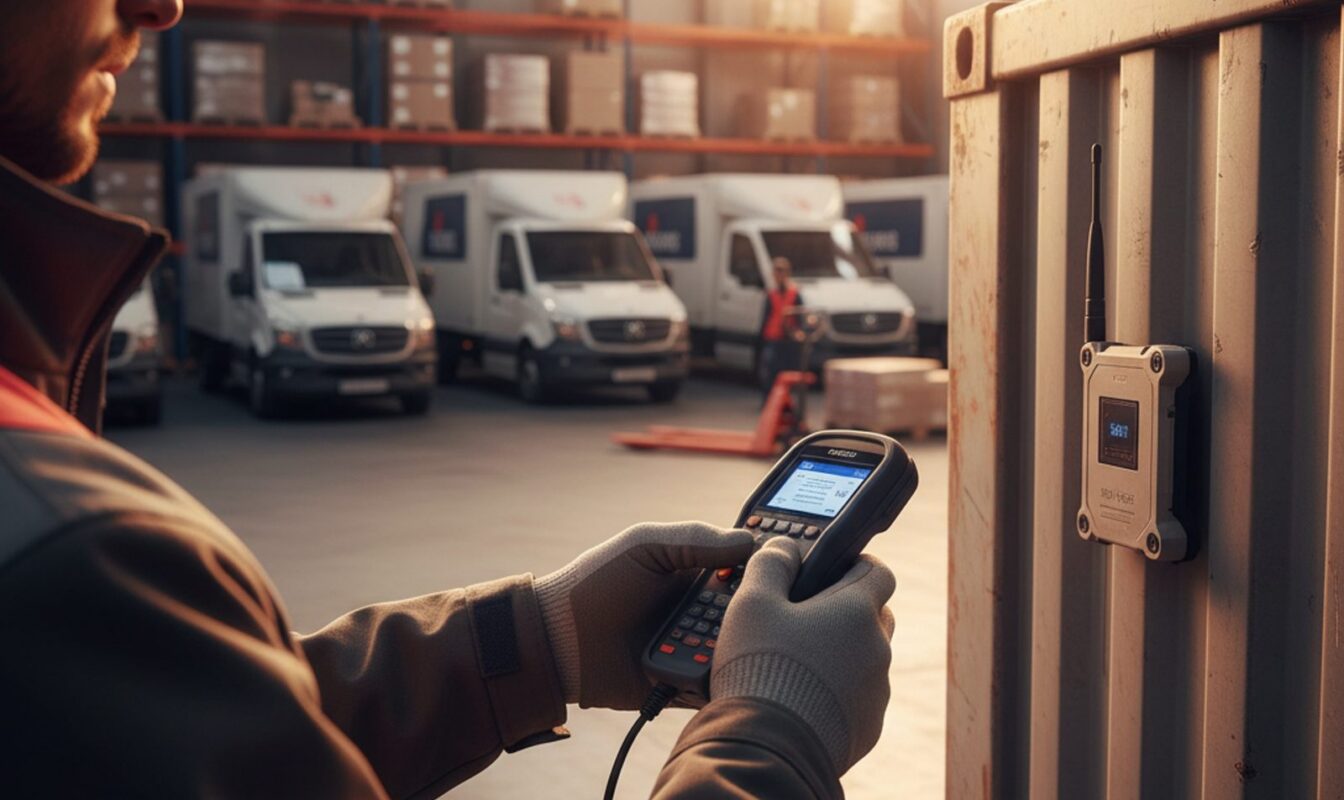
- Indoor GPS dead zones: Heavy steel racking, concrete, and corrugated metal roofing create a Faraday cage effect that blocks satellite signals, so a standard GPS puck goes dark the moment it rolls through the dock door into the building.
- Reactive discovery: Without real-time alerts, theft is discovered during the next audit, often days or weeks later, long after the trail has gone cold and recovery is impossible.
- Loss that walks off-site: The most expensive thefts do not stay in the building. They leave on a truck. Once an asset crosses the geofence, indoor-only systems are useless.
Theft has also grown far more sophisticated. The crews behind today’s losses are Organized Retail Crime (ORC) syndicates, not opportunists, and they no longer rely on smash-and-grab. They use strategic theft and double brokering to redirect entire loads with forged paperwork, harvest carrier credentials through phishing to pose as legitimate pickups, and deploy GPS jammers and signal spoofers to blind older trackers. The National Insurance Crime Bureau reports that criminals increasingly exploit identity theft, fraudulent pickups, and fictitious carriers to walk inventory straight out the door under a trusted identity. This is exactly why anti-jamming technology matters: a tracker that falls back to WiFi and cellular positioning keeps reporting even when a syndicate tries to spoof or silence the GPS signal. A padlock and a fixed camera were never designed to stop any of this.
The trackers below are built to attack each of these failure points directly, turning a reactive security posture into a proactive one.
Essential IoT Features: Choosing the Best B2B GPS Asset Trackers for Supply Chain Visibility
Not every tracker is built for a warehouse environment, and the wrong choice wastes budget on hardware that goes silent the moment it matters most. Before you compare specific devices, weigh your options against these buying criteria:
- Indoor and outdoor coverage: Theft starts inside the building and ends on the road. The strongest setups combine Bluetooth Low Energy (BLE) for indoor zone visibility with cellular GPS that takes over the moment an asset leaves the dock.
- Real-time geofencing and instant alerts: A tracker is only as good as the alert it triggers. Look for instant notifications when an asset crosses a perimeter, moves after hours, or leaves an authorized zone.
- Battery life and maintenance: Trackers that need constant recharging get ignored. Multi-year battery life, or a simple replaceable cell, keeps protection running without operational drag.
- Covert form factor: If a thief can spot a tracker in three seconds, they can pry it off in five. Thin, concealable devices protect assets that bulky pucks cannot.
- Anti-jamming and fallback location: Thieves use signal jammers to silence basic GPS. The strongest devices fall back to WiFi and cellular positioning when the satellite signal is blocked or jammed, which is how GPX devices hold a reporting success rate above 98 percent.
- Recovery mode: When a theft is in progress, the device should switch to high-frequency reporting on demand, so you and law enforcement can follow the asset live instead of waiting on a once-a-day ping.
- Rugged enclosure: Warehouse and yard conditions are dusty, wet, and high-vibration. An IP67 or IP68 rating ensures the device survives the environment.
- Intelligence layer: Raw location pings are noise. The platform should turn movement into recovery, ideally with AI that surfaces anomalies and answers questions in plain language.
- WMS and ERP integration: A standalone dashboard is one more screen to ignore. The strongest platforms push tracking data into your Warehouse Management System (WMS) or ERP through APIs and webhooks, so location and movement events flow into the systems your team already runs on.
GPX builds its entire asset tracking solution around these exact requirements, which is why its lineup anchors the list below.
Top 7 Commercial GPS & BLE Trackers to Prevent Inventory Shrinkage in 2026
The right device depends on the asset you are protecting and the way it tends to go missing. Here are the seven categories that matter, with the GPX devices that lead each one.
1. GPX SmartLabel: Covert BLE Trackers for High-Value Inventory
The SmartLabel is a millimeter-thin, peel-and-stick tracker engineered to vanish into the asset it protects. It slides into the recessed grooves of power tools, hides inside cartons of high-value electronics, or tags individual cases without anyone knowing it is there. Because it is nearly impossible to spot, it doubles as a decoy-grade theft trap: when a thief walks off with what looks like ordinary inventory, the SmartLabel keeps reporting. With up to a four-year battery life and connectivity through a network of billions of Bluetooth gateways, it is the most direct enterprise answer to consumer tags, built for the loads organized crews actually target.
2. GPX AssetTag: Indoor Zone Visibility With a Replaceable Battery
When you need to know which zone an asset is sitting in, the AssetTag delivers BLE-based indoor location inside the building where GPS cannot reach. It mounts via adhesive, screws, or zip ties on totes, racks, carts, and equipment, then reports its position through any BLE-enabled GPX device nearby. The AssetTag runs on a replaceable battery with a four-year battery life, so a single cell change keeps the same device protecting assets for the better part of a decade. Rated IP67 for dust and water resistance, it is purpose-built for the realities of a working warehouse floor. Explore the full AssetTag specifications to match it to your asset mix.
3. GPX AssetTrack: Long-Life Cellular GPS That Follows Assets Off-Site
The most expensive thefts leave the building, and the AssetTrack is built to follow. This cellular GPS tracker works almost everywhere in North America, pulls location from WiFi access points in spotty coverage areas like parking decks and basements, and reads nearby AssetTags for superior indoor precision. Configured to report once per day, it delivers up to 10 years of battery life from a single device, and its IP67 enclosure shrugs off the elements. Drop it on high-value pallets, generators, or trailers that move through your yard, set a geofence around the property line, and the moment that asset crosses it after hours, you get an alert.
4. GPX AssetTrack Mini: Compact GPS for Mobile Mid-Value Assets
Not every asset needs a full-size puck. The AssetTrack Mini packs the same GPS, cellular, and WiFi indoor positioning into a small-profile body, with up to five years of battery life and an IP67 rating. It is the right fit for forklifts, picking carts, and mid-value equipment that circulates through the facility and occasionally walks out the door. It also closes a quieter source of loss: returnable transport items (RTIs) like specialized metal bins, custom pallets, and reusable totes, which bleed money through reverse logistics and “accidental shrink” when they leave with a shipment and never come back. Its ability to read AssetTags adds another layer of indoor tracking accuracy, so a single device bridges your inside and outside visibility.
5. GPX AssetTrack Charge: Rechargeable Power for Active Recovery
When an asset is in motion and every minute counts, reporting frequency beats battery longevity. The AssetTrack Charge is the rechargeable sibling of the AssetTrack, built for high-frequency pinging during active investigations and live recovery operations. Deploy it on a suspected target, crank up the reporting rate, and feed law enforcement a real-time trail. It is the device you reach for when you have moved from prevention to pursuit.
6. The GPX BLE Gateway Network: Turning the Whole Building Into a Sensor Grid
A single tracker is a dot. A network of gateways is a map. GPX connects to a purpose-built network of more than three billion interconnected Bluetooth gateways worldwide, including smartphones, forklifts, facility vehicles, and dedicated infrastructure. Anchor BLE readers throughout your facility and every tagged asset reports its zone automatically as it moves, with no manual scanning required. This is how you eliminate the blind handoff: instead of covering zones with cameras, you cover assets with continuous, automatic location updates across receiving, staging, and outbound.
7. The GPX Platform With Scout AI: The Intelligence Layer for Recovery
Hardware is half the equation. The GPX platform is where pings become decisions. Built-in geofencing triggers instant alerts on unauthorized movement, while Scout AI lets you query your tracking data in plain English, surfacing the anomalies a human would miss in a sea of location reports. Environmental sensors add tamper, shock, temperature, and humidity monitoring, so you know not just where an asset is but whether someone has touched it. Because it integrates with your WMS and ERP through APIs, that intelligence lands inside the systems your team already uses rather than in yet another silo. This is the layer that converts a stolen-goods report into a same-day recovery. Browse the complete GPX device lineup to see how the hardware and platform work together.
| GPX Device | Technology | Battery Life | Enclosure | Best For Warehouse Theft |
|---|---|---|---|---|
| SmartLabel | BLE, peel-and-stick | Up to 5 years | Ultra-thin label | Covert tagging of high-value inventory and decoy traps |
| AssetTag | BLE | 5 years, replaceable | IP67 | Indoor zone visibility for totes, racks, and carts |
| AssetTrack | GPS, cellular, WiFi, BLE | Up to 10 years | IP67 | High-value pallets and assets that leave the yard |
| AssetTrack Mini | GPS, cellular, WiFi | Up to 5 years | IP67 | Mobile mid-value assets and returnable equipment |
| AssetTrack Charge | GPS, rechargeable | High-frequency reporting | IP67 | Active investigations and live recovery pursuit |
Indoor Positioning Systems (IPS): GPS vs. BLE Beacons for Warehouse Tracking
This is the question that trips up most first-time buyers, and the honest answer is that you need both. They solve different halves of the same problem.
GPS relies on satellite signals, which makes it unbeatable for outdoor and in-transit visibility. The moment a stolen asset hits the yard, the parking lot, or the highway, GPS is what keeps the dot moving. Its weakness is the building itself. Steel racking and concrete walls form a Faraday cage that blocks satellite reception, so a GPS-only device often goes dark exactly where most warehouse theft begins. That blind spot is what an indoor positioning system (IPS) is built to fill.
BLE is the indoor specialist. Bluetooth Low Energy tags sip power, last for years, and report their zone through nearby gateways, giving you room-level and aisle-level visibility inside the four walls where GPS cannot see. The catch is range: BLE needs gateways in the area to relay its position.
The winning architecture fuses the two. A GPX AssetTrack carries cellular GPS for the outdoor and in-transit leg while reading BLE AssetTags for indoor precision, and a network of gateways fills the gaps in between. You get one continuous trail from the storage rack to the open road, with no blind spot in the middle. That continuity is the difference between knowing an asset was stolen and knowing exactly where it went.
AI-Driven Asset Recovery: Using Real-Time GPS Geofencing to Stop Stolen Cargo
Prevention is the goal, but recovery is the safety net, and speed is everything. The odds are brutal once a load is gone: the American Transportation Research Institute found that roughly 75 percent of cargo stolen from motor carriers is never recovered, at an average annual loss of $520,000 per carrier, and recovery chances fall sharply after the first 24 to 48 hours. The faster you act, the higher the odds your goods come back. Here is how a connected tracking system compresses the recovery timeline from weeks to hours:
- Instant alert: The moment a tagged asset crosses a geofence or moves after hours, the platform fires a real-time notification to your team rather than waiting for a cycle count to reveal the loss.
- Live location trail: The tracker keeps reporting as the asset moves, giving you and law enforcement a continuous map instead of a last-known dot.
- Tamper and movement data: Built-in sensors flag when a device is disturbed, adding evidence that strengthens any recovery or prosecution effort.
- Plain-language intelligence: Scout AI lets your team ask where an asset is and what changed, surfacing the answer instantly instead of forcing an analyst to dig through raw logs.
Real GPX customers have used exactly this workflow to intercept high-value loads within hours of a theft, the kind of outcome that is simply impossible with cameras and audits alone.
Action Plan: How to Recover Stolen Warehouse Inventory Using IoT Tracking Data
When an asset disappears, the first hour decides the outcome. A tagged asset turns panic into a procedure. Follow these steps in order:
- Verify the asset location first. Rule out a misplacement by pulling the asset’s last-known location on the tracking platform. It often turns out to be sitting in an unauthorized internal zone, which saves you a police report and a write-off.
- Activate high-frequency recovery mode. Switch the device to live tracking so it generates a continuous, real-time breadcrumb trail instead of a single daily ping.
- Dispatch the data to law enforcement. Give responding officers a secure, read-only link to the live tracking map. Do not rely on relaying verbal coordinate updates.
- Export tamper and sensor logs. Download the shock, tamper, and movement history to establish a definitive timeline for your insurer and legal team.
Maximizing ROI: Aligning Your Logistics Security Strategy with the Right Hardware
The highest return does not come from the most expensive tracker. It comes from matching the right hardware to the way your facility actually loses inventory, so every dollar of security spend targets a real source of shrink. Work through these questions in order, and the answer becomes obvious:
- Where does theft happen? If your losses occur inside the building, lead with BLE: AssetTags and a gateway network for zone visibility. If assets disappear on trucks or out of the yard, lead with cellular GPS like the AssetTrack.
- What is the asset worth, and how is it shaped? Thin, high-value items that must stay concealed call for the SmartLabel. Bulky equipment that moves long distances calls for a full GPS tracker. Mid-value mobile assets fit the AssetTrack Mini.
- How fast do you need to respond? If you are protecting against opportunistic loss, multi-year battery life and daily reporting are plenty. If you are actively pursuing a target, reach for the rechargeable AssetTrack Charge and crank the reporting frequency.
- Can your team act on the data? Hardware without an intelligence layer just generates noise. Choose a platform with geofencing, instant alerts, and AI querying so a ping actually triggers a response.
For most warehouses, the answer is a blend: covert SmartLabels and BLE AssetTags for indoor visibility, AssetTrack devices for anything that leaves the property, and the GPX platform tying it all together. That layered approach covers every stage of the theft lifecycle, from the blind handoff inside the building to the getaway on the highway.
Future-Proof Your Supply Chain: Deploying a Next-Gen GPS Tracking Ecosystem
Every preventable dollar of shrink is a visibility gap you can close today. GPX gives you the hardware to see every asset, the network to track it indoors and out, and the intelligence to turn movement into same-day recovery. Stop discovering theft at the next audit and start stopping it in real time. Explore the full GPX device lineup or request a pilot to begin protecting the assets that have been quietly walking off your books.
Frequently Asked Questions (FAQs)
How does a GPS tracker help recover stolen inventory?
A GPS tracker helps recover stolen inventory by firing an instant geofence alert and then streaming a continuous live location trail as the asset moves. This real-time data lets your team and law enforcement act within hours instead of discovering the loss weeks later during an audit. Faster response dramatically increases the odds of recovering the goods.
Can thieves defeat GPS trackers with jammers?
No, not reliably, because quality trackers fall back to WiFi and cellular positioning when a jammer blocks the GPS signal. A single-technology tracker is risky, but layered location keeps GPX devices reporting with a success rate above 98 percent even under interference. Built-in tamper alerts also fire the instant someone tries to remove or disturb a device, and a hidden secondary tracker, such as a covert SmartLabel, keeps transmitting even if a thief finds and disables the obvious one.
Can GPS trackers help catch employee theft in a warehouse?
Yes, covert and zone-level trackers create a movement audit trail that does not depend on camera angles or cycle-count schedules. Tools like the SmartLabel and BLE AssetTags log every move, so when a tagged asset shifts to an unauthorized zone or leaves the building outside normal hours, the system records it and sends an alert. That gives you the movement and tamper data needed to investigate internal loss that passive security tools miss.
Can BLE trackers transmit through metal warehouse racking?
Yes, BLE trackers work in racked warehouses because their signals bounce and relay through a network of nearby gateways rather than needing a clear line of sight. Dense steel racking can absorb or deflect signals, so the key is gateway density: placing enough BLE readers and gateways throughout the facility ensures a tag is always within range of a device that can relay its position. GPX uses a network of more than three billion interconnected Bluetooth gateways, supplemented by anchored readers on forklifts and fixed infrastructure, to maintain coverage through heavy racking.
How do I track inventory inside a warehouse without Wi-Fi?
You can track inventory without Wi-Fi by using BLE gateways and cellular connectivity instead. BLE asset tags report their position to nearby gateways, which can relay data over cellular networks rather than the building’s Wi-Fi, while cellular GPS trackers transmit directly over 4G and 5G. WiFi positioning is only one of several fallback options in a GPX deployment, so a facility with weak or no Wi-Fi still gets full indoor and outdoor visibility through the BLE and cellular layers.