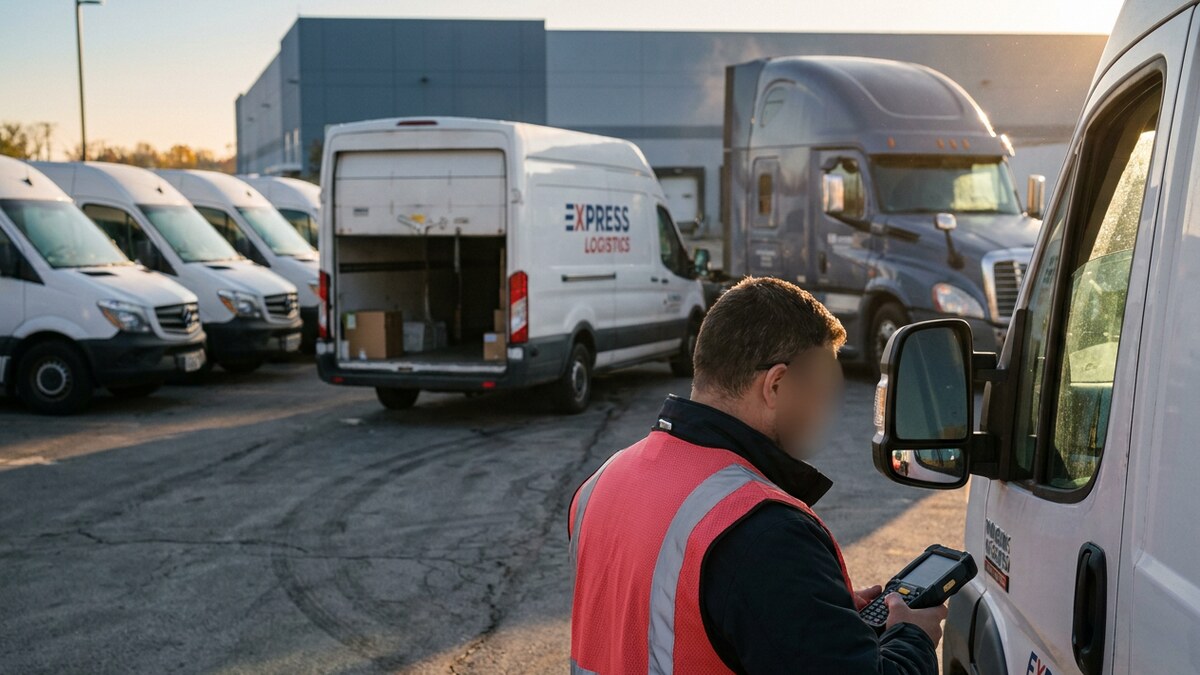


Asset theft has stopped being a nuisance and started behaving like a tax on every fleet, job site, and loaded trailer in America. In 2025, cargo theft losses across the U.S. and Canada climbed to roughly $725 million according to Verisk CargoNet, a 60% jump over the prior year, even though the number of incidents barely moved. Thieves are not stealing more loads. They are stealing more valuable ones, and they are getting better at it.
Construction sits on top of that number with its own problem. The National Insurance Crime Bureau and National Equipment Register put U.S. equipment theft at $300 million to $1 billion every year, across more than 11,000 incidents, and fewer than 25% of stolen machines are ever recovered. For single tools and small gear, the recovery rate drops below 7%. For most operators, a theft is simply a total loss.
Here is the part that does not get said in enough board meetings: the criminals taking this gear in 2026 already know what your tracker looks like and where you hid it. They cut three wires, pull a box from under the dashboard, and the dot on your map goes dark. Choosing the right GPS tracker for asset theft is no longer a hardware spec. It is a security decision, and increasingly a profitability one, because the same device that recovers a stolen asset can also lower your insurance premiums and surface thousands of dollars in underused equipment. This guide breaks down the top 7 GPS trackers for asset protection and recovery, the features that actually matter, and how to build a strategy thieves cannot defeat.
Why is Heavy Equipment and Cargo Theft Surging in 2026? (The True Cost of Blind Spots)
Theft is surging because the economics now favor the thief and the technology gap favors them too. Stolen freight and equipment move fast through resale channels, prosecution rates stay low, and the average stolen shipment is worth nearly $274,000 according to CargoNet data. High value, low risk, quick turnaround. That is the math driving organized theft rings.
Recovery rates stay low for reasons that have little to do with how good your tracker looks on paper:
- Thieves disable visible trackers first. Hardwired and OBD-II units installed in predictable spots get found, unplugged, or cut within minutes of a theft.
- GPS jamming and spoofing are mainstream now. Organized crews use cheap signal jammers to silence a tracker, or spoof coordinates so the load appears to be sitting still while it crosses three state lines.
- Theft has gone digital. Geotab research shows criminals increasingly use fraud, stolen credentials, fictitious pickups, and AI-powered social engineering to misdirect shipments before a driver suspects anything is wrong.
- Most assets are not tracked at all. Asset tracking adoption across fleets still sits between 18% and 34%, leaving enormous blind spots that are easy to exploit.
- Theft spikes after hours and around holidays. The majority of equipment thefts occur between 5 PM and 7 AM, and incidents climb during long holiday weekends when sites sit empty and response time is slowest.
The true cost of these blind spots is not just the replacement invoice. It is the project delay, the broken delivery window, the higher insurance premium next renewal, and the lost productivity while crews stand idle. The pain point is consistent across construction, fleet, cargo, automotive, and healthcare: traditional visibility tools are reactive. They tell you about a loss after it has already cost you money.
Must-Have Anti-Theft Features for GPS Asset Trackers: Bypassing Jammers & Spoofing
The anti-theft features that matter most are the ones that keep a tracker reporting after a thief tries to kill it. A standard OBD-II or telematics tracker creates a dangerous false sense of security: it was built for diagnostics and driver behavior, not covert recovery, and it sits in a known port a thief unplugs in seconds. For theft recovery, prioritize these features instead:
- Covert form factor: A tracker thieves cannot find is a tracker thieves cannot disable. Small, wireless, no exposed antenna, no power cable to trace.
- Hybrid location technology: The strongest trackers fuse GPS with cellular, Wi-Fi, and Bluetooth Low Energy (BLE). This is the direct countermeasure to jamming and spoofing, and it solves indoor blindness: pure GPS bounces or dies inside chop shops and metal shipping containers, exactly where stolen assets get hidden.
- Tamper and signal-loss alerts: Instant notification the moment an asset moves, the device is interfered with, or the signal is cut, so dispatch acts in minutes and the last known coordinates are locked for law enforcement.
- Geofencing: Automatic alerts when an asset leaves a yard, job site, or route. This is the single most useful trigger for catching theft early.
- Configurable reporting: The ability to dial reporting frequency up during a live recovery and down to conserve power in remote locations. Fixed-interval trackers cannot do both.
- Long, replaceable battery life: A dead tracker is a useless tracker. Replacing batteries on dozens of unpowered trailers and generators scattered across remote sites is a logistical nightmare, which is why 5 to 10-year replaceable batteries are critical for set-and-forget security. Real-world longevity also depends on temperature, network strength, and reporting frequency, so trust field ratings over lab numbers.
- Rugged, tamper-proof housing: Outdoor assets live in mud, heat, and rain. The device needs sealed, weatherproof construction that resists both the elements and quick removal.
- Predictable platform pricing: 37% of fleet managers cite hardware and subscription cost as the top barrier to adoption. B2B operators are tired of SaaS bloat and per-device monthly fees that balloon across a large fleet. Predictable platform pricing protects the budget as you scale.
- Integration: The hardware is only a sensor. The value is in software that turns location into geofence alerts, utilization reports, and a clean feed into your existing asset management or ERP system.
One principle shapes the entire list below: the most effective theft strategy in 2026 is rarely a single device. It is a layered approach that combines a visible deterrent with a hidden recovery tracker.
Comparing the 7 Best GPS Trackers for Stolen Asset Recovery in 2026
The table below compares the seven trackers in this guide across the features that matter most for theft prevention and recovery. On mobile, swipe horizontally to see every column.
| GPS Tracker | Best For | Covert? | Battery Life | Tamper / Geofence Alerts | Subscription Model |
|---|---|---|---|---|---|
| Spytec GL300 | Portable real-time vehicle and asset tracking | Partial (small, magnetic case) | Up to 2 to 4 weeks | Yes / Yes | Monthly per device |
| LandAirSea Overdrive | Covert vehicle and trailer tracking with concealment mode | Yes (strong magnet, dark mode) | Up to 4 years | Yes / Yes | Monthly per device |
| Invoxia GPS Pro | Anti-theft alerts for high-value vehicles and cargo | Partial | Up to 2 to 3 weeks | Yes / Yes | Monthly per device |
| Samsara Asset Gateway | Enterprise fleets needing theft plus utilization data | Partial | Multi-year (configurable) | Yes / Yes | Enterprise contract |
| Linxup Solar Tracker | Long-life tracking for trailers and non-powered equipment | Partial | Solar-assisted, long life | Yes / Yes | Monthly per device |
| CalAmp / LoJack | Law-enforcement-integrated heavy equipment recovery | Yes (hardwired, hidden) | Vehicle powered | Yes / Yes | Annual / contract |
| GPX AssetTrack Series + AssetTag | Layered theft recovery for construction, fleet, cargo, and healthcare (indoor and outdoor) | Yes (covert BLE AssetTag + GPS hybrid) | Up to 5 to 10-year replaceable; rechargeable options | Yes / Yes | Predictable platform pricing via Logistimatics; reseller program available |
[Infographic: The 7 Trackers at a Glance, Covert Rating vs Battery Life vs Subscription Model]
1. GPX AssetTrack Series and AssetTag: Best Layered Tracking for Theft Recovery
GPX Intelligence is built for the exact problem this guide describes: thieves who already know where conventional trackers hide. Rather than a single device, GPX offers a layered ecosystem that lets you match the tracker to the asset and to the threat:
- Road Wired is the hardwired, powered option for motorized vehicles and equipment. It is the visible layer that mechanics and dispatchers see, and the one that absorbs the cut-and-run attack.
- AssetTrack and AssetTrack Mini are the long-life, set-and-forget GPS trackers, with up to 10-year and up to 5-year replaceable batteries respectively. They go on trailers, generators, and equipment and keep reporting for years without a service truck visit, which solves the battery-death-in-the-field problem that plagues unpowered assets.
- AssetTrack Charge, Voyager, and Mobile are rechargeable options for assets that are handled frequently and can be topped up.
- The covert BLE AssetTag is the hidden recovery layer, a concealable tag with no wires and no exposed antenna that survives the attack after a thief finds and cuts the visible unit.
What separates GPX is the intelligence and the model behind the hardware. A hybrid of GPS, cellular, and BLE keeps assets visible both outdoors on a job site and indoors in a chop shop or storage unit, where pure GPS goes blind. Geofencing, tamper, and signal-loss alerts feed the Logistimatics platform rather than a dashboard nobody opens, and pricing avoids the per-device monthly trap that makes large-fleet tracking unaffordable. GPX also runs a reseller program, so rental businesses, dealerships, and retailers can offer tracking to their own customers and turn a security line item into a new revenue stream.
Pros:
- Layered lineup pairs a visible deterrent (Road Wired) with a covert recovery tag (AssetTag)
- Up to 5 to 10-year replaceable batteries plus rechargeable options for every asset type
- GPS, cellular, and BLE hybrid for indoor and outdoor visibility and anti-jamming resilience
- Geofence, tamper, and signal-loss alerts feeding the Logistimatics platform
- Predictable pricing plus a reseller program that creates a new revenue stream
Cons:
- Best results come from deploying the layered approach rather than a single device
- Optimized for asset recovery and visibility, not driver-behavior telematics
2. Spytec GL300: Best for Portable Real-Time Tracking
The Spytec GL300 is a long-standing favorite for small, portable real-time tracking. It is compact, easy to move between assets, and pairs with a clean mobile app that delivers live location, geofencing, and movement alerts. For an operator who needs eyes on a single high-value vehicle or piece of equipment, it is a proven choice.
Pros:
- Reliable real-time updates and easy-to-use app
- Small and portable, with optional magnetic and weatherproof cases
- Strong geofencing and motion alerts
Cons:
- Battery measured in weeks, so frequent recharging on unpowered assets
- Monthly per-device subscription adds up across a fleet
- Recognizable form factor is less covert than a concealed tag
3. LandAirSea Overdrive: Best Covert Tracker With Concealment Mode
The LandAirSea Overdrive is a popular covert option built around a super-strong magnet and a dark mode that suppresses the device LEDs for hidden placement. Paired with the Silvercloud app for real-time maps and geofencing, it suits discreet vehicle and trailer monitoring, and LandAirSea positions its lineup as costing up to 80 percent less than competing technologies. The smaller LandAirSea 54 and the OBD-II SYNC round out the family for lighter and powered use cases.
Pros:
- Strong magnet and dark mode for genuine concealment
- Up to four years of battery life on the Overdrive
- Aggressive pricing and 24/7 customer support
Cons:
- Subscription required for live tracking
- Best suited to vehicles and trailers rather than long-life equipment tagging
- Consumer-leaning ecosystem with lighter enterprise integration
4. Invoxia GPS Pro: Best for Anti-Theft Motion Alerts
The Invoxia GPS Pro is built around a singular focus on anti-theft and recovery. It excels at immediate motion and tamper alerts plus comprehensive location history, making it a fit for high-value vehicles, equipment, or sensitive cargo where the priority is knowing the instant something moves.
Pros:
- Fast motion and tamper alerts purpose-built for theft scenarios
- Detailed location history for investigation and recovery
- Compact, flexible mounting
Cons:
- Battery life in the range of weeks on continuous tracking
- Monthly subscription per device
- Less rugged than dedicated industrial trackers
5. Samsara Asset Gateway: Best for Enterprise Theft Plus Utilization
Samsara Asset Gateways are aimed at large physical-operations fleets that want theft protection and operational ROI from the same device. The platform leans hard into configurability (adjusting reporting frequency on demand) and utilization data, and Samsara cites customer outcomes such as recovering a single stolen skid steer worth six figures and identifying millions in underused equipment. It is a premium, contract-based solution best suited to enterprises ready to invest.
Pros:
- Strong utilization and efficiency reporting beyond theft recovery
- Configurable reporting frequency and long battery life
- Mature enterprise platform with deep integrations
Cons:
- Enterprise contract pricing is a barrier for smaller operators
- Heavier deployment than a simple covert tag
- Best value realized at fleet scale
6. Linxup Solar Tracker: Best for Long-Life Non-Powered Assets
The Linxup Solar Tracker targets the hardest tracking problem: unpowered assets that sit outdoors for months. Solar assistance stretches battery life well beyond a standard rechargeable unit, making it a sensible pick for trailers, shipping containers, dumpsters, and lawncare equipment. Linxup has a documented history of recovering high-value stolen equipment, including a $95,000 skid-steer loader that led police to a warehouse of additional stolen gear.
Pros:
- Solar-assisted battery life ideal for long-term outdoor assets
- Real-time location, movement alerts, and geofences
- Proven recovery track record on heavy equipment
Cons:
- Solar performance depends on placement and sun exposure
- Monthly subscription per device
- Not designed as a concealed recovery device
7. CalAmp / LoJack: Best for Law-Enforcement Recovery Integration
CalAmp, which now operates the LoJack recovery network, is a recognized name in stolen-equipment recovery with deep law-enforcement integration. A LoJack and CalAmp study found that 69% of recovered construction equipment had some form of tracking installed, underscoring how strongly recovery correlates with tracking. Its hardwired, hidden installation is built for heavy yellow iron where a powered, integrated system makes sense.
Pros:
- Established law-enforcement recovery network
- Hardwired and hidden installation on powered equipment
- Strong recovery track record on high-value machines
Cons:
- Hardwired units can be located and cut if installed predictably
- Contract and annual pricing model
- Less flexible for unpowered or rapidly moved assets
How Do Thieves Disable GPS Trackers? (Defeating Jammers, Spoofers, and Cut-and-Run Tactics)
Thieves disable GPS trackers in three main ways, and knowing them is the difference between a tracker that recovers your asset and one that goes dark on the highway:
- The cut-and-run. A thief who recognizes a tracker form factor goes straight for it. Hardwired and OBD-II units near the fuse box or under the dashboard get yanked or unplugged within minutes, and the map dot dies.
- Signal jamming. Cheap, illegal jammers flood the GPS and cellular bands so the tracker cannot report. Without a signal-loss alert, you do not even know it happened.
- GPS spoofing. More sophisticated crews feed the tracker false coordinates, so the asset appears parked while it is actually moving. By the time anyone notices, the load has crossed state lines.
The common thread is that a single visible tracker is a single point of failure. Every one of these tactics works because the thief can find, silence, or fool the one device they expect to be there. A covert tracker with no wires to cut and no exposed antenna sidesteps the cut-and-run entirely, and a hybrid signal that adds BLE and Wi-Fi positioning, paired with instant tamper and signal-loss alerts, is the practical countermeasure to jamming and spoofing. Detection by scanning is harder than most operators assume, because thieves work fast, in low light, and rely on spotting known tracker shapes, not on running scanners through every panel and seat frame.
The “Ghost Strategy”: Building a Layered Anti-Theft Architecture for Fleets
The fleets winning in 2026 do not buy the most expensive single tracker. They run a layered architecture, often called a ghost strategy, where each device covers what the others miss. Geotab research found that 58% of fleet managers agree an effective security strategy requires multiple technologies working together, not one tool in isolation.
The ghost strategy has three layers, and they map cleanly onto a real product lineup:
- The visible deterrent. A hardwired unit such as Road Wired that thieves expect to find. When they cut it, they often believe the asset is now untracked and let their guard down.
- The covert recovery layer. A hidden tag such as the BLE AssetTag, placed where wire cutters cannot reach. It survives the attack, keeps reporting through a hybrid signal that works indoors and outdoors, and routes the recovery before the asset crosses the next county line.
- The intelligence layer. The platform that ties geofence, tamper, and signal-loss alerts into action, flags which assets are highest risk going into a holiday weekend, and locks last-known coordinates for law enforcement the moment a signal drops.
“The tracker that recovers your asset in 2026 is not the one on the dashboard. It is the ghost tag hidden in the chassis.” GPX Intelligence team
[Infographic: The Layered “Ghost Strategy” Tracker Setup, Visible Decoy + Covert AssetTag + Intelligence Layer]
[Video: 60-second demo, deploying the GPX Road Wired deterrent and covert AssetTag together]
Beyond Recovery: How Telematics & Asset Intelligence Lower Fleet Insurance Premiums
Tracking pays for itself in ways that have nothing to do with a single theft. The clearest is insurance: many insurers offer discounts, in some cases up to 15%, for fleets fitted with active, verifiable theft-recovery devices, because tracked assets are recovered far more often. The device can partially pay for itself before a theft ever happens. The rest of the return compounds from there:
- Higher utilization. Location and usage data exposes idle and underused equipment you can reallocate or sell instead of buying or renting more. Enterprises have surfaced millions in underutilized assets this way.
- Less wasted labor. Eliminating the manual hunt for a misplaced trailer or generator gives crews their time back, especially across multiple sites.
- Proactive maintenance. Usage and travel data triggers service before a breakdown, and engine-hour scheduling can cut unplanned downtime materially compared with calendar-based methods.
- Cleaner reporting. Accurate location data feeds utilization, compliance, and even tax reporting, turning a security tool into an operational data source for your asset management or ERP system.
B2B Tracking Solutions by Industry: Construction, Freight, Healthcare, and AgTech
The right tracker depends heavily on the asset and the environment:
- Construction: Remote, after-hours job sites with high-value, portable equipment are prime targets, and Texas alone accounts for roughly 24% of national incidents. Covert tags on generators, attachments, and tools, paired with geofenced site boundaries, close the gap that fencing and cameras leave open.
- Freight, fleet, and automotive: Vehicles and trailers parked in unsecured lots are the top concern for more than half of fleet professionals. A hardwired deterrent plus a hidden recovery tracker protects both the vehicle and the load, and dealerships can monitor financed inventory on and off the lot.
- Cargo and in-transit logistics: With organized rings using deception and spoofing, asset-level tracking that follows the individual load, not just the truck, is essential. Dwell-time and route-deviation alerts catch theft early.
- Healthcare: Mobile medical equipment such as ventilators and imaging machines, along with high-value medicines, walks off facilities at high rates. Long-life covert tags with indoor-capable hybrid signals keep these assets visible across buildings and floors without recurring per-device costs.
- AgTech and outdoor equipment: Farms, generators, and towable gear sit unattended across wide, remote acreage. Solar-assisted and long-life trackers are built for exactly this.
- Equipment rental and dealerships: Rental houses can track every unit out in the field, and through a reseller program even offer tracking to their own customers as a new revenue stream.
- Yard and supply chain visibility: Trailers and containers staged in yards are easy, low-attention targets. Geofencing turns every yard boundary into an alarm line.
How to Choose the Right GPS Tracker for Asset Theft
There is no single best tracker, only the best tracker for your asset, your threat, and your budget. Work through these questions in order:
- Is recovery your primary goal? If yes, prioritize covert form factor and signal-loss alerts above everything else. A tracker thieves can find is a tracker thieves will defeat.
- Does the asset move indoors? Pure GPS goes blind under a roof or inside a metal container. If thieves stash gear in chop shops or storage units, you need a hybrid that adds cellular and BLE for indoor visibility.
- Is the asset powered or unpowered? Powered vehicles can support hardwired units. Trailers, generators, tools, and equipment need long battery life, and a 5 to 10-year replaceable battery removes the recharge burden entirely.
- How many assets are you protecting? Across a large fleet, per-device monthly fees are the silent budget killer. Favor predictable platform pricing.
- What is the real threat? If you face organized, tech-savvy theft, you need anti-jamming hybrid signals, geofencing, and a covert layer, not just a basic dot on a map.
- Are you buying one tracker or building a system? The strongest answer in 2026 is layered: a visible deterrent to absorb the attack, and a covert tracker to survive it and drive the recovery, with a platform that also delivers insurance savings and utilization data.
Match the tracker to the job, and you stop buying hardware and start buying recovery odds plus operational ROI. For most operators protecting high-value assets, a covert recovery layer is no longer optional.
Protect Your Assets Before the Next Bad Weekend
Every untracked asset on your job site or in your yard is a five-figure line item one bad weekend away from being replaced, and statistically unlikely to come back. GPX gives you the full layered architecture: a visible Road Wired deterrent, a covert AssetTag recovery layer that survives the cut-and-run, and the Logistimatics platform that turns geofence and tamper alerts into recovery, lower insurance premiums, and utilization insight. Talk to the GPX team about building a layered tracking strategy sized to your fleet, and ask about the reseller program if you want to turn asset protection into a new revenue stream.
Frequently Asked Questions (FAQs)
What is the best covert GPS tracker for heavy construction equipment?
The best covert tracker for heavy construction equipment is a layered setup, not a single device: a hardwired unit as a visible decoy plus a hidden BLE tag for recovery. The GPX AssetTrack Series paired with the covert BLE AssetTag fuses GPS, cellular, and BLE so equipment stays trackable indoors and out. A lone dashboard tracker is not enough, because modern cut-and-run thieves find and cut it within minutes, while the hidden tag survives to drive the recovery.
Can Apple AirTags be used for B2B cargo and asset tracking?
No. AirTags rely on a crowdsourced consumer Bluetooth network that thins out on remote job sites, rural transit routes, and inside industrial zones, exactly where commercial assets travel. They also lack enterprise geofencing, configurable reporting, rugged housing, and API integration. For B2B cargo and equipment, a hybrid GPS, cellular, and BLE tracker is far more reliable for both prevention and recovery.
Do GPS jammers really work against fleet trackers?
Yes. Cheap, illegal signal jammers can block standard GPS and cellular bands, silencing a basic tracker with no warning. The countermeasure is hybrid tracking that adds BLE and Wi-Fi positioning, plus tamper and signal-loss alerts that notify dispatch the second interference begins and lock the last known coordinates for law enforcement to act on.
How do hidden GPS trackers lower commercial fleet insurance premiums?
Insurers often offer discounts, in some cases up to 15%, for fleets equipped with active, verifiable theft-recovery devices, because tracked assets are recovered far more often. A hidden tracker can therefore offset part of its own cost before any theft occurs, while sharply improving recovery odds when one does happen.
How do GPS trackers improve stolen asset recovery rates?
GPS tracking is the single most effective recovery tool available. Industry research found that 69% of recovered construction equipment had tracking installed, and precise live coordinates let police act in hours instead of days. Tracking does not stop theft by itself, but it sharply raises recovery odds when fewer than 25% of stolen equipment is otherwise returned.
What percentage of stolen construction equipment is ever recovered?
Fewer than 25% of stolen machines are ever recovered according to the National Insurance Crime Bureau and National Equipment Register. For single tools and small gear, the recovery rate drops below 7%, meaning most operators absorb a theft as a total loss.
How much have cargo theft losses grown in the United States?
Cargo theft losses across the U.S. and Canada climbed to roughly $725 million in 2025, a 60% jump over the prior year according to Verisk CargoNet, even though the number of incidents barely moved. Thieves are targeting higher-value loads rather than stealing more frequently.