Global Supply Chain Management: What It Is, How It Works, and How GPS, BLE, RFID, and AI Power It

A single product on a store shelf often crosses three continents, six suppliers, four carriers, and dozens of handoffs before a customer ever picks it up. Global supply chain management is the discipline that holds all of those moving parts together. When it runs well, goods arrive on time, landed cost stays predictable, and customers stay loyal. When it breaks, the cost shows up fast in delayed shipments, lost inventory, and stockouts.
This guide explains what global supply chain management is, how it works from procurement to last-mile, where the real ROI and risks sit, and how four technologies, GPS, BLE, RFID, and AI, combine to give operators real-time end-to-end visibility across the global logistics network.
The Anatomy of Global Supply Chain Management in 2026
Global supply chain management (GSCM) is the coordination of every process required to source materials, produce goods, move them across borders, and deliver them to the end customer, across suppliers and partners located in multiple countries. It covers the flow of three things at once: physical goods, information, and money. In a world of borderless commerce, it is also the system that determines whether a company has supply chain resilience or sits one disruption away from a shutdown.
The “global” part is what raises the stakes. A domestic supply chain deals with one set of rules, one currency, and one set of carriers. A global logistics network spans different time zones, tariff regimes, languages, port systems, third-party logistics (3PL) partners, and regulatory bodies. That scale unlocks lower cost and wider market access, and it also introduces complexity that demands tighter control and far better data.
At its core, global supply chain management answers four operational questions every day:
- What needs to be made or moved, and in what quantity, driven by demand sensing.
- Where every item is right now, from raw material at a supplier to a pallet on a vessel to a parcel on a delivery van.
- When it will arrive, with an accurate predictive ETA rather than a guess.
- What to do when something goes wrong, such as a delayed vessel, a port strike, or a sudden spike in demand.
End-to-End Supply Chain Operations: From Procurement to Last-Mile
A global supply chain works as a connected sequence of nodes. Each node hands off to the next, and a delay or error in one ripples through every node that follows. Strong management treats the chain as one system rather than a string of separate departments.
The core stages run in this order:
- Planning and demand sensing. Teams use predictive analytics to forecast how much customers will buy and translate that into production and procurement targets. Accurate forecasts reduce both overstock and stockouts.
- Procurement logistics and sourcing. Buyers select suppliers, negotiate terms, and order raw materials or components, often from several countries to balance cost and risk.
- Manufacturing and production. Factories convert materials into finished goods, often across multiple facilities and subcontractors.
- Warehousing and inventory management. Goods are stored, counted, staged, and cross-docked. Knowing exactly what is on hand and where it sits is the foundation of a healthy chain.
- Transportation and logistics. Freight moves by ocean, air, rail, and road. This stage carries the longest lead times and the highest risk of disruption in a multimodal global network.
- Distribution and last-mile delivery. Goods flow from regional hubs to local centers and finally to the customer. The last mile is the most expensive and most visible part of the journey.
- Reverse logistics and returns. Products come back for repair, recycling, or refund. Returnable transport items (RTIs) such as pallets, totes, and racks also cycle back into the chain and need tracking on the return leg.
Information and money flow alongside these physical stages. Purchase orders, telematic data, customs filings, and payment settlements move through the same network. The companies that win are the ones that make the physical flow and the data flow match in real time, so a manager sees the same truth on a dashboard that exists on the loading dock.
Unlocking Supply Chain ROI: Agility, Cost Reduction, and Scale
Done well, global sourcing and distribution deliver measurable ROI that a purely local operation cannot match:
- Landed cost reduction. Buying from the most competitive suppliers worldwide drives down total delivered cost, not just unit price.
- Access to global markets. A connected chain lets a company sell into new regions and serve customers far from its home base.
- Scale and specialization. Each partner focuses on what it does best, from precision manufacturing to ocean freight, which raises overall quality and efficiency.
- Supplier diversification and agility. Spreading sourcing across regions reduces dependence on any single country or factory and builds resilience against local shocks.
- Round-the-clock operations. Partners in different time zones keep production, support, and shipping moving across the full day.
- Asset tracking ROI. Real-time visibility into shipments and returnable assets recovers capital that would otherwise be lost to delays, shrinkage, and idle inventory.
Solving Modern Supply Chain Disruptions and Visibility Blind Spots
The same scale that creates advantage also creates risk. Operators who understand these challenges build chains that absorb shocks instead of breaking under them:
- The “black hole” of transit. Goods often go dark at modal handoffs, such as the transfer from ocean freight to rail, where visibility blind spots leave teams guessing. A shipment that disappears between a port and a warehouse forces reactive scrambling instead of proactive planning.
- Returnable asset shrinkage. Enterprises lose millions every year when returnable transport items such as pallets, totes, and racks go missing across the reverse logistics loop, tying up capital and stalling service.
- Manual inventory audits. Warehouse staff spending hours scanning barcodes adds labor cost and human error to every count.
- Data silos. Many operators collect telematic data but lack the engine to act on it, so insight sits idle while disruptions unfold.
- Long and unpredictable lead times. Ocean freight and customs clearance add weeks, and a single port delay cascades through the whole schedule.
- Geopolitical and regulatory exposure. Tariffs, trade restrictions, and shifting customs rules change cost and feasibility quickly, and Scope 3 emissions reporting adds compliance work to sourcing decisions.
- Cold chain risk. Temperature-sensitive freight demands cold chain monitoring, and a lapse in visibility can spoil an entire load.
Almost every challenge on this list traces back to one root cause: a gap between what is physically happening in the chain and what the data shows. Closing that gap is exactly where modern tracking and intelligence technologies earn their keep.
Next-Gen Asset Tracking: Combining GPS, BLE, RFID, and Predictive AI
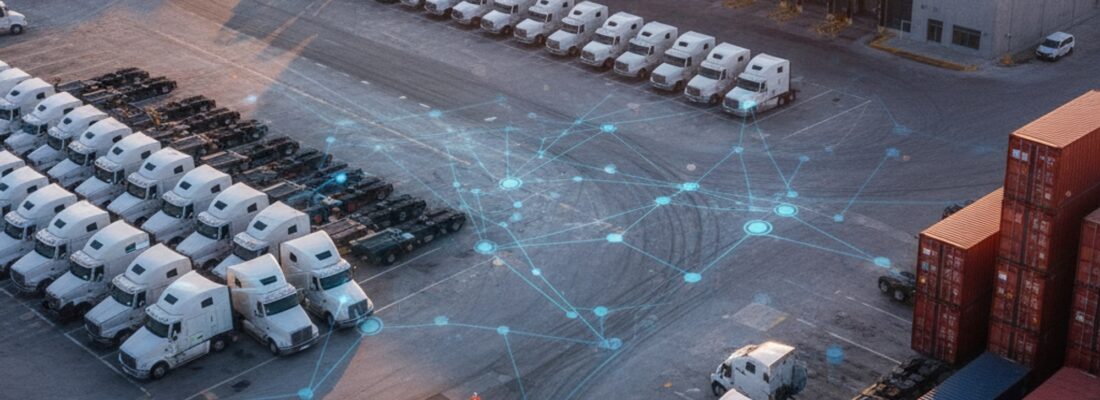
Real-time supply chain visibility is the goal, and four technologies make it possible. Each one covers a different part of the journey, and together they form a layered IoT asset tracking system that follows goods from the factory floor to the final delivery. Think of it as a relay: RFID and BLE handle indoor and facility-level visibility, GPS handles the in-transit miles, and predictive AI turns all of that telematic data into decisions.
GPS: Tracking Goods in Transit Across the Globe
Global Positioning System tracking uses satellite signals to pinpoint the location of vehicles, containers, and high-value shipments anywhere on the planet. In a global supply chain, GPS answers the question every customer and planner asks: where is my shipment right now, and when will it arrive. It is the technology that closes the black hole of transit at ocean-to-rail and rail-to-road handoffs.
- Live location of trucks, trailers, and containers across road, rail, and ocean legs.
- Geofencing through a geofencing API that triggers automatic alerts when an asset enters or leaves a port, yard, or delivery zone.
- Predictive ETAs that move operators from reactive scrambling to proactive customer communication.
- Route optimization that cuts fuel cost and improves on-time performance for fleets.
RFID: Automating Inventory and Gate-Level Dispatch
Radio Frequency Identification uses tags read by radio waves, with no line of sight required, which makes it far faster than barcode scanning for high-volume inventory. Passive RFID tags carry no battery and are read at close range, ideal for cartons, pallets, and inventory counts. Active RFID tags carry a battery and broadcast over longer distances, useful for yard and container tracking. Passive RFID directly replaces the hours warehouse staff spend on manual barcode audits by automating gate-level dispatch and receiving.
- Automated receiving and dispatch as tagged goods pass through reader gates, which removes manual scanning labor.
- Fast, accurate inventory counts that eliminate human error.
- Shrinkage reduction by flagging items that leave without authorization.
BLE: Indoor Positioning and Returnable Asset Visibility
Bluetooth Low Energy fills the gap that GPS cannot cover: indoor positioning and facility-level location, where satellite signals weaken or disappear. BLE tags broadcast to gateways placed around a site, which means operators can locate assets inside a warehouse, hospital, construction site, or distribution center down to the zone.
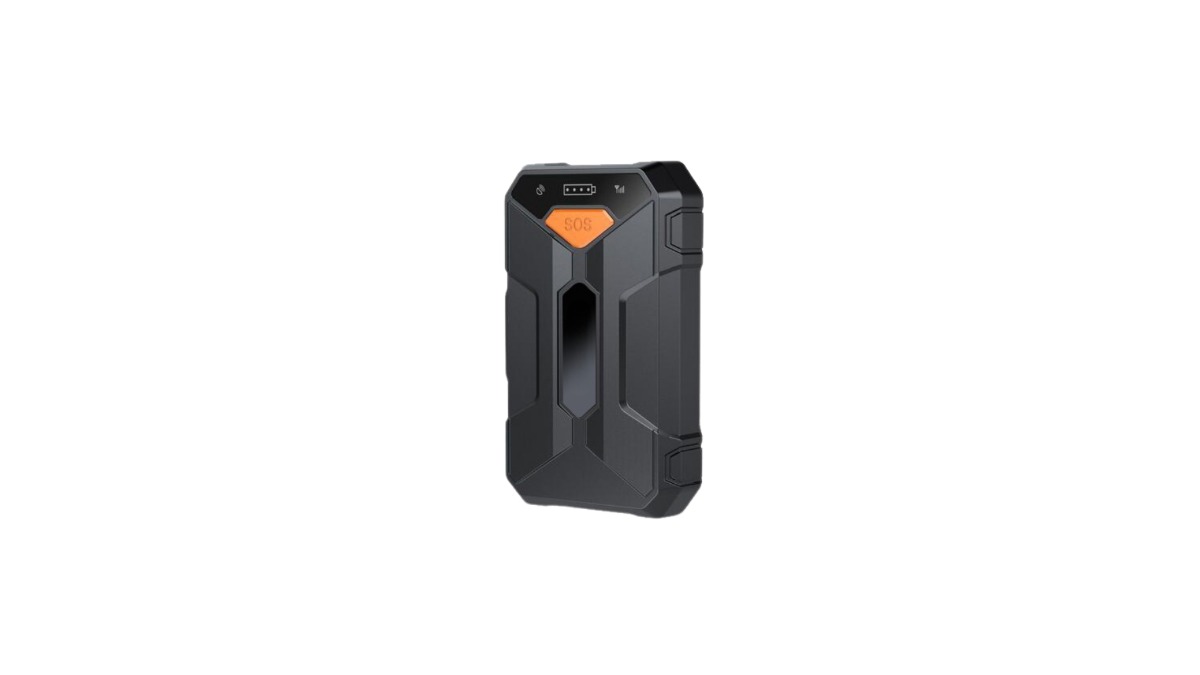
The GPX AssetTag (BLE) is built for exactly this layer of the chain, and it is the direct cure for returnable transport item loss. It delivers reliable indoor and outdoor asset visibility with a replaceable battery and a 4-year battery life, so teams track pallets, totes, racks, equipment, and high-value inventory across the reverse logistics loop without constant maintenance. BLE is the right tool for healthcare equipment, construction tools and materials, automotive parts, and any RTI that cycles in and out of a facility.
- Zone-level indoor positioning inside buildings and yards where GPS cannot reach.
- Low power draw that supports a 4-year battery life on a single replaceable cell.
- Returnable asset tracking that recovers the pallets, totes, and racks enterprises otherwise lose to shrinkage.
Predictive AI: Turning Tracking Data Into Decisions
GPS, RFID, and BLE generate a constant stream of location data. Artificial intelligence is the layer that breaks data silos and converts that stream into action. Machine learning algorithms sit on top of the tracking data and answer questions a human team cannot process fast enough on its own.
- Demand sensing and forecasting that reads historical and live signals to predict what customers will buy.
- Predictive delay alerts that combine historical GPS data, weather patterns, and port congestion metrics to warn teams before a shipment runs late.
- Anomaly detection that flags an asset that stops moving, takes a wrong route, or disappears from the network.
- Dynamic rerouting that reroutes freight and rebalances stock around extreme weather, port strikes, and disruption in real time.
The comparison below shows how each technology fits the supply chain, and where the GPX AssetTag delivers facility-level visibility.
| Technology | Typical Range | Real-Time Tracking | Power Source | Best For | Role in the Supply Chain |
|---|---|---|---|---|---|
| GPS | Global (satellite) | Yes, while in transit | Battery or vehicle power | Outdoor, in-transit, fleet | End-to-end shipment location and predictive ETA |
| Passive RFID | 1 to 10 meters | No, read at gates | No battery, reader powered | Cartons, pallets, inventory | Automated counts and gate-level dispatch |
| Active RFID | Up to 100 meters | Near real-time | Battery | Yard, containers | Zone-level location in large areas |
| BLE (GPX AssetTag) | Up to 100 meters with gateways | Yes, with gateways | Replaceable battery, 4-year battery life | Indoor positioning, returnable assets, healthcare, construction | Facility-level and last-mile visibility |
| AI | Software layer | Predictive | Cloud compute | Forecasting, routing, risk | Decisions built on GPS, RFID, and BLE data |
Why Real-Time End-to-End Visibility Is Non-Negotiable
Visibility is the thread that connects every benefit and solves nearly every challenge in a global supply chain. When a company sees its goods in real time, it stops reacting to problems after the fact and starts preventing them. A delayed vessel triggers an alert and a reroute before customers ever notice. A missing pallet shows up on a dashboard instead of disappearing from the books. A demand spike gets met because demand sensing saw it coming.
The shift from track and trace after the fact to proactive disruption management is the defining change in modern supply chain management. The stack of GPS, BLE, RFID, and predictive AI is what makes that shift practical at global scale, and it is why real-time end-to-end visibility has moved from a competitive edge to a baseline requirement.
BLE vs. RFID vs. GPS: Choosing the Right IoT Tracking Stack
There is no single best technology. The right choice depends on where your goods are in the journey and what question you need answered. Use this decision logic to match the tool to the job:
- Choose GPS when you need to track shipments and fleets in transit across roads, oceans, and borders, and when accurate predictive ETA matters most.
- Choose RFID when you need fast, automated inventory counts and gate-level dispatch inside warehouses and distribution centers.
- Choose BLE when you need indoor positioning for returnable assets, equipment, and high-value items, where GPS signals fade. The GPX AssetTag, with its replaceable battery and 4-year battery life, fits this layer for healthcare, construction, automotive, and supply chain visibility use cases.
- Add AI once your tracking data is flowing, so you can forecast demand, predict delays, and reroute freight instead of just watching dots on a map.
The strongest supply chains do not pick one technology. They layer all four, so every item is visible at every node, indoors and outdoors, in motion and at rest, with machine learning algorithms on top that turn location data into faster, smarter decisions.
Deploying Enterprise-Grade Asset Tracking With GPX Solutions
GPX builds B2B asset tracking solutions that close the visibility gap across your entire operation. From in-transit GPS tracking to the GPX AssetTag for indoor and facility-level BLE visibility, our industrial IoT solutions give you a single, real-time view of where your assets are and what to do next. Talk to the GPX team to design a tracking stack built for your supply chain, your facilities, and your goals.
Frequently Asked Questions (FAQs)
How do I prevent the loss of returnable assets in my supply chain?
Returnable transport items such as pallets, totes, and racks go missing when they leave a facility without tracking. The fix is BLE asset tags fitted to each item, paired with gateways at your sites. The GPX AssetTag uses BLE with a replaceable 4-year battery to give zone-level indoor positioning, so you see when an RTI leaves, where it goes, and when it should return, which recovers the capital enterprises otherwise lose to shrinkage.
What is the difference between Active RFID and BLE for warehouse tracking?
Active RFID uses a battery-powered tag that broadcasts to dedicated readers over long range, which suits yard and container tracking. BLE broadcasts to standard gateways and is more cost-effective to scale across a facility, with longer battery life on a single replaceable cell. For indoor zone-level visibility of returnable assets and equipment, BLE is usually the more economical and lower-maintenance choice.
How does AI predict supply chain delays?
AI uses machine learning algorithms trained on historical GPS data, weather patterns, port congestion metrics, and carrier performance. It compares a shipment’s live telematic data against those patterns and flags the risk of a delay before it happens, which lets teams reroute freight or notify customers proactively rather than reacting after the shipment is already late.
What is the best way to achieve end-to-end supply chain visibility?
Layer the technologies by stage. Use RFID for automated inventory and gate-level dispatch, BLE for indoor positioning and returnable asset tracking, and GPS for in-transit location and predictive ETA. Then add AI on top to turn that combined data into demand forecasts, delay alerts, and dynamic rerouting. No single tool covers the whole journey, so the stack is the answer.
GPS vs. BLE vs. RFID: which tracking technology should I use?
Use GPS for outdoor, in-transit shipments and fleets across roads, oceans, and borders. Use RFID for fast, automated inventory counts inside warehouses. Use BLE for indoor and facility-level visibility where GPS signals weaken, such as tracking returnable assets, healthcare equipment, and construction materials. Most enterprises combine all three and add AI for prediction.
How many handoffs does a typical product cross before reaching a customer?
A single product can cross three continents, six suppliers, four carriers, and dozens of handoffs before a customer picks it up, making end-to-end visibility across every leg critical to predictable landed cost and on-time delivery.