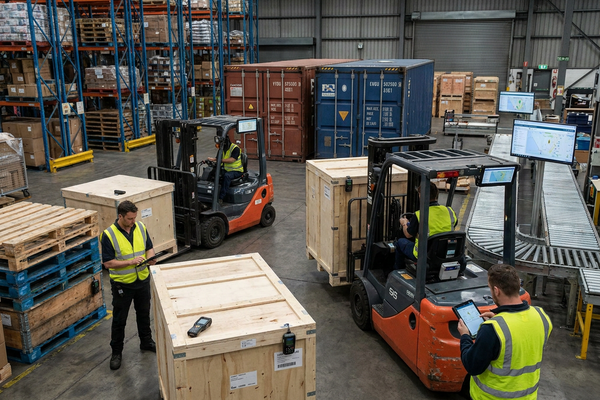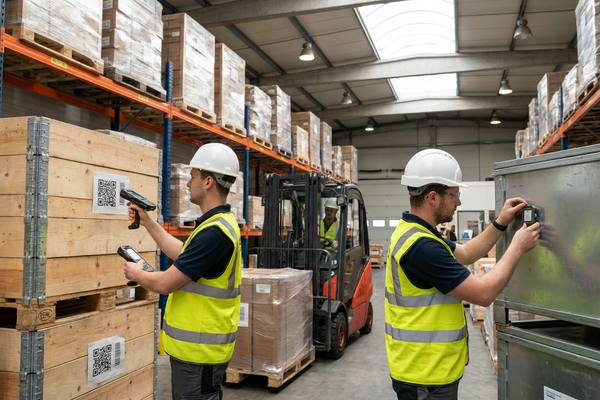
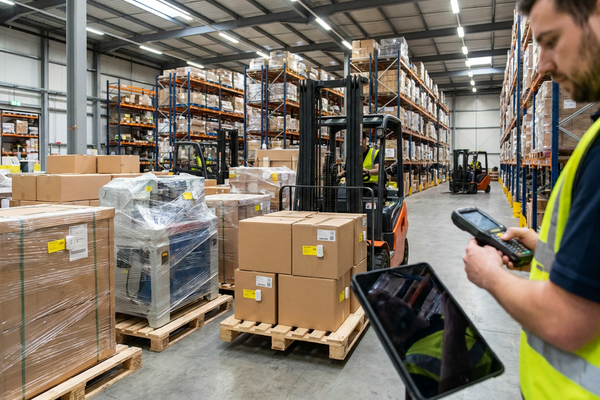

Finding lost equipment, tools, and containers drains hours and money from any large operation. The problem scales fast across multi-site facilities and supply chains. The global IoT asset tracking market now tops USD 17.55 billion, which shows how many companies face this exact issue. The broader asset tracking market is on track to reach USD 51.59 billion by 2030 at a 14.9% CAGR, underscoring how fast demand for real-time visibility is climbing. Teams want that visibility without the cost and complexity that usually comes with it.
For years, BLE tracking demanded fixed infrastructure: gateways, wiring, and power at every location. That setup costs a lot up front and keeps costing through maintenance. The market has moved on. Gateway-free systems now use existing devices or direct-to-cloud tags instead. These platforms cut total cost of ownership and deploy in days, not months.
| Platform | Network | Best For | Starting Price | Key Strength |
|---|---|---|---|---|
| GPX | Cellular, BLE, GPS, WiFi | Enterprise-scale asset intelligence | From $10/tag | Zero-infrastructure AI platform |
| Logistimatics | Cellular, GPS | Individuals & small businesses | $14.95/mo | Simple, portable GPS trackers |
| QR Inventory | BLE, QR/Barcode | Smartphone-based inventory | On Request | Uses phones as scanners/gateways |
| Sensolus | LPWAN, BLE | Non-powered industrial assets | On Request | Hybrid indoor/outdoor tracking |
| Wiliot | BLE | Item-level supply chain visibility | On Request | Battery-free IoT Pixel tags |
| Wirepas | BLE Mesh | High-density industrial IoT | On Request | Decentralized mesh networking |
| Estimote | BLE | Custom app development | On Request | Developer-focused SDKs and beacons |
Key Challenges of Implementing BLE Real Time Location Systems (RTLS)
Gateway-free BLE delivers real advantages, but a real time location system (RTLS) brings technical trade-offs. Strong BLE asset tracking software solves these problems and turns raw signals into an asset intelligence platform. Knowing the challenges upfront helps you pick the right platform.
Signal Interference
Industrial sites are hard on radio frequency (RF) signals. Concrete walls, metal shelving, and heavy machinery block, reflect, or absorb BLE signals. That degrades location accuracy and drops assets off the network, leaving blind spots in your operation.
Limited Accuracy and Range
Standard BLE delivers zone-level or room-level accuracy, usually within a few meters. Its range tops out around 100 meters in ideal conditions. Ultra-Wideband (UWB) and some WiFi systems do better. For sub-meter precision or long-distance outdoor tracking, BLE needs a multi-network approach.
Scalability and Coverage Gaps
Gateway-free systems rely on mobile devices or the tags themselves to relay data. That creates a dependency. If workers with scanner apps skip certain areas, or tags fall outside a cellular master device’s range, coverage gaps appear. Without a strong cloud backend, data from thousands of devices congests the system and slows processing.
Battery Life Management
Battery-powered tags need monitoring and replacement across thousands of assets, and that upkeep adds real cost over a deployment’s life. Low-power protocols and long-life cells reduce the burden. Tags built on a 5-year replaceable battery, for example, keep maintenance predictable instead of forcing a full hardware swap.
Device Durability
Industrial environments punish hardware with impact, vibration, moisture, temperature swings, and chemical exposure. Consumer-grade tags fail fast in these conditions. Ruggedized, IP67-rated asset tags survive the loading dock, the yard, and the factory floor, which protects both your data and your hardware investment.
Device Provisioning at Scale
Onboarding, configuring, and deploying thousands of devices across multiple sites is a major implementation hurdle. Each tag that needs manual setup slows the rollout. Peel-and-stick tags that activate on contact with the cloud cut provisioning from months to days and remove the configuration bottleneck for large enterprises.
Security Vulnerabilities
Every wireless protocol invites security threats, and BLE is no exception. Without encryption, authentication, and access control at the device, network, and cloud levels, attackers can gain unauthorized access, sniff data, or disrupt the system. That puts sensitive operational data at risk.
Data Integration and Management
Location data alone solves little. The value comes from feeding it into your enterprise resource planning (ERP), warehouse management system (WMS), or maintenance management system (CMMS). Skip that integration, and your teams juggle disconnected tools, wiping out the efficiency you gained.
1. GPX: AI-Powered, Gateway-Free Asset Intelligence
GPX delivers an AI-powered asset intelligence platform built for enterprise scale, going well beyond dots on a map. The platform runs on a zero-infrastructure model: multi-network smart tags and disposable labels report straight to the cloud over cellular. No local gateways, readers, or WiFi required. Teams deploy across facilities, yards, and in-transit supply chains in days. The GPX Scout AI engine turns that data into predictive ETAs and prescriptive operational alerts.
- Location: Austin, TX, USA (HQ)
- Best for: Enterprise organizations that need multi-site, indoor and outdoor visibility without capital spend on infrastructure.
- Pricing: Disposable tags from $10. Platform pricing is usage-based.
- Connectivity: Cellular (4G/5G LTE-M), BLE, GPS, and WiFi positioning.
- Standout features: Zero-infrastructure deployment; Scout AI predictive analytics; multi-network smart tags; low-cost disposable Smart Labels.
Advantages
- Zero Infrastructure Cost: Skips the purchase, install, and upkeep of gateways, cutting most of your year-one capital outlay.
- AI-Powered Insights: Delivers predictive and prescriptive intelligence, not just reactive location dots.
- Rapid Deployment: Peel-and-stick tags cover thousands of assets in days, not months.
- Unified Indoor & Outdoor Tracking: One platform tracks assets as they move between facilities, yards, and public transport networks.
- True Scalability: The direct-to-cloud architecture scales globally without performance loss or local network limits.
2. Logistimatics: Portable and Personal GPS Tracking
Logistimatics is GPX’s sibling brand, serving consumers and small businesses with simple, portable GPS trackers. Individuals and small fleet owners track vehicles, personal assets, or loved ones through a straightforward mobile app. It handles GPS tracking well, but it is not an enterprise BLE platform and targets different use cases.
- Location: Fayetteville, AR, USA
- Best for: Individuals, families, and small businesses tracking a handful of assets in real time.
- Pricing: Hardware purchase plus monthly plans from around $14.95/month.
- Connectivity: Primarily 4G cellular and GPS.
- Standout features: User-friendly mobile app; portable hardware with magnetic cases; no-contract monthly plans.
Advantages
- Quick to set up and use.
- Affordable hardware and flexible monthly plans.
- Reliable real-time GPS tracking for vehicles and individual assets.
Disadvantages
- Not BLE-focused and lacks indoor asset location features.
- Not built for enterprise deployments with thousands of assets.
- Limited analytics and no ERP or WMS integration.
3. QR Inventory: Smartphone-Powered Asset Management
QR Inventory runs asset and inventory management on the devices employees already carry: smartphones. Workers scan QR codes, barcodes, or BLE tags to update locations, count inventory, and manage equipment check-ins and check-outs. The smartphone acts as the mobile gateway, syncing data to a central cloud platform. That makes it a form of gateway-free BLE asset tracking software.
- Location: San Diego, CA, USA
- Best for: Construction, facilities, and manufacturing teams that want to track assets with employee smartphones instead of dedicated hardware.
- Connectivity: BLE, QR/Barcode via smartphone.
- Standout features: BLE tag tracking with smartphone scanning; customizable fields and forms; inventory and maintenance modules; offline data collection.
Advantages
- Cuts infrastructure costs by using existing smartphones.
- Automates manual processes and reduces human error.
- Flexible and customizable across industries.
Disadvantages
- Depends on consistent employee participation and device availability.
- No continuous real-time tracking without someone actively scanning.
- Pricing requires a sales consultation.
4. Sensolus: Specialized Tracking for Non-Powered Assets
Sensolus tackles a specific logistics problem: tracking non-powered assets like returnable transport packaging (RTP), containers, and industrial equipment. Its hybrid approach pairs low-power wide-area networks (LPWAN) for outdoor tracking with BLE for precise indoor location. That combination delivers end-to-end visibility on multi-year battery life with minimal maintenance.
- Location: Ghent, Belgium
- Best for: Logistics and manufacturing companies tracking large fleets of non-powered returnable assets across complex supply chains.
- Connectivity: LPWAN (Sigfox/LoRaWAN), BLE, GPS.
- Standout features: Hybrid indoor/outdoor tracking; geofencing and alerts; shock and temperature monitoring; multi-year battery life.
Advantages
- Solves the non-powered asset problem end to end.
- Long battery life lowers total cost of ownership.
- Combines networks for strong coverage and efficiency.
Disadvantages
- Specialized; might not fit general-purpose asset tracking.
- Pricing is custom and not public.
- Granular indoor location can still need some beacon infrastructure.
5. Wiliot: Battery-Free, Item-Level Intelligence
Wiliot takes a different path with its “IoT Pixels,” postage-stamp-sized, battery-free BLE tags. These tags harvest energy from ambient radio waves, such as those from WiFi and Bluetooth devices, to power themselves. Stick one on almost any product for item-level tracking and sensing, including temperature and fill level, across the supply chain. Existing Bluetooth infrastructure, including smartphones and WiFi access points, reads the tags, creating a true gateway-free network.
- Location: San Diego, CA, USA
- Best for: Supply chain and retail teams that need granular, item-level visibility for inventory and product integrity.
- Connectivity: BLE.
- Standout features: Battery-free Bluetooth tags; reads through existing infrastructure; real-time sensing; secure cloud platform with AI analysis.
Advantages
- No battery maintenance or replacement, which lowers long-term costs.
- Infrastructure-light, using ambient devices as the network.
- Visibility down to the individual item.
Disadvantages
- Newer technology with growing adoption.
- Performance depends on the density of ambient Bluetooth devices.
- Needs a critical mass of tagged items for the full network effect.
6. Wirepas: Decentralized, High-Density Mesh Networking
Wirepas approaches gateway-free differently with its Wirepas Mesh software. Devices form a decentralized, self-healing mesh network instead of reporting to a central gateway. Each device acts as a router, passing data along until it reaches a single “sink” device that connects to the cloud. This slashes the number of gateways needed for large, high-density industrial deployments.
- Location: Tampere, Finland
- Best for: Large-scale industrial IoT in smart buildings, lighting, and factories that track millions of devices.
- Connectivity: BLE Mesh.
- Standout features: Decentralized mesh networking; self-healing and self-optimizing; massive scalability; hardware-agnostic software.
Advantages
- Reliable and scalable for high-density environments.
- Cuts the need for traditional gateways and complex network planning.
- Low-power operation extends device battery life.
Disadvantages
- A software protocol, not an end-to-end solution; needs hardware partners and integration.
- A data sink is still required to pull data out of the mesh.
- Implementation gets complex for teams new to mesh networking.
7. Estimote: Developer Tools for Proximity Solutions
Estimote is well known among developers for its quality BLE beacons and software development kits (SDKs). It does not ship a ready-made asset tracking app. Instead, it gives businesses the building blocks to create custom gateway-free solutions. With Estimote beacons and SDKs, developers build mobile apps that detect assets, trigger actions, and guide indoor navigation.
- Location: New York, NY, USA & Kraków, Poland
- Best for: Developers and companies with in-house technical teams building custom location-aware apps or products.
- Connectivity: BLE.
- Standout features: Wide beacon hardware range; strong iOS and Android SDKs; cloud platform for beacon management and security; active developer community and documentation.
Advantages
- Excellent tools for highly customized solutions.
- Enables smartphone-centric, gateway-free architectures.
- Reliable, quality beacon hardware.
Disadvantages
- Not off-the-shelf; building an app takes real development resources.
- Relies on a smartphone running a specific app to collect data.
- Not ideal for continuous, unattended tracking of critical assets.
How to Choose the Right BLE Asset Tracking Software
The best platform depends on your use case, environment, and goals. Skip the feature checklist and focus on these core decision drivers.
Total Cost of Ownership (TCO)
Look past the per-tag price at full TCO. A legacy gateway system posts a low tag price, then adds tens or hundreds of thousands of dollars in gateways, cabling, installation, and IT upkeep. A gateway-free system like GPX carries a different tag cost but cuts nearly all infrastructure and installation expense. The result: a far lower year-one TCO and faster ROI.
Scalability and Environment
Are you covering one warehouse or a global supply chain? A smartphone-based solution like QR Inventory works in a single controlled facility but fails for assets in transit. A decentralized mesh like Wirepas excels in high-density factories but is not built for wide-area outdoor tracking. Match the platform architecture to your operational footprint.
Required Accuracy
Be honest about the accuracy you need. Do you need to know a tool sits in a specific room (zone-level), or its exact spot on a workbench (precision-level)? BLE nails zone-level accuracy. For sub-meter precision, look at pricier options like UWB or a hybrid platform that includes it.
Integration and Data Value
The best BLE asset tracking software becomes part of your operational nervous system. How easily does it connect to your ERP, WMS, or other systems? Does it hand you a raw data feed or real intelligence? Platforms with built-in AI and analytics tell you not just where things are, but what to do next.
You can move from reactive searching to predictive visibility without the infrastructure burden. A gateway-free BLE system gives you the clarity to cut costs, improve utilization, and build a more resilient supply chain. See how GPX’s AI-powered, zero-infrastructure platform delivers on our Gateway-Less BLE Asset Tracking page.
Frequently Asked Questions (FAQs)
What is gateway-free BLE asset tracking?
Gateway-free BLE asset tracking lets BLE tags send data straight to the cloud or a mobile app, with no fixed, locally installed gateway in between. Tags with built-in cellular handle this directly, or nearby smartphones act as mobile gateways.
What is the total cost of ownership (TCO) for a gateway-free BLE system?
Total cost of ownership goes well beyond the per-tag price. Legacy gateway systems add gateways, cabling, installation, and IT upkeep that reach tens or hundreds of thousands of dollars. A gateway-free system like GPX, using direct-to-cloud Smart Labels from $10, removes nearly all of that infrastructure spend and lowers year-one TCO.
What is the typical range and accuracy of a BLE tag?
A standard BLE tag reaches up to 100 meters (about 300 feet) in open space, though walls and obstructions shorten that. Location accuracy runs 1 to 5 meters, which suits room-level or zone-level identification rather than precise sub-meter positioning.
Can BLE tracking be used for both indoor and outdoor assets?
Yes, though it usually takes a hybrid approach. Standard BLE works best indoors. For outdoor assets, the strongest solutions use multi-network tags that pair BLE for indoor accuracy with GPS and cellular for wide-area tracking, all in a single platform.
How does BLE asset tracking software integrate with other business systems like an ERP?
Leading platforms offer Application Programming Interfaces (APIs) or pre-built connectors. These feed location and sensor data straight into your Enterprise Resource Planning (ERP), Warehouse Management System (WMS), or other systems, enriching them with real-time asset intelligence.