

Every logistics team asks the same question: where is my shipment right now, and is it safe? For too many operations, the honest answer is a shrug. Freight moves through a black box of carrier handoffs and manual check calls, and problems surface only after the damage is done. Gartner found that only 29% of supply chain organizations have built the capabilities they need to deliver on future performance.
That gap explains why investment is pouring into connected tracking. The IoT-powered logistics market will grow from $42.3 billion in 2023 to $146.1 billion by 2033, a 13.2% annual growth rate. The best platforms go beyond location pings. They add multi-sensor data, predictive ETAs, and integration into the systems you already run.
Choosing the right software is harder than it looks. Data hides in disconnected systems, hardware and rollout carry real costs, and assets change hands across carriers and borders. This guide ranks the top 9 logistics tracking software providers so you can match a platform to your operation, from single parcels to a global pool of returnable assets.
| Platform | Network | Best For | Starting Price | Key Strength |
|---|---|---|---|---|
| GPX | Gateway-less terrestrial, BLE, GPS | Real-time shipment & asset visibility | Free hardware, from $45/yr | AI-powered multi-sensor tracking |
| Samsara | Cellular, GPS | Fleet management & safety | $27/month/vehicle | Integrated AI dashcams & telematics |
| Tive | Cellular, WiFi | In-transit shipment condition | On request | Real-time condition monitoring |
| FourKites | Multi-modal APIs, ELD | Enterprise end-to-end visibility | On request | Predictive ETAs & yard management |
| Project44 | Multi-modal APIs, ELD | Large-scale supply chain visibility | On request | Broad carrier network integration |
| Descartes | Multi-modal APIs | Shippers, brokers & 3PLs | $1,000/user/year | Real-time freight visibility |
| Verizon Connect | Cellular, GPS | Diversified commercial fleets | $23.50/month/vehicle | Comprehensive fleet management |
The Short Version
- Most logistics teams cannot answer where a shipment is in real time without guessing.
- Only 29% of supply chain organizations have the capabilities needed for future performance, per Gartner.
- The IoT logistics market grows at 13.2% annually, reaching $146.1 billion by 2033.
- Top platforms deliver multi-sensor data, predictive ETAs, and integration with existing systems.
- Key challenges include disconnected data, hardware costs, and assets changing hands across carriers.
What Disconnected Systems Do to Logistics Visibility
The right platform does more than show data. It answers the operational problems that drive cost, delay, and lost customers. Start by naming the challenges it has to solve.
- Information silos: Most operations run disconnected systems. The TMS, WMS, and ERP rarely talk to each other, so teams stitch together a fragmented view by hand. That manual work breeds delays and errors.
- No true real-time data: Carrier EDI updates and check calls keep you reacting instead of preventing. A shipment sits delayed, overheated, or tampered with for hours before anyone notices, and by then the loss is booked.
- Integration complexity: A tracking platform is only as good as the data it reaches. Connecting a diverse network of carriers, 3PLs, and legacy systems is a real technical hurdle. Weak integrations leave data incomplete and inaccurate.
- Cost and scalability: A full tracking program means hardware, subscriptions, and data plans. For fleets with thousands of assets, those costs run high, and small and mid-sized businesses struggle to justify the ROI without a scalable model.
- Global, multi-modal handoffs: Modern supply chains span trucks, trains, ocean liners, and cargo planes. Holding one unbroken chain of custody across carriers and borders defeats most basic systems.
- Data and device security: Connected trackers expand the attack surface. Enterprise buyers scrutinize device-level vulnerabilities, data encryption, and privacy compliance before they put thousands of sensors on the network. A SOC 2 compliant platform is now table stakes.
- Industry compliance: Regulated goods carry strict traceability mandates. FDA FSMA 204 for food traceability and DSCSA for pharmaceuticals demand documented, auditable custody records that generic tracking cannot produce.
- Reverse logistics visibility: Returns, warranty claims, and reusable containers move backward through the chain and vanish from most systems. That blind spot on returnable assets is a large and often hidden cost center.
- Sustainability and ESG reporting: Companies now report on emissions, route efficiency, and fuel use. Gathering accurate, asset-level data for those metrics is a top-down mandate that tracking software directly enables.
1. GPX Intelligence
GPX Intelligence runs an AI-powered asset tracking and supply chain visibility platform that goes beyond dots on a map. It fuses data from a wide range of sensors to deliver predictive insight and operational clarity for complex logistics. GPX tracks not just where an asset is, but its condition, its security, and its predicted arrival time. Logistics managers move from reacting to problems to preventing them, stopping spoilage, theft, and delays before they hit the bottom line.
- Location: USA
- Best for: Companies that need device-level visibility for in-transit shipments, returnable logistics assets like totes and containers, and high-value equipment.
- Pricing: The AssetTag Pro comes with free hardware from $45 a year per device, and disposable Smart Labels add low-cost, per-shipment tracking, so deployments scale without heavy upfront hardware bills.
- Connectivity: Coverage across a gateway-less terrestrial network, BLE, GPS, and Wi-Fi positioning, with the AssetTag Pro reporting 20 to 30 times a day.
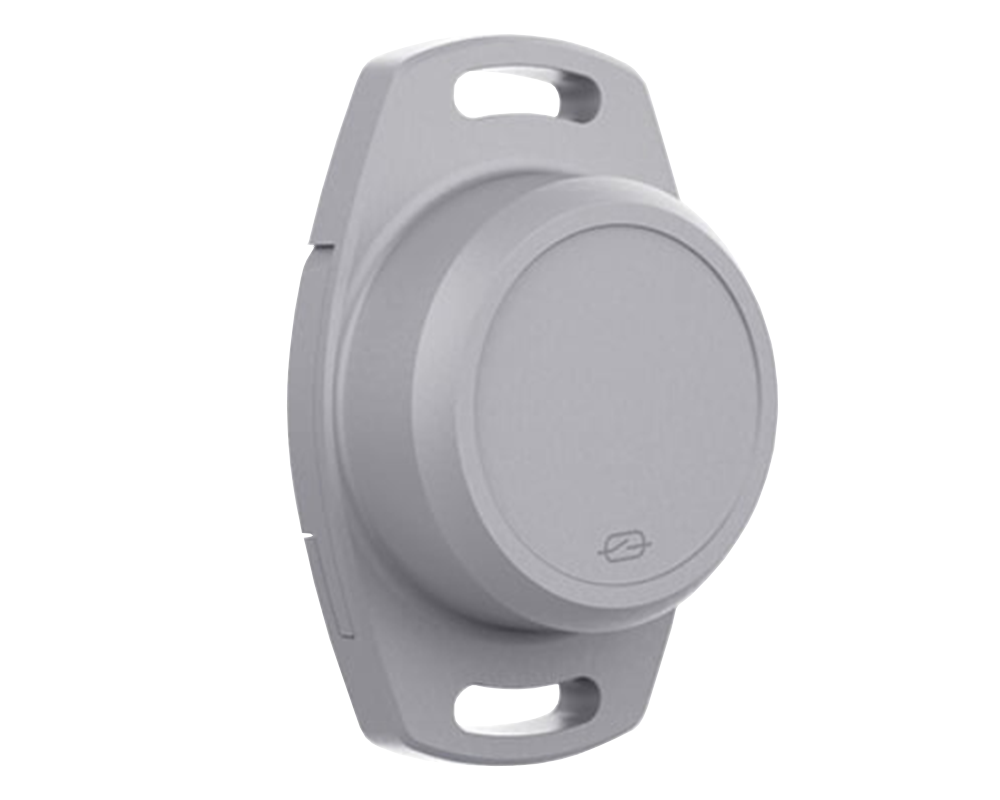
- Standout features: Smart Labels are peel-and-stick disposable trackers for individual shipments. AssetTag Edge is a rugged, IP67-rated tag for returnable container tracking. Scout AI delivers predictive analytics, and multi-sensor hardware monitors temperature, shock, humidity, and light.
Advantages
- Predictive intelligence: Scout AI reads live data to produce accurate ETAs and prescriptive alerts, so teams resolve disruptions before they spread.
- Flexible, scalable hardware: Options run from disposable labels for a single journey to rugged tags for years of reuse, so you match hardware to the job without large upfront costs.
- One platform for every asset: Track a single package or an entire fleet in one place, with no data silos.
- Condition monitoring end to end: Sensors track temperature, humidity, shock, and light, so you prove product integrity for cold chain, pharmaceuticals, and sensitive electronics.
2. Samsara
Samsara is a major force in connected operations, best known for fleet management. Its platform folds GPS tracking, AI dashcams, driver-safety monitoring, and ELD compliance into one system. Vehicle telematics is its core, but it also tracks trailers and equipment, which makes it a strong pick for teams managing an entire fleet from one dashboard.
- Location: San Francisco, CA, USA
- Best for: Fleets of all sizes that want one system for vehicle tracking, safety, compliance, and asset management.
- Pricing: Starts at $27 to $33 per vehicle per month. AI dashcam features push this to $40 to $60+ per month. Requires a 3-year contract.
- Connectivity: Cellular and GPS.
- Standout features: Dual-facing AI dashcams with in-cab coaching, strong driver-safety and compliance tools, video telematics, and deep reporting and analytics.
Advantages
- Polished, user-friendly platform with a deep feature set.
- Cuts accidents and improves driver safety through its AI camera system.
- Excellent for fleets that prioritize ELD compliance and vehicle telematics.
Disadvantages
- Pricing runs higher than many competitors, especially with advanced features.
- Requires a minimum 3-year contract with possible termination fees.
- Supports only Samsara-branded hardware.
3. Tive
Tive specializes in real-time, in-transit visibility, with a heavy focus on condition, not just location. Its single-use and multi-use trackers deliver global, multi-modal coverage, which suits high-value goods, pharmaceuticals, and perishables where product integrity is critical. The platform serves shippers who need to monitor and react to environmental excursions or security breaches in transit.
- Location: Boston, MA, USA
- Best for: Shippers in life sciences, food & beverage, and high-value electronics who track shipment condition in real time.
- Connectivity: Cellular and WiFi.
- Standout features: Real-time tracking of temperature, humidity, shock, and light, broad global coverage, 24/7 monitoring services, and two-way connectivity to adjust tracker settings mid-journey.
Advantages
- Accurate, real-time location and condition data.
- Instant alerts enable proactive intervention on delays or condition changes.
- Clean cloud platform with strong support and monitoring services.
Disadvantages
- Pricing is not public and requires a custom quote.
- Built for in-transit shipments more than a permanent pool of assets.
4. FourKites
FourKites is a leading enterprise supply chain visibility platform that pulls data from many sources into one end-to-end view. It focuses on software-based visibility, integrating with carrier telematics, TMS, and other systems rather than shipping its own hardware. Its strength is machine learning that delivers accurate predictive ETAs, plus tools for yard management and appointment scheduling.
- Location: Chicago, IL, USA
- Best for: Large enterprises that want software-driven visibility across road, rail, ocean, and air.
- Connectivity: Integrates with thousands of carrier telematics, ELD, and TMS systems by API.
- Standout features: Machine-learning predictive ETAs, a Shipment Twin for detailed end-to-end tracking, an advanced yard-management tool, and strong analytics and reporting.
Advantages
- Exceptional end-to-end visibility for complex supply chains.
- Accurate predictive ETAs sharpen planning and customer service.
- A large network of integrated carriers gives broad data coverage.
Disadvantages
- Enterprise-level pricing is not public.
- Implementation is complex and needs significant IT coordination.
- Data accuracy depends on the quality of third-party carrier data.
5. Project44
Like FourKites, Project44 is a visibility software leader that connects shippers, carriers, and 3PLs through its cloud platform. It delivers real-time, multi-modal freight tracking across a vast global carrier network. Its Movement platform is the single source of truth for shipment data, from full truckload to parcel, with analytics to optimize performance and manage disruptions.
- Location: Chicago, IL, USA
- Best for: Large shippers and logistics providers that need global, multi-modal visibility with strong API and integration.
- Connectivity: API integration with a global carrier network across ocean, rail, air, and road.
- Standout features: Real-time tracking across all modes, predictive ETA updates, exception-management dashboards, and parcel tracking with temperature monitoring.
Advantages
- Deep visibility and data insight through a modern platform.
- Strong API focus makes it a flexible part of any tech stack.
- Accurate data streamlines operations and customer communication.
Disadvantages
- Custom enterprise pricing requires a direct sales conversation.
- Some users report friction with carrier onboarding and data consistency.
- As software only, it does not solve for un-wired assets or shipments.
6. Descartes MacroPoint
Now part of Descartes, MacroPoint is one of the original real-time freight visibility networks. It serves shippers, brokers, and 3PLs with software-based tracking of in-transit shipments. The platform taps a broad carrier network for location data and adds predictive analytics and automated alerts to manage exceptions. It holds a strong foothold in the brokerage and 3PL community.
- Location: Waterloo, ON, Canada
- Best for: Freight brokers, 3PLs, and shippers that want a proven, widely adopted network for real-time freight tracking.
- Pricing: Starts around CA$1,000 per user per year, with per-shipment costs from $0.10 to $3.75. Implementation runs $3K to $20K.
- Connectivity: Integrates with ELD and telematics devices, driver mobile apps, and carrier TMS systems.
- Standout features: Configurable control-tower views, automated alerts and predictive ETAs, geofencing, and temperature monitoring.
Advantages
- Reliable, widely trusted platform with a large carrier network.
- Automates tracking and cuts check calls, which lifts efficiency.
- Flags potential disruptions and delivery exceptions early.
Disadvantages
- Pricing and implementation costs get complex and significant.
- The interface feels dated next to newer competitors.
7. Verizon Connect
Verizon Connect offers a strong suite of fleet management and asset tracking that runs on Verizon’s nationwide network. It fits businesses with diversified fleets across field service, construction, and long-haul trucking. The platform pairs real-time GPS tracking with dispatch, driver management, compliance, and asset tools for a full view of mobile operations.
- Location: Atlanta, GA, USA
- Best for: Field service, construction, and other fleet-based businesses that want one management platform.
- Pricing: Starts around $23.50 per vehicle per month, usually on a three-year contract. Extra features and hardware raise costs.
- Connectivity: Cellular and GPS.
- Standout features: Live map with traffic and weather, AI dash cams, field-service dispatch tools, and asset tracking for powered and unpowered equipment.
Advantages
- Broad feature set spanning vehicles, assets, and mobile workers.
- Easy-to-use interface with strong enterprise scale.
- Backed by the reach and reliability of the Verizon network.
Disadvantages
- Requires multi-year contracts, usually three years.
- Pricing is not transparent and needs a sales consultation.
- Fees for hardware installation, removal, or transfer add up.
8. Geotab
Geotab is a global fleet management leader known for its open platform and data integration. Instead of a closed system, it supports a marketplace of third-party hardware and software that plug into its platform. That makes it a flexible, customizable choice for fleets of any size, with strong vehicle telematics, compliance, and driver-behavior tools. Its Geotab Ace AI assistant adds an analytics layer.
- Location: Oakville, ON, Canada
- Best for: Fleets that want a flexible, data-centric platform with wide integration options.
- Connectivity: Cellular and GPS, with broad OEM and third-party hardware support.
- Standout features: An open marketplace with hundreds of integrations, the Geotab Ace AI assistant, deep engine diagnostics, and strong OEM partnerships.
Advantages
- Highly customizable through its open platform and large partner network.
- Deep vehicle data and engine diagnostics for maintenance.
- Supports a wide range of third-party hardware for more choice.
Disadvantages
- Pricing is not public and varies by reseller.
- The volume of options overwhelms new users.
9. Trimble Transportation
Trimble is a long-standing transportation technology provider with a massive portfolio across the supply chain. From in-cab systems and ELD compliance, including the Omnitracs brand it acquired, to enterprise TMS and freight-brokerage software, Trimble covers nearly every part of logistics. Its edge is deep industry expertise and an integrated suite for large, complex trucking operations.
- Location: Westminster, CO, USA
- Best for: Large trucking companies and logistics enterprises that want one integrated management, mobility, and compliance suite.
- Connectivity: Cellular, GPS, and satellite.
- Standout features: End-to-end TMS, fleet management and ELD tools, route optimization and dispatch software, and asset tracking and maintenance.
Advantages
- Comprehensive portfolio covering nearly every transportation need.
- Decades of experience and a strong trucking reputation.
- Focus on safety, compliance, and operational efficiency.
Disadvantages
- The vast product suite is complex to set up and integrate.
- Pricing is custom for enterprise deals and not public.
- Often too complex and costly for smaller fleets or shippers.
Logistics Software vs Logistics Tracking Software: Which One Do You Need?
Buyers searching for logistics software usually mean one of three different categories, and they solve different problems. Picking the wrong one is the most common reason a rollout disappoints.
| Category | What it manages | Typical buyer question |
|---|---|---|
| Transportation management (TMS) | Planning loads, choosing carriers, tendering, freight audit and payment | Which carrier and route should this shipment take, and what should it cost? |
| Warehouse management (WMS) | Inventory, picking, packing and labor inside the building | What is on the shelf and how fast can we ship it? |
| Logistics tracking and visibility | Where shipments, trailers, containers and returnable assets are right now, and their condition | Where is it, is it on time, and did anything happen to it on the way? |
Logistics management software is often sold as a suite that covers the first two. Tracking platforms like the ones ranked above sit alongside it and feed real location and condition data back into those systems. If your planning runs well but you still lose trailers, pallets or high-value loads after they leave the dock, a tracking platform is the gap to close first.
How to Decide Between Fleet Telematics and Asset Tracking
The best logistics tracking software depends on your operation. A platform built for a large enterprise fleet overshoots a company focused on package integrity. Work through these questions to find the right fit.
- What are you tracking? Vehicle fleets need telematics, returnable assets like pallets and totes need durable tags, and high-value shipments need disposable trackers. The asset dictates the hardware and software.
- What data is essential? Is location enough, or do you need condition monitoring for temperature, humidity, shock, or light? Define your must-have data points to filter out platforms that fall short.
- How will it integrate? The platform has to fit your stack. Check the provider’s API and its ability to connect with your TMS, WMS, or ERP. Poor integration just creates more data silos.
- What is the true total cost of ownership? Look past the monthly fee. Ask about hardware costs, contract length, implementation fees, and support or training. A low monthly rate on a long, rigid contract costs more over time.
- How much automation do you need? Do you have staff to watch a dashboard around the clock, or do you need automated alerts and AI-driven insight? Modern platforms turn raw data into prescriptive action.
Answer these and you move from broad logistics software to the specific platform that solves your most pressing problems and returns clear value. Modern logistics teams treat tracking as an intelligence layer, not a status page.
Ready to move beyond dots on a map and take real control of your supply chain? See how GPX Intelligence delivers predictive visibility and clear ROI. Get started with GPX today.
Frequently Asked Questions (FAQs)
What is the difference between asset tracking and fleet management?
Fleet management focuses on vehicles. It uses telematics to monitor driver behavior, fuel, engine diagnostics, and route efficiency. Asset tracking is broader. It covers non-powered assets like trailers, containers, equipment, and individual parcels, monitoring location, condition, and use anywhere in the world, not just when tethered to a vehicle.
What is the typical ROI for an asset tracking system?
Return comes from four levers: less theft and loss, higher asset utilization, lower spoilage on temperature-sensitive goods, and fewer hours spent on manual check calls and status updates. Teams that track returnable containers and high-value equipment recover assets they would otherwise write off, and that recovery alone often covers the hardware cost within the first year. Model the numbers against your current loss rates and the business case becomes clear.
Can this software track assets globally?
Yes. Advanced platforms track worldwide with multi-network devices that switch between cellular networks like LTE-M and satellite when cellular drops. That keeps visibility unbroken across oceans and remote regions.
What is multi-sensor tracking, and why does it matter?
Multi-sensor tracking captures more than GPS location. Devices add sensors for temperature, humidity, shock, light, and air pressure. GPX Smart Labels and AssetTag Edge use this data to prove product integrity for pharmaceuticals, fresh food, and electronics across the supply chain.
How does AI improve logistics tracking?
AI turns raw tracking data into predictive and prescriptive intelligence. Instead of only showing where a shipment is, GPX Scout AI weighs traffic, weather, and historical data to predict an accurate ETA. It flags anomalies, like an unexpected stop or a temperature change, and alerts managers before a small problem escalates.
How ready are most supply chain organizations to meet future logistics demands?
Gartner found that only 29% of supply chain organizations have built the capabilities they need to deliver on future performance, leaving the majority dependent on manual processes and fragmented, disconnected data.
How fast is the IoT-powered logistics tracking market growing?
The IoT-powered logistics market is projected to grow from $42.3 billion in 2023 to $146.1 billion by 2033, a 13.2% annual growth rate driven by rising demand for real-time shipment visibility and connected tracking.