

The Bluetooth Low Energy (BLE) indoor location market is on track to grow from $4.3 billion in 2025 to $11.8 billion by 2030, a 22.5% compound annual growth rate, with asset tracking the single largest application driving that curve. At the hardware layer, the BLE beacons market is forecast to climb from $12.35 billion in 2025 to $87.4 billion by 2031. Translation: BLE has moved from a consumer key-finder novelty to the connective tissue of how serious operations see their assets.
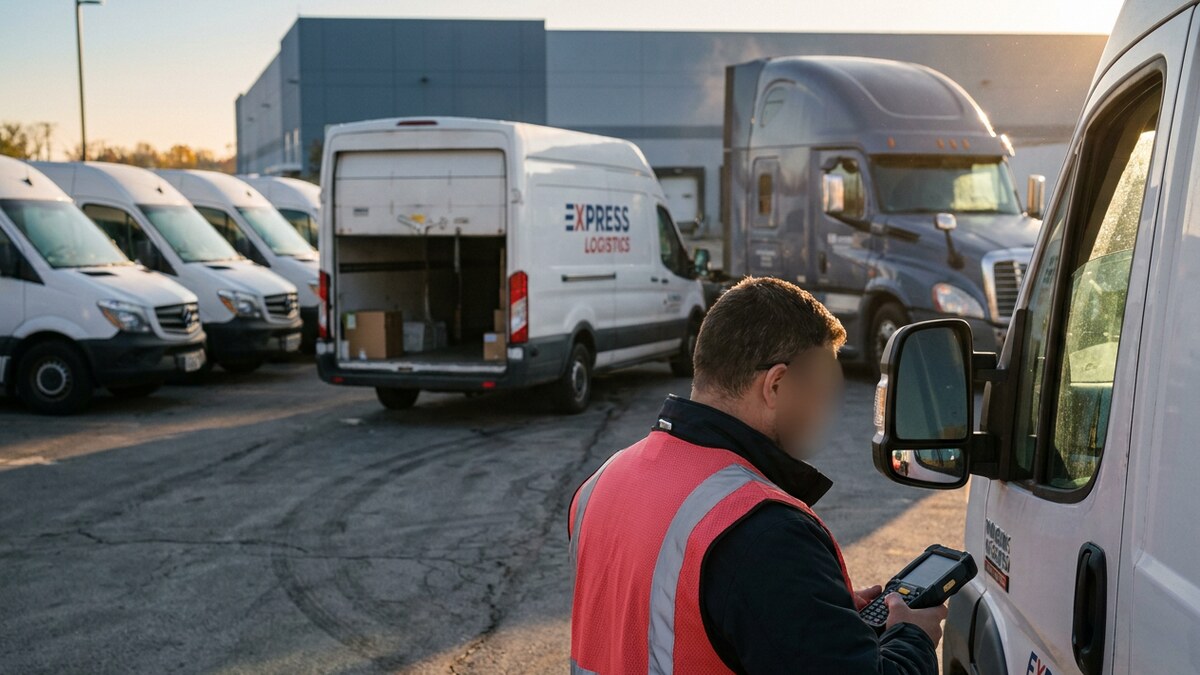
If you run a fleet, a construction yard, a hospital network, or an in-transit logistics operation, you have felt the pain that BLE solves. Tools that walk off job sites. Trailers that disappear from the manifest. Medical equipment that nobody can locate when a patient is waiting. The right BLE tracker turns those blind spots into a live picture of where everything is, what condition it is in, and what is about to go wrong.
This guide ranks the top 7 BLE trackers of 2026 across business and personal use, compares the technology against GPS, UWB, and RFID, addresses the real challenges buyers run into, and closes with a practical framework for choosing the right device for your operation.
Executive Summary: The Top 7 BLE Trackers of 2026 at a Glance
- Best for enterprise asset tracking: GPX AssetTag, a rugged IP67 BLE tag backed by a terrestrial network, GPS handoff, and the Scout AI analyst.
- Best for consumers: Apple AirTag 2, with ultra-wideband (UWB) Precision Finding and roughly 60 m range as of its January 2026 refresh.
- Market trajectory: The BLE indoor location market grows from $4.3 billion in 2025 to $11.8 billion by 2030, a 22.5% CAGR, with asset tracking the largest application.
- Cost at scale: Basic BLE tags now reach sub-$5 per unit at high volume, making fleet-wide tagging viable without a capital fight.
- The decisive factor: The network and AI software behind the tag, not the tag itself, separate enterprise infrastructure from a consumer toy.
- 2026 precision trend: Bluetooth AoA (Angle of Arrival) and UWB are pushing high-end real-time location systems (RTLS) toward sub-meter and centimeter accuracy.
What Is an Enterprise BLE Tracker? How Bluetooth Low Energy (BLE) RTLS & Indoor Positioning Works
A BLE tracker is a small, battery-efficient tag that broadcasts a short-range Bluetooth signal carrying a unique identifier. When a compatible receiver picks up that signal, the platform records where the tag is and, in many systems, what is happening to the asset it is attached to. Because the radio sips power instead of draining it, a single coin-cell battery can run for years rather than days. In enterprise settings, these tags form the foundation of a real-time location system (RTLS), the indoor positioning layer that tells you where every tagged asset sits at any moment.
Here is the mechanism in plain terms:
- The tag broadcasts. The BLE tag sends out a low-power signal at regular intervals. It does not need a SIM card, a cellular plan, or a power outlet.
- A receiver listens. That signal is picked up by a phone, a fixed gateway, a vehicle-mounted hub, or a wider community network of devices already in the field.
- The platform locates and reasons. Software translates the handshake into a location, then layers in alerts, geofencing, condition data, and increasingly, AI-driven predictions about risk and movement.
The strategic shift in 2026 is that BLE is no longer judged on the tag alone. It is judged on the network behind the tag and the intelligence layered on top. A tag that only works when your own phone is in the room is a consumer toy. A tag that reports through a national network of gateways and feeds an AI analyst is enterprise infrastructure. That distinction is the single most important thing to understand before you buy.
Why BLE Beacons & Ambient IoT Are Dominating Supply Chain Visibility in 2026
Three forces have pushed BLE from the periphery to the center of the asset-tracking conversation this year.
Cost-Efficiency at Scale (Sub-$5 Per Unit). Basic BLE tags now reach a few dollars per unit at high volume, which means you can tag thousands of pallets, tools, and containers without a capital-approval war. That low per-unit cost is exactly why asset tracking has become the largest BLE application segment, ahead of navigation and workforce management.
Smarter Hardware, Multi-Year Battery Life. Modern BLE tags fold in temperature, humidity, shock, and tamper sensing, so a tag on a sensitive shipment reports not just where it is but whether it was dropped, overheated, or opened. Apple raised the consumer bar in January 2026 when the AirTag 2 paired second-generation ultra-wideband with BLE to stretch effective range near 60 meters and deliver near 10-centimeter location fidelity, and enterprise buyers now expect similar precision from their fleets.
Battery-Free Ambient IoT Has Arrived. Energy-harvesting tags that draw power from ambient light and radio waves are moving out of the lab and into supply chains, promising single-use and ultra-long-life tracking with no battery to replace. The direction of travel is clear: more tags, on more assets, reporting more often, for less money.
For operations leaders, the takeaway is simple. The question is no longer whether to use BLE. It is which BLE tracker, backed by which network, gives you visibility you can actually act on.
Top 7 BLE Trackers of 2026: Evaluating B2B Industrial, Fleet, and Consumer Tags
We evaluated the field on the criteria that matter to operators: network reach, battery life, durability, sensing, software intelligence, and total cost to deploy at scale. Here is the at-a-glance comparison, followed by a detailed look at each device.
| BLE Tracker | Best For | Network & Range | Battery | Standout Feature |
|---|---|---|---|---|
| GPX AssetTag | Enterprise asset, fleet & logistics visibility | Terrestrial BLE network plus AssetTrack GPS handoff | Replaceable coin cell, multi-year | Scout AI analyst plus IP67 rugged sensing |
| Apple AirTag 2 | Personal items, iPhone users | Apple Find My plus UWB, ~60 m | Replaceable coin cell, ~1 year | UWB Precision Finding |
| Tile Pro | Cross-platform everyday items | Tile and Life360 community, up to 400 ft | Replaceable coin cell, ~1 year | Works on iOS and Android |
| Samsung Galaxy SmartTag2 | Samsung and Android users | SmartThings Find network | Replaceable coin cell, 500+ days | AR Compass find mode |
| Wiliot IoT Pixel | Supply chain, retail, cold chain | Ambient IoT cloud network | Battery-free, energy harvesting | Battery-free sensing at scale |
| Kontakt.io | Healthcare and indoor RTLS | BLE plus gateways and cloud | Replaceable, multi-year | Room-level real-time location |
| Link Labs AirFinder | Industrial indoor and outdoor assets | BLE with LTE-M backhaul | Multi-year | Hybrid indoor plus GPS handoff |
The Authoritative Verdict: For mixed indoor and outdoor industrial fleets, hybrid BLE plus GPS networks like GPX consistently outperform standalone consumer tags. Layered covert tagging on a networked platform lifts asset recovery rates above 85%, compared with the 20 to 25% typical of visible-only setups, a gap that pays back an entire program from a single recovered asset.
1. GPX AssetTag: Best for Enterprise Asset, Fleet, and Logistics Visibility
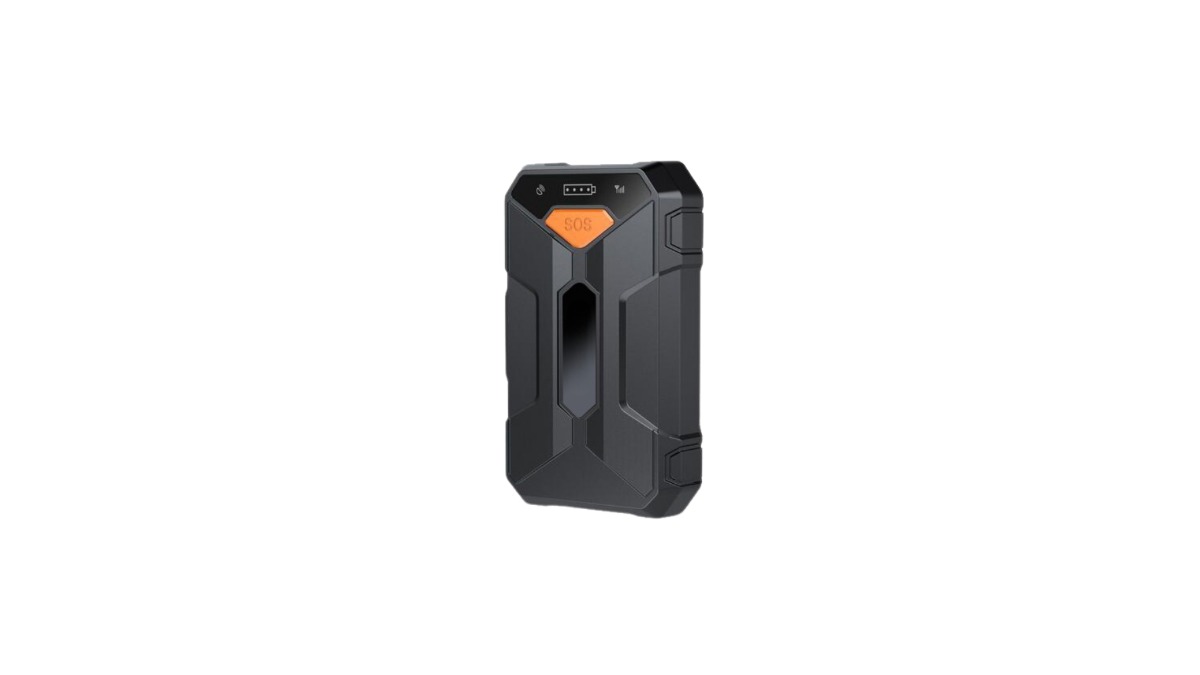
The GPX AssetTag is the enterprise-grade answer to consumer key finders. It is a rugged, IP67-rated BLE tag that mounts to almost anything with adhesive, screws, or zip ties, and it survives the conditions that destroy consumer tags: rain, dust, vibration, and the back of a flatbed in July. The battery is a user-replaceable coin cell built for multi-year deployments, so the device keeps reporting long after a sealed consumer tag would be landfill.
What separates the AssetTag from the pack is what sits behind it. It networks with GPX AssetTrack BLE-enabled GPS devices and mobile hubs to deliver location indoors, where GPS signals cannot reach, and outdoors as the asset moves. When an asset leaves a geofence, the tag keeps broadcasting through the GPX terrestrial BLE network, so recovery teams can act on the asset’s current position rather than its last-seen location. On top of all of it runs Scout AI, a built-in analyst that surfaces anomalies, predicts high-risk movement, and routes alerts to the right people in seconds. For construction fleets, in-transit shipments, and high-value equipment, that combination of rugged hardware, network reach, and AI is the difference between knowing and acting.
2. Apple AirTag 2: Best for Personal Items and iPhone Users
The AirTag 2 is the gold standard for consumers and the benchmark every other tracker is measured against. Its January 2026 refresh paired a second-generation ultra-wideband chip with BLE to push effective range near 60 meters and deliver centimeter-level Precision Finding inside the Apple ecosystem. Backed by the enormous Find My network of iPhones, it is excellent at locating a backpack, a set of keys, or luggage. For business asset tracking, however, it has hard limits: it is tied to Apple devices, it offers no enterprise dashboard, no condition sensing, and no fleet-grade alerting. It finds your stuff. It does not run your operation.
3. Tile Pro: Best Cross-Platform Everyday Tracker
Tile, now part of Life360, is the leading platform-agnostic option. The Tile Pro offers the longest range in the Tile lineup, up to 400 feet, a replaceable battery, and a community-finding network that works across both iOS and Android. That cross-platform reach is its real advantage in mixed-device households and small teams. Like other consumer tags, it is built for everyday belongings, not for ruggedized industrial deployment or large-scale asset intelligence.
4. Samsung Galaxy SmartTag2: Best for Android and Samsung Ecosystems
The SmartTag2 is Samsung’s answer to the AirTag, and it is a strong one for Android-first users. It leans on the SmartThings Find network, offers a long battery life rated past 500 days on a replaceable cell, and includes an augmented-reality Compass mode that points you toward a nearby item. It is a polished consumer device with the same ceiling as its peers: great for personal items inside the Samsung world, not designed for enterprise asset tracking.
5. Wiliot IoT Pixel: Best Battery-Free Option for Supply Chains
Wiliot represents the frontier of the category. Its IoT Pixel tags are battery-free, drawing power from ambient radio energy, which makes them ideal for tagging vast numbers of items across retail, cold chain, and supply chain operations where replacing batteries on millions of tags would be impossible. The Pixel can sense temperature and report through an ambient IoT cloud. The tradeoff is that it depends on dense reader infrastructure and a cloud platform, so it shines in high-density, high-volume environments rather than scattered field assets.
6. Kontakt.io: Best for Healthcare and Indoor RTLS
Kontakt.io is a heavyweight in enterprise real-time location systems, with deep roots in healthcare. Its BLE tags, paired with gateways and cloud analytics, deliver room-level location for tracking infusion pumps, wheelchairs, and surgical instruments inside hospitals and large facilities. It is purpose-built for organizations that need precise indoor location across a fixed campus and have the appetite to plan and maintain gateway infrastructure.
7. Link Labs AirFinder: Best Hybrid Indoor and Outdoor Industrial Tracker
Link Labs AirFinder targets industrial operations that need to follow assets both inside a facility and out into the yard or on the road. It combines BLE tags with LTE-M backhaul and GPS handoff, so an asset stays visible as it moves from an indoor zone to an outdoor one. For manufacturers and logistics operators with a mix of indoor and outdoor tracking needs, it is a credible enterprise contender.
BLE vs. GPS vs. UWB vs. RFID: Which Asset Tracking Technology Has the Best ROI?
No single radio technology wins everywhere, and the best modern systems combine several. Here is how the four core technologies compare so you can match the tool to the job.
- BLE (Bluetooth Low Energy): Low cost, low power, and excellent indoors. It excels at proximity and zone-level location across large tag fleets. Its native range is short, which is why the network behind the tag matters so much.
- GPS: Unmatched for outdoor, wide-area, real-time location across cities and highways. It struggles indoors and inside metal-walled trailers, and it draws far more power than BLE. Pairing GPS hubs with BLE tags closes the indoor gap.
- UWB (Ultra-Wideband): The precision leader, delivering centimeter-level accuracy. It is more expensive and power-hungry than BLE, which is why it tends to appear as a premium add-on, as it does in the AirTag 2, rather than the everyday workhorse.
- RFID: Cheapest of all and great for choke-point scanning at a dock door or shelf, but passive RFID has very short read range and no real-time, continuous visibility once an asset leaves the reader.
The winning pattern in 2026 is convergence. BLE tags for breadth and battery life, GPS for the open road, UWB where precision is non-negotiable, and an AI software layer that unifies all of it into one operational picture. That is exactly the architecture leading platforms now deliver, rather than forcing a buyer to choose a single radio.
Key Problems Enterprise BLE Buyers Run Into
Before you commit to a deployment, it pays to be clear-eyed about both the problems BLE eliminates and the deeper systemic challenges enterprise buyers run into.
What BLE trackers solve:
- Lost and stolen assets. Tools, trailers, and equipment that vanish from job sites and yards become visible and recoverable, with covert tagging strategies pushing recovery rates well above visible-only tracking.
- Indoor blind spots. Inside buildings and metal-walled trailers where GPS fails, BLE delivers the proximity location that operations actually need.
- Manual searching and wasted labor. Staff stop hunting for misplaced gear and get back to the work that matters, which is a major driver of BLE adoption in healthcare and field operations.
- Condition blindness. Sensor-equipped tags flag temperature excursions, shocks, and tamper events on sensitive cargo before the damage becomes a claim.
The deeper challenges enterprise buyers are searching to solve:
- API and system integration (the digital twin problem). The fear is creating yet another siloed dashboard. The fix is a platform with open APIs and webhooks that feed BLE location and condition data directly into your existing ERP (enterprise resource planning), TMS, or fleet management software, so your tracking layer becomes part of a live digital twin of operations rather than a screen nobody opens.
- Security, spoofing, and signal jamming. Enterprise buyers want to know if signals are encrypted and what happens if someone tries to spoof or jam a tag. Serious platforms use encrypted payloads, rotating identifiers, and anomaly detection, so a jammed or cloned tag triggers an alert instead of a silent gap. Pairing a covert tag with a visible decoy also defeats the thief who disables the unit they can see.
- The battery management nightmare. Tagging 10,000 pallets eventually means changing 10,000 batteries, a maintenance burden that can sink a program. Two answers exist: enterprise tags with replaceable, multi-year coin cells that stagger replacement cycles, and battery-free ambient IoT tags like the Wiliot IoT Pixel that remove the replacement problem entirely at high volume.
Where BLE still has limits:
- Range depends on the network. A bare BLE tag is only as useful as the readers around it. Without a gateway network, a vehicle hub, or a large community network, coverage gaps appear fast.
- Infrastructure planning is real work. Large fixed deployments require careful IoT gateway placement and ongoing battery management, which is why many organizations choose a managed network rather than building one alone.
- Consumer tags do not scale. Apple, Tile, and Samsung devices are superb for personal items but lack the dashboards, alerting, durability, and integrations an enterprise operation requires.
Enterprise Buying Guide: How to Select an Industrial BLE Tracker and IoT Gateway System
The right BLE tracker is the one that matches your assets, your environment, and your appetite for infrastructure. Work through these questions in order and the choice gets clear quickly.
- What are you tracking, and where? Personal belongings inside a phone’s range point to a consumer tag. High-value business assets moving across indoor and outdoor environments point to an enterprise platform with network reach and GPS handoff.
- What network sits behind the tag? This is the question that separates a toy from infrastructure. Confirm whether the device relies only on your own phones, on a community network, or on a dedicated gateway and terrestrial network that reports even when the asset leaves your sites.
- Do you need condition data, not just location? If your cargo is sensitive, prioritize tags with temperature, humidity, shock, and tamper sensing built in.
- How rugged does the hardware need to be? For construction, fleet, and logistics, an IP67-rated tag with a replaceable battery will outlast and outperform a sealed consumer device.
- What does the software actually do? A dot on a map is the floor, not the ceiling. The highest-return systems add geofencing, real-time alerts, and an AI analyst that predicts risk and drives recovery, so your team acts on insight rather than hunting through a dashboard.
- What is the total cost to deploy at scale? Look past the per-tag price to gateways, software subscriptions, integration, and battery upkeep across the full fleet over several years.
If your goal is personal peace of mind, the AirTag 2, Tile Pro, or SmartTag2 will serve you well. If your goal is operational visibility across a business, where lost assets cost real money and minutes matter, choose a platform engineered for it. The GPX AssetTag, backed by the GPX terrestrial network and Scout AI, is built for exactly that: rugged hardware, network reach indoors and out, and the intelligence to turn tracking data into action. Request a pilot and start tagging the assets that have been quietly walking off your books.
Frequently Asked Questions (FAQs)
What is the difference between Bluetooth AoA and standard BLE?
Standard BLE estimates location from signal strength (RSSI), which gives you zone-level or room-level accuracy. Bluetooth AoA (Angle of Arrival) uses multi-antenna receivers to calculate the precise angle a signal arrives from, enabling sub-meter and even centimeter-level positioning. AoA is the high-precision direction-finding standard driving advanced real-time location systems (RTLS) in 2026, while standard BLE remains the cost-effective choice for broad, large-scale asset tracking.
How many BLE gateways do I need for a 100,000 sq ft warehouse or facility?
As a rule of thumb, a single BLE IoT gateway covers roughly 10,000 to 15,000 square feet for dependable zone-level location, so a 100,000 square foot facility typically needs about 8 to 12 gateways. The exact count depends on layout, racking density, wall materials, and whether you need room-level or sub-meter accuracy, which requires tighter spacing. Mobile hubs mounted on forklifts and vehicles can reduce the number of fixed gateways by extending coverage as they move.
Is a hybrid BLE and GPS tracker better than standalone GPS?
For most business assets, yes. Standalone GPS is excellent outdoors but goes blind indoors and inside metal-walled trailers, and it drains battery quickly. A hybrid BLE plus GPS approach, like the GPX AssetTag networked with AssetTrack GPS devices, delivers indoor proximity location and outdoor wide-area tracking from one platform, with far longer battery life on the BLE tags. The result is continuous visibility as an asset moves between indoor and outdoor environments, which standalone GPS cannot provide.