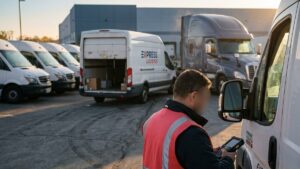

A delivery truck sits idle at a yard gate for ninety minutes. A pallet of temperature-sensitive medication drifts two degrees too warm somewhere between the distribution center and the clinic. A piece of construction equipment vanishes from a job site over a holiday weekend. In every one of these moments, the same question gets asked too late: Where is it, what condition is it in, and why didn’t we know sooner?
That gap between what is happening in your supply chain and what you can actually see is the problem AI-powered supply chain visibility was built to close. In this guide, we break down exactly what it means, how it works, the ROI, the pain points it solves, and how to choose the right solution for your operation.
Key Takeaways
- AI-powered supply chain visibility combines real-time GPS, BLE, and IoT sensor data with machine learning to track assets end to end.
- It shifts operations from reactive (reporting problems after they happen) to predictive (flagging risks before they cost you money).
- The right tracking hardware, including B2B GPS trackers and BLE asset tags, is the foundation that makes intelligent visibility accurate and reliable.
What Is AI-Powered Supply Chain Visibility? (RTLS & Predictive Analytics Explained)
Supply chain visibility is your ability to track goods, assets, and shipments as they move from origin to destination. The traditional version relies on manual scans, periodic check-ins, and spreadsheets that tell you where something was, not where it is right now.
AI-powered supply chain visibility takes that same goal and adds two things: continuous data from real-time location systems (RTLS) and machine intelligence that interprets it. Instead of a static report, you get a living picture of your operation that not only shows you the present but also predicts what is likely to happen next through predictive analytics.
In practical terms, it combines several technologies working together:
- Real-time location systems (RTLS) using GPS, cellular, and Bluetooth Low Energy (BLE) tags that report position continuously rather than at fixed checkpoints.
- IoT sensor data capturing temperature, humidity, shock, and tampering across in-transit shipments and stored assets.
- Machine learning and predictive analytics that detect anomalies, forecast delays, and flag risks before they become losses.
- Automated alerts and dashboards that surface only what matters, so your team is not drowning in raw data.
The result is a shift from reactive firefighting to proactive control. You stop asking where your inventory went and start knowing where it is going.
How IoT Sensors and Machine Learning Enable End-to-End Supply Chain Visibility
Behind the dashboard, the process flows through four connected stages. Each one builds on the last, turning scattered signals into decisions you can act on in minutes instead of days.
- Capture: GPS trackers, BLE asset tags, and IoT sensors collect location and condition data from vehicles, containers, equipment, and individual assets across your network.
- Connect: That data streams into a central platform through cellular and cloud connectivity, unifying information that used to live in separate silos.
- Analyze: Machine learning models compare incoming data against historical patterns, route benchmarks, and expected timelines to spot deviations, predict ETAs, and calculate risk scores.
- Act: The system pushes alerts, recommendations, and automated workflows to the right people, so a flagged delay or a temperature breach triggers action right away.
The intelligence layer is what separates this from a simple GPS map. A traditional tracker tells you a truck is stopped. An AI-powered system tells you the truck is stopped, the stop is forty minutes longer than the historical average for that route, the delay puts a same-day medical delivery at risk, and here is the alternate carrier you should dispatch. That is the difference between data and insight, and it is what makes true end-to-end visibility possible.
Why Real-Time Supply Chain Visibility Matters More Than Ever in 2026
Supply chains have grown longer, faster, and far less forgiving. Customers expect near-instant fulfillment, margins are thin, and a single disruption can ripple across hundreds of shipments. Visibility is no longer a competitive edge. It is the cost of staying in the game.
Several forces are pushing this from a nice-to-have to a must-have:
- Rising customer expectations for accurate, real-time delivery tracking across every industry, not just parcel.
- Increased regulatory and compliance pressure, especially in healthcare and pharmaceutical cold chains where condition monitoring is mandatory.
- Persistent disruption risk from weather, geopolitics, labor shortages, and demand swings that punish slow-reacting operations.
- The high cost of lost and stolen assets, particularly high-value equipment in construction, fleet, and automotive sectors.
When you cannot see your supply chain clearly, you absorb the cost of every blind spot: idle labor, expedited shipping fees, spoiled goods, replacement equipment, and damaged customer trust. AI-driven visibility turns those hidden costs into measurable, manageable line items.
AI-Powered vs Traditional Supply Chain Visibility: What Is the Difference?
The clearest way to understand the value is to put the two approaches side by side. Traditional visibility answers questions about the past. AI-powered visibility answers questions about the present and the future.
| Capability | Traditional Visibility | AI-Powered Visibility |
|---|---|---|
| Data updates | Manual scans at fixed checkpoints | Continuous, real-time location and sensor feeds |
| Insight type | Backward-looking reports | Predictive ETAs and risk forecasting |
| Problem detection | Found after the fact | Anomalies flagged before they escalate |
| Response | Reactive, manual coordination | Automated alerts and recommended actions |
| Asset tracking with GPX | Periodic, gap-prone | GPS and BLE AssetTags with 4-year battery life reporting continuously |
| Scalability | Labor-intensive to expand | Scales across sites and assets with minimal overhead |
The ROI of Predictive Supply Chain Visibility: Cutting Costs and Improving SLAs
The payoff shows up across cost, risk, and customer experience. For B2B operations, the return on investment is measured in fewer penalties, leaner operations, and stronger service level agreements (SLAs). Here are the gains operations leaders report most often once intelligent visibility is in place.
- Fewer lost and stolen assets: Continuous tracking means high-value equipment and inventory are accounted for in real time, with instant alerts when something leaves a defined geofence.
- Lower expedited shipping costs: Predicting delays early lets you reroute or reschedule before you are forced into expensive last-minute fixes.
- Improved on-time delivery and SLA performance: Accurate, AI-calculated ETAs let you communicate proactively with customers and protect your service reputation and contractual commitments.
- Stronger compliance: Automated temperature and condition logging creates the audit trail regulated industries require, without manual paperwork.
- Better capacity planning: Pattern analysis across your network reveals bottlenecks and underused assets you could not see before.
- Faster decision-making: Your team acts on prioritized alerts instead of digging through raw data, freeing hours every week.
Solving Logistics Blind Spots: Shrinkage, Spoilage, and Demurrage Fees
Most visibility problems are not caused by a lack of data. They are caused by data that is fragmented, delayed, or impossible to interpret fast enough. Here is how AI addresses the pain points operations teams hit most.
- The blind-spot problem: Assets disappear between checkpoints. AI-powered tracking with GPS and BLE tags closes those gaps with continuous reporting, so there is no dead zone between scans.
- The data overload problem: Too many feeds, too little meaning. Machine learning filters the noise and surfaces only the events that need a human decision.
- The siloed systems problem: Carriers, yards, and warehouses each use their own tools. A unified visibility platform connects these sources into a single source of truth.
- The reactive culture problem: Teams spend their days fighting fires. Predictive alerts shift the work upstream, catching issues while they are still cheap to fix.
- The trust problem: Customers and partners want proof, not promises. Real-time, verifiable tracking data replaces guesswork with evidence.
For a logistics director or supply chain VP, these blind spots are not abstract. They translate directly into financial drains that hit the bottom line:
- Detention and demurrage fees: Poor yard and gate visibility means trucks and containers sit too long at ports and distribution centers, racking up fines that climb by the hour.
- SLA and OTIF chargebacks: Missing delivery windows for major retailers triggers penalties under On Time In Full (OTIF) programs, and those chargebacks compound fast across a season.
- Cold chain compliance ruptures: Under FDA and FSMA rules, a single break in continuous temperature data can force rejection of an entire load, turning one sensor gap into a six-figure loss.
Continuous, AI-monitored visibility is what stops each of these before the invoice or the rejection ever lands.
Real-World Use Cases: Fleet, Construction, Healthcare, and In-Transit Logistics
AI-powered visibility is not a single product. It adapts to the assets and risks of each industry. A few of the highest-impact applications:
- Fleet and in-transit logistics: Real-time vehicle tracking, route optimization, and predictive ETAs keep deliveries on schedule and cut fuel and labor waste.
- Construction: High-value tools, generators, and heavy equipment are tagged and geofenced across job sites, sharply reducing theft and idle-asset costs.
- Healthcare and pharma cold chain: Continuous temperature and condition monitoring protects sensitive medications and creates the compliance record regulators expect.
- Automotive: Parts, components, and finished vehicles are tracked across plants, yards, and transport so production lines never stall waiting on a missing input.
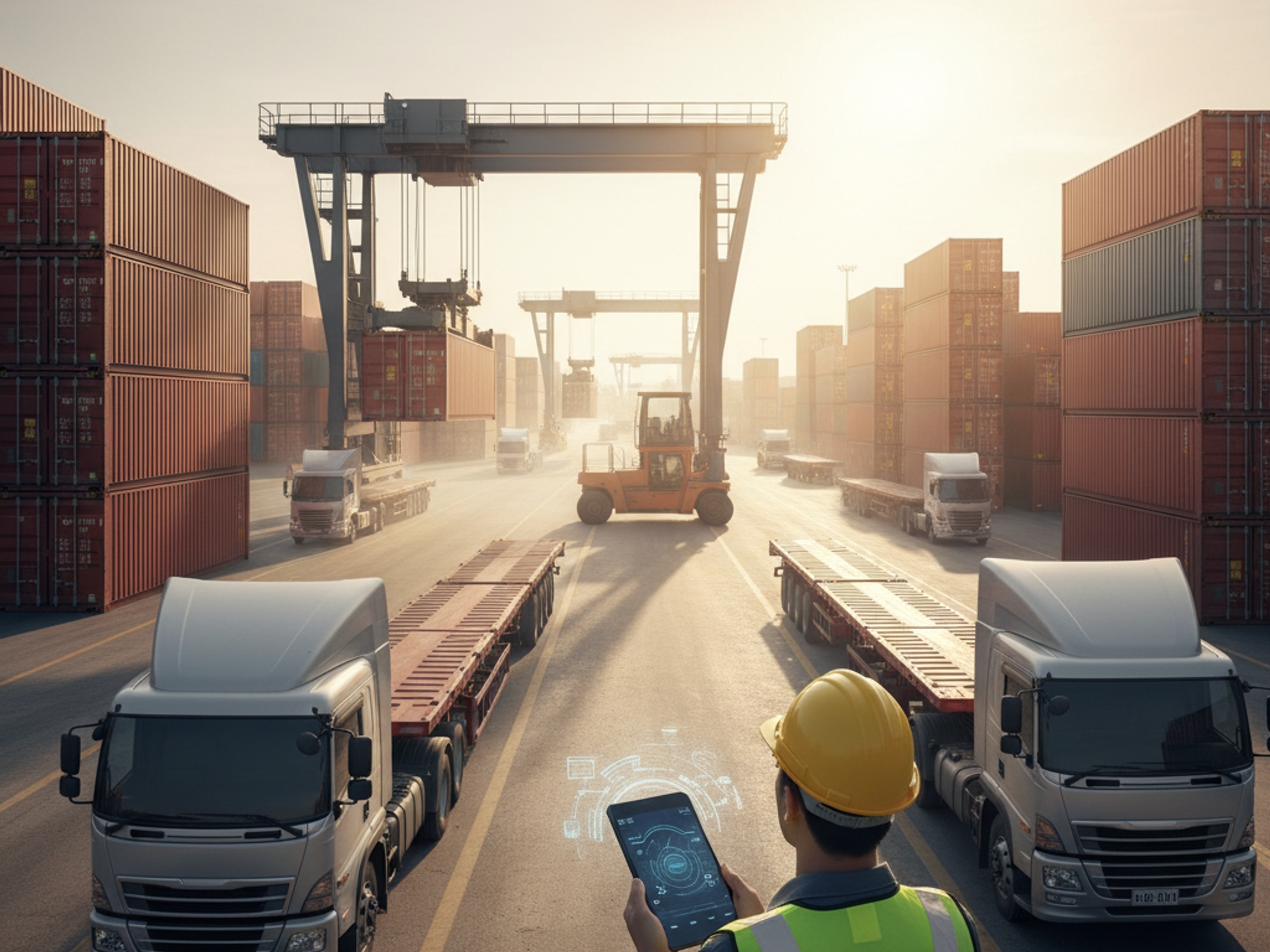
- Yard and supply chain visibility: Trailers and containers are located instantly within busy yards, ending the costly hunt for misplaced assets and speeding gate-to-dock flow.
Across all of these, the common thread is the same: knowing the precise location and condition of every asset, continuously, turns uncertainty into control.
Why B2B GPS Trackers & BLE Tags Are the Backbone of Logistics Telematics
You cannot have intelligent visibility without reliable data at the source, and that source is hardware on the ground. GPS trackers and BLE asset tags are the backbone of logistics telematics. If the location and condition data is incomplete or unreliable, even the best AI model produces guesses instead of guidance.
This is where the right tracking foundation matters. GPX Intelligence provides B2B GPS and BLE tracking purpose-built for end-to-end supply chain visibility, including:
- GPS trackers for vehicles, trailers, and high-value mobile assets that report location in real time across long-haul and in-transit routes.
- GPX AssetTags (BLE) with a 4-year battery life, ideal for tagging tools, equipment, and inventory that move between sites and need continuous, low-maintenance tracking.
- Condition and movement sensing that feeds the AI layer with the temperature, motion, and tamper data needed for predictive alerts and compliance.
Strong telematics hardware plus an intelligent software layer is what delivers genuine end-to-end visibility, from the moment an asset leaves origin to the moment it reaches its destination.
How to Choose the Right AI-Powered Supply Chain Visibility Solution
Not every platform is built for every operation. The right choice depends on your assets, your routes, and the risks that cost you the most. Use these criteria to evaluate any solution before you commit:
- Match the hardware to your assets: Outdoor, long-haul, and fleet tracking need GPS. Indoor, yard, and localized asset tracking are better served by BLE tags. Most operations need both.
- Confirm the data is truly real-time: Ask how often devices report and whether there are coverage gaps. Continuous reporting is what makes predictive analytics work.
- Demand predictive intelligence, not just maps: A dashboard that shows location is the starting point. Look for predictive ETAs, anomaly detection, and automated alerts that drive action.
- Check the condition-monitoring fit: If you move temperature-sensitive or fragile goods, verify the platform captures and logs the sensor data your compliance rules require.
- Evaluate integration and scalability: The solution should connect to your existing systems and grow across sites and assets without adding heavy manual overhead.
- Weigh total cost against risk reduction: Compare the investment to what blind spots already cost you in theft, fees, spoilage, and missed SLAs.
Ready to See Your Entire Supply Chain in Real Time?
Blind spots cost money, time, and trust, and every one of them is avoidable. With GPX Intelligence, you get the B2B GPS and BLE tracking foundation that powers true AI-driven supply chain visibility, built for fleet, construction, healthcare, automotive, and in-transit logistics. Talk to the GPX team today to map out a visibility solution that fits your operation and start turning data into decisions.
Frequently Asked Questions (FAQs)
1. What is the difference between supply chain visibility and supply chain transparency?
Visibility is your real-time ability to track where assets are and what condition they are in. Transparency goes a step further, sharing that information openly with partners and customers. AI-powered visibility supplies the accurate data that makes real transparency possible.
2. How does AI improve supply chain forecasting?
AI analyzes historical logistics data, weather patterns, and live GPS feeds to predict delays, optimize routing, and automate inventory forecasting. This shifts operations from reactive firefighting to proactive planning.
4. How does real-time visibility reduce logistics costs?
It eliminates detention and demurrage fees, reduces asset theft, optimizes fuel through smarter routing, and prevents spoilage of temperature-sensitive cargo with continuous IoT condition monitoring.
6. What kind of data does AI-powered supply chain visibility use?
It draws on real-time GPS and BLE location data, IoT sensor readings such as temperature, shock, and tampering, plus historical route data. The AI compares live signals against these patterns to forecast delays and flag risk.
8. Which industries benefit most from AI-powered supply chain visibility?
Fleet and in-transit logistics, construction, healthcare cold chains, automotive, and yard operations see the strongest returns. Any operation with high-value mobile assets, strict compliance needs, or tight delivery windows gains the most.