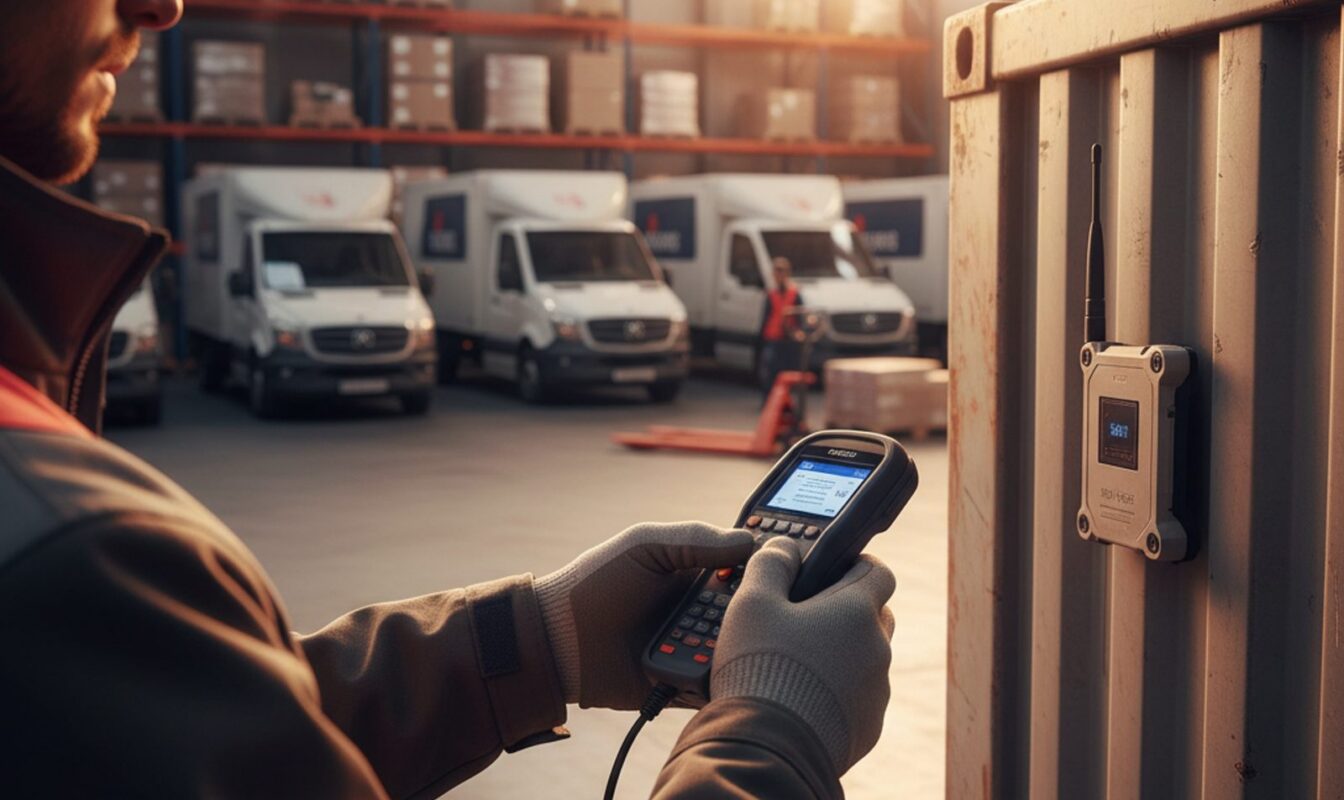


Managing a fleet of vehicles, a yard of equipment, or a supply chain of returnable containers comes down to one problem: visibility. Without accurate, timely data on where your assets sit and what they are doing, you run with blind spots that cause delays, loss, and wasted labor. The IoT-based asset tracking market is growing fast, from $8.7 billion in 2024 to nearly $18.6 billion by 2030, because guessing carries a real cost.
For decades, the default answer has been the traditional GPS tracker. These devices use cellular networks to report location, and they work well for plenty of jobs. A newer option, the modern asset tag, solves the biggest frustrations with legacy tracking. McKinsey estimates that IoT in factory settings alone represents up to $3.3 trillion in annual value by 2030. Knowing the difference between the two technologies is how you pick the right tool for the job.
The choice usually comes down to a specific operational problem. Businesses are leaving budget GPS trackers and expensive carrier programs behind for three reasons: high monthly data fees, batteries that die in weeks, and reporting that runs too slow for operations yet too fast for long battery life. Asset tags remove that trade-off between cost, battery, and data freshness.
| Platform | Network | Best For | Starting Price | Key Strength |
|---|---|---|---|---|
| GPX AssetTag Pro | Terrestrial IoT Network | Non-powered assets & equipment | Free hardware, from $45/year | Multi-year battery with multiple daily reports |
| Samsara | Cellular (4G LTE) | Large enterprise fleets | Custom Quote | All-in-one vehicle & asset platform |
| Verizon Connect | Cellular (4G LTE) | Service-heavy fleets | Custom Quote | Deep customization & network reliability |
| Linxup | Cellular (4G) | Small to mid-sized businesses | $15/month | Affordable, transparent pricing |
| Geotab | Cellular (4G LTE) | Data-driven fleets | Via Reseller | Open platform with deep integrations |
The Problems Asset Tracking Has to Solve
Before you compare devices, understand the problems any tracking solution has to solve for real supply chain visibility. Many teams find their current methods, whether manual spreadsheets or first-generation GPS, create more problems than they fix. Moving from guesswork to data-driven decisions means clearing these common hurdles.
- High total cost of ownership: Traditional GPS trackers carry costs well beyond the hardware. Each device needs an active SIM card and a cellular data plan, so every tracked asset adds a recurring monthly expense. Across large volumes of equipment, that gets cost-prohibitive fast.
- Poor battery performance: Constant communication with cellular towers drains batteries. Many so-called “long-life” GPS trackers only reach a multi-year lifespan by reporting once a day or less. That leaves huge blind spots and makes the data useless for planning.
- Inaccurate asset inventories: Manual check-in processes and infrequent reports create “ghost assets,” equipment that exists in your records but can’t be found in the yard. That wastes time, stalls projects, and complicates audits.
- Vulnerability to loss and theft: Without frequent, reliable location data, recovering stolen equipment is nearly impossible. By the time you notice an asset is gone, a dead battery or a stale location ping offers no help.
- Scaling to thousands of devices: Tracking a handful of assets is simple. Rolling out thousands of trackers, provisioning them, monitoring device health, and pushing updates across an IoT platform at scale is a different problem that trips up systems built for small fleets.
- Data security and privacy: Location data on high-value assets and in-transit shipments is sensitive. A tracking platform has to protect it with encryption, role-based access controls, and SOC 2-grade handling, or it becomes a liability instead of an asset.
- Disconnected data: Many systems run in a silo, unable to connect with the ERP, WMS, or other software that runs your business. That blocks automated workflows, utilization analysis, and a single view of operations.
What Is a GPS Tracker?
A traditional GPS tracker uses the Global Positioning System to fix its location and a cellular modem to send that data over a network like 4G or 5G. Think of it as a small cell phone dedicated to reporting coordinates. The device holds a GPS receiver, a battery, and a SIM card that connects it to a carrier such as AT&T, T-Mobile, or Verizon.
This setup shines for real-time, high-frequency tracking of powered assets like vehicles and heavy machinery. Wired into the vehicle’s power, battery life stops being a concern, and the device updates every few seconds. That makes it ideal for live dispatching and fast theft recovery. On non-powered assets like trailers, containers, or tools, though, the power-hungry cellular connection and the monthly data fees turn into real drawbacks.
What Is an Asset Tag? (The Modern Alternative)
A modern asset tag, like the GPX AssetTag Pro, runs on a different architecture that fixes the cost and battery problems of traditional GPS. Instead of a cellular modem and SIM card, these tags use low-power, wide-area networks (LPWAN) and other efficient terrestrial networks. That single choice reshapes both performance and cost.
Dropping the cellular connection cuts power draw sharply. The tag runs for years on a small, sealed internal battery while sending several location updates a day. The cost model changes too. No SIM card means no monthly carrier fees. The subscription covers network access and the software platform, so the total cost of ownership stays low and predictable, especially across hundreds or thousands of non-powered assets.
1. GPX AssetTag Pro
The GPX AssetTag Pro is a clear example of the modern asset tag, built for tracking non-powered equipment at scale. It offers “peel-and-stick” deployment and runs for years without maintenance, reporting location 20 to 30 times a day. A gateway-less terrestrial network keeps it off cellular, so it avoids the fees and battery drain while delivering far more data than a typical long-life GPS unit.
- Location: USA
- Best for: Teams managing hundreds or thousands of non-powered assets, such as trailers, containers, bins, tools, and equipment, that need multi-year battery life with multiple daily reports.
- Pricing: The hardware is free, included with the subscription, which starts from $45/year per device at scale.
- Connectivity: Proprietary terrestrial IoT network, GPS, Wi-Fi positioning, and Bluetooth Low Energy (BLE).
- Standout features: Three-year sealed battery (no recharging or swaps) while reporting 20 to 30 times a day, no monthly cellular fees, peel-and-stick installation, geofencing alerts, and a rugged IP67-rated housing.
Benefits
- No cellular modem means no monthly carrier fees, so the total cost of ownership runs well below any GPS tracker.
- Three-year battery life with up to 30 reports a day, so you never trade data freshness for longevity.
- Frequent reports show real asset movement and utilization rates, which sharpens planning and scheduling.
- The small, self-contained, peel-and-stick design deploys across thousands of assets with no wiring.
- An IP67 rating handles dust and water in harsh industrial settings.
2. Samsara
Samsara leads in connected operations, with an enterprise platform that unifies vehicle tracking, equipment monitoring, and site security. Its asset gateways track powered and non-powered assets in real time and tie into a wider network of AI dash cams and compliance tools. Samsara fits large, complex operations that want one source of truth for every physical asset.
- Location: San Francisco, California, USA
- Best for: Large enterprise fleets and operations-heavy businesses that need one platform for vehicles, equipment, and sites.
- Connectivity: Cellular (4G LTE).
- Standout features: Real-time tracking with a fast refresh rate, AI-powered dash cameras, strong ELD compliance support, and a large marketplace of integrations.
Benefits
- One platform for full operational visibility.
- True real-time tracking with updates every second.
- Highly rated interface and mobile app.
- AI-driven insights that improve safety and efficiency.
Drawbacks
- Premium pricing that is not published.
- Requires a minimum three-year contract.
- Overkill for simple tracking needs.
- Hardware purchase is required upfront.
3. Linxup
Linxup offers GPS tracking aimed at small and mid-sized businesses. It focuses on an affordable, easy-to-use system for monitoring vehicles, equipment, and other assets. With transparent pricing plus driver-behavior monitoring and geofencing, Linxup gives businesses a solid entry point to control fleets and assets without enterprise cost and complexity.
- Location: St. Louis, Missouri, USA
- Best for: Small and mid-sized businesses that want an easy, affordable way to track vehicles and assets.
- Pricing: Asset tracking plans start at $15 per month per device.
- Connectivity: Cellular (4G).
- Standout features: Real-time GPS tracking, driver-behavior monitoring for speeding and idling, maintenance reminders, geofencing, and Google Maps integration.
Benefits
- Affordable, transparent monthly pricing.
- Plug-and-play installation on many devices.
- Solid U.S.-based support.
- Flexible plans with no long-term contracts on some options.
Drawbacks
- Lacks the advanced analytics of enterprise platforms.
- Some users report mobile-app performance issues.
- A narrower feature set than competitors like Samsara.
For consumers or very small operations that only need simple, low-cost GPS on a vehicle or a few assets, budget brands like Logistimatics or Bouncie cover the basics, though they rely on recurring monthly cellular plans and lack the multi-year battery and scale of a modern asset tag.
Four Questions That Decide Tags Versus Trackers
The right choice depends entirely on your use case. There is no single “best” technology, only the right tool for your goals and budget. Four questions guide the decision:
- What are you tracking? For powered vehicles or heavy equipment that need second-by-second data for dispatching, a hardwired GPS tracker is the right call. For non-powered assets like trailers, containers, pallets, tools, or rental equipment, a modern asset tag with a multi-year battery fits better.
- What is your budget? For a handful of high-value assets, a monthly GPS fee is reasonable. To track hundreds or thousands of items, asset tags cost far less over time because they skip the recurring cellular fee on every device.
- How important is battery life? If assets sit for weeks or months, or if reaching them is hard, a multi-year battery is essential. Asset tags are built for a “set it and forget it” reality. GPS trackers on non-powered assets force a trade-off: to stretch battery life, you cut reporting to once a day or less and accept the blind spots.
- What problem are you solving? If your goal is immediate recovery of a stolen vehicle, the live tracking of a cellular GPS device wins. If your goal is operational efficiency, less time hunting for equipment, automated inventory counts, and utilization analysis, the higher report frequency and lower cost of an asset tag deliver more value.
Most businesses end up needing a mix. The point is to drop the one-size-fits-all habit of legacy tracking and match each device to the asset’s value, power source, and role in your operation.
This guide covers the technology; our breakdown of AirTags for business digs into why consumer devices fall short at scale. For a recommendation matched to your fleet and assets, talk with our team today.
Frequently Asked Questions (FAQs)
How do GPS trackers work?
GPS trackers receive signals from satellites orbiting the Earth to calculate their exact location. The device then uses a built-in cellular modem, much like a cell phone, to send that location over a 4G or 5G network to a central server. You view the asset on a map through a web or mobile app.
What is the main cost difference between asset tags and GPS trackers?
The recurring cellular fee. A traditional GPS tracker needs a SIM card and a data plan for each device, which means a monthly bill from a carrier. Modern asset tags, like the GPX AssetTag Pro, use more efficient networks with no individual cellular subscription, trading high monthly fees for a lower annual platform subscription.
Can asset tags be used for theft recovery?
Yes. They do not offer the second-by-second tracking of a cellular GPS device during a pursuit, but their multiple daily reports give a very recent last-known location. Their small size and long battery life let you place them covertly, so they keep working long after a thief disables a more obvious tracker.
Do cars have GPS trackers for repossession?
Yes. Lenders in “buy here, pay here” and subprime auto loans commonly install GPS devices in vehicles. The trackers help the financing company locate a vehicle if the borrower defaults, and they are typically wired into the car’s power for continuous operation.
How long do the batteries last in different types of trackers?
It varies widely. A portable, cellular GPS tracker lasts a few days to a few weeks depending on how often it reports. A “long-life” GPS tracker lasts one to three years but usually gets there by reporting once a day. A modern asset tag solves that trade-off, running three or more years while still reporting several times a day.
How large is the IoT asset tracking market, and what is driving its growth?
The IoT-based asset tracking market was valued at $8.7 billion in 2024 and is forecast to reach nearly $18.6 billion by 2030. Growth is driven by the real, measurable cost of poor visibility across fleets, equipment yards, and supply chains.