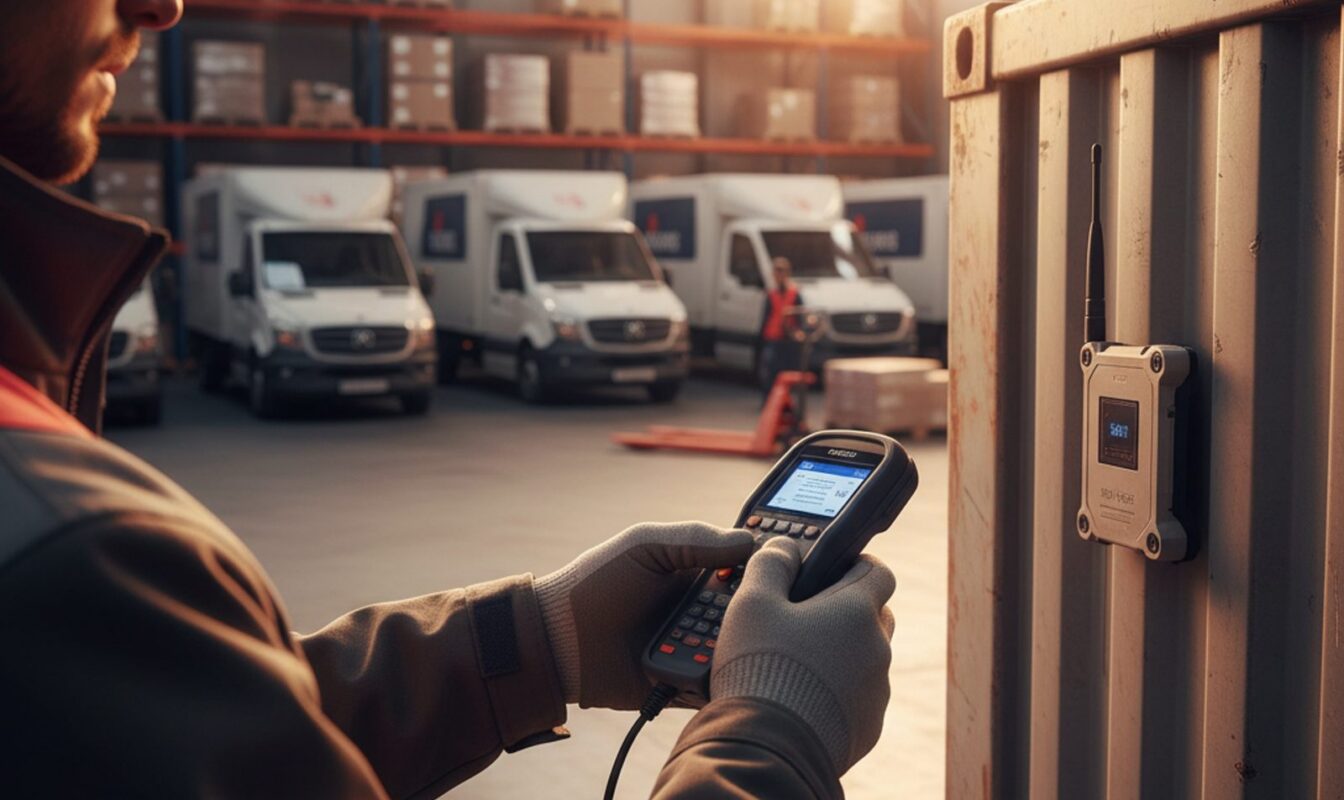


Asset visibility makes or breaks B2B operations. Stale location data inflates costs, stalls logistics, and forces teams to react instead of plan. Poor data quality alone costs organizations an average of $12.9 million a year, according to Gartner. Supply chain disruptions now hit companies every 3.7 years, draining the equivalent of 45% of a year’s profits over a decade, according to the McKinsey Global Institute. The fix starts with one decision: real-time or passive tracking.
This article breaks down how each method works, what it costs, and where it fits. By the end, you will know which data cadence matches your assets, your budget, and your risk tolerance.
Real-Time vs Passive Tracking: The Core Difference
The difference comes down to one thing: when you get the data. That single factor shapes cost, battery life, and your ability to act. Each approach fits a different job.
Real-Time Tracking
Real-time tracking sends live or near-live updates on location and status. The device transmits over cellular, satellite, or other wireless networks. Your team watches assets move as it happens and responds on the spot.
Passive Tracking
Passive tracking records data on the device and stores it for later. You pull the logs when the asset returns to a depot or docks at a download station. You get a history, not a live feed.
How Each One Works
The mechanics behind each method drive its cadence and cost. They also set your connectivity needs, power draw, and ability to step in. Here is how each one operates.
Real-time tracking transmits at set intervals through cellular modems, satellite transceivers, or Bluetooth Low Energy (BLE) gateways. A GPS receiver fixes the location while onboard sensors capture data like temperature or motion. The device pushes that information to a cloud platform. You get instant alerts, live route monitoring, and on-the-fly logistics changes. A heavy equipment tracker, for example, reports its location every 60 seconds while moving.
Passive tracking works like a data recorder. It logs coordinates, timestamps, and sensor readings to internal memory. Logging runs on a schedule or triggers on events like movement or zone entry. The data stays on the device until you retrieve it, usually over USB or a docking station. This suits auditing past movements or assets you check infrequently.
Advantages and Limitations for B2B Operations
Each method carries clear trade-offs that hit your operations directly. Weigh them against your goals before you commit. The payoff ranges from instant intervention to low-cost historical records.
Real-Time Tracking
Advantages: Immediate visibility is the headline benefit. You respond fast to theft, diversions, or emergencies. You gain tighter security, cold-chain compliance for temperature-sensitive cargo, and smarter resource allocation. For high-value assets, live data powers predictive ETAs and geofencing alerts when assets cross set boundaries. That live feed also fuels AI-powered asset tracking platforms with the data they need for prediction.
Limitations: Real-time tracking costs more to run. Cellular and satellite data plans add up, and batteries need frequent charging or swaps. Signals drop in remote areas and indoors, which creates data gaps. Constant data streams also demand solid software to manage the volume.
Passive Tracking
Advantages: Lower upfront and ongoing costs make passive tracking attractive. No cellular subscriptions, simpler devices, longer battery life. It fits historical auditing, post-trip analysis, and compliance checks where you do not need to act in the moment. For assets that sit in secured yards or rarely move, it keeps a record at low cost.
Limitations: You lose immediate visibility. Theft, route deviations, or temperature excursions surface only after you download the data. That delay rules out live intervention, which matters most for high-value or time-sensitive goods. Recovering a stolen asset gets far harder without live location.
Cost and Total Cost of Ownership: Subscription vs Hardware-Only
The real cost goes well past the hardware price tag. Total cost of ownership (TCO) drives the smart investment call. The two models split between a subscription service and a hardware-first approach.
Real-time tracking carries a higher TCO because it depends on active data transmission. The hardware costs about the same, but cellular or satellite subscriptions recur every month. Multiply that by your fleet and the number climbs fast. In return, you cut inefficiencies, tighten security, and resolve exceptions sooner.
Passive tracking runs a lower TCO because it drops the recurring data fees. Your costs are the hardware and the labor to pull data from each device. The devices are simpler, sometimes cheaper to build, and their long battery life cuts maintenance. When historical data does the job, the hardware-only model wins on economics.
Battery Life, Connectivity and Convenience
Battery life, connectivity, and convenience decide how practical a solution is to deploy. They set your maintenance load and how reliably you reach your data. Each approach scores differently, and newer options close the old gaps.
Real-time tracking needs steady power for constant transmission. That means bigger batteries, regular recharging, or a hardwired source, which limits where you can deploy. Cellular networks (4G/5G LTE-M, Cat-M1, NB-IoT) cover wide areas but hit dead zones in remote spots and inside buildings. Satellite fills those gaps but raises cost and power draw. The upside is remote access with no manual retrieval.
Passive tracking runs far longer on a battery thanks to intermittent logging and no live transmission. That suits assets deployed for long stretches without power. The catch is physical retrieval, which adds manual steps to reach your records. Beyond setup, connectivity plays no role in moving the data.
The GPX AssetTag closes that gap. It uses gateway-free BLE to deliver near real-time visibility with no per-asset cellular subscription. Each device runs on a 4-year replaceable battery, which slashes maintenance and stretches deployment cycles. It routes data through nearby smartphones or installed BLE gateways, pairing frequent updates with passive-grade power efficiency. This multi-sensor platform keeps assets visible within set zones while sidestepping the battery drain and subscription costs of full cellular tracking.
Real-Time vs Passive Tracking: Side-by-Side Comparison
The table below lines up the key dimensions side by side. Use it to spot which approach fits your operation at a glance.
| Dimension | Real-Time Tracking | Passive Tracking |
|---|---|---|
| Data cadence | Live or near-live updates (seconds to minutes) | Logged for later download (hours to months) |
| Connectivity | Active (cellular, satellite, BLE via gateway) | Local storage; manual retrieval |
| Intervention ability | Immediate, proactive response | None until data is retrieved |
| Upfront cost | Moderate to high (device plus initial setup) | Low to moderate (device only) |
| Ongoing cost | Recurring subscription fees (data plan) | Minimal (battery replacement, retrieval labor) |
| Battery | Shorter life, more frequent charging or replacement | Longer life (months to years) |
| Best-fit use | High-value assets, critical shipments, dynamic operations | Historical audit, low-value assets, static inventory |
| Theft response | Immediate location for rapid recovery | Delayed information, hinders recovery |
Use Cases
The right choice gets obvious once you look at real scenarios. Each method serves a distinct need, from securing high-value cargo to logging yard equipment. These examples point you to the better fit.
When Real-Time Wins
Real-time tracking earns its keep when you need data now and have to act fast.
- Fleet Supervision & Dispatch: For delivery fleets, construction equipment, or service vehicles, live data lets dispatchers optimize routes, respond to delays, and give customers accurate ETAs. (See also: Real-Time Supply Chain Visibility Platforms)
- Theft Response: Live location on a stolen asset drives rapid recovery and cuts your losses.
- Compliance & Cold Chain Monitoring: Pharmaceuticals, food, and other temperature-sensitive cargo rely on continuous monitoring and instant alerts when conditions drift.
- High-Value Asset Security: Expensive machinery, specialized tools, and critical components in transit or on site stay protected with constant visibility. (See also: IoT Equipment Tracking Solutions)
- Dynamic Inventory Tracking: In busy distribution operations where inventory moves often, real-time updates locate specific items fast. (See also: Real-Time Inventory Tracking Software)
When Passive Is Enough
Passive tracking fits when immediate data is optional and cost matters more.
- Historical Audit & Post-Event Analysis: Review past routes, verify delivery times after the fact, or study equipment usage over time.
- Low-Value or Cost-Sensitive Assets: When a real-time subscription outweighs the benefit, such as rental equipment on long cycles or returnable containers.
- Dealership & Yard Records: Track vehicles or equipment inside a fixed yard, where a daily or weekly download does the job.
- Infrequent Movement: Assets that move only occasionally, where continuous tracking adds cost with little gain.
Challenges of Real-Time and Passive Tracking (and how to solve them)
Both methods bring challenges you have to plan around. Spot them early and you build a tracking strategy that holds up.
For real-time tracking, subscription cost at scale is the big one. Monthly data plans across thousands of assets get expensive fast. Tiered plans, tuned reporting intervals, and hybrid setups keep it in check. Connectivity dead zones are another hurdle. Weak cellular or satellite signals leave gaps, which multi-network devices or BLE solutions close. The GPX AssetTag, for instance, talks through any nearby BLE gateway or smartphone. (See also: BLE Asset Tracking Solutions) Battery drain from high-frequency reporting also bites, so balance update intervals against power or move to long-life batteries.
Passive tracking skips subscriptions but trades that for delayed data and retrieval labor. With no live feed, theft or damage shows up hours or days later. Set clear download schedules and fold the analysis into routine workflows. The volume of historical data piles up too, so plan for tools that turn it into insight. Both methods can stumble on indoor positioning gaps unless you add BLE or WiFi triangulation, which the GPX multi-sensor platform handles.
What Decides Between Real-Time and Passive Data
Choosing between real-time and passive comes down to a few clear questions about your assets, your environment, and the cost of waiting. Run through these before you buy.
- Asset Value and Sensitivity: Is the asset high-value, perishable, or mission-critical? Those call for real-time. Low-value or non-critical assets do fine on passive.
- Intervention Urgency: Do you need to react the moment something goes wrong, like theft or a route deviation? Then real-time is non-negotiable. If audit history is enough, passive works.
- Operational Environment: Will assets run in remote areas with weak coverage, or stay inside yards and facilities? Multi-network or BLE solutions like the GPX AssetTag cover the gaps; passive suits predictable, retrieve-on-site settings.
- Budget Constraints & ROI: Tally hardware, subscriptions, and retrieval labor. Weigh the savings from less theft, better efficiency, and compliance against the cost. (See also: ROI of GPS Tracking)
- Data Requirements: Do you need live streams for predictive analytics, or do periodic logs cover compliance and post-mortem review? AI-powered asset tracking runs on live data and turns raw location into intelligence.
- Battery Life & Maintenance: Can you handle frequent battery swaps or hardwired installs? If not, long-life options like the GPX AssetTag’s 4-year replaceable battery or passive trackers fit better.
Work through these points and you deploy the right mix of real-time and passive tracking across your asset portfolio, with visibility where it counts and cost control where it does not.
GPX delivers AI asset intelligence that goes beyond dots on a map, turning raw location into operational agility and predictive ETAs across your supply chain. See how our multi-sensor platform and the GPX AssetTag sharpen your asset visibility and drive returns. Learn more at gpx.co/products/assettag.
For the full picture across GPS, active and passive RFID and BLE, and how it plays out for equipment, fleet and inventory, see our complete guide to active vs passive tracking.
Frequently Asked Questions (FAQs)
What is the difference between real-time and passive tracking?
Real-time tracking sends live location and status updates wirelessly as they happen. Passive tracking logs data on the device, so you retrieve and download it later. The split comes down to when you get the data.
How does real-time tracking work?
A real-time device fixes its position with GPS, then transmits over cellular, satellite, or BLE to a cloud platform. The steady stream gives you live monitoring, instant alerts, and remote management from any connected location.
Is real-time tracking worth the subscription cost?
For high-value assets, critical shipments, or anything that demands fast intervention, yes. The monthly fee pays off through fewer losses, tighter security, better efficiency, and quick decisions on live data.
When is passive tracking good enough?
Passive tracking works when immediate data is optional and you mainly need records for audits, post-trip review, or compliance. It also fits low-value assets and gear that rarely moves, where a hardware-only solution keeps costs down.
Can you combine real-time and passive tracking?
Yes, and a hybrid often wins. Run real-time on high-value assets in transit and passive on static yard inventory. The GPX AssetTag bridges both with near real-time BLE updates, no per-asset cellular plan, and long battery life.
What does poor location data quality actually cost a business?
According to Gartner, poor data quality costs organizations an average of $12.9 million per year. Stale location data inflates costs, stalls logistics, and forces teams to react to problems rather than prevent them.