Pallet, tote and crate tracking
Pallets, totes, crates and dunnage move between your warehouse, your carriers and your customers, and most pools lose track of them somewhere in between. Our pallet tracking system puts a small tag on each unit that reports its location on its own, indoors and outdoors, with no gateways to install and no batteries to charge on a schedule. You see where every pallet is, how long it has been sitting there, and which site is holding more than its share. AssetTag Pro tags start as low as $45 a year each, with the hardware included.
How it works
1. Tag the unit. Each pallet, tote or crate carries a small tag. AssetTag Pro is a sealed tag that never needs charging, with a battery life of up to 3 years (up to 5 on AssetTag Pro Max). For one-way shipments a SmartLabel sticks on and tracks the load until it is delivered.
2. Let the network carry the signal. Tags report through a large public Bluetooth and cellular network, so a pallet is seen in your warehouse, on a truck and at a customer dock without you installing readers, portals or gateways at any of those sites. GPS pallet tracking devices cover the loads that need a live position on the road.
3. Work from one platform. Every location report lands in the same pallet tracking software: a live map, a timestamped history for each unit, counts by site, and alerts when something leaves, arrives or sits too long. The same account covers pallets, returnable containers and shipments.
Beyond pallets
Most pools are not only pallets. Plastic totes, reusable produce crates, bulk bins, IBCs, racks and dunnage all go missing in the same places for the same reasons, so they belong in the same tote tracking system.
Choose the tag by how the unit travels. AssetTag Pro suits closed-loop units that come back to you again and again. SmartLabel suits one-way trips, as low as $13 per label with tracking included. Wired and battery GPS trackers suit high-value loads that need a position every few minutes.
If your pool is mostly returnable packaging moving between suppliers and plants, the returnable container tracking page covers that workflow in more depth.
A trusted partner to the world's biggest companies





















































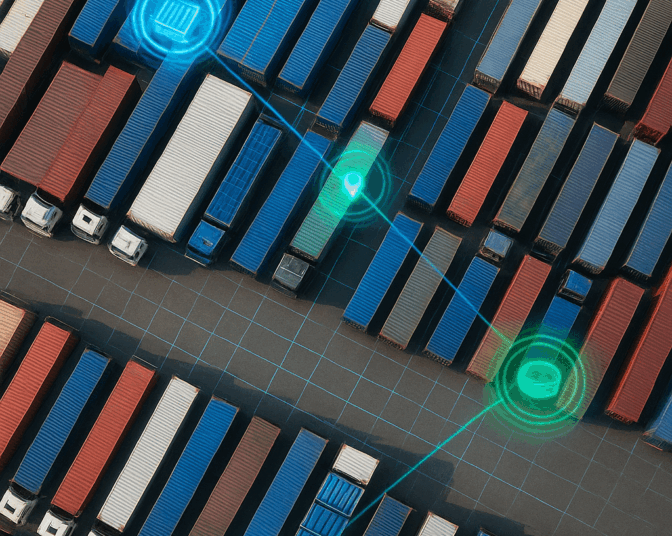
Pallets rarely disappear in one event. They drift: a few stay at a customer site, a few are used to ship someone else’s goods, a few sit in a yard corner until they are written off. Without a record of where each unit went, the loss only shows up at the annual count. These are the five problems a pallet tracking system is built to fix.
Every unit that is not returned has to be bought again. Tags give each pallet and crate a location and a geofence, so you get an alert when one leaves a site it should not leave, and you can see exactly where it went when it does.
Manual scans and spreadsheet counts miss units and double count others. Tracked counts come from the tags themselves, so each site’s pallet balance is current without anyone walking the rows.
A pool that turns slowly needs more units. Dwell and cycle time reports show which sites hold pallets longest, so you can recover idle stock before you buy more.
Pallets change hands between plants, carriers, distribution centers and customers. A shared, timestamped record of where each unit was, and when, settles disputes about who had it last.
For sensitive loads, trackers with sensors record shock, temperature and humidity along with location, and alert when a reading goes out of range, so a damaged or spoiled load is caught before it reaches the customer.
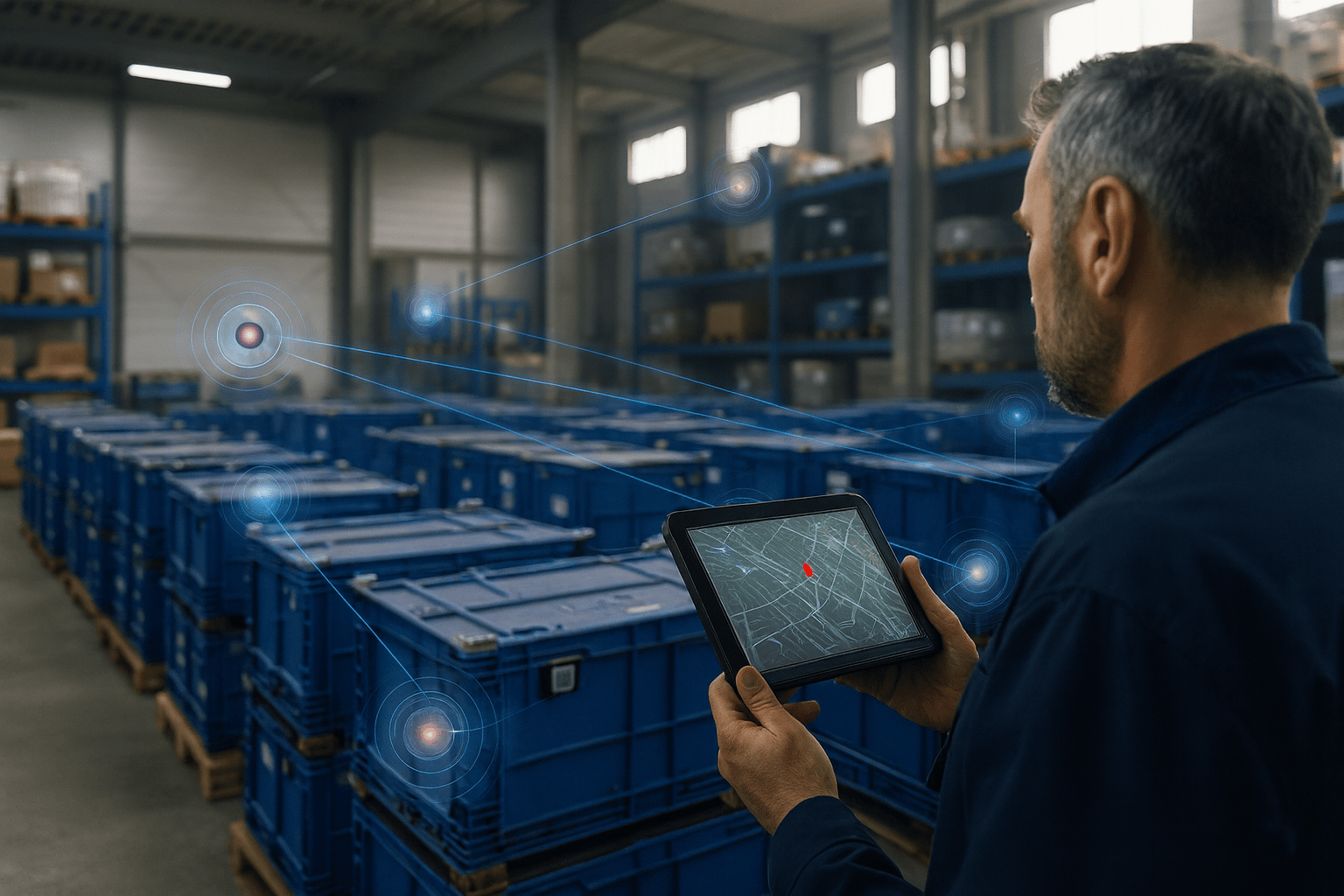
Inside a building, GPS cannot see through the roof. Warehouse pallet tracking relies on Bluetooth instead: tags are picked up by nearby phones and devices on the network, so you know which facility, and often which dock or yard, a pallet is in, without mapping the building or mounting readers on the ceiling.
Inside the four walls you get:
1
Site-level location: know which facility, dock or yard a pallet is in.
2
Movement history: a timestamped trail from dispatch to return.
3
Dwell alerts: flag pallets that have sat in one place too long.
4
Counts by site: see how many units each location is holding right now.
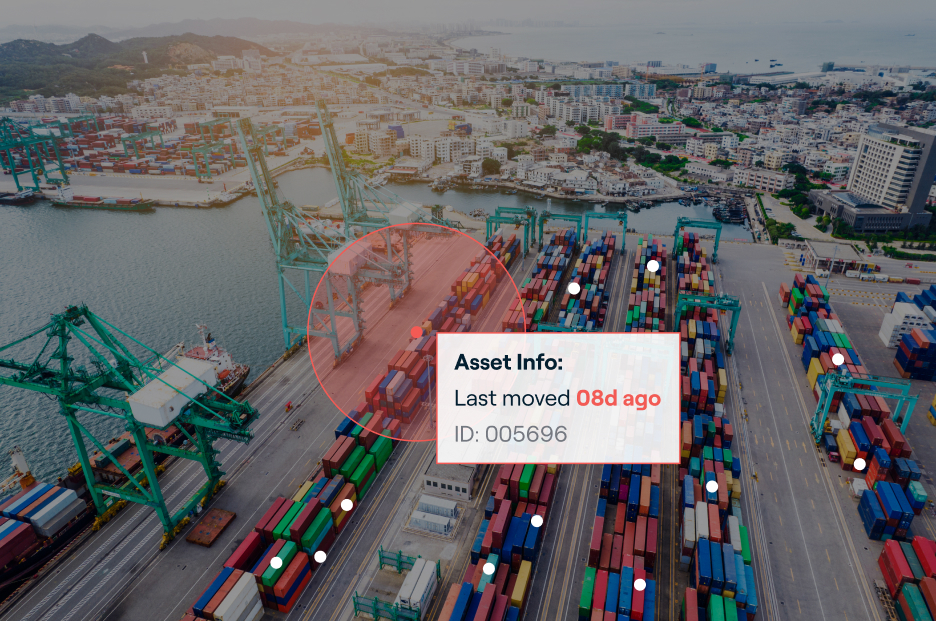
The tags collect the data; the pallet tracking software turns it into decisions. Set a geofence around each plant, customer and depot, and the platform tells you when units arrive, when they leave and when they overstay. Reports rank sites and partners by the pallets they hold and the pallets they lose.
What the software does for you:
1
Geofences: get an alert when a pallet leaves a site or arrives at one.
2
Dwell reports: find the customers and suppliers who hold pallets longest.
3
Loss reports: see which lanes and partners lose the most units.
4
Exports and API: send pallet counts and events to your ERP and WMS.
Reconcile: tracked counts against the ERP ledger
Charge back: late or lost returns, with location evidence
Plan: pallet purchases from real turn rates
Share: pallet status with carriers and customers
Replace: manual cycle counts and spreadsheets
Location data is most useful when it lands where your team already works. Tracked counts, arrivals, departures and dwell events can be exported or pulled through the API into your ERP, WMS or TMS, so the pallet balance in your system of record matches what is actually on each site.
Once a pallet leaves the dock, the question changes from where it is stored to where it is going. GPS pallet tracking reports position on the road, confirms arrival at the customer, and records when the empty unit starts its trip back. High-value or time-critical loads can use a GPS tracker with frequent updates; routine flows can rely on the tag already on the pallet.
IoT and smart pallets
A smart pallet is simply a pallet that can report on itself. Instead of buying pallets with built-in electronics, IoT pallet tracking adds a tag to the pallets you already own, wood, plastic or metal, and connects it to a network and a platform. That keeps the pallet cheap and moves the intelligence into a tag you can transfer, reuse or replace.
What makes it work:
1
Tags that fit the pallets you already own
2
Location, dwell and condition data in one place
3
No readers, portals or gateways to install
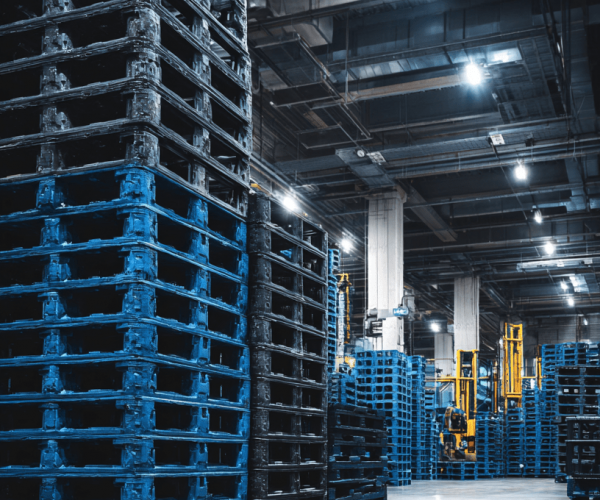

RFID pallet tracking works well when every pallet passes through a fixed read point: a portal on each dock door, a handheld scan at receiving. Between those points it is blind, and every site that needs visibility needs its own reader infrastructure. Tags that report on their own remove the read points entirely.
| Question | RFID tags and readers | Bluetooth and GPS tags |
|---|---|---|
| What sees the pallet? | A reader or handheld within range | The tag reports through a network |
| Infrastructure at each site | Portals, readers, cabling, install | None |
| Visibility between sites | None until the next read point | Location throughout the trip |
| Customer and supplier sites | Only if they install readers | Covered without their involvement |
| Cost per tag | Lowest | Higher, but no reader spend |
RFID stays a good fit inside a single, controlled facility. For pallets that travel between partners, see our RFID cost per asset breakdown for how the reader spend adds up.
Pricing is per tag, per year, with no hardware to buy for the tags most pools use:
Final pricing depends on pool size and reporting needs. Tell us how many pallets, totes or crates you run and we will price the whole pool.
Most pallet pools run on one of three GPX devices: AssetTag Pro for reusable pallets and totes, Smart Label for one-way loads that never come back, and AssetTag Edge for dense indoor zones. The same tags power returnable container tracking and shipment tracking. See every GPX tracking solution.
Case Study
See how our customers have used our tracking solutions to improve their supply chain operations, reduce costs, and enhance customer satisfaction.
Your Questions About Pallet Tracking Answered
Frequently asked questions about pallet, tote and crate tracking
AssetTag Pro tags start as low as $45 a year each with the hardware included, and SmartLabel starts as low as $13 per label with tracking included. GPS trackers are quoted per deployment. The return depends on how many units you lose today, what each one costs to replace and how many sit idle, so the fastest way to size it is to get pricing for your pool and compare it with last year’s replacement spend.